
Warm Up Your Home in Washington County—No Chimney, No Smoke, No Hassle.
From Weiser to Cambridge and Midvale, electric fireplaces give Washington County homes clean, instant zone heat without venting, chimney work, or wildfire-smoke tradeoffs. Find the right unit and connect with a trusted local dealer.
Every Project Starts From One of These Five Situations
Clean heat for canyon country winters.
Washington County sits in the Snake River canyon country of western Idaho, with the county seat of Weiser at roughly 2,100 feet and small communities like Cambridge and Midvale spread across ranch and farm country. Winters here aren't the brutal single-digit stretches you'd see in Bozeman or Helena, but with an average winter low around 22°F and about 5,616 heating degree days, the county still sees plenty of cold mornings that call for supplemental heat in mudrooms, additions, and older farmhouses that were never built with modern insulation in mind.
Late summer and fall wildfire smoke is a real concern for this part of Idaho, and it's one of the practical reasons electric fireplaces have caught on locally even in a county where wood stoves remain standard. When a smoke advisory means keeping windows shut and avoiding anything that adds particulate to the air, an electric unit lets a household add heat to a bedroom, den, or converted garage without touching a flue or burning anything at all. For rental properties along the river, weekend cabins, and homes that already lean on a wood stove for primary heat, electric fills the gap as a no-fuss second heat source.
Three steps. No salesperson until you're ready.
Tell us about your project
Your zip code, your situation, and the fuel you're leaning toward—or let the answers point you to one.
See what's actually available
The brands dealers within 100 miles genuinely carry—real options, never a catalog mirage.
Get your dealer & Project Guide
A trusted local dealer, plus the free Project Guide & Parts List that names every component of the job.
Frequently Asked Questions
How much does an electric fireplace installation cost in Washington County?
Cost depends heavily on the type of unit. A plug-in freestanding or wall-mount electric fireplace can run as little as $300 to $800 installed, since it simply plugs into an existing outlet with no electrician needed. Built-in electric fireplaces or inserts that require a dedicated 20-amp circuit—common when a homeowner wants the unit hardwired into a wall or mantel surround—typically land between $1,500 and $4,000 once a licensed electrician runs the circuit and a carpenter builds out the surround. Local dealers can walk through both paths during an in-home consultation.
Do I need a permit to install an electric fireplace in Washington County?
A simple plug-in unit generally doesn't require any permit—it's no different than plugging in a space heater. If you're having a dedicated circuit installed for a built-in or insert, that electrical work typically requires a permit through the Washington County Building Department, and most electricians handle that paperwork as part of the job. There's no chimney, venting, or combustion appliance permit involved, which is one of the main reasons electric installs move faster than wood or gas projects in this county.
Electric vs. wood—which makes more sense for my home?
Wood remains the standard heat source for a lot of Washington County homes, and it makes sense given the access to cutting permits through BLM Vale District ($10 per cord), Boise National Forest ($5–$20 per cord), and Wallowa-Whitman National Forest ($20 per 4 cords) during the spring-through-fall cutting seasons—with lodgepole pine, ponderosa pine, Douglas fir, and larch all common locally. Wood also keeps working during a power outage, which matters in a rural county where outages can stretch. Electric can't provide backup heat without power, but it wins on convenience, zero smoke output, and no wood handling or ash cleanup—which is exactly why many households here run wood as primary heat and add an electric unit in a second room rather than choosing one or the other.
Will my electric fireplace work during a power outage?
No—electric fireplaces require power to run, so they'll go dark along with everything else if the grid goes down. For rural stretches of Washington County where outages can last a while during winter storms, that's an important limitation to plan around. Most households here treat electric as a convenience and zone-heating option alongside a wood stove or propane appliance that can keep running when the power doesn't.
What's the best use case for an electric fireplace in Washington County?
Electric fireplaces do best as supplemental or zone heat rather than a home's primary heat source—think a bedroom addition, a converted garage, a mother-in-law suite, or a room that's hard to keep warm even with central heat running. They're also a strong fit for rental properties around Weiser and Midvale where landlords want ambiance and backup warmth without the maintenance of a wood-burning appliance, and for households that want a smoke-free heat option ready to go during late-summer wildfire smoke advisories when combustion appliances aren't ideal.
What size electric fireplace do I need?
Sizing an electric fireplace is mostly about the room, not the whole house, since these units are built for zone heating rather than whole-home output. Most electric inserts and built-ins are rated to comfortably heat 400 to 1,000 square feet, which covers a single large room or open living/dining area in most Washington County homes. For a small bedroom or den addition, a compact wall-mount or insert on the lower end of that range is usually plenty. A local dealer can confirm sizing based on your room's insulation and ceiling height.
How much does it cost to run an electric fireplace?
Most electric fireplaces draw around 1,500 watts on the heat setting, which works out to roughly 15 cents an hour of run time at typical Idaho Power residential rates—inexpensive compared to running central heat to warm a single room. That efficiency is part of why electric units make sense as supplemental heat in Washington County: you can run one for hours in a cold bedroom or addition without seeing much movement on the monthly bill, especially compared to heating that whole space through ducted HVAC.
What's the difference between an electric insert, a built-in, and a freestanding electric fireplace?
A freestanding or wall-mount unit plugs into a standard outlet and can go almost anywhere with no electrical work—the simplest option for most Washington County homes. An electric insert is sized to slide into an existing fireplace opening, often used to convert an old wood-burning fireplace that's no longer in regular use into a low-maintenance heat source. A built-in electric fireplace is designed to be framed into a wall or custom mantel surround during a remodel, usually wired to a dedicated circuit for a cleaner, more permanent look. Which one makes sense depends on whether you're working with an existing fireplace opening, a bare wall, or just want something you can move later.
Electric vs. gas—which is right for my home?
Gas fireplaces put out real heat and can often run during a power outage with the right ignition system, but they require either a natural gas line or a propane tank, plus venting and gas-fitter work—a bigger project in a rural county like Washington where propane is the common fuel outside the few natural-gas-served areas. Electric skips all of that: no gas line, no venting, no propane delivery to schedule, just an outlet or a simple circuit. For homeowners who want ambiance and supplemental warmth without touching gas infrastructure, electric is usually the simpler and less expensive path. For those who want a fireplace that can serve as a real backup heat source and don't mind the added installation complexity, gas is worth considering alongside electric.
Can I put a TV above my fireplace?
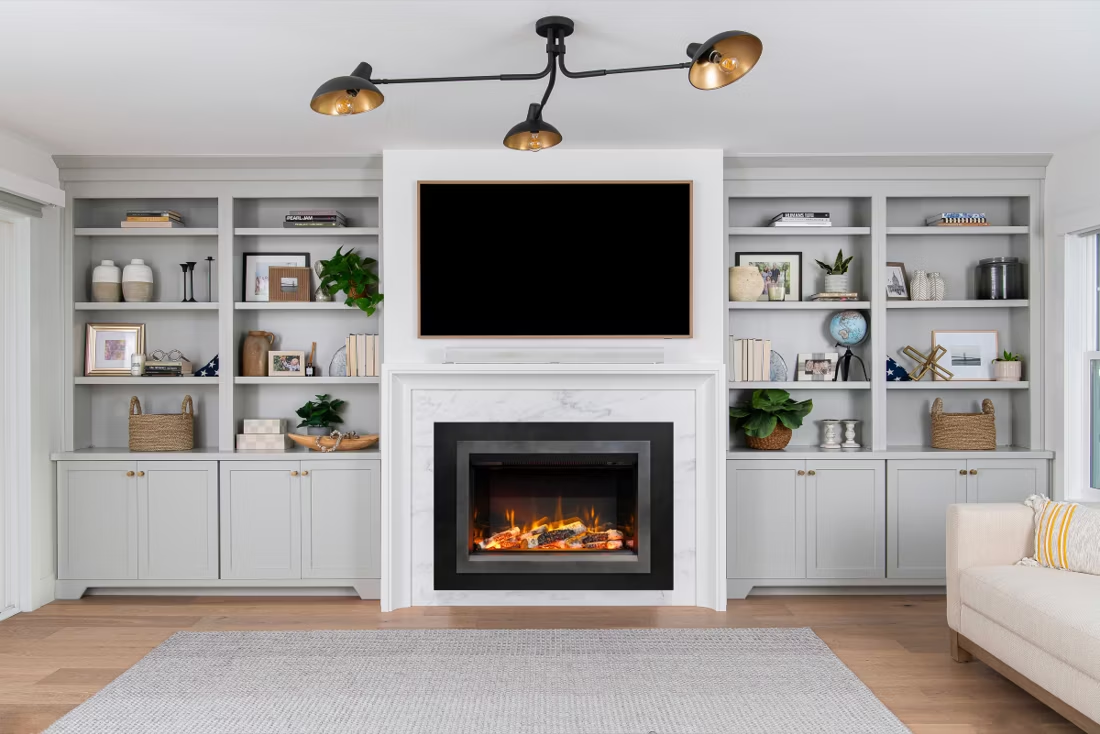
Yes—with an asterisk. Fireplaces are hot and TVs don't like heat. Either put a mantel between them to deflect rising warmth, or choose a fireplace with heat-management technology that creates a cool zone on the wall above—the wall stays around 125 degrees, barely warm, while the room still gets full heat. If you like clean lines and don't want a mantel, heat management is the answer.
Do electric fireplaces actually produce heat?
Yes—most put out around 4,800–5,000 BTUs from a standard outlet, which comfortably warms a bedroom, office, or den as a comfort-zone heater. What they won't do is carry a whole house the way wood, gas, or pellet can. Think of electric as ambiance-first with honest supplemental heat: flames on with no heat in July, flames plus warmth in January.
What is an in-home preview and do I need one?
It's a visit where a hearth professional measures your space, confirms the model you picked actually works in your home, and walks the specs—framing, gas line, venting, finish work—before anything is ordered. Some details you just can't know until you see the house. Never make a down payment without one; it's the single most-skipped step that burns buyers.
Can I install a fireplace myself?
If you're putting a fire in your house on purpose, it's best to work with an expert. Unless you're genuinely experienced in framing, gas line, vent pipe, and the national code on clearances to combustibles, have a professional do it—and ideally the same company that sells you the fireplace, so warranty, service, and liability all live under one roof.
Find your electric fireplace in Washington County.
Tell us a bit about your home and we'll match you with the right electric fireplace, insert, or built-in—plus a free Project Guide & Parts List and a trusted local dealer to install it.
Find Your Fireplace →