
Reliable pellet heat for Shoshone County's long Silver Valley winters.
From Wallace to Kellogg to Mullan, Shoshone County homes face winters as demanding as Duluth, Minnesota. A pellet stove gives you consistent, thermostat-controlled warmth without the splitting and stacking—matched to a vetted local dealer who sizes and vents it correctly.
Every Project Starts From One of These Five Situations
A cleaner-burning alternative rooted in the valley's timber culture.
Shoshone County sits deep in the Idaho Panhandle, wedged along the South Fork of the Coeur d'Alene River between the timbered ridges that surround the historic Silver Valley towns of Wallace, Kellogg, Osburn, Mullan, and Pinehurst. Elevations run from roughly 2,300 feet on the valley floor up into the 4,000-foot range on surrounding slopes, and with winters comparable to Duluth, Minnesota, winter here is long even though the average low sits around 22°F. This is timber and mining country, and lodgepole pine, ponderosa pine, Douglas fir, and larch cut from the Idaho Panhandle National Forests have heated Silver Valley homes for generations.
Pellet stoves have become a common second option alongside that wood-burning tradition, not a replacement for it. They deliver even, thermostatically controlled heat without cutting, splitting, or hauling cordwood, and they burn clean enough to keep running during the wildfire-smoke advisories that hit the valley most summers and falls, when outdoor burning and some wood-stove use gets restricted. Regional brands like Bear Mountain, Lignetics, and Pacific Pellet move through Inland Northwest hardware and feed stores and are the pellets most Shoshone County dealers stock or can order. A locally matched dealer will size the unit to your square footage and elevation, handle the venting, and walk you through county permitting—no big-box guesswork in a valley where a poorly vented appliance is a real safety issue.
Three steps. No salesperson until you're ready.
Tell us about your project
Your zip code, your situation, and the fuel you're leaning toward—or let the answers point you to one.
See what's actually available
The brands dealers within 100 miles genuinely carry—real options, never a catalog mirage.
Get your dealer & Project Guide
A trusted local dealer, plus the free Project Guide & Parts List that names every component of the job.
Frequently Asked Questions
How much does a pellet stove installation cost in Shoshone County?
Cost depends mainly on the unit's hopper size and BTU output, whether the installation needs new electrical work for the auger and blower motor, and whether you're venting through an existing masonry chimney or a fresh wall penetration. Homes converting an old wood fireplace into a pellet insert typically see lower costs than a new freestanding stove install in a room with no existing venting. Rather than guess at a number that doesn't reflect your home, the free Project Guide & Parts List we put together after matching you with a Shoshone County dealer includes a firm parts list and installed price for your specific space.
What size pellet stove do I need for a Shoshone County home?
With winters comparable to Duluth, Minnesota, Shoshone County sits solidly in cold-climate sizing territory—closer to what you'd spec for a home in Duluth or Bozeman than a milder part of the Inland Northwest. Older, less-insulated homes common in Wallace and Kellogg's historic districts generally need a larger hopper and higher BTU output than a comparably sized newer build in Pinehurst or Smelterville. Homes higher up the valley slopes, where wind and snow load are heavier, also tend to run larger units. A local dealer will walk your square footage, ceiling height, and insulation level before recommending a model—sizing is one of the few things worth getting an in-person opinion on rather than guessing from a chart.
Where can I find a certified pellet stove installer near me in Shoshone County?
Look for installers with NFI (National Fireplace Institute) pellet certification, which covers proper venting, hopper placement, and electrical hookup specific to pellet appliances—different skills than a wood-stove install. Because Shoshone County is spread out along a narrow river valley, dealers based in the Kellogg-Osburn area typically cover the whole Silver Valley corridor, but homes further out toward Avery or Murray may see a small travel charge added to the quote. We match you with a trusted dealer already working in your part of the county rather than the nearest big-box store two counties over.
What's the difference between a pellet stove and a pellet insert?
A pellet stove is a freestanding unit that sits on its own hearth pad and vents through an exterior wall or existing chimney—it can go almost anywhere with proper clearances. A pellet insert is built to slide into an existing masonry fireplace opening, which is common in Shoshone County's older Silver Valley homes that were built around a wood-burning hearth decades ago. For a home with an existing fireplace you're not using, an insert is usually the simpler and less expensive route since it reuses the chimney cavity. A newer home without an existing fireplace is generally better suited to a freestanding stove.
Do I need a permit to install a pellet stove in Shoshone County?
Yes—a new pellet appliance installation typically requires a building permit through the county, and most local installers include pulling that permit as part of the job so you're not left coordinating it yourself. Worth knowing: because pellet stoves burn far cleaner than open wood fires, they're generally not subject to the same wildfire-smoke burn restrictions that occasionally limit outdoor and open wood burning in the valley during bad-air days—one reason some Silver Valley households add a pellet unit as their everyday stove and keep a wood stove for backup.
What's the best pellet stove for a Shoshone County winter?
Look for a unit with a large-capacity hopper—40 to 60+ pounds—so you're not refilling constantly during the long stretch of cold that runs from October well into April here. Because pellet stoves rely on electricity to run the auger and combustion blower, and mountain valleys like this one do lose power during winter storms, pairing the stove with a small battery backup or generator setup is worth discussing with your installer if you're relying on it as a primary heat source rather than backup. Bear Mountain, Lignetics, and Pacific Pellet fuel—all sold regionally—will run in most standard hopper-fed units; your local dealer can confirm which brand burns cleanest in the specific model you're considering.
How often does a pellet stove need to be cleaned and serviced?
Plan on cleaning the burn pot and glass every few days to weekly during heavy winter use, a deeper hopper and auger cleaning monthly, and a full professional inspection and exhaust-vent cleaning once a year—typically late summer before the Silver Valley's heating season starts in earnest. Skipping the annual vent cleaning is the most common cause of pellet stoves shutting down mid-winter, which is a bad time to be without heat in a county with winters as demanding as Duluth's.
Where can I buy pellet fuel in Shoshone County?
Bear Mountain, Lignetics, and Pacific Pellet are the regional brands most commonly stocked or orderable through hardware and feed stores serving the Kellogg-Osburn-Wallace corridor, since all three manufacture within trucking distance of the Inland Northwest. Availability and pricing shift seasonally and by supplier, so it's worth checking with the dealer you're matched with about current stock and whether they offer bulk-ton delivery—some Silver Valley households buy their season's supply early in fall before demand picks up.
Pellet vs. wood—which makes more sense for a Shoshone County home?
Wood has deep roots here—cutting permits through the Idaho Panhandle National Forests and BLM's Coeur d'Alene and Spokane districts run as little as $5 to $20 per cord during the spring-through-fall cutting season, and lodgepole pine, ponderosa pine, Douglas fir, and larch are all abundant locally. That makes self-cut wood hard to beat on raw fuel cost, and wood stoves keep working without electricity during storm outages. Pellet stoves trade that self-sufficiency for convenience—no splitting, no stacking, more even heat output, and cleaner burning that isn't affected by the wildfire-smoke advisories that occasionally restrict open wood burning in the valley. Many Shoshone County households end up with both: wood as the backup and pellet as the everyday stove.
How often does a pellet stove need cleaning?
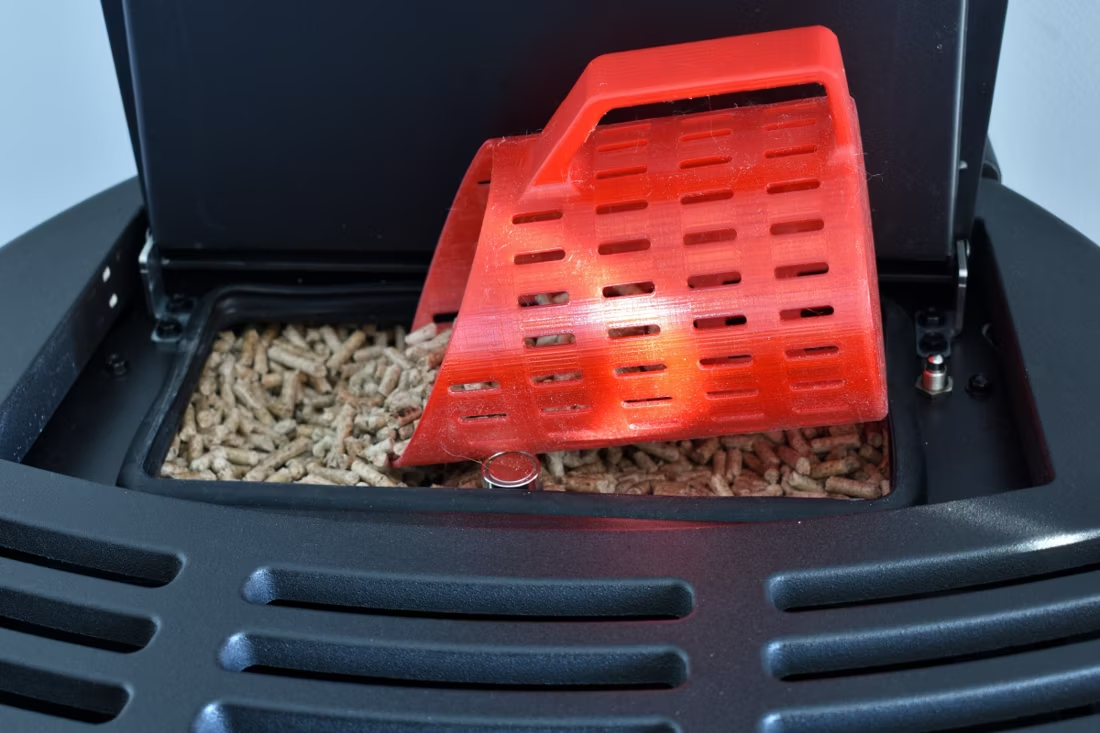
A clean pellet stove is a happy pellet stove. Plan on cleaning the burn pot about once a week when you're burning regularly—ash and clinkers gum up the air holes just like a pellet barbecue. Most pellet stove problems trace back to skipped cleaning that nobody explained up front. Some designs make it easy with a trapdoor burn pot: pull a lever and the gunk drops into the ash pan.
What do I measure to size a fireplace insert?
Four numbers tell you what fits: the front width, the front height, the back width, and the overall depth of your existing fireplace opening. Grab a tape measure, jot those down, and snap a photo of the wall—those two things do more to move your project forward than anything else you can do today.
Does a fireplace add value to my home?
On average, a fireplace adds back to the home about the same amount you spent installing it. Add the monthly savings from heating the rooms you actually use instead of the whole house—often hundreds of dollars a year—and the value case is strong before you even count what a fire does for how your family uses the room.
Can a fireplace actually lower my heating bill?
Yes—by creating a comfort zone. A furnace heats every square foot of the house just to warm the one room you're in; a gas fireplace on low burns roughly a sixth of the gas a typical furnace does. Set the furnace around 55–60 degrees as a baseline, then heat the rooms your family actually uses. Families who heat this way commonly save $20–$60 a month.
Pellet Brands Stocked Around Shoshone County
Manufacturers will point you to the nearest stocking dealer.
Find your pellet stove in Shoshone County.
Tell us about your home and we'll match you with a trusted local Shoshone County dealer and send you a free Project Guide & Parts List—the exact pellet stove or insert, vent kit, and installed plan for your space.export
Find Your Fireplace →