
Instant heat for Silver Valley winters.
Shoshone County endures winters as harsh as those in the coldest parts of the Rockies in the narrow canyons around Kellogg, Wallace, and Osburn. A properly vented gas fireplace or insert delivers steady warmth without the wood-hauling—matched with a local dealer who can actually get one installed here.
Every Project Starts From One of These Five Situations
Reliable heat for a valley that runs cold and narrow.
Shoshone County sits in Idaho's Panhandle, wedged into the steep river canyons of the Silver Valley—Wallace, Kellogg, Osburn, and Mullan all sit below towering ridgelines that trap cold air and hold winter longer than the surrounding region. With average winter lows around 22°F and climate zone 5B conditions similar to what you'd find in Bozeman, Montana, homes here need heat that doesn't depend on someone remembering to feed a stove before bed. A direct-vent gas fireplace or insert gives you that: flip a switch, get heat, no ash to haul out in the morning.
Natural gas infrastructure is limited through much of rural Shoshone County, so propane is the common fuel choice for most gas fireplace installs outside the immediate town cores—a local dealer will know which service lines run where on your street and size your tank or line accordingly. Either fuel path gets you the same benefit: consistent, on-demand heat that pairs well with a primary wood setup for backup, since this is also lodgepole pine and larch country where many households still keep a wood stove running through the coldest stretches.
Three steps. No salesperson until you're ready.
Tell us about your project
Your zip code, your situation, and the fuel you're leaning toward—or let the answers point you to one.
See what's actually available
The brands dealers within 100 miles genuinely carry—real options, never a catalog mirage.
Get your dealer & Project Guide
A trusted local dealer, plus the free Project Guide & Parts List that names every component of the job.
Frequently Asked Questions
How much does a gas fireplace installation cost in Shoshone County?
Expect a range similar to other mountain-canyon markets in the Idaho Panhandle—typically $4,000 to $10,000 depending on whether you're converting an existing masonry fireplace with a direct-vent insert (the lower end) or installing a new built-in unit with fresh gas line work and framing (the higher end). Homes on propane will have added cost if a new tank or line run is needed, particularly on the steeper lots common around Wallace and Mullan where terrain adds labor time. A local dealer will give you a firm number after seeing your specific venting path.
Is propane or natural gas more common for Shoshone County gas fireplaces?
Propane is the more practical answer for most of the county. Natural gas distribution is limited outside the denser parts of town, so the majority of gas fireplace installs in Kellogg, Wallace, Osburn, and the outlying areas run on propane, either from an existing household tank or a new tank set specifically for the fireplace. If your home already has propane for a furnace or water heater, adding a fireplace is usually a simple tie-in. A local installer will confirm what's actually running to your property before quoting anything.
Can I convert my existing wood fireplace to gas?
Yes, and it's a common upgrade in older Silver Valley homes, many of which were built with masonry fireplaces decades before gas inserts were an option. A direct-vent gas insert slides into the existing firebox and uses a stainless liner run through your existing chimney, so you keep the original masonry look while gaining real, controllable heat output. Cost typically lands in the $4,000 to $8,500 range locally depending on the insert and whether new gas line or propane tank work is required.
Will my gas fireplace still work if the power goes out?
Most will, which matters in a canyon county where winter storms and slides can knock out power for stretches at a time. Units with standing pilot or IPI ignition typically run on battery backup that kicks in automatically when the power drops—you just need to keep fresh batteries in the unit. Valor fireplaces take a different approach: the pilot's thermocouple generates its own electricity, so there's no battery to remember at all. Ask your local dealer about the ignition system on any model you're considering if outage resilience matters to you.
What's the difference between a gas fireplace, insert, and stove?
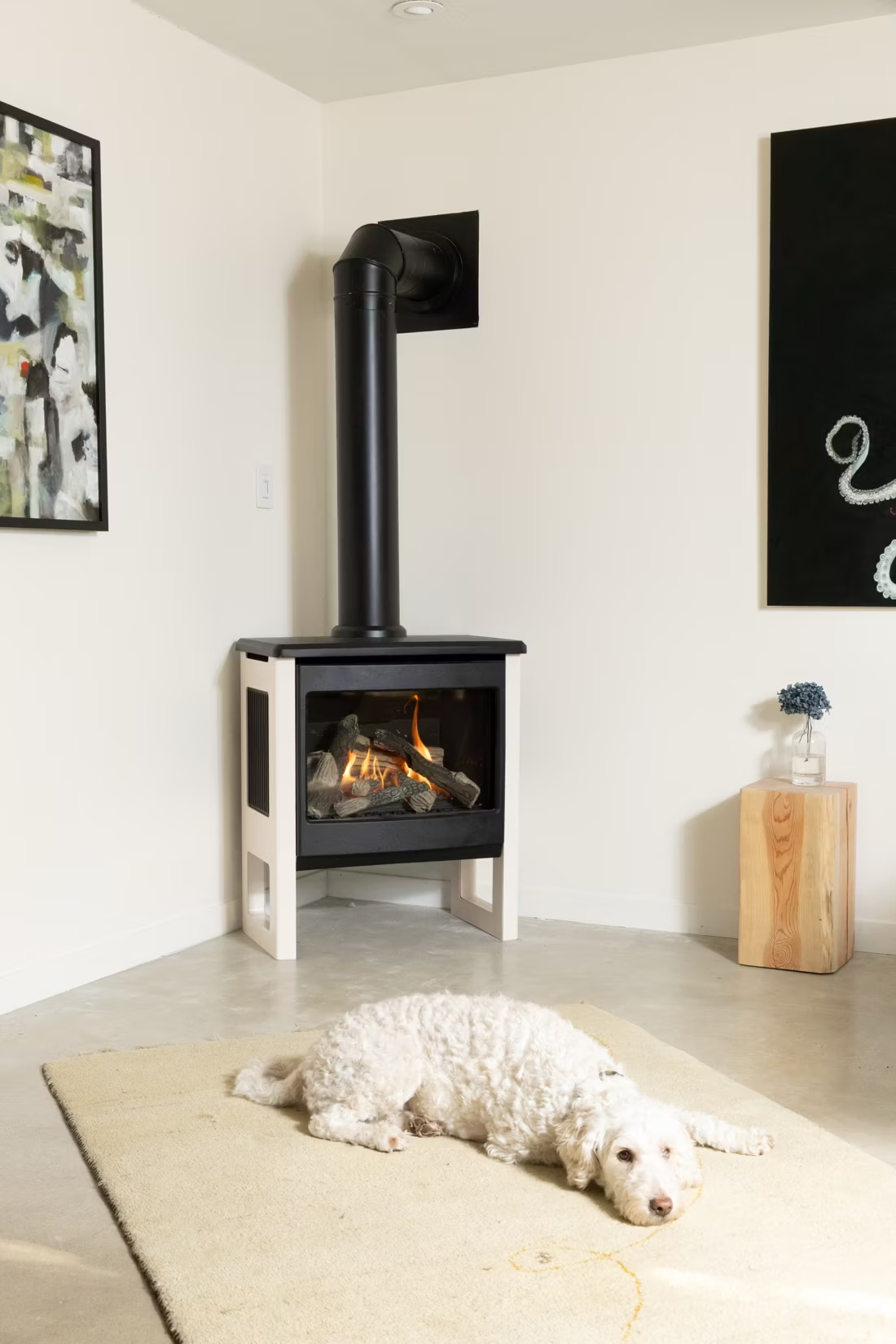
A gas fireplace is a built-in unit framed into a wall, typically chosen for new construction or a full remodel. A gas insert is sized to slide into an existing masonry firebox, which is the common route for older Shoshone County homes that already have a chimney. A gas stove is a freestanding cabinet-style unit that sits on the floor and vents through a wall or existing flue, often a good fit for smaller homes or additions where a full fireplace isn't practical. Most local retrofits in this county are inserts, simply because so much of the existing housing stock has a masonry fireplace already in place.
Do I need a permit for a gas fireplace installation in Shoshone County?
Yes—both a building permit and a gas line or propane connection permit are typically required for a new gas fireplace installation, and the gas-side work needs to be done by a licensed gas-fitter regardless of whether you're on natural gas or propane. Most established hearth dealers coordinate the permitting, venting, and gas-fitter scheduling as one package, which is one of the real advantages of using a trusted local installer instead of piecing the job together yourself.
Vented vs. vent-free gas fireplaces—which should I choose in Shoshone County?
Vented, direct-vent units are the standard recommendation for county homes, and for good reason: they draw combustion air from outside and exhaust it back outside through sealed venting, so nothing byproduct-related ends up in your living space. Vent-free units burn directly into the room and are legal in Idaho with proper sizing, but they add moisture and combustion byproducts to indoor air—a bigger consideration in tightly built, well-insulated mountain homes where fresh air exchange is already limited in winter. A direct-vent fireplace or insert is the safer, more universally recommended choice for this climate.
How often does a gas fireplace need servicing?
Plan on an annual inspection, ideally before the coldest months arrive. A technician checks the burner, pilot assembly, venting, and any gas connections, and cleans the glass and interior—a much lighter lift than sweeping a wood chimney, but still important for safety and efficiency. Expect to pay somewhere in the $150 to $250 range for a standard annual service call from a local gas appliance technician.
Should I get a gas fireplace or stick with wood in Shoshone County?
Many households in the Silver Valley end up with both. Wood remains a strong choice here given the abundant lodgepole pine, ponderosa pine, and larch available through Idaho Panhandle National Forests and BLM cutting permits (typically $5 to $20 per cord), plus wood's advantage of working without electricity during outages. Gas wins on convenience—no hauling, no ash, instant on-off control—and makes sense as the primary heat source in a main living area, with a wood stove kept elsewhere in the home for backup during extended winter storms or power loss. A local dealer can walk through both setups for your specific home.
Can I put a TV above my fireplace?
Yes—with an asterisk. Fireplaces are hot and TVs don't like heat. Either put a mantel between them to deflect rising warmth, or choose a fireplace with heat-management technology that creates a cool zone on the wall above—the wall stays around 125 degrees, barely warm, while the room still gets full heat. If you like clean lines and don't want a mantel, heat management is the answer.
What's the difference between an insert and a zero-clearance fireplace?
An insert is a fireplace that slides into a pre-existing wood-burning fireplace—if you don't have one, there's nothing to insert it into. A zero-clearance fireplace is built into a framed wall, which makes it the answer for remodels and new construction. Simple test: existing masonry fireplace means insert; blank or framed wall means zero-clearance.
How much should I budget for a fireplace?
For an average home—covering the fireplace, the vent pipe, and basic installation—a budget between $3,900 and $5,500 gives you a lot of options across wood, gas, and pellet. By the time you add finish work, gas line, and electrical, the average complete installation lands between $5,000 and $12,000 all-in. In a remodel or new build, a good rule is to put about 2.5% of the total project cost toward the fireplace.
Does a fireplace add value to my home?
On average, a fireplace adds back to the home about the same amount you spent installing it. Add the monthly savings from heating the rooms you actually use instead of the whole house—often hundreds of dollars a year—and the value case is strong before you even count what a fire does for how your family uses the room.
Find your gas fireplace in Shoshone County.
Tell us about your home and we'll match you with a trusted local dealer and send over a free Project Guide & Parts List—the exact parts, including the vent kit, for your Shoshone County gas fireplace project.
Find Your Fireplace →