
Steady, low-smoke heat for Lincoln County's high desert winters.
Consistent, low-maintenance heat for Shoshone, Richfield, Dietrich, and the rest of Lincoln County's high-desert winters. Find the right pellet stove or insert, and connect with a trusted local dealer.
Every Project Starts From One of These Five Situations
Consistent heat without the smoke.
Lincoln County sits on the Snake River Plain in south-central Idaho, a high-desert stretch of sagebrush country anchored by Shoshone, with Richfield and Dietrich rounding out the county's small population of roughly 2,490. Winters here run long and steady rather than brutally cold—climate zone 5B, average winter lows near 23°F, and a heating season with a load somewhat comparable to Bismarck, ND even though the daily lows aren't as extreme. Summers bring a different challenge: wildfire smoke drifting in from surrounding forestland is a recurring regional air quality concern, and it shapes how a lot of Lincoln County households think about their home heating equipment.
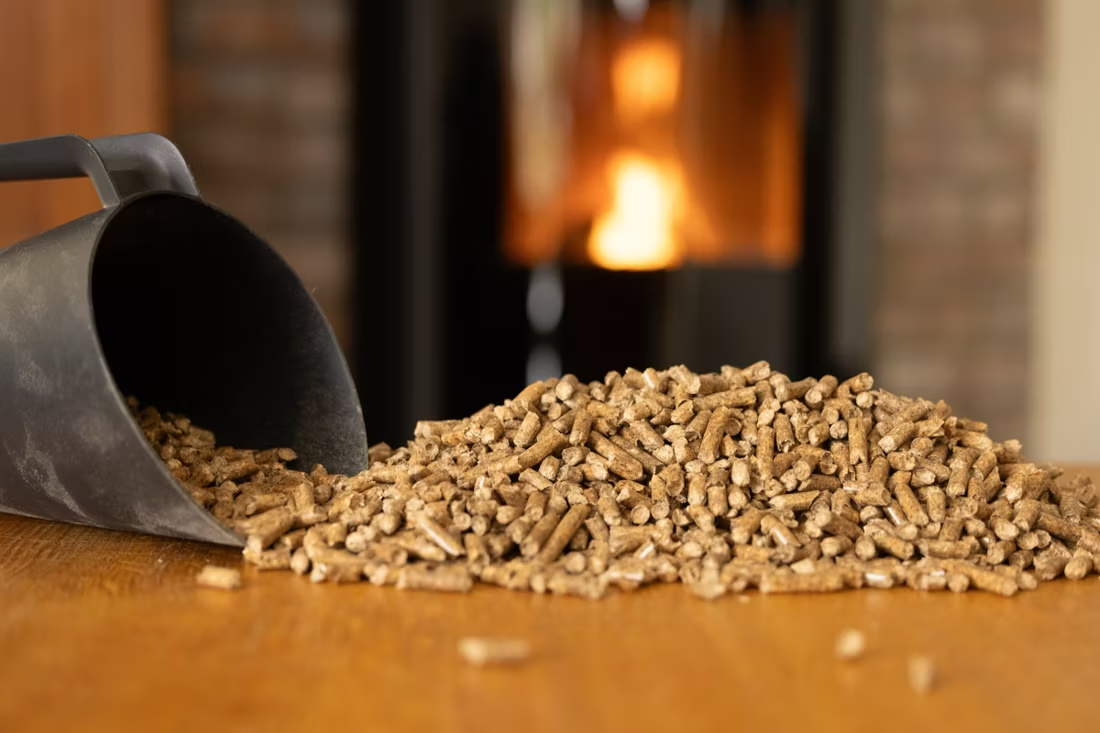
Pellet stoves and inserts are a natural fit for that combination. They burn compressed wood pellets—sourced regionally from brands like Bear Mountain, Lignetics, and Pacific Pellet—in a thermostatically controlled hopper that produces almost no visible smoke, a real advantage in a county where summer wildfire haze already strains air quality. Unlike a wood stove, there's no cutting, splitting, or hauling; unlike a furnace, a pellet stove keeps working through outages as long as you've got backup power for the auger and blower. For a county this size, with the nearest hearth showrooms typically a drive toward Twin Falls, running on bagged or bulk-delivered pellets instead of self-cut cordwood off Sawtooth National Forest or BLM land is one less logistical headache.
Three steps. No salesperson until you're ready.
Tell us about your project
Your zip code, your situation, and the fuel you're leaning toward—or let the answers point you to one.
See what's actually available
The brands dealers within 100 miles genuinely carry—real options, never a catalog mirage.
Get your dealer & Project Guide
A trusted local dealer, plus the free Project Guide & Parts List that names every component of the job.
Frequently Asked Questions
How much does a pellet stove installation cost in Lincoln County?
Most freestanding pellet stove installations in Lincoln County run in the neighborhood of $3,500 to $6,500, including the unit, a wall-thimble vent kit, and basic hearth pad work—a pellet insert going into an existing masonry fireplace typically lands a bit higher, closer to $4,500 to $7,500, once a stainless liner and venting adapter are factored in. Because Lincoln County doesn't have a hearth dealer within Shoshone or Richfield city limits, installers usually travel in from the Twin Falls or Jerome area, and that trip can add a modest travel charge to the final quote—worth asking about up front.
What size pellet stove do I need for my home?
Sizing depends on square footage, ceiling height, and how tight or leaky your home is—a common issue in Lincoln County's older farmhouses out toward Dietrich and Richfield. As a rough guide: a small stove handles up to about 1,000 sq ft, a mid-size unit covers 1,000 to 2,000 sq ft, and larger stoves can heat 2,000-plus sq ft of well-insulated space. With a long, steady heating season and winter lows averaging 23°F, most Lincoln County homes land in the mid-size range rather than needing the largest units sold—this isn't Anchorage-level cold, but it's a long, steady heating season that rewards a stove sized for sustained daily use rather than occasional supplemental warmth.
Where can I buy pellets in or near Lincoln County?
There isn't a big-box pellet retailer inside Lincoln County itself, so most residents pick up pellets in Twin Falls or Jerome, or arrange bulk delivery. Regional brands like Bear Mountain, Lignetics, and Pacific Pellet are the ones most commonly stocked at farm and hardware stores across southern Idaho, typically sold in 40-lb bags on pallets, with bulk-ton pricing running roughly $250 to $320 a ton depending on the brand and season. Buying a season's supply—usually 2 to 3 tons for an average Lincoln County home—before winter locks in pricing and avoids scrambling if a cold snap drives up regional demand.
Pellet stove vs. wood stove—which makes more sense in Lincoln County?
Wood is genuinely cheap here if you're willing to cut your own—Sawtooth National Forest permits run $5 to $20 per cord and BLM Twin Falls District permits run about $10 per cord, and lodgepole pine, ponderosa pine, Douglas fir, and larch are all available on public land within a reasonable drive. But that requires a truck, a chainsaw, storage space, and time during the May-through-October cutting season. Pellet stoves skip all of that: no permits, no splitting, no seasoning wood for a year before burning it, and much lower visible smoke output—which matters given how often wildfire smoke already affects air quality here in late summer. If convenience and clean-burning matter more to you than the lowest possible fuel cost, pellet is usually the better fit.
Do I need a permit to install a pellet stove in Lincoln County?
Yes—a building permit is required for a new pellet stove installation, whether it's a freestanding unit or an insert. In unincorporated parts of the county, that permit goes through the Lincoln County Building Department; if your home is within Shoshone city limits, check with the city office first since some jurisdictions route permits differently. Most hearth installers coming from the Twin Falls area handle the permit paperwork as part of the installation, so this typically isn't something you have to manage yourself—just confirm it's included in your quote.
What's the best pellet stove for Lincoln County's winters?
Look for a stove with a large enough hopper to get through a full overnight burn without needing a refill—with average winter lows around 23°F and a heating season that runs from roughly October through April, a hopper that holds 24-plus hours of fuel cuts down on middle-of-the-night reloading. Most units sold by dealers serving this part of Idaho are compatible with regional pellet brands like Bear Mountain, Lignetics, and Pacific Pellet, so fuel availability isn't usually the limiting factor—it's more about matching hopper size and BTU output to your square footage. A local installer can size this correctly during an in-home visit rather than guessing off a chart.
How often does a pellet stove need maintenance?
Plan on emptying the ash pan every few days during regular use, a deeper cleaning of the burn pot and heat exchanger tubes every couple of weeks, and a full professional service once a year—typically before the heating season starts in early fall. Pellet stoves produce far less creosote than wood stoves, so they don't need the same kind of annual chimney sweep, but the auger, exhaust fan, and gaskets do wear over time and benefit from a yearly inspection. Given the limited number of hearth service providers within driving distance of Lincoln County, it's worth scheduling that fall service early—appointment slots fill up fast once the weather turns.
Will my pellet stove work during a power outage?
Not without a backup power source—pellet stoves rely on electricity to run the auger that feeds fuel and the blower that distributes heat, so a standard unit will shut down in an outage. For rural parts of Lincoln County where winter storms can knock out power for a stretch, a lot of homeowners pair their pellet stove with a small battery backup or a portable generator sized to run the auger and fan (usually a modest 300 to 600 watt draw). If backup heat during outages is a priority and you don't want to manage a generator, a wood stove or a propane-fueled unit that doesn't depend on electronics may be worth considering as a second heat source.
Pellet stove vs. electric fireplace—which is right for my home?
Electric units are simpler—plug in, no fuel storage, no venting required—and they're a reasonable option for supplemental heat in a single room or as an ambiance-focused addition to a living space. But electric heaters top out at a fixed wattage and generally can't match the sustained heat output of a pellet stove across a whole living area, and running one as a primary heat source through a Lincoln County winter with a long, steady heating season can get expensive on electricity alone. Pellet stoves cost more to install upfront but deliver more heat per dollar over a full heating season for homes that need real warmth, not just a supplemental unit in one room.
Why is a fireplace insert so efficient?
An insert does two things: it seals the chimney completely, so you stop losing air you already paid to heat, and it radiates warmth into the room through the firebox and glass. Most add a heat-exchange fan that pulls cool room air underneath, wraps it around the hot firebox, and pushes it back out warm. Your home is more efficient before you've even lit the first fire.
What's the difference between an insert and a zero-clearance fireplace?
An insert is a fireplace that slides into a pre-existing wood-burning fireplace—if you don't have one, there's nothing to insert it into. A zero-clearance fireplace is built into a framed wall, which makes it the answer for remodels and new construction. Simple test: existing masonry fireplace means insert; blank or framed wall means zero-clearance.
Does a fireplace add value to my home?
On average, a fireplace adds back to the home about the same amount you spent installing it. Add the monthly savings from heating the rooms you actually use instead of the whole house—often hundreds of dollars a year—and the value case is strong before you even count what a fire does for how your family uses the room.
What is an in-home preview and do I need one?
It's a visit where a hearth professional measures your space, confirms the model you picked actually works in your home, and walks the specs—framing, gas line, venting, finish work—before anything is ordered. Some details you just can't know until you see the house. Never make a down payment without one; it's the single most-skipped step that burns buyers.
Pellet Brands Stocked Around Lincoln County
Manufacturers will point you to the nearest stocking dealer.
Find your pellet stove in Lincoln County.
Tell us about your home and heating goals, and we'll match you with a trusted local dealer serving Lincoln County—plus a free Project Guide & Parts List with the exact parts, including your vent kit, for your pellet stove project.
Find Your Fireplace →