
Keep Your Family Warm and Safe—No Matter What
From Burley to Albion to the ranches along the Raft River, wood heat has always made sense here. Get matched with a trusted local dealer who knows what actually works in this climate.
Every Project Starts From One of These Five Situations
A cold, dry climate built for wood heat.
Cassia County sits in south-central Idaho, stretching from the irrigated farmland around Burley up into the timbered slopes of the Albion Mountains and the Sawtooth National Forest. With a long, cold heating season and average winter lows around 21°F, the county sees a heating season comparable to Bismarck, ND—long, cold, and dry. Wood has been a practical heat source here for generations, both as a way to cut propane and electric bills and as backup heat when winter storms take out power on outlying ranches and farmsteads.
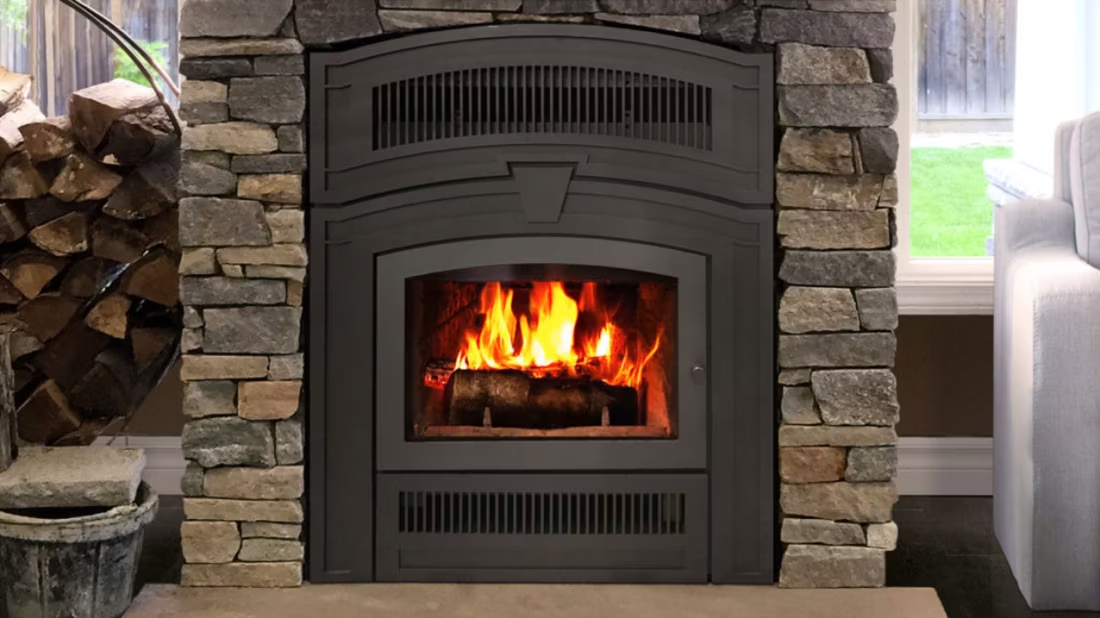
Public timber access through the Sawtooth National Forest and BLM Twin Falls District keeps firewood affordable for anyone willing to cut their own—lodgepole pine, ponderosa pine, Douglas fir, and larch are all common species harvested locally, each burning a little differently in terms of heat output and coaling. A correctly sized wood stove or insert, installed by someone who understands local elevation and construction, delivers steady radiant heat through the coldest stretches of January and February and keeps a home warm even when the grid doesn't cooperate.
Firewood Cutting Permits Near Cassia County
Three steps. No salesperson until you're ready.
Tell us about your project
Your zip code, your situation, and the fuel you're leaning toward—or let the answers point you to one.
See what's actually available
The brands dealers within 100 miles genuinely carry—real options, never a catalog mirage.
Get your dealer & Project Guide
A trusted local dealer, plus the free Project Guide & Parts List that names every component of the job.
Frequently Asked Questions
How much does a wood stove installation cost in Cassia County?
Most wood stove installations in Cassia County run in the $4,000 to $9,000 range, depending on the stove itself, whether a new chimney chase needs to be built, and hearth pad requirements for code clearance. Homes with an existing masonry fireplace converting to an insert tend to land on the lower end since the chimney is already in place. New construction or homes without any existing flue—common on some of the county's newer rural builds—run higher once Class A pipe and roof penetration are factored in. A local dealer will give you a firm number after seeing your home and chimney situation.
What size wood stove do I need for my home?
Sizing depends on square footage, ceiling height, insulation, and whether the stove is your primary heat or a supplement to propane or electric. As a rough guide for Cassia County's cold, dry climate: small stoves suit a single room, shop, or cabin under 1,000 square feet; medium stoves handle 1,000 to 2,000 square feet of main living space; larger stoves are needed for well-insulated homes above 2,000 square feet or for homes at higher elevation near Albion and the Sawtooth foothills, where wind exposure and colder overnight temperatures push heat demand up. An undersized stove will run flat-out and still fall short on the coldest nights; an oversized one will smolder and build creosote. A local dealer can size your space correctly during an in-home visit.
Where can I find certified wood stove installers near Burley and Albion?
Look for installers carrying NFI (National Fireplace Institute) or CSIA (Chimney Safety Institute of America) certification—both signal real training in wood-burning venting and clearance requirements, not just retail sales. A trusted local dealer serving Cassia County will typically cover Burley, Oakley, Albion, and the surrounding farm and ranch country, with a modest travel charge for the more remote stretches toward the Raft River Valley. Installation is usually bundled with the stove purchase from the same company, which keeps warranty coverage and code compliance simple. Steer clear of general handyman installs for a wood-burning appliance—incorrect clearances and venting are the leading cause of chimney fires.
What's the difference between a wood stove and a wood insert?
A wood stove is a freestanding unit sitting on its own hearth pad, vented up through a chimney, and can go almost anywhere in a home with the right clearances. A wood insert is built to slide into an existing masonry fireplace opening, turning a drafty, inefficient old hearth into a sealed, high-output heat source using the chimney you already have. For older farmhouses in Cassia County with an existing brick fireplace, an insert is usually the more cost-effective route. Homes without an existing fireplace—including many newer builds around Burley—are better suited to a freestanding stove.
Do I need a permit to install a wood stove in Cassia County?
Yes—new wood stove installations require a building permit, and the unit itself needs to meet current EPA emissions standards. Most local dealers handle the permitting paperwork as part of the installation, so it's rarely something homeowners have to manage themselves. You don't need a permit to simply burn wood in an already-permitted stove, but Cassia County does see periodic wildfire smoke concerns in late summer and early fall, which is worth keeping in mind if you're planning outdoor burning around the same time as stove installation work.
What's the best wood stove for Cassia County's climate?
With a long, cold winter season and regular sub-zero overnight temperatures during cold snaps, a catalytic stove from a brand like Blaze King is worth a serious look for homes using wood as primary heat—these can hold a fire 20+ hours on a single load, which matters when you're not eager to reload at 2 a.m. in January. Non-catalytic stoves from Pacific Energy or Lopi are a solid, lower-maintenance option for supplemental heat or smaller spaces. Homes higher up toward Albion and the Sawtooth foothills should size up slightly given colder average temperatures and more wind exposure. A local dealer can match a specific model to your home's elevation and square footage.
How often should my chimney be inspected and cleaned?
CSIA guidelines call for an annual inspection on any wood-burning appliance, and Cassia County is no exception. For a stove getting regular winter use, plan on a full sweep and inspection each late summer or early fall, before the burning season starts. Homes using wood as a primary heat source and burning through several cords a winter may need a mid-season check if creosote builds up faster than expected. This is especially worth staying on top of for ranch properties farther from town, where emergency response time runs longer if something does go wrong.
Where can I get firewood or a cutting permit in Cassia County?
Firewood cutting permits for Cassia County are available through the Sawtooth National Forest, running roughly $5 to $20 per cord depending on the season, and through the BLM Twin Falls District at around $10 per cord. Cutting season generally runs April or May through October. Common species harvested locally include lodgepole pine, ponderosa pine, Douglas fir, and larch—each with different burn characteristics, with Douglas fir and lodgepole running hotter and longer than pine. For homeowners who'd rather not cut their own, local firewood sellers around Burley typically sell by the cord, with pricing that varies by species and season.
Wood stove vs. pellet stove—which is right for my Cassia County home?
Wood stoves burn cordwood, work with zero electricity—a real advantage during winter storm outages on outlying ranches—and pair naturally with low-cost Forest Service and BLM cutting permits already available in the county. Pellet stoves burn compressed wood pellets from regional brands like Bear Mountain or Lignetics, are simpler to operate day-to-day, and produce less ash, but they need electricity to run the auger and blower, so they're not a fallback during a power outage. For rural Cassia County properties where outages are a real possibility, wood tends to be the more resilient choice. For in-town homes around Burley with steady power and a preference for convenience, pellet is worth considering. A local dealer carries both and can walk through the tradeoffs for your specific home.
What's the difference between an insert and a zero-clearance fireplace?
An insert is a fireplace that slides into a pre-existing wood-burning fireplace—if you don't have one, there's nothing to insert it into. A zero-clearance fireplace is built into a framed wall, which makes it the answer for remodels and new construction. Simple test: existing masonry fireplace means insert; blank or framed wall means zero-clearance.
Why is my open fireplace making my house colder?
Open fireplaces suck—literally. As the fire burns, it consumes air your furnace already paid to heat and pulls it out through the chimney, so the house is actually colder after the fire goes out than before you lit it. An insert fixes this: it seals the chimney, puts fixed glass across the front, and turns that hole in your house into a real heat source.
What is an in-home preview and do I need one?
It's a visit where a hearth professional measures your space, confirms the model you picked actually works in your home, and walks the specs—framing, gas line, venting, finish work—before anything is ordered. Some details you just can't know until you see the house. Never make a down payment without one; it's the single most-skipped step that burns buyers.
Can a fireplace actually lower my heating bill?
Yes—by creating a comfort zone. A furnace heats every square foot of the house just to warm the one room you're in; a gas fireplace on low burns roughly a sixth of the gas a typical furnace does. Set the furnace around 55–60 degrees as a baseline, then heat the rooms your family actually uses. Families who heat this way commonly save $20–$60 a month.
Stove and Fireplace Dealers in Cassia County
Get matched with a wood dealer in Cassia County.
Tell us about your home and heating goals, and we'll match you with a trusted local dealer and send over a free Project Guide & Parts List—the exact parts, vent kit included, for your wood heat project.
Find Your Fireplace →