
Clean, flip-of-a-switch heat for Cassia County homes.
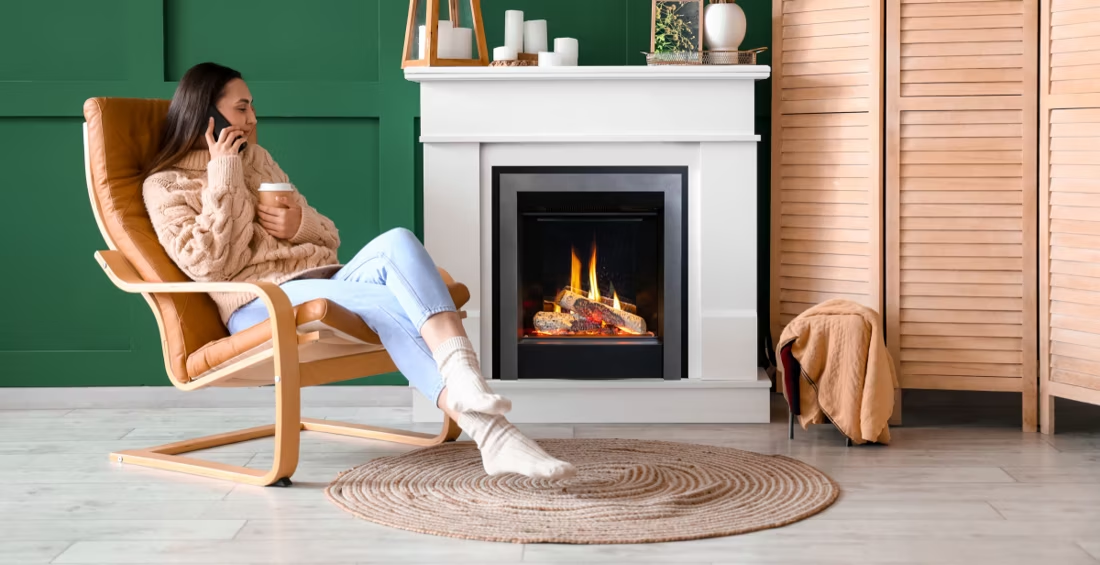
From Burley and Declo out to Oakley, Albion, and Malta, electric fireplaces give Cassia County homes instant zone heat and real flame-look ambiance with no chimney and no smoke. Find the right unit and connect with a trusted local dealer.
Every Project Starts From One of These Five Situations
Simple heat that works anywhere the power runs.
Cassia County stretches from the Snake River Plain around Burley and Declo up into the Albion Mountains and south toward the City of Rocks National Reserve near Almo, with elevations climbing from roughly 4,200 feet in the valley to over 9,000 feet at Mount Harrison. Winter lows average around 21°F and the county has a cold-climate winter heating load in the same range as Bozeman, Montana. That kind of winter, spread across a county of just 13,468 people, means most homes lean on a primary system like a propane furnace or heat pump and add electric fireplaces or inserts where they actually spend time: the living room, a finished basement, a bedroom that never quite warms up.
Electric is also the practical choice where a masonry chimney or gas line isn't in the picture, which describes a lot of rural Cassia County housing stock. A plug-in insert or built-in unit installs in an afternoon with no venting, no clearance-to-combustibles headache, and no wood to split or haul. It's also a smart pick during the wildfire smoke advisories that hit south-central Idaho most summers and falls—you get real flame ambiance without adding another source of particulates to an already smoky sky. Whether you're in town in Burley or Oakley, or out toward Almo and the rock formations at City of Rocks, the right electric unit is sized to your room, not your whole house.
Three steps. No salesperson until you're ready.
Tell us about your project
Your zip code, your situation, and the fuel you're leaning toward—or let the answers point you to one.
See what's actually available
The brands dealers within 100 miles genuinely carry—real options, never a catalog mirage.
Get your dealer & Project Guide
A trusted local dealer, plus the free Project Guide & Parts List that names every component of the job.
Frequently Asked Questions
How much does an electric fireplace installation cost in Cassia County?
Plug-in freestanding electric fireplaces and stoves typically run $300 to $900 installed in Cassia County, since they just need a standard 120V outlet and no permit. Built-in electric fireplaces or inserts that require a dedicated circuit, in-wall wiring, or custom framing run higher, often $800 to $1,800, once a licensed electrician's time is factored in. Rural installs out toward Malta, Albion, or Almo sometimes carry a small travel charge from electricians and installers based in Burley. A local dealer will quote a firm number after seeing your wall, your electrical panel, and the unit you want.
Do I need a permit to install an electric fireplace in Cassia County?
It depends on the unit. A plug-in electric fireplace or stove that runs off an existing outlet generally doesn't require a permit—you're not altering wiring or the structure. A built-in electric fireplace that needs a new dedicated circuit, a wall cutout, or a mantel surround typically does require an electrical and building permit through the Cassia County Building Department for homes outside city limits, or the applicable city office in Burley or Oakley. Most local dealers coordinate the electrical permit as part of the installation so you're not chasing it down yourself.
Will my electric fireplace work during a power outage?
No—electric fireplaces and inserts stop working the moment the power goes out, since the heating element and flame effect both run on household current. That matters in Cassia County, where rural lines served by Raft River Rural Electric Cooperative and Idaho Power can go down during winter storms, especially at elevation near Albion and the Cassia Range. If backup heat during outages is a priority for your household, pair an electric unit for everyday convenience with a wood or propane appliance for the nights the grid goes down.
What's the difference between an electric fireplace, insert, and stove?
An electric fireplace is typically a built-in or wall-mounted unit designed to look like a traditional fireplace, often set into a mantel surround. An electric insert is sized to slide into an existing masonry fireplace opening, turning an old wood-burning firebox into a clean, no-venting heat source—a common upgrade for older farmhouses around Declo and Oakley that have a fireplace nobody wants to feed wood into anymore. An electric stove is a freestanding cabinet-style unit that mimics a wood stove's look and can go almost anywhere near an outlet. For most Cassia County homes, the insert makes sense if you already have a fireplace opening; the stove or built-in fits better in a room that never had one.
How does wildfire smoke factor into the choice of electric heat here?
South-central Idaho, including Cassia County, sees periodic wildfire smoke advisories in late summer and fall from regional fires in the Sawtooth and surrounding forests. Unlike wood-burning appliances, electric fireplaces don't add any smoke or particulates to the air, so they're a reasonable choice for households that want fire ambiance without a second emissions source during a smoky season, or for anyone who's sensitive to wood smoke but still wants the look and feel of a fireplace.
Are electric fireplaces enough heat for Cassia County winters?
On their own, generally no. Most electric fireplaces and inserts put out somewhere between 4,000 and 9,000 BTUs—enough to comfortably heat a single room, but not a whole house through a winter that averages 21°F lows and carries a winter heating load in the same range as Bozeman, Montana. In Cassia County, electric units work best as zone heat: warming the room you're actually sitting in while your furnace, heat pump, or baseboard system handles the rest of the house. If you're trying to heat a whole cabin or an older home near Almo or Albion with no other heat source, a wood stove or larger propane appliance is usually a better fit.
What brands of electric fireplaces are worth considering?
Dimplex, Napoleon, and Amantii are widely available, well-regarded brands that cover everything from basic plug-in inserts to large linear built-ins with realistic flame effects. Feature differences that matter for Cassia County homes include heater wattage (look for units rated for at least 4,000 BTUs if you want real supplemental heat, not just ambiance), thermostat control, and flame-effect quality if the unit will run flame-only through the summer wildfire smoke season without the heater on. A local dealer can walk you through options in person rather than guessing from online photos.
Electric vs. wood—which makes more sense for my Cassia County home?
Wood is the better choice if you want backup heat during power outages, have access to Sawtooth National Forest or BLM Twin Falls District cutting permits (running $5 to $20 per cord), and don't mind hauling and splitting lodgepole pine, ponderosa pine, douglas fir, or larch. Electric is the better choice if you want zero maintenance, no smoke during wildfire season, and heat that turns on and off with a remote. A lot of Cassia County households end up with both: wood or propane as the workhorse system, and an electric fireplace or insert in a room where convenience matters more than raw BTUs.
How much does it cost to run an electric fireplace in Cassia County?
Most electric fireplaces draw around 1,500 watts on the heater setting. At typical Idaho Power and Raft River Rural Electric Cooperative residential rates, running the heater for a full evening (roughly 4 hours) costs somewhere in the range of 60 cents to a dollar, depending on your specific rate schedule. Running the flame effect alone, without the heater, uses only a small fraction of that. For most households using an electric fireplace as supplemental evening heat in a single room, the added cost on a monthly power bill is modest compared to running a whole-house furnace longer.
Can I put a TV above my fireplace?
Yes—with an asterisk. Fireplaces are hot and TVs don't like heat. Either put a mantel between them to deflect rising warmth, or choose a fireplace with heat-management technology that creates a cool zone on the wall above—the wall stays around 125 degrees, barely warm, while the room still gets full heat. If you like clean lines and don't want a mantel, heat management is the answer.
Does an electric fireplace need a vent or chimney?
No—that's its superpower. An electric fireplace needs a wall and an outlet, period. No vent pipe, no gas line, no clearances to design around, which is why it works in bedrooms, offices, apartments, and walls where venting a gas or wood unit would be impractical or impossible. Installation is typically the simplest and least expensive of any fireplace type.
Does a fireplace add value to my home?
On average, a fireplace adds back to the home about the same amount you spent installing it. Add the monthly savings from heating the rooms you actually use instead of the whole house—often hundreds of dollars a year—and the value case is strong before you even count what a fire does for how your family uses the room.
Should the dealer who sells my fireplace also install it?
Ideally, yes. A fireplace project involves vent pipe, gas line, electrical, and often tile or stone. Hire three or four separate trades and you own the liability and the game of telephone between them. One company selling and installing means one accountable party, start to finish—ask about factory training, on-time completion records, and what happens if an inspection fails.
Stove and Fireplace Dealers in Cassia County
Find your electric fireplace in Cassia County.
Tell us a bit about your home and we'll put together a free Project Guide & Parts List—the right electric fireplace, insert, or stove for your space, plus a match with a trusted local dealer who can install it correctly.
Find Your Fireplace →