
Clean-Burning Heat for Portneuf Valley Winters.
With a winter heating load comparable to Helena, Montana and winter lows near 21°F, Bannock County homes need real heat—and pellet stoves deliver it without adding to the smoke that settles into the valley on inversion days. Find the right unit and get matched with a trusted local dealer.
Every Project Starts From One of These Five Situations
Efficient heat that keeps the air clear.
Bannock County sits in the Portneuf River Valley, boxed in by the Bannock and Portneuf ranges, with Pocatello's elevation running around 4,460 feet. That geography is exactly what creates the county's winter inversion problem—cold, still air settles into the valley floor and traps particulate matter close to the ground, which is why Bannock County carries a non-attainment designation for air quality. Add wildfire smoke drifting in from surrounding forests most late summers, and it's a valley where what comes out of your chimney actually matters to your neighbors, not just your heating bill. Winters here run comparable to Helena, Montana in total heating load, with average winter lows around 21°F stretching from October well into April.
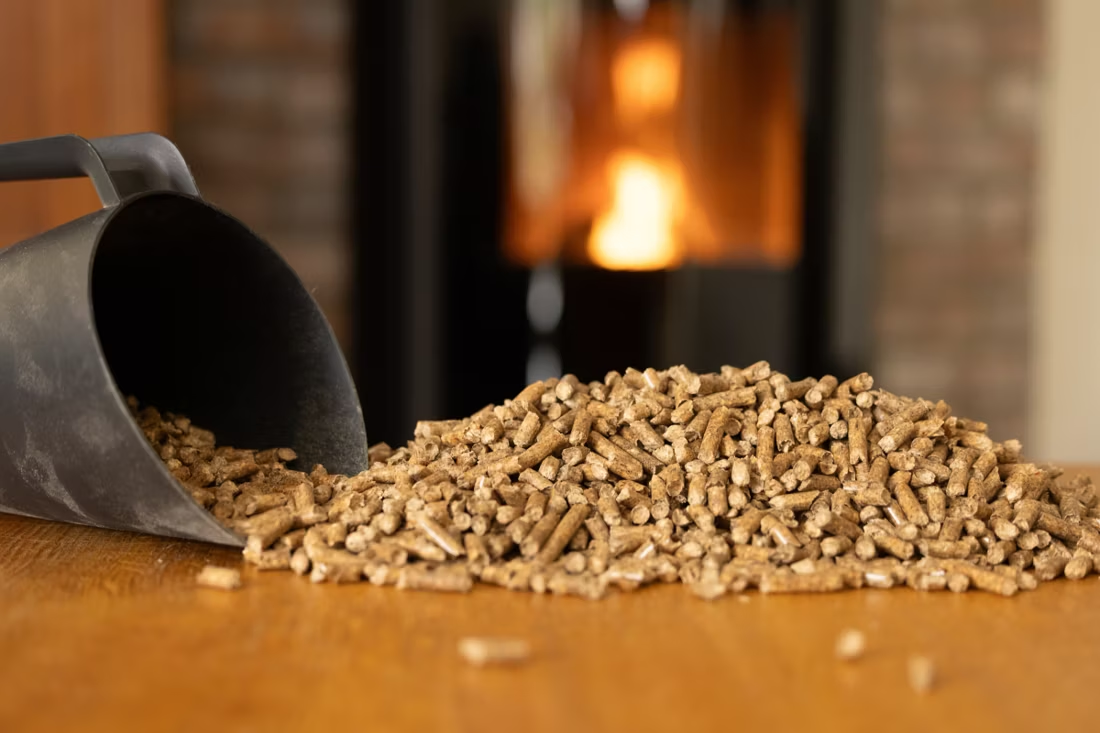
Pellet stoves burn compressed sawdust and wood waste far more completely than cordwood, which means dramatically lower particulate output on the exact kind of still, cold nights when inversions trap smoke over Pocatello and Chubbuck. Regional pellet supply is solid—Bear Mountain, Lignetics, and Pacific Pellet all distribute through the Mountain West—so fuel availability isn't the constraint it can be in more remote counties. Pellet stoves also skip the Forest Service cutting permit process altogether; there's no need to haul lodgepole pine or Douglas fir out of the Caribou-Targhee National Forest when your fuel arrives in 40-pound bags. What a pellet stove does need is correct sizing, proper wall venting, and a hopper capacity that matches how you actually plan to use it—which is where a trusted local dealer earns their keep instead of a big-box return counter.
Three steps. No salesperson until you're ready.
Tell us about your project
Your zip code, your situation, and the fuel you're leaning toward—or let the answers point you to one.
See what's actually available
The brands dealers within 100 miles genuinely carry—real options, never a catalog mirage.
Get your dealer & Project Guide
A trusted local dealer, plus the free Project Guide & Parts List that names every component of the job.
Frequently Asked Questions
How much does a pellet stove installation cost in Bannock County?
Most pellet stove and insert installations in Bannock County run in the $3,500 to $6,500 range, depending on whether you're installing a freestanding stove with a simple wall-through vent kit or converting an existing masonry fireplace into a pellet insert. Because pellet units vent through a side wall rather than requiring a full masonry chimney, installs are typically less expensive than a comparable wood stove project—the main cost drivers are the unit itself, hearth pad requirements, and whether a dedicated electrical outlet needs to be added for the auger and blower motor. Homes in outlying areas like Inkom, Arimo, or Downey may see a modest travel charge added by installers based near Pocatello.
What size pellet stove do I need for a Bannock County home?
Sizing depends on square footage, insulation, and whether the stove is your primary or supplemental heat source. Given the county's long, cold winter, most valley-floor homes in Pocatello and Chubbuck do well with a mid-size unit rated for 1,200 to 2,000 square feet, while larger or less-insulated homes—including older farmhouses around McCammon or Lava Hot Springs—often need a larger-hopper unit to keep up through a full inversion-season cold snap. Homes at slightly higher elevation in the foothills tend to need more heating capacity per square foot than the same house on the valley floor. A local dealer can size this correctly during an in-home visit; guessing on size either leaves you cold on the worst nights or running the stove at an inefficient low burn most of the season.
Where can I find a certified pellet stove installer near me?
Look for installers with NFI (National Fireplace Institute) certification, which covers proper venting, clearance-to-combustible requirements, and electrical hookup for pellet appliances specifically. Certified local dealers serving Bannock County generally cover Pocatello, Chubbuck, and the surrounding communities, with a modest travel charge for jobs further out toward McCammon, Downey, or Arimo. Because pellet stoves depend on a properly sized vent run and a reliable power connection, this isn't a project for a general handyman—improper venting is the leading cause of pellet stove performance complaints, not to mention a code issue if the county building department later inspects the work.
What's the difference between a pellet stove and a pellet insert?
A pellet stove is a freestanding unit that sits on its own hearth pad and vents through an exterior wall—it can go almost anywhere in a room with the right clearances. A pellet insert is built to slide into an existing masonry fireplace opening, converting an old wood-burning fireplace into a sealed, high-efficiency pellet unit while using the existing chimney chase (with a proper liner) for venting. For Bannock County homes that already have a masonry fireplace, an insert is often the cleaner upgrade—it keeps the existing look while dramatically cutting particulate output compared to open wood burning. Homes without an existing fireplace typically go with a freestanding stove instead.
Do I need a permit to install a pellet stove in Bannock County?
Yes—new pellet stove and insert installations require a building permit through the Bannock County Building Department, or through the City of Pocatello if the home is within city limits. Most local dealers handle the permit paperwork as part of the installation, so it typically isn't something you have to manage yourself. One advantage over wood heat: there's no Forest Service cutting permit involved, since pellet fuel is purchased by the bag or ton rather than harvested from the Caribou-Targhee National Forest or BLM Idaho Falls District land. Pellet stoves also tend to fare better than uncertified wood stoves when the county issues air quality advisories during winter inversions, since they burn more completely and produce far less visible smoke.
What's the best pellet stove for Bannock County's climate?
For a valley that regularly sees winter lows around 21°F and a full heating season running past 6,000 degree days, look for a pellet stove with a large hopper capacity—60 to 80 pounds—so you're not refilling every few hours during the coldest stretches. Brands like Harman, Lopi, and Quadra-Fire all make units with reliable auger feed systems and thermostatic control suited to sustained cold-weather use. If you're in a non-attainment-sensitive area of the valley, an EPA-certified model with a high combustion efficiency rating will also produce less visible exhaust on still, cold days when inversions are most likely to trap smoke near the ground. A local dealer can match hopper size and BTU output to your specific square footage and elevation.
How often does a pellet stove need to be serviced?
Plan on a professional inspection and deep clean once a year, ideally before the heating season starts in the fall. Beyond the annual service, pellet stoves need more hands-on upkeep than gas units—the ash pot should be emptied every few days during regular use, the burn pot and glass need periodic cleaning to keep combustion efficient, and the exhaust venting should be checked for creosote and ash buildup at least once a season. Because pellet stoves rely on an electric auger and blower, it's also worth having a technician check those components annually, since a failing motor is the most common reason a pellet stove starts underperforming mid-winter.
Where can I buy pellet fuel in Bannock County?
Bear Mountain, Lignetics, and Pacific Pellet all distribute pellet fuel through retailers serving the Pocatello and Chubbuck area, and most hearth dealers who sell pellet stoves also stock or special-order fuel. Pricing in the Mountain West typically runs in the $220 to $300 per ton range depending on brand and softwood versus hardwood blend, usually sold by the ton (fifty 40-pound bags) or by the individual bag for smaller needs. Buying a season's supply in late summer, before demand picks up ahead of the first cold snap, is usually the best way to avoid picked-over stock at local retailers.
Pellet stove vs. wood stove—which is right for my Bannock County home?
Wood stoves work without electricity, burn locally available lodgepole pine, ponderosa pine, Douglas fir, and larch cut under Forest Service and BLM permits (Caribou-Targhee National Forest runs $5 to $20 per cord, BLM Idaho Falls District around $10 per cord), and give you the most authentic fire experience. Pellet stoves require power to run the auger and blower—meaning they won't function as backup heat during an outage—but they burn far more cleanly and completely, which matters directly in a county with a non-attainment designation and regular winter inversions trapping smoke over the valley. For homes prioritizing air quality, hands-off operation, and consistent output, pellet usually wins. For rural properties where power outages are more common and self-sufficiency matters, wood often makes more sense. Some Bannock County homeowners run both—wood for backup and ambiance, pellet for daily convenience.
How often does a pellet stove need cleaning?
A clean pellet stove is a happy pellet stove. Plan on cleaning the burn pot about once a week when you're burning regularly—ash and clinkers gum up the air holes just like a pellet barbecue. Most pellet stove problems trace back to skipped cleaning that nobody explained up front. Some designs make it easy with a trapdoor burn pot: pull a lever and the gunk drops into the ash pan.
Why is my open fireplace making my house colder?
Open fireplaces suck—literally. As the fire burns, it consumes air your furnace already paid to heat and pulls it out through the chimney, so the house is actually colder after the fire goes out than before you lit it. An insert fixes this: it seals the chimney, puts fixed glass across the front, and turns that hole in your house into a real heat source.
How much should I budget for a fireplace?
For an average home—covering the fireplace, the vent pipe, and basic installation—a budget between $3,900 and $5,500 gives you a lot of options across wood, gas, and pellet. By the time you add finish work, gas line, and electrical, the average complete installation lands between $5,000 and $12,000 all-in. In a remodel or new build, a good rule is to put about 2.5% of the total project cost toward the fireplace.
Can a fireplace actually lower my heating bill?
Yes—by creating a comfort zone. A furnace heats every square foot of the house just to warm the one room you're in; a gas fireplace on low burns roughly a sixth of the gas a typical furnace does. Set the furnace around 55–60 degrees as a baseline, then heat the rooms your family actually uses. Families who heat this way commonly save $20–$60 a month.
Stove and Fireplace Dealers in Bannock County
Pellet Brands Stocked Around Bannock County
Manufacturers will point you to the nearest stocking dealer.
Find your pellet stove in Bannock County.
Tell us about your home and heating goals, and we'll match you with a trusted local dealer and a free Project Guide & Parts List—a plan for your Bannock County pellet project with the exact parts, including the vent kit, and a dealer who can actually install it.
Find Your Fireplace →