
Instant Heat, Zero Smoke, Any Room in Bannock County.
No chimney, no venting, and no air quality advisory to worry about—electric heat for Pocatello, Chubbuck, and the rest of the Portneuf Valley. Find the right unit and connect with a trusted local dealer.
Every Project Starts From One of These Five Situations
The cleanest option when the valley air turns bad.
Pocatello sits in the Portneuf River Valley at roughly 4,500 feet, ringed by mountains that trap cold air and smoke through the winter—Bannock County is a designated non-attainment area for fine particulates, and inversions can stack up stagnant, hazy air for days at a time. Winters run cold enough to matter: an average of 6,130 heating degree days and winter lows around 21°F put the county in a climate zone comparable to Bozeman, Montana. That combination—real cold plus real air quality pressure—is exactly where electric fireplaces earn their place. They add zone heat and ambiance without putting another gram of particulate into an airshed that's already working overtime in January.
Electric options here range from simple plug-in inserts that drop into an existing fireplace opening to zero-clearance wall-mount units and freestanding stoves that work in apartments and rentals near Idaho State University where a chimney or gas line isn't an option. Most plug-in units need nothing more than a standard outlet. Built-in units that call for a dedicated circuit typically need an electrical permit through the Bannock County Building & Planning Division, or the City of Pocatello Building Division if you're inside city limits. Either way, the appliance runs on power from Rocky Mountain Power, the utility serving most of the county—no fuel deliveries, no wood to split, and no burn-ban notice to check before you light it.
Three steps. No salesperson until you're ready.
Tell us about your project
Your zip code, your situation, and the fuel you're leaning toward—or let the answers point you to one.
See what's actually available
The brands dealers within 100 miles genuinely carry—real options, never a catalog mirage.
Get your dealer & Project Guide
A trusted local dealer, plus the free Project Guide & Parts List that names every component of the job.
Frequently Asked Questions
How much does an electric fireplace installation cost in Bannock County?
A basic plug-in electric insert or freestanding stove typically runs $300 to $1,200 installed, since most units simply drop into an existing opening and plug into a standard outlet—no permit, no electrician required. A built-in wall-mount or fully recessed unit that needs a new dedicated 20-amp circuit runs higher, usually $1,500 to $3,500, once you factor in the electrician's time to run the circuit and a local dealer to handle the trim-out. Because there's no chimney, no venting, and no gas line involved, electric installs in Bannock County are consistently the least expensive of the four fuel types.
Can an electric fireplace actually heat a room in Bannock County's winters?
For supplemental heat, yes. Most electric fireplaces top out around 1,500 watts and 5,000 to 9,000 BTU—enough to noticeably warm a bedroom, home office, or finished basement, especially with the door closed. But with average winter lows around 21°F and cold snaps that drop well below that, an electric unit isn't going to carry a whole house the way a furnace or heat pump does. The honest way to think about it locally: electric fireplaces are a zone-heating and ambiance upgrade layered on top of your existing central system, not a replacement for it—particularly in older, less-insulated homes around Pocatello's historic neighborhoods.
Do I need a permit to install an electric fireplace in Bannock County?
Most plug-in electric inserts and freestanding stoves don't require a permit since they use a standard outlet and involve no structural or electrical modification. If you're installing a built-in or wall-mount unit that requires a new dedicated circuit, an electrical permit is typically needed—through the Bannock County Building & Planning Division for unincorporated areas, or the City of Pocatello Building Division if the property is within city limits. A local dealer or licensed electrician handling the circuit work can usually confirm what's needed for your specific address before the job starts.
How does electric heat compare to wood during a winter inversion?
This is one of the more practical reasons electric fireplaces have caught on in the Portneuf Valley. Bannock County's non-attainment status means winter inversions can trigger voluntary or mandatory wood-burning curtailment on the worst air days, which leaves wood stove owners unable to burn even when it's the coldest. Electric units aren't affected by any of that—they run the same on a red-air-quality day as they do on a clear one. That said, wood still has a place here: local cutting permits through the Caribou-Targhee National Forest and BLM's Idaho Falls District make lodgepole pine, ponderosa pine, Douglas fir, and larch inexpensive to gather for those who want a wood stove as their primary heat source and are willing to work around curtailment days.
Electric vs. gas fireplace—which makes more sense for my Bannock County home?
Gas delivers more heat output and can serve as genuine supplemental warmth during a cold snap, but it requires a gas line, venting, and a larger installation budget. Electric skips all of that—no gas line, no venting, no combustion byproducts—which makes it the practical choice for condos, apartments near Idaho State University, and rental units where running new gas service isn't realistic or allowed. For a primary residence with existing gas service, gas usually wins on heat output; for anywhere gas access is limited or the goal is simple, low-cost ambiance, electric is the easier path.
What's the difference between an electric insert, electric stove, and wall-mount unit?
An electric insert is built to slide into an existing fireplace opening—masonry or zero-clearance—and is the most common upgrade for homeowners with an old, rarely used wood-burning fireplace. An electric stove is a freestanding cabinet-style unit that sits on the floor and mimics a traditional wood stove's look, popular in homes without an existing fireplace opening. A wall-mount or fully recessed unit is installed flush into a wall like a piece of built-in cabinetry or a linear feature above a mantel, and is common in newer construction or remodels around Chubbuck and Pocatello's newer subdivisions. All three plug into standard household current unless you choose a larger built-in model that calls for a dedicated circuit.
What does it cost to run an electric fireplace in Bannock County?
Electric fireplaces are inexpensive to operate compared to central heat. A typical 1,500-watt unit run for several hours a day on Rocky Mountain Power's residential rate adds roughly $10 to $25 a month to a utility bill during heavy winter use, depending on how often it runs and current rates. Most units also let you run the flame effect without the heater engaged, so you can keep the ambiance going year-round for a fraction of a cent per hour without adding any heating cost at all—a detail a lot of homeowners appreciate once the Portneuf Valley thaws out.
Will an electric fireplace work during a power outage?
No—electric fireplaces require household power to run the heater, blower, and flame effect, so they shut down the moment the power goes out. That's an important distinction for Bannock County homeowners weighing fuel types: if backup heat during a winter storm-related outage is a priority, a wood stove or a battery-backed gas unit will keep working when a purely electric fireplace won't. Electric is best understood as a convenience and ambiance upgrade for normal day-to-day use, not an emergency heat source.
What's the best electric fireplace for a Bannock County home?
For most homes here, look at units from established brands like Dimplex, Napoleon, or Touchstone with the full 1,500-watt heater option rather than a decorative-only model—that gives you real supplemental warmth on the cold mornings the Portneuf Valley is known for, not just a glowing screen. Homes near Idaho State University or in older Pocatello neighborhoods with limited electrical capacity should have a dealer confirm whether the panel can support a dedicated circuit before committing to a larger built-in unit. A local dealer can walk through wattage, room size, and your home's existing wiring to land on the right fit.
Can I put a TV above my fireplace?
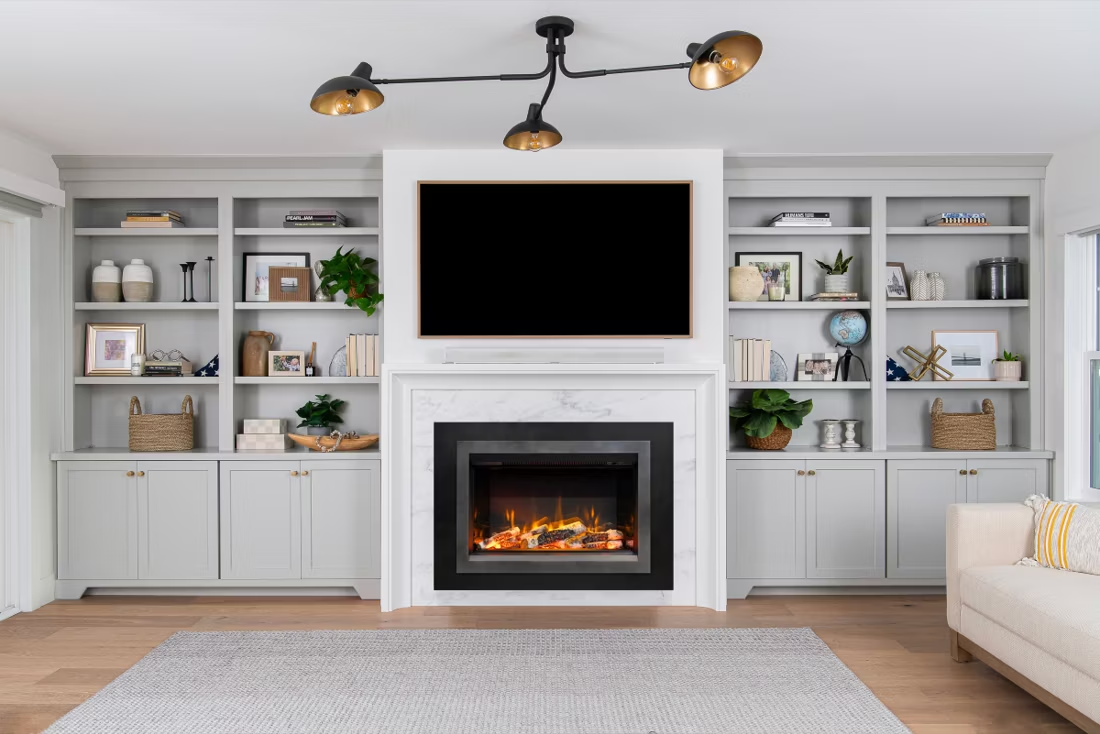
Yes—with an asterisk. Fireplaces are hot and TVs don't like heat. Either put a mantel between them to deflect rising warmth, or choose a fireplace with heat-management technology that creates a cool zone on the wall above—the wall stays around 125 degrees, barely warm, while the room still gets full heat. If you like clean lines and don't want a mantel, heat management is the answer.
Do electric fireplaces actually produce heat?
Yes—most put out around 4,800–5,000 BTUs from a standard outlet, which comfortably warms a bedroom, office, or den as a comfort-zone heater. What they won't do is carry a whole house the way wood, gas, or pellet can. Think of electric as ambiance-first with honest supplemental heat: flames on with no heat in July, flames plus warmth in January.
Can a fireplace actually lower my heating bill?
Yes—by creating a comfort zone. A furnace heats every square foot of the house just to warm the one room you're in; a gas fireplace on low burns roughly a sixth of the gas a typical furnace does. Set the furnace around 55–60 degrees as a baseline, then heat the rooms your family actually uses. Families who heat this way commonly save $20–$60 a month.
Can I install a fireplace myself?
If you're putting a fire in your house on purpose, it's best to work with an expert. Unless you're genuinely experienced in framing, gas line, vent pipe, and the national code on clearances to combustibles, have a professional do it—and ideally the same company that sells you the fireplace, so warranty, service, and liability all live under one roof.
Stove and Fireplace Dealers in Bannock County
Find your electric fireplace in Bannock County.
Tell us a bit about your home and we'll match you with the right electric fireplace, insert, or stove—plus a free Project Guide & Parts List and an introduction to a trusted local dealer who can get it installed correctly.
Find Your Fireplace →