
Warmth without the wood smoke, wired in an afternoon.
Zero-emission zone heat for Pocatello's cold, inversion-prone winters—no chimney, no gas line, no burn restrictions. Find the right unit and connect with a trusted local dealer.
Every Project Starts From One of These Five Situations
Clean heat for a valley that traps its own winter air.
Pocatello sits at 4,462 feet in the Portneuf Valley, a climate zone 6B pocket with a long, demanding heating season comparable to places like Bozeman, MT, and average winter lows around 21°F. Bannock County is also a designated non-attainment area for particulate matter, and winter inversions regularly trap wood smoke and wildfire haze against the valley floor. An electric fireplace or insert sidesteps that entirely—no combustion, no particulate emissions, and no risk of getting caught by a wood-burning curtailment advisory during a bad-air stretch in January.
Idaho Power serves Pocatello at a residential rate of about 11.76 cents per kWh, which is below the national average and reflects the region's heavy reliance on hydroelectric generation along the Snake River system. That makes electric fireplaces a genuinely low-cost option for zone heating—a bedroom, a finished basement, a home office, or an ISU-area rental without an existing chimney or gas service. In a 6B climate this cold, an electric fireplace isn't meant to replace your furnace or heat pump, but it's an efficient, install-anywhere way to add real supplemental warmth and ambiance to the rooms you actually live in.
Three steps. No salesperson until you're ready.
Tell us about your project
Your zip code, your situation, and the fuel you're leaning toward—or let the answers point you to one.
See what's actually available
The brands dealers within 100 miles genuinely carry—real options, never a catalog mirage.
Get your dealer & Project Guide
A trusted local dealer, plus the free Project Guide & Parts List that names every component of the job.
Frequently Asked Questions
How much does an electric fireplace installation cost in Pocatello?
Plug-in freestanding or wall-mount electric fireplaces typically run $300-$900 installed, since they just need a standard outlet and mounting hardware. Built-in electric inserts or linear units set into a wall or existing masonry surround run higher—usually $1,500-$3,500—once you factor in framing, a dedicated 20-amp circuit, and a licensed electrician if the unit needs to be hardwired rather than plugged in. Compare that to the $4,500-plus most wood or gas installs run in Pocatello, and electric is by far the lowest-cost path to a fireplace feature, especially in a home without an existing chimney or gas line.
Do I need a permit to install an electric fireplace in Pocatello?
Usually only if the unit requires new electrical work. A plug-in unit on an existing outlet typically needs no permit at all. A built-in insert that requires a new dedicated circuit or hardwiring should go through a licensed electrician, and that electrical work is generally permitted through the City of Pocatello or Bannock County building department depending on where you live. Unlike wood stoves or gas fireplaces, there's no combustion appliance permit, no venting inspection, and no EPA certification requirement—electric is the simplest fuel type to get through code review.
Does an electric fireplace help during Pocatello's winter inversions?
Yes, and this is one of the more practical local arguments for electric heat. Bannock County sits in an EPA non-attainment area for particulate matter, and the Portneuf Valley traps cold air—and wood smoke—during winter inversions that can last for days. Wood stoves can be subject to voluntary or mandatory burning curtailments on the worst air-quality days. An electric fireplace produces zero emissions, so it keeps running regardless of the local air advisory—useful if you want heat in a bedroom or den without worrying about a burn ban.
What will an electric fireplace actually cost to run on my Idaho Power bill?
Most electric fireplace heaters draw around 1,500 watts on the heat setting. At Idaho Power's residential rate of roughly 11.76 cents per kWh, that works out to about 18 cents an hour to run on high heat—roughly $4.20 for a full 24 hours, though most households run the heater a few hours a day rather than continuously. Running the unit on flame-only mode (no heat) draws only a small fraction of that, often under 100 watts, so you can enjoy the visual effect nearly for free during shoulder-season months when you don't need supplemental warmth.
Can an electric fireplace actually heat my house in a Pocatello winter?
Not as a whole-home solution. With average winter lows around 21°F and a long, demanding heating season comparable to places like Bozeman, MT, Pocatello's climate zone 6B winters put real demand on a home's primary heating system, and a typical electric fireplace tops out around 5,000-5,200 BTUs—enough to noticeably warm a bedroom, office, or open den, but not a whole house. Think of it as zone heating: it lets you turn down the thermostat and heat the room you're actually using, which can meaningfully lower your furnace or heat pump runtime, but it's a supplement to central heat, not a replacement for it.
What's the difference between an electric insert, a wall-mount unit, and a freestanding electric stove?
An electric insert is built to slide into an existing masonry fireplace opening, which works well for Pocatello's older brick homes near downtown and the ISU campus that already have a fireplace shell but no working chimney liner. A wall-mount or linear electric fireplace hangs flush on a wall like a large TV and suits newer construction or remodels where you want a modern, built-in look. A freestanding electric stove mimics a traditional wood stove's shape and can go almost anywhere with an outlet—a good fit for renters, condos, or additions where you can't modify the wall or fireplace opening at all.
Can I put an electric fireplace in a home or apartment without a chimney or gas line?
Yes—that's actually where electric fireplaces do their best work. Many Pocatello apartments, condos, and newer subdivisions were never built with a masonry chimney or a natural gas hookup to the living room. An electric unit needs nothing more than a wall outlet or a single dedicated circuit, so it's the only fireplace option that works in a rental, a manufactured home, or a room on an upper floor where running venting or gas line would be impractical or against a lease.
How much maintenance does an electric fireplace need?
Very little compared to wood or gas. There's no annual chimney sweep, no gas line inspection, and no creosote to manage. Maintenance is mostly dusting the unit, occasionally cleaning the glass front, and replacing the LED light strip or heating element after several years of regular use—most LED sets are rated for 20,000-plus hours. Local hearth retailers that carry electric lines can also service or replace a blower motor if the fan gets noisy, but most owners never need a service call at all.
Electric vs. gas—which makes more sense for my Pocatello home?
Gas delivers real heat output—enough to serve as meaningful supplemental or even primary zone heat during Pocatello's cold 6B winters—but it requires either a natural gas line or a propane tank, plus venting and a $4,500-plus installed cost in most cases. Electric delivers a lower, gentler heat output, essentially no install cost by comparison, and the flexibility to go anywhere with an outlet, but it won't keep a room warm the way a gas insert will on the coldest nights. If you have an existing fireplace or gas service and want serious heat, gas is usually the better fit. If you want an affordable, code-simple ambiance feature for a bedroom, rental, or room without gas access, electric is the practical choice.
Can I put a TV above my fireplace?
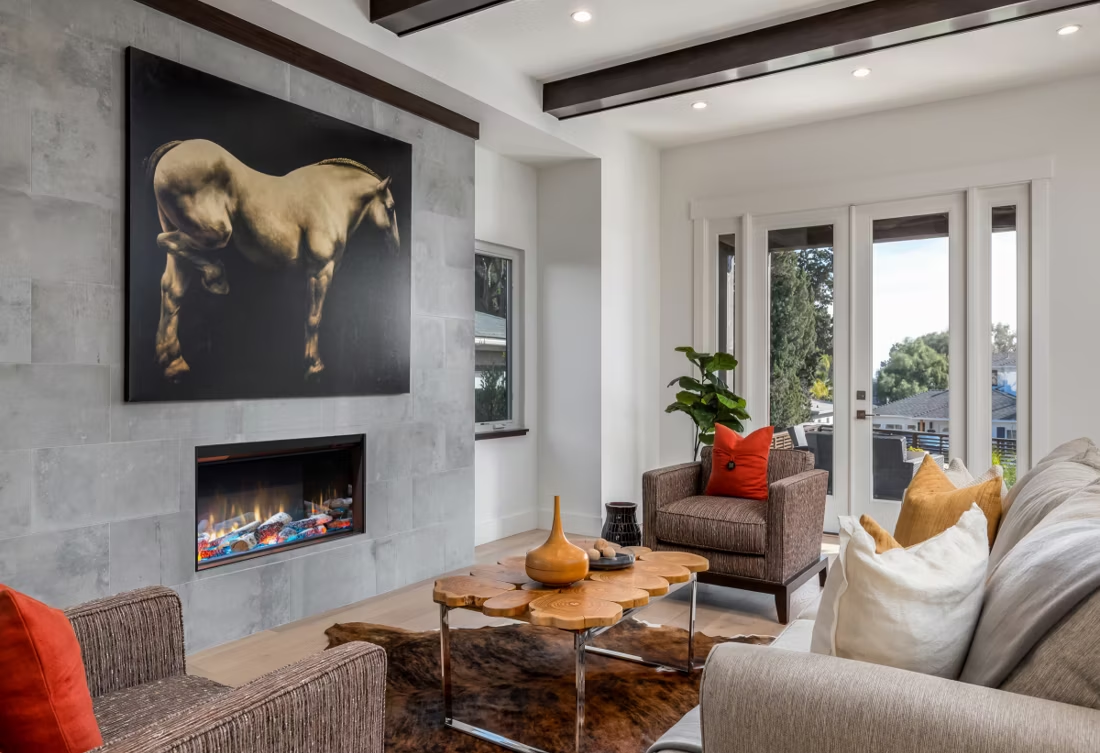
Yes—with an asterisk. Fireplaces are hot and TVs don't like heat. Either put a mantel between them to deflect rising warmth, or choose a fireplace with heat-management technology that creates a cool zone on the wall above—the wall stays around 125 degrees, barely warm, while the room still gets full heat. If you like clean lines and don't want a mantel, heat management is the answer.
Do electric fireplaces actually produce heat?
Yes—most put out around 4,800–5,000 BTUs from a standard outlet, which comfortably warms a bedroom, office, or den as a comfort-zone heater. What they won't do is carry a whole house the way wood, gas, or pellet can. Think of electric as ambiance-first with honest supplemental heat: flames on with no heat in July, flames plus warmth in January.
How much should I budget for a fireplace?
For an average home—covering the fireplace, the vent pipe, and basic installation—a budget between $3,900 and $5,500 gives you a lot of options across wood, gas, and pellet. By the time you add finish work, gas line, and electrical, the average complete installation lands between $5,000 and $12,000 all-in. In a remodel or new build, a good rule is to put about 2.5% of the total project cost toward the fireplace.
Does a fireplace add value to my home?
On average, a fireplace adds back to the home about the same amount you spent installing it. Add the monthly savings from heating the rooms you actually use instead of the whole house—often hundreds of dollars a year—and the value case is strong before you even count what a fire does for how your family uses the room.
Nearby Dealers
Hearth shops serving Pocatello and the surrounding area.
Electric Service in Pocatello
An electric fireplace's heater draws about 1,500 watts—pennies per hour at local rates.
Idaho Power Co
Find your electric fireplace in Pocatello.
Tell us a bit about your home and we'll put together a free Project Guide & Parts List for your electric fireplace project in Pocatello, plus match you with a trusted local dealer who can size, wire, and install it correctly.
Find Your Fireplace →