
Steady Heat for Adams County's Long Mountain Winters.
From Council to New Meadows to Cambridge, Adams County's long winters call for heat that's clean, consistent, and doesn't ask much of you. Find the right pellet stove or insert and get matched with a trusted local dealer.
Every Project Starts From One of These Five Situations
Consistent, low-smoke heat for a wildfire-aware county.
Adams County sits in Idaho's West Central Mountains, where valley towns like Council, New Meadows, and Cambridge sit around 3,000 feet along the Weiser River while the surrounding Payette National Forest and Seven Devils country climb past 8,000 feet toward Hells Canyon. Climate zone 6B puts this county among the colder heating climates in the Lower 48—winters here run long and heavy, closer in severity to Helena, Montana than to most of the Idaho valley towns people picture. With a population under 1,000 spread thin across a lot of mountain and timber ground, most homes here are used to handling their own heat, and firewood from lodgepole pine, ponderosa pine, Douglas fir, and larch has always been close at hand.
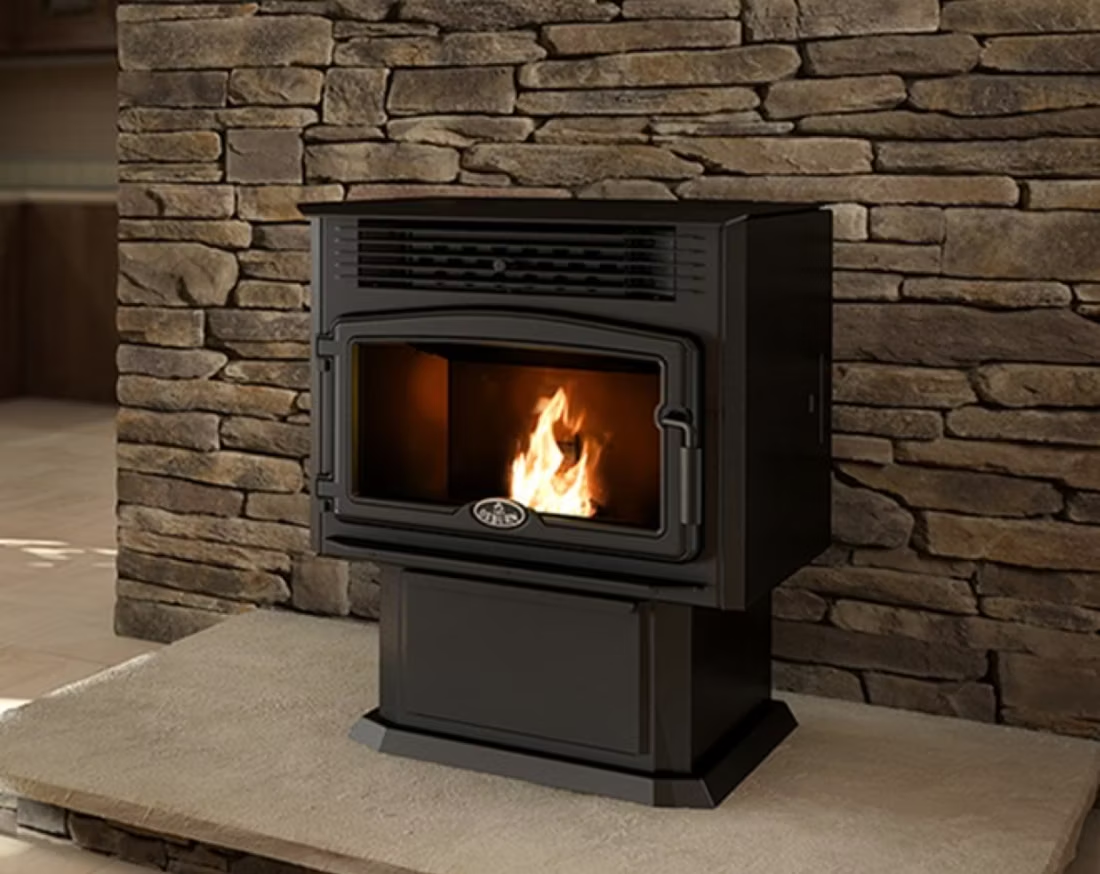
Pellet appliances have become a practical alternative to cordwood for a lot of Adams County households—not a replacement for the county's wood-burning tradition, but a cleaner, more hands-off option for people who want thermostat-controlled heat without splitting and stacking. Regional pellet brands like Bear Mountain, Lignetics, and Pacific Pellet are widely stocked at hearth retailers serving this part of Idaho, and their pellets are made largely from the same pine, fir, and larch mill residue that grows in the county's own forests. The county's air quality concern is wildfire smoke, which is mostly a summer and fall event when fires burn in the surrounding national forest—pellet stoves don't add to that problem the way an older, uncertified wood stove can during shoulder-season burning. Because Adams County is remote, with the nearest larger retail centers in McCall, Weiser, or Boise over an hour away, getting matched with a dealer who actually knows the mountain roads and travels this territory regularly matters more here than in a bigger market.
Three steps. No salesperson until you're ready.
Tell us about your project
Your zip code, your situation, and the fuel you're leaning toward—or let the answers point you to one.
See what's actually available
The brands dealers within 100 miles genuinely carry—real options, never a catalog mirage.
Get your dealer & Project Guide
A trusted local dealer, plus the free Project Guide & Parts List that names every component of the job.
Frequently Asked Questions
How much does a pellet stove installation cost in Adams County?
Pellet stove and insert installations in this part of Idaho typically run in the range of $3,000 to $7,500, depending on the unit, whether it's a freestanding stove or an insert going into an existing masonry fireplace, and how much venting work is involved. Because Adams County is sparsely populated and the nearest hearth dealers are often based in McCall, Weiser, or the Boise area, expect a modest travel charge added to installs in more remote parts of the county like Indian Valley or up toward Bear or Council Mountain. A local dealer will give you a firm number after seeing your home, chimney or venting situation, and electrical access for the unit.
What size pellet stove do I need for a home in Adams County?
Sizing depends on square footage, ceiling height, insulation, and how much of your heating load the stove needs to carry. Given the cold, high-elevation reality of climate zone 6B, most homes in Council, New Meadows, or Cambridge do better sizing up rather than sizing down—a stove rated for a home a size smaller might struggle to keep pace on the coldest nights of a long mountain winter. Homes higher up in the Seven Devils foothills or exposed to wind along the Weiser River valley should size even more conservatively. A local dealer will walk your home and size the unit for free rather than relying on a generic square-footage chart.
Where can I find a certified pellet stove installer near me in Adams County?
Because Adams County's population is under 1,000, there isn't a large local hearth retail presence—most installers who serve Council, New Meadows, and Cambridge are based out of McCall, Weiser, or the Boise metro and travel into the county for jobs. Look for installers with NFI (National Fireplace Institute) certification, since pellet appliance venting and electrical hookup still require the same code compliance as any other solid-fuel appliance. A trusted dealer who already covers this stretch of west-central Idaho will know the local building department's expectations and won't be guessing at travel logistics on delivery day.
What's the difference between a pellet stove and a pellet insert?
A pellet stove is a freestanding appliance that sits on its own hearth pad and vents through a wall or roof—it can go almost anywhere in a home with the right clearances. A pellet insert is built to slide into an existing masonry fireplace opening, which is a common upgrade for older Adams County farmhouses and cabins that already have a wood-burning fireplace but want cleaner, more efficient heat without tearing out the existing hearth. If you've got an existing fireplace, an insert is usually the more cost-effective path; if you're heating a room or building without one, a freestanding stove is the more flexible option.
Do I need a permit to install a pellet stove in Adams County?
Yes—a building permit is generally required for a new pellet stove or insert installation, whether you're in Council, New Meadows, Cambridge, or unincorporated parts of the county, since the work involves venting through a wall or roof and often new electrical for the unit's auger and blower. Most established local dealers handle the permitting as part of the installation, which is one more reason to route the project through a trusted installer rather than a handyman install. Check with the Adams County building department before starting any DIY work.
What's the best pellet stove for Adams County's climate?
For a climate zone 6B county with long, cold winters, look for a pellet stove with a large hopper capacity so you're not refilling every few hours overnight, and confirm the BTU output is enough to cover your actual square footage rather than a best-case number. Brands commonly available through regional dealers—including units compatible with Bear Mountain, Lignetics, and Pacific Pellet fuel—offer models built for sustained, cold-weather use. Because winter storms can close mountain passes and knock out power in this part of Idaho, ask your dealer about battery backup options for the auger and blower, since pellet appliances stop running without electricity.
How often does a pellet stove need to be serviced?
Plan on an annual professional service before burning season starts, along with regular homeowner maintenance during the winter—emptying the ash pan, cleaning the burn pot, and vacuuming the hopper and auger area every couple of weeks during heavy use. A yearly service from a qualified technician covers the exhaust fan, gaskets, and venting, which matters in a remote county like Adams where a mid-winter breakdown can mean a longer wait for a technician to make the drive out from McCall or Boise.
Where can I buy pellets in Adams County?
Regional brands like Bear Mountain, Lignetics, and Pacific Pellet are the pellets most commonly stocked by hearth dealers and hardware stores serving this part of west-central Idaho, sold in standard 40-pound bags. Given how remote Council, New Meadows, and Cambridge are, and how mountain passes can close during heavy winter storms, most local pellet stove owners buy their season's supply early in the fall rather than restocking bag by bag through the winter. Buying a ton or more at once, when a dealer can deliver it, is typically the more economical route than repeated small purchases.
Pellet stove vs. wood stove—which makes more sense in Adams County?
Wood is deeply rooted in Adams County—lodgepole pine, ponderosa pine, Douglas fir, and larch are all abundant in the surrounding Payette National Forest, and a lot of longtime residents already cut and split their own firewood. Wood stoves also keep working without electricity, which matters when winter storms take out power in the mountains. Pellet stoves trade that self-sufficiency for convenience and a cleaner burn—no splitting, no ash-heavy fires, and more consistent heat output—but they need electricity to run, so a power outage means no heat unless you've got a battery backup or generator. For a primary residence with reliable power, pellet is often the easier day-to-day choice; for a cabin or a household that wants heat no matter what the grid is doing, wood remains the more resilient option. Many Adams County homes end up with both.
What's the difference between an insert and a zero-clearance fireplace?
An insert is a fireplace that slides into a pre-existing wood-burning fireplace—if you don't have one, there's nothing to insert it into. A zero-clearance fireplace is built into a framed wall, which makes it the answer for remodels and new construction. Simple test: existing masonry fireplace means insert; blank or framed wall means zero-clearance.
Why is a fireplace insert so efficient?
An insert does two things: it seals the chimney completely, so you stop losing air you already paid to heat, and it radiates warmth into the room through the firebox and glass. Most add a heat-exchange fan that pulls cool room air underneath, wraps it around the hot firebox, and pushes it back out warm. Your home is more efficient before you've even lit the first fire.
What is an in-home preview and do I need one?
It's a visit where a hearth professional measures your space, confirms the model you picked actually works in your home, and walks the specs—framing, gas line, venting, finish work—before anything is ordered. Some details you just can't know until you see the house. Never make a down payment without one; it's the single most-skipped step that burns buyers.
Can a fireplace actually lower my heating bill?
Yes—by creating a comfort zone. A furnace heats every square foot of the house just to warm the one room you're in; a gas fireplace on low burns roughly a sixth of the gas a typical furnace does. Set the furnace around 55–60 degrees as a baseline, then heat the rooms your family actually uses. Families who heat this way commonly save $20–$60 a month.
Pellet Brands Stocked Around Adams County
Manufacturers will point you to the nearest stocking dealer.
Find your pellet stove in Adams County.
Tell us a bit about your home in Adams County and we'll put together a free Project Guide & Parts List—the right pellet stove or insert, the vent kit it needs, and a trusted local dealer who can install it.
Find Your Fireplace →