
Heating a small mountain county with a very big winter.
Wood, gas, pellet, and electric fireplace resources for New Meadows, Council, and the rural stretches of Adams County. Find the fuel that fits your home and get matched with a local hearth retailer who actually services this area.
Every Project Starts From One of These Five Situations
Climate Zone 6B heating in one of Idaho's least-populated counties.
Adams County sits in west-central Idaho's Zone 6B climate, closer in feel to Bozeman, Montana than to Boise despite being under 100 miles from the state capital. With under 1,000 residents spread across nearly 1,400 square miles, most homes here are on acreage, off municipal gas lines, and surrounded by lodgepole pine, ponderosa pine, Douglas fir, and larch—the species that stock most woodsheds in this county. Long, cold winters and thin rural infrastructure mean heating choices matter more here than in denser counties; a stove that can't hold a fire overnight, or a dealer three hours away, is a real problem, not an inconvenience.
What you'll find on this hub: hearth retailers, service technicians, and fuel suppliers covering both incorporated towns—New Meadows and Council—and the unincorporated communities scattered along the Little Salmon and Weiser River drainages. Pick your fuel below to see local dealers, typical installed costs, and unit recommendations suited to this elevation and climate. Given how sparse the county is, expect some retailers and techs to be based just outside the county line in Adams County's neighboring service areas—that's normal here, and it's noted on each listing.
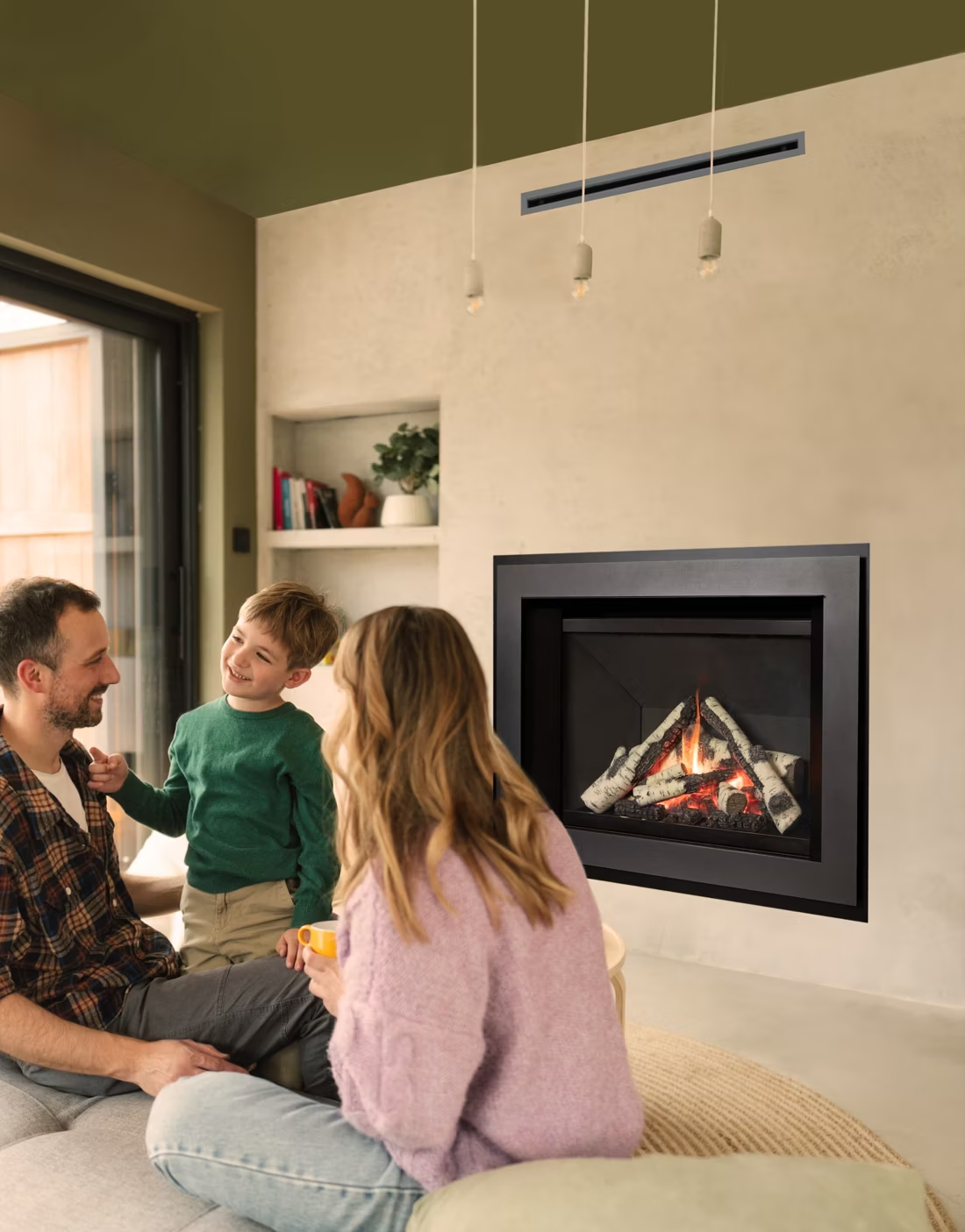
Four fuels. One honest answer for Adams County.
Three steps. No salesperson until you're ready.
Tell us about your project
Your zip code, your situation, and the fuel you're leaning toward—or let the answers point you to one.
See what's actually available
The brands dealers within 100 miles genuinely carry—real options, never a catalog mirage.
Get your dealer & Project Guide
A trusted local dealer, plus the free Project Guide & Parts List that names every component of the job.
Frequently Asked Questions
Which fireplace fuel makes sense in Adams County?
It depends on where your home sits and how remote it is. Wood is the default for most rural Adams County homes—lodgepole pine, ponderosa pine, Douglas fir, and larch are all locally abundant, and a catalytic or non-cat wood stove will hold a fire through a genuinely cold night without depending on the grid or a propane truck showing up on schedule. Gas here almost always means propane, since there's no natural gas utility infrastructure in this county—propane fireplaces and inserts offer instant, thermostat-controlled heat that's popular as a second heat source or for homes where daily wood-loading isn't practical. Pellet stoves are a solid middle ground, with Bear Mountain, Lignetics, and Pacific Pellet all distributed in this part of Idaho, though homeowners should have a backup heat plan for extended winter power outages since pellet stoves need electricity to run their augers and blowers. Electric fireplaces work fine as supplemental heat in a bedroom or den but aren't a serious primary-heat option given how cold Adams County winters run. Many homes here end up with two fuels—wood or propane as the workhorse, electric or pellet in a secondary space.
Do I need a permit to install a fireplace or stove in Adams County?
In most cases, yes, for wood, gas, and pellet appliances—new installs, inserts, and stoves generally require a building permit and, for gas or propane work, a separate permit covering the fuel line and licensed installation of the gas connection. Wood-burning appliances sold and installed today are EPA-certified units by default, which matters given how commonly wildfire smoke already affects regional air quality in late summer. Electric fireplaces are typically permit-exempt unless the installation involves new wiring or a built-in unit tied into a dedicated circuit. Because Adams County is so rural, permitting authority and inspection scheduling can take longer than in a metro area—most local hearth retailers who install here are used to this and handle the permit paperwork and inspection coordination as part of the job.
Does wildfire smoke affect wood burning here?
Indirectly, yes. Adams County's air quality concern is wildfire smoke, not winter wood-smoke inversions like you'd see in a basin-bound area—the issue tends to show up in late summer and early fall when regional fires push smoke through the Little Salmon and Weiser River valleys, sometimes lingering for days depending on wind patterns. This doesn't typically restrict winter wood-stove use the way urban non-attainment zones do, but it's worth factoring into a wood-supply plan: many homeowners here cut and season firewood a full year ahead, partly because smoky late-summer days aren't ideal for chainsaw work in the woods and partly because well-seasoned wood burns cleaner and more efficiently once winter arrives.
Can one dealer near Adams County handle all four fuel types?
Some can, but given the population base, don't expect a large multi-fuel showroom on every corner. Dealers based in New Meadows or Council that serve Adams County directly tend to carry wood and pellet as their core lines, with propane fireplace and insert options available either in-house or through a partner propane installer; electric units are often a smaller add-on line rather than a dedicated display. If you want to compare all four fuels side by side, it's common for Adams County homeowners to work with a dealer in the broader McCall service area, which supports a bigger year-round customer base and correspondingly wider selection. Either way, ask directly what a dealer stocks and installs—in a county this size, showroom inventory shifts based on what local demand supports that season.
How does service and repair work in a county this rural?
Plan ahead. Most chimney sweeps, gas/propane techs, and pellet-stove service people covering Adams County are based in New Meadows, Council, or McCall and build in drive time to reach outlying properties along Highway 95 or up into the Weiser River drainage—a 30 to 60 minute one-way trip isn't unusual, and rural trip fees in the $50-100 range are common. Pre-season service, scheduled in late summer before wildfire-smoke season and before the first cold snap, is far easier to book than an emergency mid-winter call when every wood stove and propane furnace in the county is getting worked hard at once. If you're on a pellet stove, keep a backup heat source on hand for power outages, since a stalled auger with no electricity means no heat until service and grid power are both restored.
What does fireplace installation typically cost across fuel types in Adams County?
Costs run close to, or slightly above, typical rural mountain-West pricing given the added travel factored into most rural installs. Wood stove or insert: roughly $4,500-$9,500 for a standard install, more if new chimney chase work is required for new construction. Propane fireplace, insert, or stove: roughly $4,500-$11,000, with cost driven heavily by how much new gas line and venting work is needed since there's no existing natural gas infrastructure to tap into. Pellet stove or insert: roughly $4,500-$7,500 for most installs. Electric fireplace: $200-$3,000 for the unit itself, plus $400-$1,200 in labor for anything beyond a simple plug-and-play placement. Because dealer density is low here, get a written quote that includes any rural travel or trip charge up front—it's frequently itemized separately from the installation labor.
What is an in-home preview and do I need one?
It's a visit where a hearth professional measures your space, confirms the model you picked actually works in your home, and walks the specs—framing, gas line, venting, finish work—before anything is ordered. Some details you just can't know until you see the house. Never make a down payment without one; it's the single most-skipped step that burns buyers.
How much should I budget for a fireplace?
For an average home—covering the fireplace, the vent pipe, and basic installation—a budget between $3,900 and $5,500 gives you a lot of options across wood, gas, and pellet. By the time you add finish work, gas line, and electrical, the average complete installation lands between $5,000 and $12,000 all-in. In a remodel or new build, a good rule is to put about 2.5% of the total project cost toward the fireplace.
Can a fireplace actually lower my heating bill?
Yes—by creating a comfort zone. A furnace heats every square foot of the house just to warm the one room you're in; a gas fireplace on low burns roughly a sixth of the gas a typical furnace does. Set the furnace around 55–60 degrees as a baseline, then heat the rooms your family actually uses. Families who heat this way commonly save $20–$60 a month.
Wood, gas, pellet, or electric—how do I choose?
Match the fuel to your life, not the other way around. Wood: lowest fuel cost and total power-outage independence, but you're hauling and stacking. Gas: press a button, set a thermostat, no maintenance to speak of. Pellet: wood economics with automatic feeding, in exchange for weekly cleaning and a need for electricity. Electric: plugs in anywhere with honest supplemental heat. Nobody regrets the fuel that fits how they actually live.
Stove and Fireplace Dealers in Adams County
Listings include WhyFire partner dealers, dealers we have verified as authorized for the brands we recommend, and established local businesses that carry hearth products. Every listing shows which one it is. The ones marked Preferred run on WhyFire's software, so they can show you real pricing and book your appointment right here. No manufacturer pays for placement. How we verify dealers →
McCall Stove & Fireplace
Find your fireplace fit in Adams County.
Tell us your fuel and your town, and I'll match you with a trusted local dealer and send over a free Project Guide & Parts List—the exact parts, vent kit included, and the dealer I'd recommend for your home.
Find Your Fireplace →