
Find out if a pellet stove actually makes sense in West Loch Estate.
With a winter low averaging 62°F and almost no heating demand on this stretch of Oahu, pellet stoves are a genuine rarity here. If you still want one—for a rental cabin elsewhere, ambiance, or a specific project—we'll help you find out what's realistic.
Every Project Starts From One of These Five Situations
Oahu's climate leaves almost no need for supplemental heat.
West Loch Estate sits at 12 feet of elevation on Oahu's leeward coast near Pearl Harbor, in a climate zone (1A) with an almost nonexistent winter heating need—for comparison, a place like Duluth, MN faces a long, intense heating season. Winter lows here average 62°F. There's simply no functional need for a home heating appliance, pellet or otherwise, and that's reflected in how few pellet stoves exist on this part of the island.
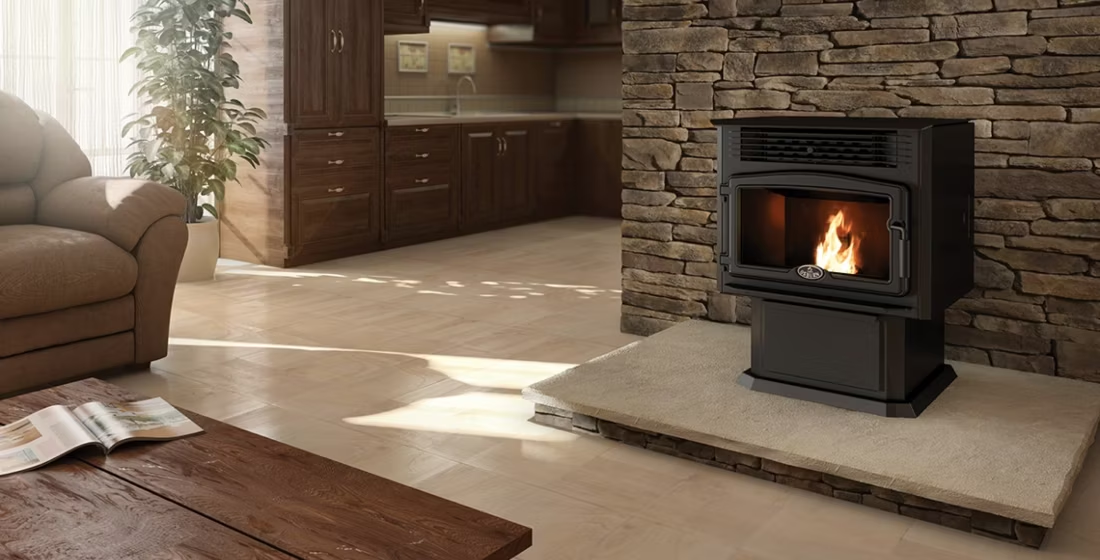
That doesn't mean it's impossible. A small number of Oahu homeowners install a pellet stove for the look and ambiance of a real flame, for a second property in a cooler climate, or for a very specific project need. If that's you, know the practical realities going in: pellet fuel isn't milled locally—the regional brand available here, Lignetics, arrives by container and typically carries a freight premium over mainland pricing. Any new solid-fuel appliance also needs a building permit through the Honolulu Department of Planning and Permitting, and a licensed installer will need to size venting correctly for a home that was never built with a chimney chase in mind. We'll walk you through whether it's worth it, and connect you with someone who can actually do the work if it is.
Three steps. No salesperson until you're ready.
Tell us about your project
Your zip code, your situation, and the fuel you're leaning toward—or let the answers point you to one.
See what's actually available
The brands dealers within 100 miles genuinely carry—real options, never a catalog mirage.
Get your dealer & Project Guide
A trusted local dealer, plus the free Project Guide & Parts List that names every component of the job.
Frequently Asked Questions
Are pellet stoves actually used in West Loch Estate?
Rarely, and for good reason. With an average winter low of 62°F and essentially no need for winter heating, homes in West Loch Estate don't need supplemental heat the way homes in cold-climate states do. Where you do see a pellet stove on Oahu, it's almost always for the visual appeal of a real flame in a living room, a vacation rental trying to stand out, or a homeowner who owns a second property somewhere colder and wants matching decor. It's a legitimate niche, just not a mainstream one here.
How much does a pellet stove installation cost in West Loch Estate?
Because so few get installed here, there isn't a well-established local price range the way there is in cold-climate markets. On the mainland, a typical pellet stove installation runs $3,000 to $6,500 depending on the unit and venting work. In West Loch Estate, expect to land at the higher end of that once you factor in shipping the stove itself and the fact that few local installers specialize in solid-fuel appliances—most of Oahu's hearth trade is built around gas and electric units instead. A local dealer can give you a firm number once they know your home's layout.
Where do I even get pellet fuel in West Loch Estate?
Pellet fuel isn't produced in Hawaii, so anything you burn arrives by container ship. Lignetics is the regional brand most likely to show up at hardware retailers or specialty suppliers on Oahu, but availability can be inconsistent and pricing runs well above mainland rates once inter-island freight is added. If you're seriously considering a pellet stove here, it's worth confirming a reliable local supply chain before you commit to the appliance—some owners end up having pellets shipped directly rather than relying on local stock.
Do I need a permit to install a pellet stove in West Loch Estate?
Yes—any new solid-fuel or vented appliance installation falls under the Honolulu Department of Planning and Permitting, which covers building permits island-wide, including West Loch Estate. Because pellet installations are uncommon here, it's worth using an installer who has actually pulled this type of permit before rather than a general contractor unfamiliar with hearth appliance venting requirements.
What do most West Loch Estate homeowners install instead of a pellet stove?
Given the tropical climate, the more common choices are electric fireplaces for pure ambiance with no venting required, or gas fireplace inserts for homes that want real flame and occasional evening warmth without dealing with fuel logistics. Neither requires the freight-driven fuel supply chain that a pellet stove does, which is a big part of why they're more practical for most homes here.
With Hawaiian Electric rates so high, does an electric fireplace even make sense here?
Hawaiian Electric's residential rate runs around 42.9 cents per kWh—among the highest in the country—so running an electric fireplace as an actual heat source would get expensive fast. In practice, most Oahu buyers use electric units for their flame effect on a low or no-heat setting, which draws very little power, rather than for real warmth. If you want genuine ambiance without a meaningful electric bill impact, that's usually how local installers configure them.
Could I use local wood species like koa or ohia to make my own pellets?
Koa, ohia, and eucalyptus all grow on Oahu and are prized for woodworking and, in koa's case, furniture—but none of them are being milled into fuel pellets locally. Pellet manufacturing requires industrial-scale drying and compression equipment that doesn't exist as a fuel-focused operation in Hawaii, so any pellets you burn will still be a shipped-in product like Lignetics, regardless of what grows in your backyard.
Why don't more homes in West Loch Estate have any kind of wood or pellet heating?
It comes down to climate. With next to no winter heating need and lows that rarely dip below the low 60s, there's no functional heating gap for a wood or pellet appliance to fill. Compare that to a place like Bismarck, ND, where winter design temperatures justify running a stove around the clock—West Loch Estate homes simply never face that scenario, so solid-fuel heat never became part of the local building culture the way it has in colder states.
Pellet stove vs. gas fireplace—which makes more sense in West Loch Estate?
For a home here, a gas fireplace is almost always the more practical choice. Gas units light instantly, don't depend on a shipped-in fuel supply, and pair naturally with the occasional cool evening West Loch Estate does get. A pellet stove requires a hopper, an auger, sourced fuel, and routine ash cleanup—all real maintenance for a climate that gives you maybe a handful of nights a year where you'd actually want extra warmth. Pellet still wins if what you want is the specific look and feel of a pellet-burning appliance regardless of climate fit, and we can help you find a dealer for that too.
How often does a pellet stove need cleaning?
A clean pellet stove is a happy pellet stove. Plan on cleaning the burn pot about once a week when you're burning regularly—ash and clinkers gum up the air holes just like a pellet barbecue. Most pellet stove problems trace back to skipped cleaning that nobody explained up front. Some designs make it easy with a trapdoor burn pot: pull a lever and the gunk drops into the ash pan.
Why is a fireplace insert so efficient?
An insert does two things: it seals the chimney completely, so you stop losing air you already paid to heat, and it radiates warmth into the room through the firebox and glass. Most add a heat-exchange fan that pulls cool room air underneath, wraps it around the hot firebox, and pushes it back out warm. Your home is more efficient before you've even lit the first fire.
Can I install a fireplace myself?
If you're putting a fire in your house on purpose, it's best to work with an expert. Unless you're genuinely experienced in framing, gas line, vent pipe, and the national code on clearances to combustibles, have a professional do it—and ideally the same company that sells you the fireplace, so warranty, service, and liability all live under one roof.
Can a fireplace actually lower my heating bill?
Yes—by creating a comfort zone. A furnace heats every square foot of the house just to warm the one room you're in; a gas fireplace on low burns roughly a sixth of the gas a typical furnace does. Set the furnace around 55–60 degrees as a baseline, then heat the rooms your family actually uses. Families who heat this way commonly save $20–$60 a month.
Nearby Dealers
Hearth shops serving West Loch Estate and the surrounding area. Every listing shows whether it is a WhyFire partner, a dealer we have verified as authorized for the brands we recommend, or a local business carrying hearth products. No manufacturer pays for placement. How we verify dealers →
Island Pool And Supply
Pellet Brands Stocked Around West Loch Estate
Manufacturers will point you to the nearest stocking dealer.
Get matched with a local dealer for your West Loch Estate pellet project.
Tell us about your home and what you're hoping to get out of a pellet stove here. We'll send a free Project Guide & Parts List—including the vent kit—and connect you with a trusted local dealer who can tell you straight whether it's a fit for West Loch Estate.
Find Your Fireplace →