
Keep Your Family Warm and Safe—No Matter What
With winter lows averaging 61°F, almost nobody in Waimea needs a wood stove to stay warm. But a small number of upcountry homes install one anyway, for the fire itself. Here's what that actually looks like.
Every Project Starts From One of These Five Situations
An unusual fit, chosen for ambiance more than warmth.
Waimea sits at 2,853 feet on the saddle between the Kohala Mountains and Mauna Kea, which makes it noticeably cooler and mistier than the beach towns down the hill—but the numbers still tell the real story: an average winter low of 61°F and only a handful of genuinely chilly days all year. Compare that to a place like Duluth, MN, where the heating season runs long and hard for most of the year, and it's clear Waimea isn't a wood-heat town in any climatic sense. Nobody here is burning cordwood to survive a cold snap.
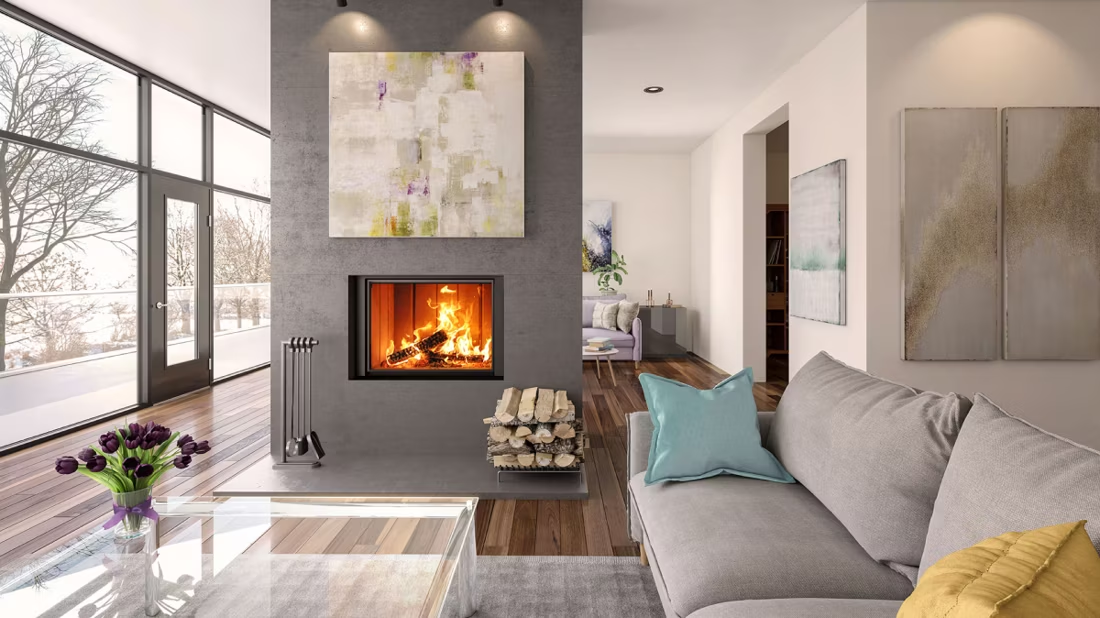
What does happen is smaller and more particular: a handful of Parker Ranch-country homeowners install a wood stove or fireplace as a focal point—something to light on a genuinely cool, foggy Waimea evening, or to give a ranch-style great room the presence an open hearth provides. There's no non-attainment designation and no seasonal burn restrictions here, so the county isn't the obstacle. The real constraints are practical: almost no local installers specialize in wood-burning appliances, firewood supply is thin, and most of what you'd want to burn—koa especially—is more valuable as lumber than as fuel.
Three steps. No salesperson until you're ready.
Tell us about your project
Your zip code, your situation, and the fuel you're leaning toward—or let the answers point you to one.
See what's actually available
The brands dealers within 100 miles genuinely carry—real options, never a catalog mirage.
Get your dealer & Project Guide
A trusted local dealer, plus the free Project Guide & Parts List that names every component of the job.
Frequently Asked Questions
How much does a wood stove installation cost in Waimea?
Expect to pay in the same general range as a mainland installation—roughly $4,500 to $9,000 for the stove, hearth pad, and Class A chimney—but budget extra on top of that. Because these installs are uncommon on the Big Island, most homeowners end up bringing in a contractor from Hilo or Kona, and the unit itself typically has to be freighted in rather than pulled off a local showroom floor. Ask any installer you're considering for a firm number that includes travel and shipping, not just the appliance price.
Why would anyone want a wood fireplace where it almost never gets cold?
Waimea's climate doesn't call for heat, but it does deliver genuinely cool, damp, overcast evenings—a byproduct of sitting at nearly 2,900 feet between two mountains. For ranch-style homes in and around town, a wood fireplace functions less like a furnace and more like a centerpiece: something to light on a misty night for the light and warmth of the flame itself, not to offset a heating bill. It's a lifestyle choice here, not a climate necessity.
What kind of firewood is actually available locally?
Eucalyptus is the most practical choice—it's a common reforestation and plantation species on the island and burns reasonably well once seasoned. Ohia is dense and technically excellent firewood, but most residents avoid cutting live ohia given its cultural significance and the ongoing threat of Rapid Ohia Death, so supply is limited and often discouraged. Koa is a valuable hardwood almost always reserved for furniture and woodworking rather than the fireplace—burning koa is generally considered a waste of the wood. Most Waimea stove owners end up relying on eucalyptus or firewood trucked in from Hilo-area suppliers.
Are there any air quality restrictions on wood burning in Waimea?
No—there are no non-attainment designations or wood-smoke curtailment periods in this part of Hawaii County, unlike mainland cities with winter inversion problems. The air quality issue Big Island residents actually deal with is volcanic vog from Kilauea, which has nothing to do with residential wood stoves. In practical terms, this means no burn bans to worry about, though it also means there's less regulatory infrastructure and fewer local installers than you'd find in a place where wood heat is common.
Do I need a permit to install a wood stove in Waimea?
Yes—a wood-burning appliance, its hearth pad, and any new chimney penetration require a building permit through the Hawaii County Department of Public Works Building Division. Because installations like this are rare here, only a small handful of licensed contractors on the island have gone through the process before, so it's worth confirming permit experience specifically with wood stoves—not just general fireplace or renovation work—before you hire anyone.
Is a wood stove practical as a heat source in Waimea?
Not really, and it's worth being direct about that. With an average winter low of 61°F and only a handful of genuinely chilly days a year, there's essentially no heating demand to offset. A wood stove here functions as ambiance and occasional supplemental warmth on the coolest, foggiest nights—not as a way to lower a heating bill or keep a home warm through winter, the way it would in a genuinely cold climate.
Wouldn't electric heat be simpler than dealing with wood?
For most Waimea homes, yes. Hawaii Electric Light Co's residential rate—around $0.48 per kWh, among the highest in the country—sounds like it should push people away from electric heat, but because there are only a handful of genuinely chilly days a year, the actual electric cost of taking the occasional chill off a room is minimal. An electric fireplace or small space heater covers that need at a fraction of the installation cost and complexity of a wood-burning unit, with none of the firewood sourcing headaches.
Where can I actually buy firewood in Waimea?
Supply is thin. Some ranch operations and tree-removal crews around Parker Ranch land sell eucalyptus by the truckload when they're clearing acreage, but there's no established firewood retail market the way there is in cold-climate towns. Some homeowners order kiln-dried firewood shipped in from Hilo-based suppliers or the mainland, which adds real cost. If you're planning a wood stove, it's worth lining up a firewood source before the appliance is even installed.
Wood vs. pellet vs. electric—what actually makes sense in Waimea?
Given how little heating Waimea homes need, wood only makes sense if you specifically want the experience of a real, tended fire and don't mind the sourcing and maintenance that comes with it. A pellet stove—Lignetics pellets are the regional brand most likely to be available—offers a cleaner, more automated flame with less hassle, though it still requires fuel deliveries to an island with limited supply. For most homeowners here, an electric fireplace or insert is the simplest fit: no venting, no firewood, no permitting headache, and the electric cost is trivial when you're only running it a handful of cool evenings a year.
What's the difference between an insert and a zero-clearance fireplace?
An insert is a fireplace that slides into a pre-existing wood-burning fireplace—if you don't have one, there's nothing to insert it into. A zero-clearance fireplace is built into a framed wall, which makes it the answer for remodels and new construction. Simple test: existing masonry fireplace means insert; blank or framed wall means zero-clearance.
Why is my open fireplace making my house colder?
Open fireplaces suck—literally. As the fire burns, it consumes air your furnace already paid to heat and pulls it out through the chimney, so the house is actually colder after the fire goes out than before you lit it. An insert fixes this: it seals the chimney, puts fixed glass across the front, and turns that hole in your house into a real heat source.
Can a fireplace actually lower my heating bill?
Yes—by creating a comfort zone. A furnace heats every square foot of the house just to warm the one room you're in; a gas fireplace on low burns roughly a sixth of the gas a typical furnace does. Set the furnace around 55–60 degrees as a baseline, then heat the rooms your family actually uses. Families who heat this way commonly save $20–$60 a month.
Can I install a fireplace myself?
If you're putting a fire in your house on purpose, it's best to work with an expert. Unless you're genuinely experienced in framing, gas line, vent pipe, and the national code on clearances to combustibles, have a professional do it—and ideally the same company that sells you the fireplace, so warranty, service, and liability all live under one roof.
Nearby Dealers
Hearth shops serving Waimea and the surrounding area. Every listing shows whether it is a WhyFire partner, a dealer we have verified as authorized for the brands we recommend, or a local business carrying hearth products. No manufacturer pays for placement. How we verify dealers →
Hawaii Fireplace – Kamuela
Island Pool & Spa Supply
Fireplace & Home Center
Find your wood fireplace in Waimea.
Tell us about your home and we'll match you with a local dealer who actually installs wood-burning units on the Big Island, plus a free Project Guide & Parts List covering the exact parts—including the vent kit—for your Waimea project.
Find Your Fireplace →