
Keep Your Family Warm and Safe—No Matter What
Waikoloa Village rarely gets cold enough to need a fire for warmth, but a well-chosen wood fireplace still has a place for atmosphere. Find the right fit and connect with a trusted local dealer.
Every Project Starts From One of These Five Situations
This is one of the least heating-dependent climates in America.
Waikoloa Village sits at 579 feet on the leeward Kohala Coast of Hawaii Island, inside climate zone 1A—the same zone as Miami and Honolulu, about as far from a heating climate as U.S. building code gets. Overnight lows here rarely dip below the mid-60s even in January, and there's no real heating season to speak of. Compare that to Duluth, Minnesota, where homeowners face a long, brutal winter and a wood stove is load-bearing winter infrastructure—Waikoloa Village's heating load is close to zero.
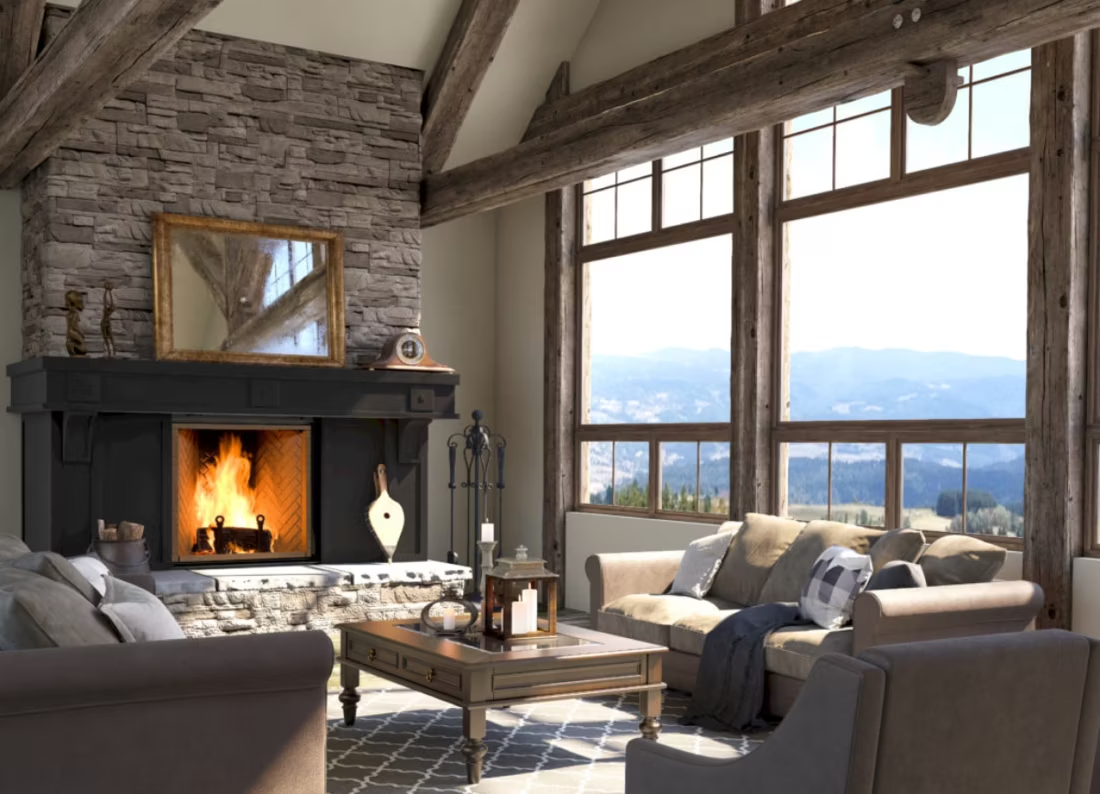
That doesn't mean nobody wants one. Some homes in and around Waikoloa Village install wood-burning fireplaces purely for the pull of a real fire—the crackle, the smell, the gathering point in an open-concept great room. Mainland transplants building retirement homes here often specify one out of habit, and it still reads as an upscale feature to resale buyers from colder states. For homeowners who want the look and warmth-on-demand without the upkeep, gas and electric are worth serious consideration too—especially since Hawaii Electric Light Co. residential rates run around 48 cents per kWh, among the highest in the country, which matters more if a unit runs for hours than if it's lit occasionally for atmosphere.
Three steps. No salesperson until you're ready.
Tell us about your project
Your zip code, your situation, and the fuel you're leaning toward—or let the answers point you to one.
See what's actually available
The brands dealers within 100 miles genuinely carry—real options, never a catalog mirage.
Get your dealer & Project Guide
A trusted local dealer, plus the free Project Guide & Parts List that names every component of the job.
Frequently Asked Questions
Does Waikoloa Village ever get cold enough to need a wood stove for heat?
Realistically, no. Waikoloa Village sits in climate zone 1A at 579 feet elevation on the Kohala Coast, where nighttime lows typically stay in the mid-60s to low 70s year-round. There's no meaningful heating season here—nothing like Bozeman, Montana or Fargo, North Dakota, where a wood stove is essential winter infrastructure. Any wood-burning fireplace installed in Waikoloa Village is there for atmosphere, not warmth.
If it's always warm, why would anyone install a wood fireplace here?
Ambiance, mostly. A real wood fire is a gathering point—the sound, the smell, the visual focal point of a great room—and plenty of Waikoloa Village homeowners, especially those who relocated from colder states, want that even in a place that never needs heat. It also shows up as a resale feature in higher-end homes marketed to mainland buyers who associate a fireplace with a finished living space. If that's your reason, a local dealer can help you find a unit sized for looks and occasional use rather than sustained heat output.
What does a wood fireplace installation cost in Waikoloa Village?
There isn't much local pricing history to draw on, because so few Big Island homes install wood-burning appliances—most installers here specialize in gas or electric units instead. Expect costs to run higher than a comparable mainland install, since chimney components, hearth materials, and Class A pipe typically have to be shipped or barged to the island. A trusted local dealer matched through Find My Fireplace can walk you through a firm quote for your specific home and roofline before you commit to anything.
Can I burn local wood like koa or ohia in a wood-burning fireplace?
Probably not, and for good reason. Ohia is under strict interisland movement restrictions because of Rapid Ohia Death, a fungal disease that has killed vast stretches of native forest across Hawaii Island—moving ohia wood, even for firewood, risks spreading it further. Koa is a prized hardwood almost always reserved for furniture and woodworking, not fuel. Eucalyptus, which grows fast on plantation land around the island, is the most realistic locally available option, though many homeowners end up importing kiln-dried hardwood for cleaner, more consistent burning.
Would gas or electric make more sense than wood for a Waikoloa Village home?
For most homeowners here, yes. Given how rarely a fire is actually needed for warmth, a vented gas fireplace or a good electric unit gets you the visual effect without a chimney to maintain in salt air and volcanic humidity, and without sourcing or storing firewood on an island where it's not locally abundant. The one caveat on electric: Hawaii Electric Light Co. residential rates run around 48 cents per kWh, among the highest in the country, so if you want a unit that runs for hours as background ambiance rather than occasional use, that operating cost is worth factoring in.
Do I need a permit to install a wood-burning fireplace in Waikoloa Village?
Yes—new solid-fuel appliance installations go through the Hawaii County Department of Public Works Building Division like any other building permit, regardless of how rarely the unit gets used. The upside for Waikoloa Village homeowners is there are no seasonal burn curtailment days or non-attainment restrictions to navigate, since air quality here isn't a concern the way it is in wood-heavy mainland valleys. A local installer familiar with county permitting can handle the paperwork alongside the install.
What size or style of wood stove fits a typical Waikoloa Village home?
Since the goal here is almost always ambiance rather than whole-home heat load, most homeowners are better served by a small to mid-size zero-clearance wood fireplace or freestanding stove positioned as a visual centerpiece rather than something sized for BTU output. Open floor plans, lanai-style living, and the tile or metal roofing common in Waikoloa Village homes also affect how venting gets routed—a local installer will need to assess your specific roofline before recommending a unit.
Where can I get firewood delivered in Waikoloa Village?
Firewood delivery is limited on the Big Island compared to the mainland—there's no established cordwood supply chain the way there is in wood-heating regions. Most homeowners who install a wood fireplace here end up sourcing kiln-dried hardwood shipped or barged in, or occasionally picking up eucalyptus offcuts from landscapers clearing plantation lots. Because supply is thin, plan on paying more per cord than you would on the mainland, and ask your installer for current local supplier recommendations.
Wood vs. gas vs. electric—which fireplace actually fits a home in Waikoloa Village?
For a climate that essentially has no heating season, the honest answer is that wood is the least practical of the three, and gas or electric usually wins on convenience. Wood still has a place if you specifically want the real-fire experience and don't mind sourcing imported firewood and maintaining a chimney in humid, salty air. Gas gives you instant, clean ambiance without smoke or ash. Electric is the simplest to install and maintain, though at roughly 48 cents per kWh through Hawaii Electric Light Co., it's better suited to occasional evening use than as a heat source you'd run for hours. A local dealer can walk through all three against your specific home and how you'll actually use it.
Why is a fireplace insert so efficient?
An insert does two things: it seals the chimney completely, so you stop losing air you already paid to heat, and it radiates warmth into the room through the firebox and glass. Most add a heat-exchange fan that pulls cool room air underneath, wraps it around the hot firebox, and pushes it back out warm. Your home is more efficient before you've even lit the first fire.
Why is my open fireplace making my house colder?
Open fireplaces suck—literally. As the fire burns, it consumes air your furnace already paid to heat and pulls it out through the chimney, so the house is actually colder after the fire goes out than before you lit it. An insert fixes this: it seals the chimney, puts fixed glass across the front, and turns that hole in your house into a real heat source.
Can a fireplace actually lower my heating bill?
Yes—by creating a comfort zone. A furnace heats every square foot of the house just to warm the one room you're in; a gas fireplace on low burns roughly a sixth of the gas a typical furnace does. Set the furnace around 55–60 degrees as a baseline, then heat the rooms your family actually uses. Families who heat this way commonly save $20–$60 a month.
Can I install a fireplace myself?
If you're putting a fire in your house on purpose, it's best to work with an expert. Unless you're genuinely experienced in framing, gas line, vent pipe, and the national code on clearances to combustibles, have a professional do it—and ideally the same company that sells you the fireplace, so warranty, service, and liability all live under one roof.
Nearby Dealers
Hearth shops serving Waikoloa Village and the surrounding area. Every listing shows whether it is a WhyFire partner, a dealer we have verified as authorized for the brands we recommend, or a local business carrying hearth products. No manufacturer pays for placement. How we verify dealers →
Hawaii Fireplace – Kamuela
Island Pool & Spa Supply
Fireplace & Home Center
Find your wood fireplace in Waikoloa Village.
Tell us about your home and how you plan to use it, and we'll match you with a trusted local dealer who can get the right materials to the island and put together a free Project Guide & Parts List—the exact parts, venting, and recommended installer for your Waikoloa Village project.
Find Your Fireplace →