
Keep Your Family Warm and Safe—No Matter What
With winter lows averaging 61°F and almost no heating demand on the Hamakua Coast, wood heat isn't a practical fit here—but if you still want the look and ritual of a real fire, we can connect you with a local dealer who builds them right.
Every Project Starts From One of These Five Situations
In Pepeekeo's climate, wood heat is nearly obsolete.
Pepeekeo sits at 539 feet on the Hamakua Coast north of Hilo, in climate zone 1A—hot and humid nearly year-round. The area has essentially no real heating season at all, compared to genuinely cold-climate towns like Duluth or Bismarck, and the average winter low here is 61°F, warmer than a mild spring evening on the mainland. There simply isn't a season where a home in Pepeekeo needs a wood stove to keep from getting cold.
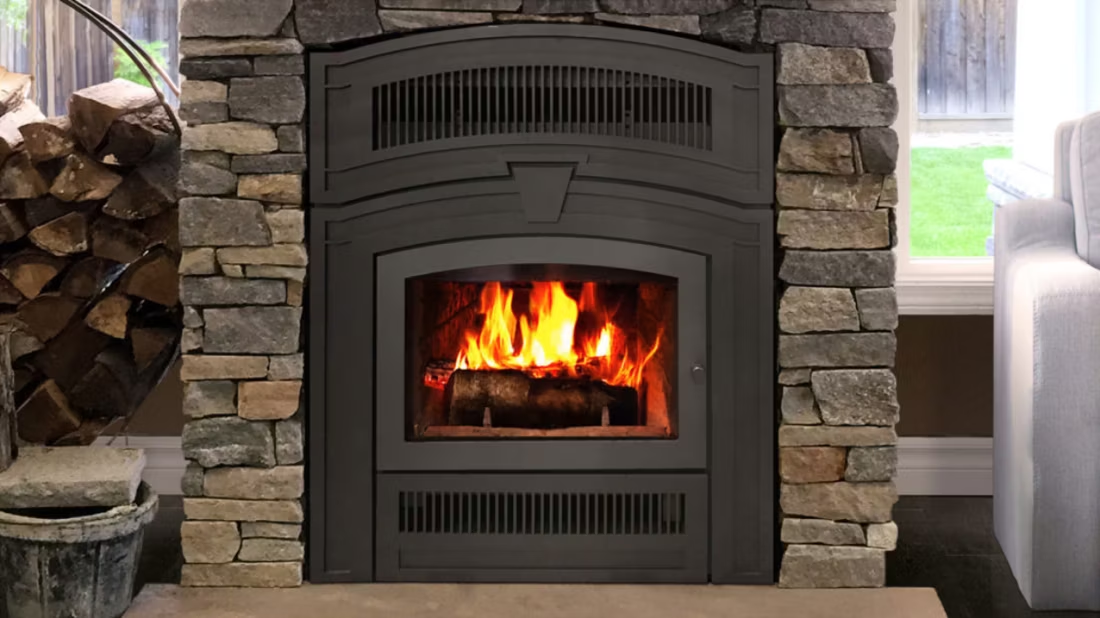
That's why we flag wood as not applicable for this town rather than pretending it's a mainstream heating choice. A small number of homeowners still build a wood-burning fireplace into a custom Hamakua Coast home purely for the look and ritual—often alongside koa or ohia woodwork elsewhere in the house—but it's a design decision, not a heating one. Locally, eucalyptus, ohia, and koa are far more valuable as furniture, canoe, and ukulele timber than as firewood, and gas fireplaces are just as rare here since there's no piped natural gas on the island. If you're set on a real wood fire for ambiance, or you split time with a colder property elsewhere, we can still help you find the right fit.
Three steps. No salesperson until you're ready.
Tell us about your project
Your zip code, your situation, and the fuel you're leaning toward—or let the answers point you to one.
See what's actually available
The brands dealers within 100 miles genuinely carry—real options, never a catalog mirage.
Get your dealer & Project Guide
A trusted local dealer, plus the free Project Guide & Parts List that names every component of the job.
Frequently Asked Questions
Do people actually install wood-burning stoves or fireplaces in Pepeekeo?
Very rarely, and almost never for heat. With essentially no real heating season and winter lows averaging 61°F, there's no season where a Pepeekeo home needs supplemental heat, let alone a wood stove built to hold an overnight fire through single-digit cold. The handful of wood-burning installs on the Hamakua Coast tend to be decorative masonry fireplaces in custom, larger homes, installed for the visual centerpiece rather than warmth. Hearth dealers serving the Hilo side of the Big Island stock far more electric and gas log units than true wood stoves, because that's where the actual demand is.
Why does Find My Fireplace mark wood fuel as 'not applicable' for Pepeekeo?
It comes down to the climate. Pepeekeo sits in climate zone 1A with essentially no real heating season at all—for comparison, a cold-climate town like International Falls, Minnesota has a long, brutal winter that runs for months on end. A wood stove is engineered to hold a slow, radiant fire through freezing overnight temperatures; that condition just doesn't occur here. We'd rather flag that honestly than tell you a cast-iron catalytic stove is the right call for a town that averages 61°F lows in January.
I still want a wood-burning fireplace for the look and ritual—what should I know before installing one here?
It's doable, but plan for a few Hawaii-specific realities. You'll need a building permit through the County of Hawaii Building Division, and any metal chimney components should be stainless or otherwise corrosion-rated—Pepeekeo's windward-coast humidity is hard on standard galvanized flue pipe over time. Because the unit will likely see only occasional use rather than daily winter burns, creosote buildup is less of a concern than in cold climates, but rust, mildew, and wood-frame termite exposure around the chimney chase are bigger issues here than they'd be on the mainland. Most owners treat it as an architectural feature they light a handful of evenings a year.
Can I burn local woods like koa or ohia in a fireplace?
You technically can, but it would be an unusual use of expensive wood. Koa and ohia are prized far more for furniture, canoe building, and ukulele making than as firewood, and ohia in particular is subject to movement restrictions on the Big Island tied to Rapid Ohia Death, a fungal disease that's killed large stands of the tree—moving cut ohia logs around the island can be regulated. Eucalyptus, grown commercially on the Hamakua Coast for timber and pulp, is more realistically available as scrap or trim material if you do want an occasional decorative fire.
What about a gas fireplace instead of wood in Pepeekeo?
Gas is also uncommon here, though slightly more practical than wood. There's no piped natural gas utility on the Big Island, so any gas fireplace would run on propane trucked or shipped in—the same fuel many homes already use for cooking or water heating. A propane fireplace sidesteps the firewood supply and venting concerns of a true wood-burning unit, but it's still a rare install; most Pepeekeo homeowners looking for hearth ambiance skip combustion fuels entirely.
What fuel do most Pepeekeo homeowners actually use for hearth ambiance?
Electric. It's the one fuel type Find My Fireplace's data marks as a standard fit for this town, largely because it requires no venting, no chimney, and no fuel supply chain—all real obstacles here. Hawaii Electric Light Co. (HELCO) charges around 48 cents per kWh, among the highest residential electricity rates in the country, so most owners choose an electric fireplace they run for a few hours in the evening purely for the flame effect rather than as a heat source they'd want running constantly.
Will homeowners insurance treat a wood-burning fireplace differently on the Big Island?
It can, mostly because underwriters here are far more used to inspecting for termite damage and lava-zone exposure than creosote buildup or chimney fire risk. Because wood-burning installs are so uncommon in Pepeekeo, expect an insurer to ask for documentation of a certified install and possibly more frequent inspection sign-off than they'd require for the same unit in a cold-climate state where wood heat is routine.
Can a wood chimney be built into a new home in Pepeekeo?
Yes, though few local contractors do it regularly since demand is so low. It requires a building permit through the County of Hawaii Building Division, and most builders spec a factory-built zero-clearance fireplace with a Class A chimney using stainless or otherwise corrosion-resistant components, given the windward coast's humidity. Cost is driven mostly by the custom masonry or chase framing rather than by typical hearth-store stove pricing, since this isn't a standard package any local dealer keeps in stock.
I split time between Pepeekeo and a colder mainland home—does a wood stove make more sense there instead?
Almost certainly. If your other property sits somewhere with a real heating season—a cabin in Montana or a home near Duluth, for example—that's where a wood stove will actually earn its keep, and we can match you with a trusted dealer local to that address. For the Pepeekeo property itself, an electric fireplace for ambiance, or a propane unit if you want real flame, is the more practical call given the climate here.
Why won't my new wood stove get going like my old one?
New wood stoves are 70%+ efficient, so far less heat goes up the flue—which also means less draft to get a fire established. The rule: build a genuinely hot fire for about 45 minutes before you choke it down. Skip that and you get smoke in the room, creosote in the chimney, and a fire that never takes off. Most performance complaints trace straight back to this.
Why is a fireplace insert so efficient?
An insert does two things: it seals the chimney completely, so you stop losing air you already paid to heat, and it radiates warmth into the room through the firebox and glass. Most add a heat-exchange fan that pulls cool room air underneath, wraps it around the hot firebox, and pushes it back out warm. Your home is more efficient before you've even lit the first fire.
Can a fireplace actually lower my heating bill?
Yes—by creating a comfort zone. A furnace heats every square foot of the house just to warm the one room you're in; a gas fireplace on low burns roughly a sixth of the gas a typical furnace does. Set the furnace around 55–60 degrees as a baseline, then heat the rooms your family actually uses. Families who heat this way commonly save $20–$60 a month.
How much should I budget for a fireplace?
For an average home—covering the fireplace, the vent pipe, and basic installation—a budget between $3,900 and $5,500 gives you a lot of options across wood, gas, and pellet. By the time you add finish work, gas line, and electrical, the average complete installation lands between $5,000 and $12,000 all-in. In a remodel or new build, a good rule is to put about 2.5% of the total project cost toward the fireplace.
Nearby Dealers
Hearth shops serving Pepeekeo and the surrounding area. Every listing shows whether it is a WhyFire partner, a dealer we have verified as authorized for the brands we recommend, or a local business carrying hearth products. No manufacturer pays for placement. How we verify dealers →
Fireplace & Home Center
Hawaii Fireplace – Kamuela
Island Pool & Spa Supply
Explore your wood fireplace options in Pepeekeo.
Tell us about your project—if a trusted local dealer can build a decorative wood-burning fireplace that holds up in Pepeekeo's humid, windward-coast climate, we'll connect you with them and send a free Project Guide & Parts List, including the corrosion-resistant venting your install actually needs.
Find Your Fireplace →