
Keep Your Family Warm and Safe—No Matter What
Pahala averages a 54°F winter low and needs only a tiny fraction of the heating most places require—one of the mildest climates in the country. Wood heat is uncommon here, but if you want one for ambiance or a cooler upcountry property, we'll connect you with someone who can actually build it right.
Every Project Starts From One of These Five Situations
Pahala's climate rarely calls for a wood stove.
Pahala sits in the Ka'u district of the Big Island at 851 feet elevation, in climate zone 1A—the same zone used for Miami and Honolulu. Winter lows average 54°F, and the town's heating season is so short that it needs just a sliver of the heat a cold-climate town like Duluth, MN burns through in a single week of January. This former sugar plantation town simply doesn't have a heating season in the way most of the country does, and most homes here were built without any dedicated heat source at all.
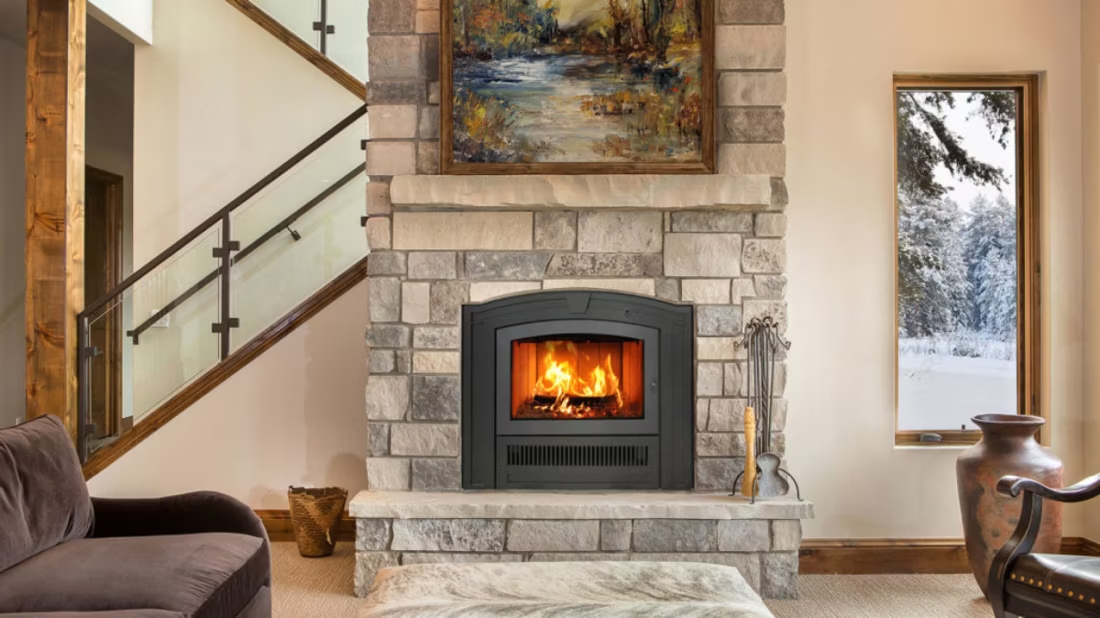
That doesn't mean wood heat is off the table entirely. A small number of homeowners—often at slightly higher, cooler elevations toward Wood Valley and the Ka'u Forest Reserve, or at vacation rental properties wanting a real hearth as a focal point—do install wood stoves or fireplaces. Locally available species like eucalyptus, planted widely on old plantation land, could serve as firewood, though native ohia is subject to Rapid Ohia Death quarantine restrictions and koa is far too valuable as a hardwood to burn. For the rare Pahala project, we still match homeowners with a trusted installer who understands the shipping and code realities of building a wood-burning appliance on this side of the island.
Three steps. No salesperson until you're ready.
Tell us about your project
Your zip code, your situation, and the fuel you're leaning toward—or let the answers point you to one.
See what's actually available
The brands dealers within 100 miles genuinely carry—real options, never a catalog mirage.
Get your dealer & Project Guide
A trusted local dealer, plus the free Project Guide & Parts List that names every component of the job.
Frequently Asked Questions
Do people in Pahala actually install wood stoves or fireplaces?
Only a handful. Pahala sits in the Ka'u district at 851 feet, where the average winter low is 54°F and the town needs only a sliver of the heating that a cold-climate town like Bozeman, MT uses in a single winter. Most Pahala homes have never needed a heat source beyond a light jacket. The rare installs we do see are usually vacation rentals wanting a cozy focal point, or homeowners at slightly higher elevation toward Wood Valley and the Ka'u Forest Reserve who get genuinely cool, damp evenings.
What would a wood stove installation cost in Pahala?
There isn't a well-established local price because so few installers on the Big Island stock solid-fuel appliances for a market this small. Expect to pay a premium over mainland pricing—often in the $6,000-$12,000+ range once you factor in barge freight for the stove and Class A chimney pipe, plus a specialist willing to travel from Hilo or Kona for the install. A dealer match through Find My Fireplace will give you a firm number based on the specific unit and your home's venting path.
Why does Pahala need so little heating?
Pahala falls in climate zone 1A—the same designation used for Miami and Honolulu—with trade winds keeping temperatures mild year-round. Pahala needs less than 2% of the heating a place like Fargo, ND requires in a typical winter. Furnaces, and by extension wood stoves, simply aren't part of how most homes here are built.
What wood species grow locally, and could I burn them?
Eucalyptus, planted widely on former sugar plantation land around Pahala, actually burns reasonably well and is the closest thing to a local firewood source. Ohia, the native forest tree, is best left alone—Rapid Ohia Death (ROD) has led to strict state quarantine rules on moving ohia wood off-site, and cutting live trees is discouraged. Koa is a prized, slow-growing hardwood reserved almost exclusively for furniture, canoes, and carving; you won't find anyone burning koa for heat.
What do Pahala homeowners use for heat instead of wood?
Most homes need no supplemental heat at all. When it's used, it's typically a small electric space heater or a portable propane heater for the occasional cool, rainy night. Hawaii Electric Light Co. serves the area, and at roughly 48 cents per kWh, running electric heat regularly gets expensive fast—one more reason wood, gas, or a small ductless heat pump only shows up in the rare home that truly wants it.
Are there air quality rules that affect wood burning in Pahala?
None specific to wood smoke—Hawaii County isn't a non-attainment area and doesn't run burn bans like you'd see in a place with winter inversions. The air quality issue Pahala residents actually watch is vog, the volcanic smog that drifts over from Kilauea's ongoing activity, which has nothing to do with fireplaces but does shape how people think about anything that adds particulates to the air.
Do I need a permit for a wood-burning appliance in Pahala?
Yes. Even though installations are rare, any solid-fuel appliance still falls under the County of Hawaii's building and fire code requirements, administered through the County of Hawaii Department of Public Works. A licensed installer will pull the permit, confirm clearances, and make sure the chimney penetration is inspected—the same as it would be anywhere else, just handled by one of the few contractors on the island who does this work regularly.
I still want a wood fireplace for ambiance—is that realistic?
It is, and we can help. A number of Big Island homeowners install wood fireplaces purely for the look and feel rather than actual heat need—think a stone hearth in a Ka'u ranch home or a vacation rental near Punalu'u. The main hurdle is logistics: shipping the unit and chimney components by barge and scheduling an installer who travels to Ka'u. A dealer match through Find My Fireplace accounts for that reality up front rather than assuming mainland lead times.
Wood vs. gas vs. electric—what actually makes sense in Pahala?
For nearly every Pahala home, gas (propane, since natural gas isn't run this far south on the island) or a small electric unit makes more practical sense than wood—there's simply no real heating load to justify cordwood, storage, and chimney maintenance in a town that averages a 54°F winter low. Wood only wins if you specifically want the ambiance of a real fire and are willing to pay the shipping and installer premium that comes with being rare on this island. If heat output rather than atmosphere is the goal, our gas and electric fireplace guides for Pahala are the more realistic starting point.
What's the difference between an insert and a zero-clearance fireplace?
An insert is a fireplace that slides into a pre-existing wood-burning fireplace—if you don't have one, there's nothing to insert it into. A zero-clearance fireplace is built into a framed wall, which makes it the answer for remodels and new construction. Simple test: existing masonry fireplace means insert; blank or framed wall means zero-clearance.
What do I measure to size a fireplace insert?
Four numbers tell you what fits: the front width, the front height, the back width, and the overall depth of your existing fireplace opening. Grab a tape measure, jot those down, and snap a photo of the wall—those two things do more to move your project forward than anything else you can do today.
What is an in-home preview and do I need one?
It's a visit where a hearth professional measures your space, confirms the model you picked actually works in your home, and walks the specs—framing, gas line, venting, finish work—before anything is ordered. Some details you just can't know until you see the house. Never make a down payment without one; it's the single most-skipped step that burns buyers.
Can a fireplace actually lower my heating bill?
Yes—by creating a comfort zone. A furnace heats every square foot of the house just to warm the one room you're in; a gas fireplace on low burns roughly a sixth of the gas a typical furnace does. Set the furnace around 55–60 degrees as a baseline, then heat the rooms your family actually uses. Families who heat this way commonly save $20–$60 a month.
Nearby Dealers
Hearth shops serving Pahala and the surrounding area. Every listing shows whether it is a WhyFire partner, a dealer we have verified as authorized for the brands we recommend, or a local business carrying hearth products. No manufacturer pays for placement. How we verify dealers →
Fireplace & Home Center
Island Pool & Spa Supply
Hawaii Fireplace – Kamuela
Get matched with a wood-heat specialist near Pahala.
Tell us about your home and we'll connect you with a local dealer who can put together a free Project Guide & Parts List—including the vent kit—for a wood stove or fireplace project in Pahala, even though it's an uncommon build on this side of the island.
Find Your Fireplace →