
Pellet stoves are the exception, not the rule, in Nanawale Estates.
At 447 feet in the Puna District, with winter lows averaging 61°F and almost no days that ever call for heat, most homes here have no real use for a pellet stove. If yours is one of the rare exceptions, we'll still connect you with a dealer who can size it right.
Every Project Starts From One of These Five Situations
Nanawale Estates has almost no need for space heat.
Nanawale Estates sits in the lower Puna District of the Big Island at just 447 feet of elevation, in climate zone 1A—the same tropical classification used for Miami and Honolulu. With virtually no need to ever heat a home and winter lows that rarely dip below 61°F, this is one of the least heating-dependent places in the entire United States. The eucalyptus, ohia, and koa that grow throughout lower Puna are valued locally for lumber, carving, and construction—not firewood, and there's no local tradition of burning anything for warmth.
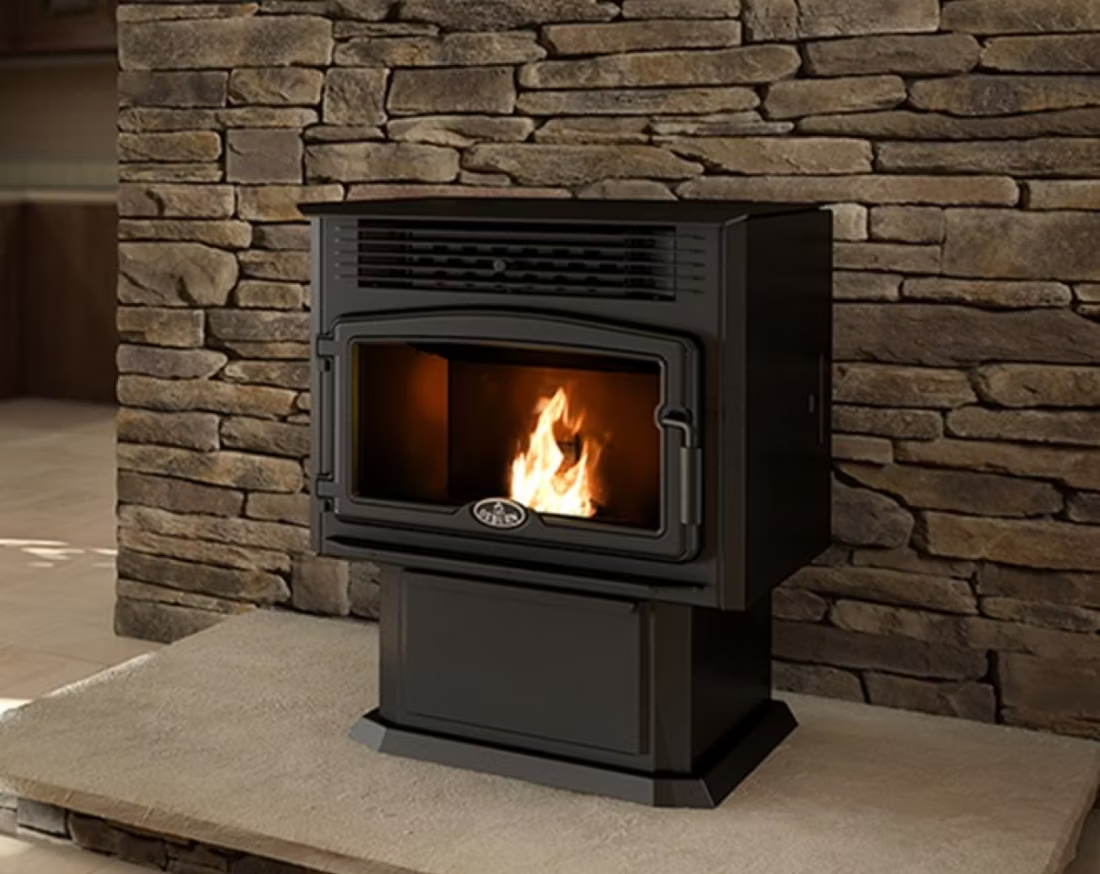
That said, a small number of pellet stoves do get installed here—usually for the visual warmth of a real flame, for a vacation rental catering to mainland guests who expect a hearth, or for a property owner who also has a cabin somewhere colder and wants the same setup at home. Lignetics is the regional pellet brand most likely to turn up on the Big Island, though supply is thin and pellets typically arrive by barge alongside everything else shipped to Hawaii Island, which adds cost. For most households here, an electric space heater is the more practical fit for the rare cool, rainy night—even with Hawaii Electric Light Co.'s residential rate running about 48 cents per kWh, one of the highest in the country, occasional use costs far less than installing and maintaining a pellet appliance you'll rarely fire up.
Three steps. No salesperson until you're ready.
Tell us about your project
Your zip code, your situation, and the fuel you're leaning toward—or let the answers point you to one.
See what's actually available
The brands dealers within 100 miles genuinely carry—real options, never a catalog mirage.
Get your dealer & Project Guide
A trusted local dealer, plus the free Project Guide & Parts List that names every component of the job.
Frequently Asked Questions
Does it make sense to install a pellet stove in Nanawale Estates?
For heating purposes, generally no. With winter lows averaging 61°F and essentially no need for home heating, a pellet stove won't pay for itself in warmth the way it would in a place like Bozeman, MT or Burlington, VT. Homeowners who install one here are almost always doing it for the look and feel of a real fire, for a vacation rental that wants a cozy focal point, or because they split time between the Big Island and a colder climate and want matching equipment. If that's your situation, we can still match you with a dealer who understands the install is more about ambiance than BTUs.
Why would anyone want a pellet stove in a place this warm?
The most common reason we see is aesthetic—a real flame in the living room, even in a climate where you'll rarely need the heat output. The second most common reason is rental property appeal: short-term rental owners in lower Puna sometimes install a small stove because mainland guests associate a hearth with a proper vacation cabin. A few owners also split time between Nanawale Estates and a colder second home and want the systems to feel familiar. None of these are heating-driven decisions, and a good local dealer will tell you that upfront rather than oversell the appliance.
How much does a pellet stove installation cost in Nanawale Estates?
There isn't a reliable local cost baseline here, because installations are infrequent enough that Big Island dealers don't quote them the way they would in a market with real winter demand. Expect the unit itself, plus shipping to the island, plus venting work, to run higher than a comparable mainland install—freight alone adds a meaningful premium on any hearth appliance shipped to Hawaii Island. The honest answer is that you'll need a specific in-home quote; that's exactly what the free Project Guide & Parts List is built for.
Where can I buy pellets in or near Nanawale Estates?
Lignetics is the pellet brand most likely to show up in Big Island hardware and feed stores, but because demand is so low in lower Puna, stock can be inconsistent and prices run higher than on the mainland once shipping is factored in. Some owners order pellets online in bulk and have them barged over with other household goods. If you're seriously considering a stove here, it's worth confirming with your matched dealer what's actually stocked nearby before you commit to a model.
What's a more practical heating option for a Nanawale Estates home?
For the occasional cool, rainy evening, a portable electric space heater is almost always the more sensible choice than a pellet stove, since Hawaii Electric Light Co. customers pay around 48 cents per kWh—high, but you're only running it a handful of nights a year rather than maintaining a hopper-fed appliance you rarely use. Electric fuel relevance is rated standard for this area precisely because it scales to occasional need without the venting, hopper loading, or pellet sourcing headaches a wood-pellet system requires in a market this small.
Do I need a permit to install a pellet stove in Nanawale Estates?
Any solid-fuel appliance installation typically falls under the County of Hawaii Building Division's permitting process, covering the unit placement, clearances, and venting through the roof or wall. Because pellet stoves are uncommon in lower Puna, it's worth confirming permit requirements directly with the county rather than assuming a mainland-standard process applies—and any dealer who regularly installs hearth appliances on the island should already know the local submittal requirements.
Will a pellet stove work during a power outage in Nanawale Estates?
No—pellet stoves rely on an electric auger and blower to feed fuel and circulate heat, so they shut down without power just like a furnace would. This matters more here than the mild climate suggests: lower Puna has experienced grid disruptions tied to volcanic activity, including the 2018 Kilauea eruption that reshaped parts of this very neighborhood, as well routine storm outages. If backup heat during an outage is your actual goal, a pellet stove isn't the tool for it—a battery-backed electric option is more realistic given how rarely you'd need supplemental heat in the first place.
Pellet stove vs. wood stove—does either make sense here?
Both are rated not-applicable for this area for the same reason: there's essentially no heating demand at 447 feet elevation with winter lows around 61°F. Locally available wood species like ohia, koa, and eucalyptus are prized for lumber and craft work, not firewood, and there's no cutting-permit culture here the way there is in mainland forest districts. If you want a wood-burning look without the heating rationale, a wood stove has the same ambiance argument as a pellet stove, but pellet units are generally cleaner and easier to operate occasionally, which tends to suit a rarely-used appliance better.
Is there anywhere on the Big Island where a pellet stove actually makes sense?
Yes—higher-elevation communities like Volcano Village, sitting near 3,700 feet close to Hawaii Volcanoes National Park, see genuinely cool, damp nights year-round and a much more legitimate case for supplemental heat. Nanawale Estates, at 447 feet in the Puna lowlands, just doesn't share that climate. If you own property in both places, it's worth treating them as two separate decisions rather than assuming what works at elevation makes sense at sea level.
How often does a pellet stove need cleaning?
A clean pellet stove is a happy pellet stove. Plan on cleaning the burn pot about once a week when you're burning regularly—ash and clinkers gum up the air holes just like a pellet barbecue. Most pellet stove problems trace back to skipped cleaning that nobody explained up front. Some designs make it easy with a trapdoor burn pot: pull a lever and the gunk drops into the ash pan.
What's the difference between an insert and a zero-clearance fireplace?
An insert is a fireplace that slides into a pre-existing wood-burning fireplace—if you don't have one, there's nothing to insert it into. A zero-clearance fireplace is built into a framed wall, which makes it the answer for remodels and new construction. Simple test: existing masonry fireplace means insert; blank or framed wall means zero-clearance.
Can a fireplace actually lower my heating bill?
Yes—by creating a comfort zone. A furnace heats every square foot of the house just to warm the one room you're in; a gas fireplace on low burns roughly a sixth of the gas a typical furnace does. Set the furnace around 55–60 degrees as a baseline, then heat the rooms your family actually uses. Families who heat this way commonly save $20–$60 a month.
How much should I budget for a fireplace?
For an average home—covering the fireplace, the vent pipe, and basic installation—a budget between $3,900 and $5,500 gives you a lot of options across wood, gas, and pellet. By the time you add finish work, gas line, and electrical, the average complete installation lands between $5,000 and $12,000 all-in. In a remodel or new build, a good rule is to put about 2.5% of the total project cost toward the fireplace.
Nearby Dealers
Hearth shops serving Nanawale Estates and the surrounding area. Every listing shows whether it is a WhyFire partner, a dealer we have verified as authorized for the brands we recommend, or a local business carrying hearth products. No manufacturer pays for placement. How we verify dealers →
Fireplace & Home Center
Hawaii Fireplace – Kamuela
Island Pool & Spa Supply
Pellet Brands Stocked Around Nanawale Estates
Manufacturers will point you to the nearest stocking dealer.
See what's actually realistic for pellet heat in Nanawale Estates.
Tell us about your home and how you'd actually use the stove—ambiance, a rental property, or a second home elsewhere—and we'll match you with a local dealer and send a free Project Guide & Parts List with the exact equipment and vent kit for your situation.
Find Your Fireplace →