
Keep Your Family Warm and Safe—No Matter What
With essentially no winter heating season and winter lows averaging 64°F, upcountry Molokai was never built around wood heat. If you still want a wood-burning fireplace for ambiance, a vacation rental, or an outdoor gathering space, we'll connect you with a dealer who knows how to make that work here.
Every Project Starts From One of These Five Situations
Why wood heat isn't part of daily life on Molokai.
Kualapuu sits at 731 feet on Molokai's upcountry plateau, in a climate zone (1A) that never generates a heating load—the National Weather Service shows essentially no winter heating season here, and the average winter low hovers around 64°F. Compare that to a place like Duluth, MN, where a long, bitterly cold winter makes wood stoves a practical necessity every year. In Kualapuu, a wood-burning appliance isn't solving a heating problem, because there isn't one.
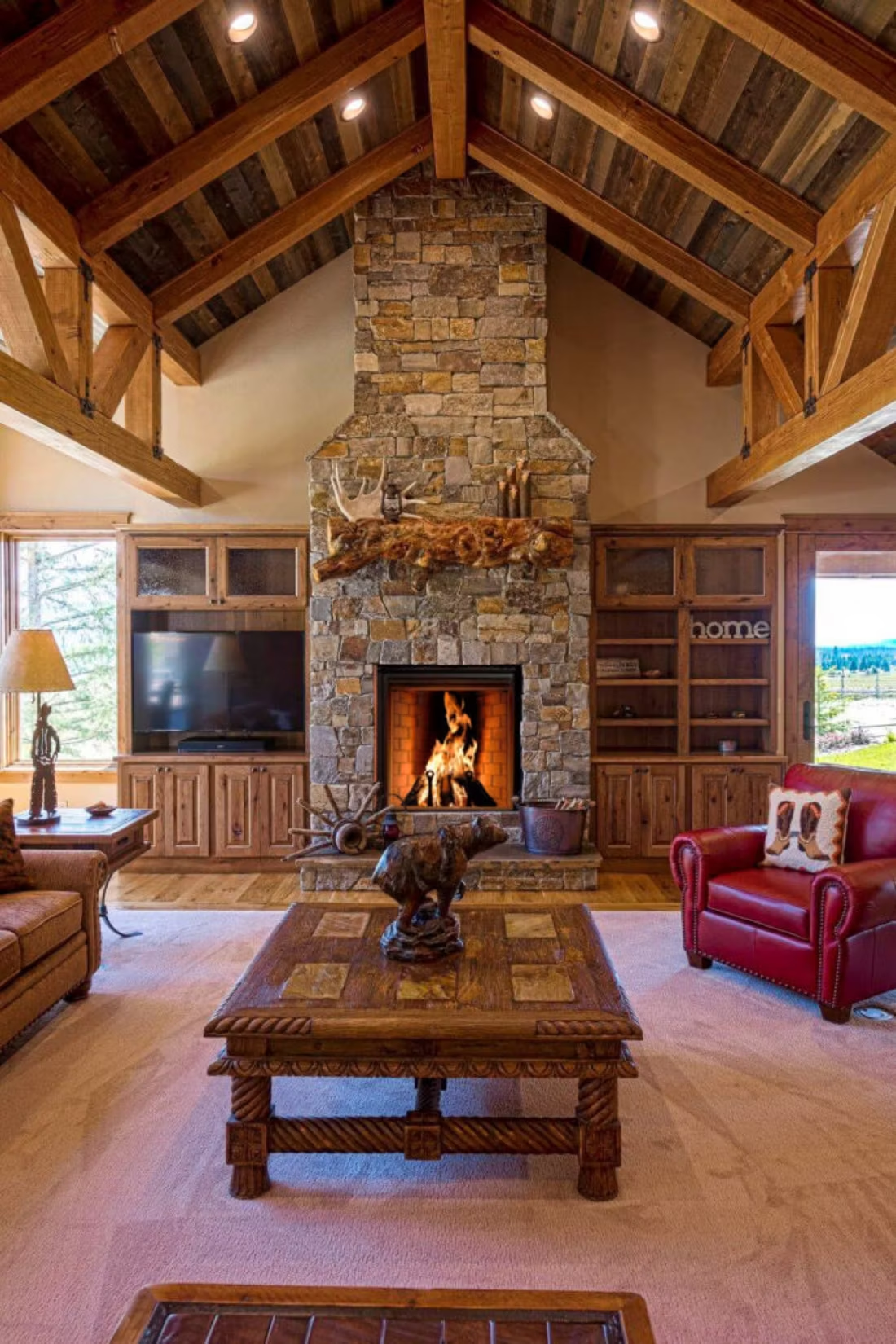
That said, we occasionally hear from homeowners who want a wood-burning fireplace anyway—for the look and ritual of a real fire in a great room, for a vacation rental that wants the feature, or for outdoor gatherings using local eucalyptus or fallen ohia. Koa is too valuable and culturally significant to burn as firewood; most local koa goes to woodworking and canoe building instead. If you're one of the homeowners pursuing this as a deliberate choice rather than a heating necessity, the path looks different here than on the mainland—freight logistics, humidity, and Maui County permitting all factor in, and we'll walk you through what's realistic before you commit.
Three steps. No salesperson until you're ready.
Tell us about your project
Your zip code, your situation, and the fuel you're leaning toward—or let the answers point you to one.
See what's actually available
The brands dealers within 100 miles genuinely carry—real options, never a catalog mirage.
Get your dealer & Project Guide
A trusted local dealer, plus the free Project Guide & Parts List that names every component of the job.
Frequently Asked Questions
How much does a wood-burning fireplace cost to install in Kualapuu?
There isn't a well-established local price range because so few homes on Molokai install wood-burning units—most hearth retailers serving Maui County focus their Molokai work on gas and electric appliances instead. Expect costs to run meaningfully higher than a comparable mainland install once you factor in barge freight to Kaunakakai Harbor for the stove or insert itself, plus travel costs for a certified installer who typically has to come over from Maui or Oahu. Get a firm number from a trusted dealer before assuming a mainland price applies.
Why don't more homes in Kualapuu use wood heat?
Because there's no heating demand to speak of. Kualapuu's climate zone (1A) has essentially no winter heating season, and winter lows average around 64°F—mild enough that most homes here have no space heating system at all, let alone a dedicated wood stove. Wood heat exists in places with real winter cold, like Bozeman, MT or Burlington, VT, where a stove needs to hold a fire through single-digit nights. That reality simply doesn't exist on upcountry Molokai.
What wood species grow locally, and can I burn them?
Eucalyptus, ohia, and koa are the common species around Kualapuu, but none of them function as a local 'firewood supply chain' the way pine or oak might elsewhere. Eucalyptus is the most practical option for occasional burning if you can source fallen or cleared trees. Ohia carries cultural significance and is also affected by Rapid Ohia Death, so moving it around the island raises quarantine concerns—check with the Hawaii Department of Agriculture before transporting any. Koa is prized for woodworking and canoe building and essentially never gets burned as firewood.
Do I need a permit to install a wood-burning fireplace in Kualapuu?
Yes. Any new wood-burning appliance install requires a building permit through the Maui County Department of Public Works, Building Division, which covers Molokai. Because these installs are uncommon here, it's worth confirming with the county directly that your specific unit and venting plan meet current code before ordering equipment—a trusted local-serving dealer can usually manage that coordination for you rather than leaving you to sort it out solo from Kualapuu.
Could an outdoor wood-burning fire pit or imu-style feature work instead?
For most Kualapuu homeowners chasing the wood-fire experience without a heating need, an outdoor fire feature is the more common and practical route than an indoor stove or fireplace. There's no regional air quality concern flagged for this area—no inversion layers or non-attainment status—but open burning is still regulated by the county fire authority, and Molokai's steady trade winds mean spark control and clearance from vegetation matter more than they would in a still, humid location. A local contractor familiar with outdoor hearth features can size this correctly for your lot.
What's the better alternative if I just want the ambiance of a fireplace?
Electric fireplaces are worth a close look here. They install with minimal venting or structural work, which matters when everything else has to come in by barge. The tradeoff is Maui Electric's residential rate of roughly $0.44 per kWh—among the highest in the country—so running one for hours of daily ambiance adds up faster than it would on the mainland. Gas is the other standard option in Kualapuu and tends to deliver a more convincing flame for less ongoing cost, provided propane delivery is available at your address.
Are there practical downsides to a wood stove in a Molokai home?
A few. Hawaii's humidity makes stored firewood harder to keep properly seasoned, and homes here are generally built for ventilation and cooling rather than sealed cold-climate performance, which changes how a chimney draws. Termite pressure is also a real consideration for any exposed wood storage near the house. None of these are dealbreakers, but they're reasons a mainland-standard installation plan often needs adjusting for local conditions—another spot where a dealer with actual Hawaii experience matters more than one working from a generic spec sheet.
How does equipment actually get to Kualapuu for an install?
Wood stoves, inserts, and venting components for Molokai installs typically ship via Young Brothers barge from Honolulu or Kahului into Kaunakakai Harbor, then get trucked the remaining distance to Kualapuu. That adds both cost and lead time compared to an install in a city with a local hearth showroom—plan for several extra weeks versus a Maui or Oahu timeline. This is exactly the kind of logistics question we ask about upfront when matching you with a dealer, so there aren't surprises once you're committed.
Wood, gas, or electric—what actually makes sense for a Kualapuu home?
Given essentially no winter heating season and average winter lows near 64°F, heating output isn't really the deciding factor for any of these—it comes down to what you want the feature to do. Gas delivers realistic flame and instant on-off convenience and is the most common choice among the standard options here. Electric is simplest to install and safest around Molokai's building stock, though the high per-kWh rate from Maui Electric makes heavy daily use costlier. Wood is the right call only if the ritual of a real fire matters more to you than convenience or cost—and even then, most homeowners here end up pointing that interest at an outdoor fire feature rather than an indoor stove.
What's the difference between an insert and a zero-clearance fireplace?
An insert is a fireplace that slides into a pre-existing wood-burning fireplace—if you don't have one, there's nothing to insert it into. A zero-clearance fireplace is built into a framed wall, which makes it the answer for remodels and new construction. Simple test: existing masonry fireplace means insert; blank or framed wall means zero-clearance.
Why is my open fireplace making my house colder?
Open fireplaces suck—literally. As the fire burns, it consumes air your furnace already paid to heat and pulls it out through the chimney, so the house is actually colder after the fire goes out than before you lit it. An insert fixes this: it seals the chimney, puts fixed glass across the front, and turns that hole in your house into a real heat source.
Can a fireplace actually lower my heating bill?
Yes—by creating a comfort zone. A furnace heats every square foot of the house just to warm the one room you're in; a gas fireplace on low burns roughly a sixth of the gas a typical furnace does. Set the furnace around 55–60 degrees as a baseline, then heat the rooms your family actually uses. Families who heat this way commonly save $20–$60 a month.
What is an in-home preview and do I need one?
It's a visit where a hearth professional measures your space, confirms the model you picked actually works in your home, and walks the specs—framing, gas line, venting, finish work—before anything is ordered. Some details you just can't know until you see the house. Never make a down payment without one; it's the single most-skipped step that burns buyers.
Nearby Dealers
Hearth shops serving Kualapuu and the surrounding area. Every listing shows whether it is a WhyFire partner, a dealer we have verified as authorized for the brands we recommend, or a local business carrying hearth products. No manufacturer pays for placement. How we verify dealers →
Hawaii Fireplace – Wailuku
Island Pool And Spa Supply
Island Pool And Supply
Find out what's realistic for a wood fireplace in Kualapuu.
Tell us about your home and what you're hoping to build, and we'll send you a free Project Guide & Parts List—the exact equipment, venting, and shipping plan for a wood-burning project in Kualapuu, matched with a dealer who actually serves Molokai.
Find Your Fireplace →