
Find your fireplace across Maui County.
From the coastal condos of Kihei and Lahaina to the cooler upcountry slopes of Kula and Makawao, and across the channel to Molokai and Lanai—get matched with a local dealer who knows what actually works on island.
Every Project Starts From One of These Five Situations
684 heating degree days and a climate where a fireplace is a lifestyle choice, not a necessity.
Maui County spans Maui, Molokai, and Lanai, and sits in climate zone 1A with an average winter low near 53°F—a heating load (684 HDD) so light it barely registers next to a mainland winter. Coastal towns like Kahului, Lahaina, and Kihei rarely see a night cold enough to want supplemental heat at all. The exception is upcountry Maui—Kula, Makawao, and Olinda climb the slopes of Haleakalā and can dip into the 40s on clear winter nights, which is where most of the county's actual demand for a wood or pellet stove lives.
That mild baseline reshapes what 'fireplace' means here. Gas (propane, since there's no piped natural gas utility on the islands) and electric units are the standard choices countywide—propane fireplaces show up in higher-end homes and resort-area builds, while electric units are everywhere in condos and vacation rentals from Wailea to Kaanapali, since they need no venting, no gas line, and rarely trigger a building permit. Wood and pellet stoves are genuinely rare: eucalyptus, an invasive species, is the wood most commonly burned locally, while native ʻōhiʻa is subject to inter-island quarantine restrictions tied to Rapid ʻŌhiʻa Death and koa is far too valuable as furniture-grade hardwood to burn. This hub rolls up hearth retailers, service techs, and fuel suppliers across all three islands—pick your fuel below for what's realistically available and installable at your address.
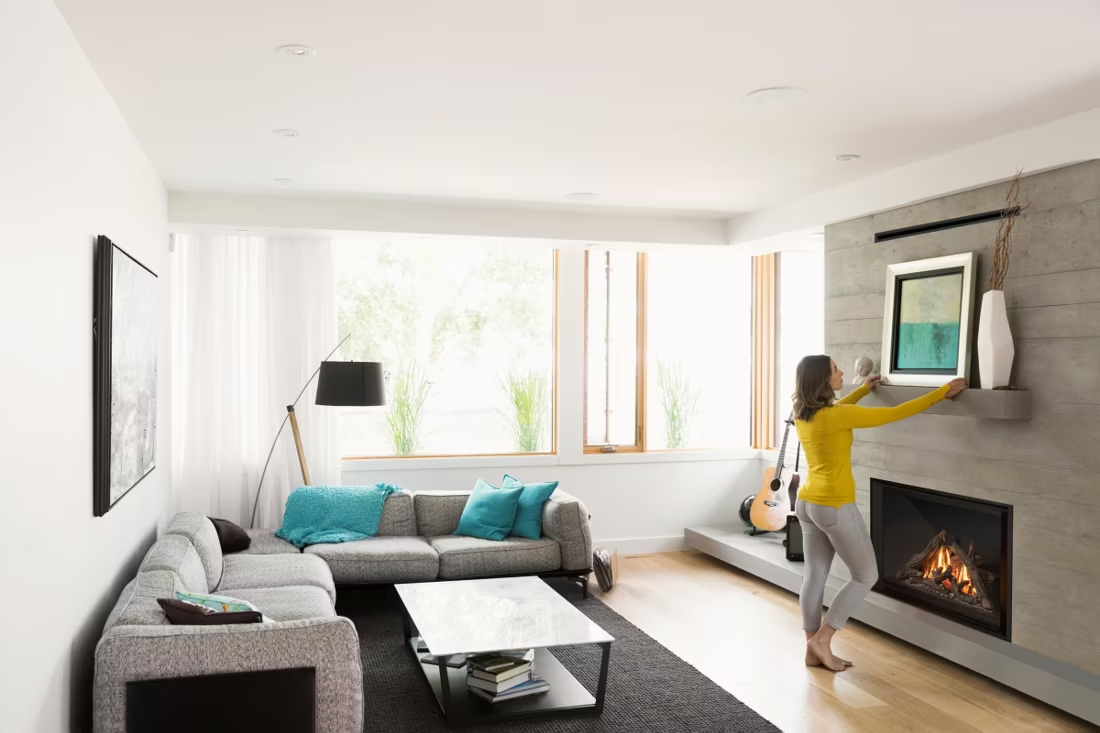
Four fuels. One honest answer for Maui County.
Three steps. No salesperson until you're ready.
Tell us about your project
Your zip code, your situation, and the fuel you're leaning toward—or let the answers point you to one.
See what's actually available
The brands dealers within 100 miles genuinely carry—real options, never a catalog mirage.
Get your dealer & Project Guide
A trusted local dealer, plus the free Project Guide & Parts List that names every component of the job.
Frequently Asked Questions
Which fireplace fuel makes the most sense in Maui County?
It depends heavily on where in the county you live. Along the coast—Kahului, Lahaina, Kihei, Wailea—winter lows rarely drop out of the 60s, so a fireplace is almost always a design or ambiance choice rather than a heating need, and propane or electric units cover that job well. Propane fireplaces are the standard 'real flame' option here since there's no piped natural gas utility on the islands. Electric fireplaces are just as common, especially in condos and vacation rentals, because they need no venting and no gas line. Wood and pellet stoves are genuinely rare countywide, but they do have a small, real niche upcountry in Kula, Makawao, and Olinda, where elevation on Haleakalā's slopes pushes nighttime temperatures into the 40s and an occasional wood fire is both practical and popular.
Do I need a building permit to install a fireplace in Maui County?
Generally yes for anything involving gas lines or venting. Propane fireplace installs need a permit through the County of Maui Department of Public Works, Building Division, plus a licensed technician to make the gas connection and set or connect the propane tank. Wood and pellet stove installs, though uncommon, still require a permit and proper chimney or vent-pipe clearance through the same office. Electric fireplaces are the exception—a plug-in unit typically needs no permit at all, and even a hardwired built-in usually just needs an electrical permit rather than a full building permit. Most retailers we match homeowners with handle this paperwork as part of the install.
Is a wood stove practical in Maui County's climate?
For most of the county, not really—with 684 heating degree days and coastal lows in the 60s, a wood stove would sit unused most of the year. Upcountry is the exception: homes in Kula and Makawao at higher elevation see genuinely cool nights and a modest number of households there do run a wood stove. If you go that route, eucalyptus—an invasive, fast-growing species—is the most commonly available and burned firewood on Maui. Native ʻōhiʻa is a poor choice for firewood even where available, since inter-island movement of ʻōhiʻa wood is restricted to slow the spread of Rapid ʻŌhiʻa Death, a fungal disease killing the species across the islands. Koa, meanwhile, is prized furniture-grade hardwood and essentially never burned.
What does fireplace installation cost on Maui, Molokai, or Lanai?
Costs run higher here than on the mainland mainly because of shipping. Propane fireplace installs typically run $5,500–$12,000 depending on tank setup and venting, a range that climbs toward the top end on Molokai and Lanai once freight and ferry costs for materials and installer travel are added in. Electric fireplaces are the most budget-friendly option—$200–$3,000 for the unit, plus $400–$1,200 in labor for anything beyond plug-and-play placement—and the most common choice in condo renovations and vacation rentals. Wood or pellet stove installs, where a dealer will even take the job, tend to land at the higher end of mainland pricing once you factor in imported parts and the smaller pool of installers who work with them.
Why are electric fireplaces so common in Maui condos and vacation rentals?
Electric units solve several problems at once for condo and resort-area owners: no venting or chimney to maintain in a humid, salt-air climate that's tough on masonry and metal; no gas line or propane tank to manage in a building with shared systems; and no real heating requirement to satisfy given how mild Maui County's winters are. Many condo associations in Kihei, Wailea, and Kaanapali also restrict open-flame installations, which makes electric the default approved option. Retailers we match homeowners with can advise on which units meet a specific building's association rules before you buy.
Where does gas and pellet fuel actually come from on the islands?
Since Maui County has no piped natural gas utility, propane for fireplaces is delivered by tank or refilled through local distributors—worth planning ahead for on Molokai and Lanai, where delivery schedules are less frequent than on Maui. Pellet fuel is the bigger logistical question: pellet stoves are rare enough here that bagged pellets, including regional brands like Lignetics, usually have to be special-ordered through a hearth retailer rather than picked up off a shelf, and freight adds noticeably to the per-bag cost compared to mainland pricing.
Wood, gas, pellet, or electric—how do I choose?
Match the fuel to your life, not the other way around. Wood: lowest fuel cost and total power-outage independence, but you're hauling and stacking. Gas: press a button, set a thermostat, no maintenance to speak of. Pellet: wood economics with automatic feeding, in exchange for weekly cleaning and a need for electricity. Electric: plugs in anywhere with honest supplemental heat. Nobody regrets the fuel that fits how they actually live.
Can I install a fireplace myself?
If you're putting a fire in your house on purpose, it's best to work with an expert. Unless you're genuinely experienced in framing, gas line, vent pipe, and the national code on clearances to combustibles, have a professional do it—and ideally the same company that sells you the fireplace, so warranty, service, and liability all live under one roof.
What is an in-home preview and do I need one?
It's a visit where a hearth professional measures your space, confirms the model you picked actually works in your home, and walks the specs—framing, gas line, venting, finish work—before anything is ordered. Some details you just can't know until you see the house. Never make a down payment without one; it's the single most-skipped step that burns buyers.
Can a fireplace actually lower my heating bill?
Yes—by creating a comfort zone. A furnace heats every square foot of the house just to warm the one room you're in; a gas fireplace on low burns roughly a sixth of the gas a typical furnace does. Set the furnace around 55–60 degrees as a baseline, then heat the rooms your family actually uses. Families who heat this way commonly save $20–$60 a month.
Stove and Fireplace Dealers in Maui County
Listings include WhyFire partner dealers, dealers we have verified as authorized for the brands we recommend, and established local businesses that carry hearth products. Every listing shows which one it is. The ones marked Preferred run on WhyFire's software, so they can show you real pricing and book your appointment right here. No manufacturer pays for placement. How we verify dealers →
Hawaii Fireplace – Wailuku
Island Pool And Spa Supply
Get matched with a local Maui County dealer.
Pick your fuel below and we'll put together a free Project Guide & Parts List—the right unit, the vent kit it needs, and the local dealer we recommend for your island.
Find Your Fireplace →