
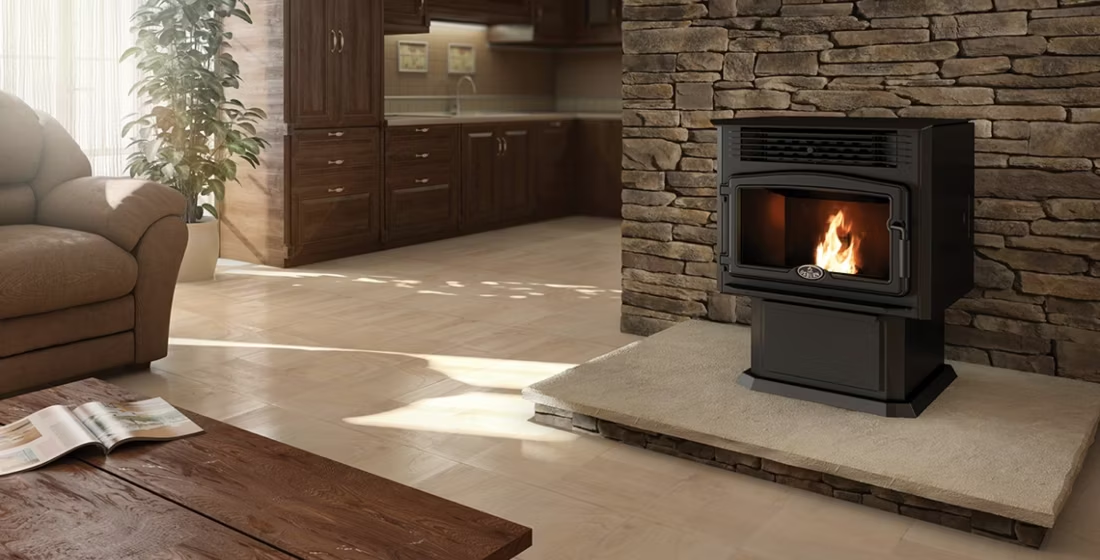
In Kaneohe, a pellet stove is the exception, not the rule.
With an average winter low of 66°F and essentially no need for indoor heating, windward Oahu simply doesn't generate the kind of cold that pellet stoves were built to answer. If you still want one—for ambiance, backup power resilience, or a mainland property—I'll connect you with a dealer who can tell you honestly whether it makes sense.
Every Project Starts From One of These Five Situations
Essentially no winter heating need changes the math.
Kaneohe sits at 47 feet on the windward side of Oahu, tucked against the Koolau Mountains, where trade winds and frequent rain keep the air mild year-round rather than cold. There's essentially no winter heating need here—compare that to a place like Duluth, MN, which faces a long, brutal heating season nearly every day of the year, and the gap explains why pellet stoves, built specifically to burn through long cold winters, have almost no functional role in a Kaneohe home. Even the misty, cooler nights up toward the Koolau foothills rarely dip below the mid-60s.
There are practical obstacles beyond climate, too. Pellets aren't produced locally, so the one regional brand available on Oahu, Lignetics, arrives by barge, and that shipping premium stacks on top of an already high cost of living. Storage is its own challenge in a humid, salt-air environment—bagged pellets absorb moisture and crumble fast unless kept in a sealed, dehumidified space, and steel stove components corrode faster here than on the mainland. For the rare homeowner who still wants one—often someone maintaining a second home in a colder climate, or a self-sufficiency-minded household on a larger Koolau-side lot wanting a non-electric backup—it's worth going in with eyes open about upkeep. For most Kaneohe households, a gas fireplace (on propane, since there's no natural gas utility on Oahu) or an electric unit through Hawaiian Electric ends up the more practical way to get real flame or ambiance without fighting the climate.
Three steps. No salesperson until you're ready.
Tell us about your project
Your zip code, your situation, and the fuel you're leaning toward—or let the answers point you to one.
See what's actually available
The brands dealers within 100 miles genuinely carry—real options, never a catalog mirage.
Get your dealer & Project Guide
A trusted local dealer, plus the free Project Guide & Parts List that names every component of the job.
Frequently Asked Questions
Why don't more homes in Kaneohe have pellet stoves?
The short answer is there's no heating load to justify one. Kaneohe averages a 66°F winter low and essentially never needs indoor heating, so a stove designed to burn for hours to hold back single-digit or teens cold has no job to do here. Add in that pellets have to be barged in—Lignetics is the one regional brand available on Oahu—and you're paying mainland-plus-shipping prices for fuel to run equipment that would sit unused most of the year.
Is it even legal or practical to install a pellet stove in a Kaneohe home?
It's legal, but practicality is the real question. Most Kaneohe homes are slab-on-grade without a chimney chase, so a pellet stove needs a new through-wall vent kit regardless of layout, similar to a direct-vent gas unit. Honolulu's building permit process treats it like any solid-fuel appliance install, so a permit and inspection are required. The bigger issue is day-to-day: the trade-wind humidity here means pellet bags need dry, sealed storage, and a stove that only runs a handful of nights a year is more upkeep than most homeowners want to sign up for.
What would it cost to install a pellet stove in Kaneohe if I still want one?
Expect the installed cost to run higher than a comparable mainland install, mostly because of freight. The stove itself, the vent kit, and any masonry or wall modification are the same labor a dealer would quote anywhere, but pellets themselves carry a real shipping premium on top of already-elevated Hawaii cost of living, and a dealer familiar with Oahu installs will be upfront that you're paying for a niche appliance rather than a mainstream heating solution.
If pellet doesn't make sense, what's a better fit for a Kaneohe home?
Most homeowners here end up happier with either a propane gas fireplace or an electric unit. Propane makes sense since there's no natural gas utility on Oahu, and a direct-vent gas fireplace gives you real flame on demand without a fuel storage or humidity problem. Electric fireplaces are simpler still—no venting required—though it's worth knowing Hawaiian Electric's residential rate runs around $0.43 per kWh, among the highest in the country, so an electric unit is better suited to occasional ambiance than as a real heat source.
Where would I even buy pellets in Kaneohe?
Lignetics is the regional brand with any presence in Hawaii, typically brought in by barge rather than stocked at every hardware store the way it would be on the mainland. Availability can be inconsistent, and pricing runs well above mainland typical rates once shipping is factored in. Anyone committing to a pellet stove here should plan on ordering ahead of hurricane season and storing several bags' worth, since resupply isn't as simple as a same-week hardware run.
Do I need special venting for a pellet stove in a Kaneohe home?
Yes—since most Kaneohe homes are slab construction without an existing masonry chimney, a pellet stove needs its own through-wall power-vent kit, similar to what a direct-vent gas insert would use. The bigger local consideration is corrosion: salt-laden trade-wind air is harder on exterior vent caps and stove hardware than an inland mainland climate, so stainless components and more frequent inspection of the vent termination are worth discussing with your installer.
Would a pellet stove help during a hurricane power outage?
Not really—pellet stoves rely on an electric auger and blower to feed fuel and manage combustion, so they stop working in a power outage just like most gas fireplaces with electronic ignition. If outage resilience is the actual goal, a battery-backed ignition gas unit or a simple non-electric propane heater is a more direct answer than a pellet stove, which needs grid power to function at all.
Who actually installs pellet stoves in Kaneohe, if almost no one needs one for heat?
The handful of installs I hear about locally tend to fall into two groups: households with a second home in a cold-climate state who want a familiar appliance, and self-sufficiency-minded owners on larger Koolau-side lots who like having a non-grid-dependent backup, even though pellet units still need electricity to run. It's a small niche, and any dealer worth working with should tell you upfront if your situation doesn't really call for one.
What about burning local wood like koa or ohia instead of pellets?
That's generally discouraged here for reasons beyond climate. Ohia lehua is under active protection from Rapid Ohia Death, a fungal disease devastating the species across the islands, and moving ohia wood is restricted in many cases to prevent spreading it. Koa is culturally significant and typically reserved for woodworking and canoe-building rather than firewood. Between the wood-sourcing restrictions and the near-total absence of heating need, most Kaneohe homeowners looking for flame and ambiance are better served by a propane or electric fireplace than any solid-fuel appliance.
Why is my open fireplace making my house colder?
Open fireplaces suck—literally. As the fire burns, it consumes air your furnace already paid to heat and pulls it out through the chimney, so the house is actually colder after the fire goes out than before you lit it. An insert fixes this: it seals the chimney, puts fixed glass across the front, and turns that hole in your house into a real heat source.
What's the difference between an insert and a zero-clearance fireplace?
An insert is a fireplace that slides into a pre-existing wood-burning fireplace—if you don't have one, there's nothing to insert it into. A zero-clearance fireplace is built into a framed wall, which makes it the answer for remodels and new construction. Simple test: existing masonry fireplace means insert; blank or framed wall means zero-clearance.
How much should I budget for a fireplace?
For an average home—covering the fireplace, the vent pipe, and basic installation—a budget between $3,900 and $5,500 gives you a lot of options across wood, gas, and pellet. By the time you add finish work, gas line, and electrical, the average complete installation lands between $5,000 and $12,000 all-in. In a remodel or new build, a good rule is to put about 2.5% of the total project cost toward the fireplace.
What is an in-home preview and do I need one?
It's a visit where a hearth professional measures your space, confirms the model you picked actually works in your home, and walks the specs—framing, gas line, venting, finish work—before anything is ordered. Some details you just can't know until you see the house. Never make a down payment without one; it's the single most-skipped step that burns buyers.
Nearby Dealers
Hearth shops serving Kaneohe and the surrounding area. Every listing shows whether it is a WhyFire partner, a dealer we have verified as authorized for the brands we recommend, or a local business carrying hearth products. No manufacturer pays for placement. How we verify dealers →
Island Pool And Supply
Pellet Brands Stocked Around Kaneohe
Manufacturers will point you to the nearest stocking dealer.
Get your free Project Guide & Parts List for a pellet install in Kaneohe.
Tell me about your home and what you're actually trying to solve—ambiance, backup power, or a genuine heating need—and I'll match you with a trusted local dealer. If pellet turns out to be the wrong fit for windward Oahu, I'll point you toward the propane or electric setup that actually makes sense here, with a free Project Guide & Parts List either way.
Find Your Fireplace →