
Warmth Is Optional Here. Ambiance Isn't.
On Hawaii Island's Kona coast, a gas fireplace is about the glow and the resale value, not survival heat. Find the right unit and connect with a trusted local dealer.
Every Project Starts From One of These Five Situations
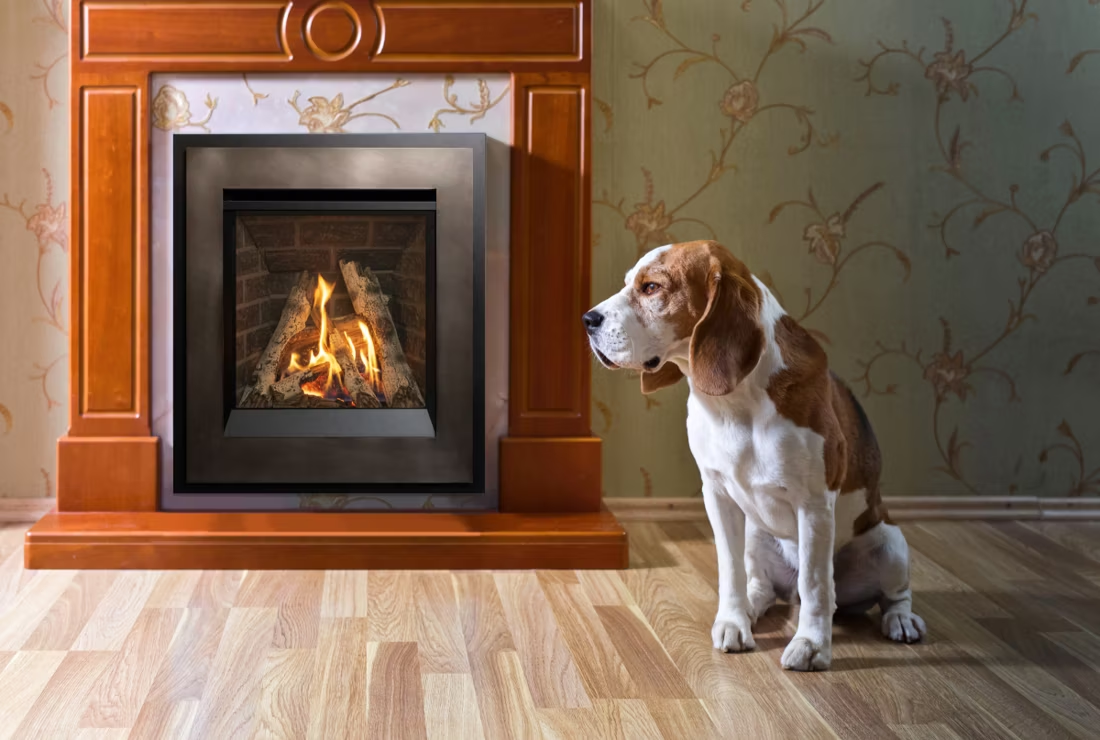
A fireplace built for ambiance, not survival.
Kahaluu-Keauhou sits on the Kona coast at roughly 482 feet, in climate zone 1A with an average winter low near 54°F and a heating season so short and mild it barely counts as one. Compare that to a place like Duluth, MN, where furnaces run nonstop through a long, brutal winter, and it's clear this is not a heating market in the traditional sense. Nobody here is sizing a fireplace to survive a January cold snap. What homeowners actually want is the visual warmth of a real flame on a cool evening, a focal point for a lanai or great room, and the resale appeal a fireplace adds to a Kona-side home.
There's no natural gas utility serving Hawaii Island, so every gas fireplace here runs on propane delivered by truck to a tank on the property. That changes the installation math compared to a mainland gas hookup, and it's worth planning for. Electricity is the other wrinkle: Hawaii Electric Light Company's residential rate runs about 48.3 cents per kWh, among the highest in the country, which makes propane a more economical choice than electric-resistance heat if you ever want the unit to put out real BTUs rather than just a flame effect.
Three steps. No salesperson until you're ready.
Tell us about your project
Your zip code, your situation, and the fuel you're leaning toward—or let the answers point you to one.
See what's actually available
The brands dealers within 100 miles genuinely carry—real options, never a catalog mirage.
Get your dealer & Project Guide
A trusted local dealer, plus the free Project Guide & Parts List that names every component of the job.
Frequently Asked Questions
How much does a gas fireplace installation cost in Kahaluu-Keauhou?
Most propane fireplace installations on this side of Hawaii Island run in the $4,000 to $9,000 range, depending on the unit, whether a new propane tank needs to be set and permitted, and how far the gas line has to run. Because there's no piped natural gas on the island, every install includes propane tank logistics that a mainland job wouldn't—either a leased tank from a local propane supplier or a purchased tank sized around 100 or 250 gallons. Freight also plays a role: fireplace units and venting components typically ship in from Oahu or the mainland, which can add cost and lead time compared to a Phoenix or Sacramento install.
Does a home in Kahaluu-Keauhou really need a fireplace at all?
Honestly, not for heat. With winter lows averaging 54°F and a heating season that's barely there, this climate doesn't create the kind of heating load you'd see in Bozeman, MT or Burlington, VT. Homeowners here install gas fireplaces almost entirely for ambiance, entertaining, and the value they add when a home goes on the market—plus the occasional genuinely chilly evening, especially in the upper elevations above the coast where temperatures drop a bit more than they do right on the water. It's a legitimate project, just a different motivation than heating-driven markets.
Can I get natural gas, or is propane my only option?
Propane is the only realistic option. Hawaii Island has no piped natural gas utility, so every gas fireplace, range, and water heater on this side of the island runs on propane delivered and stored in a tank on the property. Local propane suppliers handle tank setup, whether that's a small exchange-style tank for a modest gas log set or a larger 100- to 250-gallon tank for a fireplace with a higher BTU draw. Your installer will size the tank and regulator to match the specific unit you choose.
Do I need a permit to install a gas fireplace in Kahaluu-Keauhou?
Yes. Hawaii County Department of Public Works, Building Division requires a permit for gas line work and any structural changes tied to venting, and propane tank placement has to meet fire code setback rules from the county fire department. Licensed installers who work regularly in the Kona-Keauhou area handle this paperwork as part of the job, which matters here more than in a lot of markets—there are fewer propane-certified hearth technicians on Hawaii Island than you'd find in a comparable mainland population center, so permitting delays can stretch a project if it's not handled by someone who does this routinely.
What type of gas fireplace holds up best in a coastal Kona climate?
Direct-vent units with stainless steel venting components are the right call here. Kahaluu-Keauhou sits right on the coast, and the combination of salt air and humidity accelerates corrosion on cheaper vent caps, screws, and gas valve housings faster than it would in a dry inland climate. Vent-free gas fireplaces are generally a poor fit for this environment too—releasing combustion moisture into an already humid home increases the risk of mold and condensation issues. A sealed direct-vent system keeps combustion byproducts outside and holds up better long-term against the salt air.
Is a gas fireplace cheaper to run than an electric one here?
For anything beyond a flame-effect accent, yes. HELCO's residential rate of roughly 48 cents per kWh is nearly triple the mainland average, so an electric fireplace running at a 1,500-watt heat setting costs around 70 cents an hour to operate—expensive if you're using it regularly. A propane gas fireplace sidesteps that math since it's priced per gallon of propane rather than by the kWh. That said, small electric inserts used purely for the visual flame (drawing 40 to 100 watts with the heater off) are cheap to run either way, which is often exactly what Kahaluu-Keauhou homeowners want since heat output isn't the point.
What size gas fireplace do I actually need?
Smaller than you'd think. In a cold-climate market, an installer sizes a unit to cover a whole floor plan on the coldest night of the year. Here, with such a mild, short heating season, a 20,000 to 30,000 BTU direct-vent fireplace or a linear gas unit is plenty even in a larger great room, because it's rarely, if ever, being asked to actually heat the house. Most homeowners end up choosing based on the sightline and finish they want—linear, see-through, or traditional—rather than BTU output.
How often does a gas fireplace need to be serviced in this climate?
Plan on an annual inspection, and don't skip it just because winters here are mild. The bigger risk in Kahaluu-Keauhou isn't creosote or heavy use, it's corrosion—salt-laden coastal air and year-round humidity work on propane fittings, vent caps, and burner components faster than they would inland. A technician checking connections, the regulator, and venting integrity once a year catches corrosion issues before they become leaks. Because there are relatively few propane-certified hearth technicians serving the Kona-Keauhou area, it's worth scheduling before the cooler December-through-February stretch when demand for service visits picks up.
How long does a gas fireplace project take from order to installation?
Budget more lead time than you would on the mainland. Fireplace units and venting kits typically ship to Hawaii Island by barge from Oahu or the mainland, which can add several weeks compared to a same-week mainland delivery. Add in propane tank permitting through Hawaii County and scheduling with one of the island's limited number of licensed propane installers, and a full project—from initial consultation to a working fireplace—often runs six to ten weeks. Ordering early, especially if you're aiming to have it ready before the cooler winter months, avoids the tightest crunch.
Can I put a TV above my fireplace?
Yes—with an asterisk. Fireplaces are hot and TVs don't like heat. Either put a mantel between them to deflect rising warmth, or choose a fireplace with heat-management technology that creates a cool zone on the wall above—the wall stays around 125 degrees, barely warm, while the room still gets full heat. If you like clean lines and don't want a mantel, heat management is the answer.
Is my gas fireplace wasting gas?
If it was installed more than 15 years ago, probably. Older gas fireplaces keep a standing pilot light burning all the time, and that little flame can cost a couple hundred dollars a year. Newer models use pilot-on-demand ignition—the pilot lights only when you use the fireplace and goes out when you turn it off.
How much should I budget for a fireplace?
For an average home—covering the fireplace, the vent pipe, and basic installation—a budget between $3,900 and $5,500 gives you a lot of options across wood, gas, and pellet. By the time you add finish work, gas line, and electrical, the average complete installation lands between $5,000 and $12,000 all-in. In a remodel or new build, a good rule is to put about 2.5% of the total project cost toward the fireplace.
Can I install a fireplace myself?
If you're putting a fire in your house on purpose, it's best to work with an expert. Unless you're genuinely experienced in framing, gas line, vent pipe, and the national code on clearances to combustibles, have a professional do it—and ideally the same company that sells you the fireplace, so warranty, service, and liability all live under one roof.
Nearby Dealers
Hearth shops serving Kahaluu-Keauhou and the surrounding area. Every listing shows whether it is a WhyFire partner, a dealer we have verified as authorized for the brands we recommend, or a local business carrying hearth products. No manufacturer pays for placement. How we verify dealers →
Island Pool & Spa Supply
Hawaii Fireplace – Kamuela
Fireplace & Home Center
Find your gas fireplace in Kahaluu-Keauhou.
Tell us about your home and we'll match you with a trusted local Kona-side dealer and send a free Project Guide & Parts List—the exact parts, including the vent kit, for your gas fireplace project.
Find Your Fireplace →