
Keep Your Family Warm and Safe—No Matter What
East Kapolei has essentially no heating season and winter lows that rarely dip below 65°F, so a wood stove here is about atmosphere, not survival. If that's still what you want, we'll connect you with a trusted local dealer who can tell you what's realistically installable.
Every Project Starts From One of These Five Situations
Why wood heat is genuinely rare in East Kapolei.
East Kapolei sits at 127 feet elevation on Oahu's leeward Ewa Plain, in climate zone 1A with essentially no heating season at all. Compare that to Duluth, MN or Bozeman, MT, where residents burn four to six cords of wood a season just to survive January. In East Kapolei, the average winter low hovers around 65°F—a temperature most mainland homes would call a mild spring evening. There is no functional need for supplemental heat here, ever, which is the honest starting point for any wood-fireplace conversation on this page.
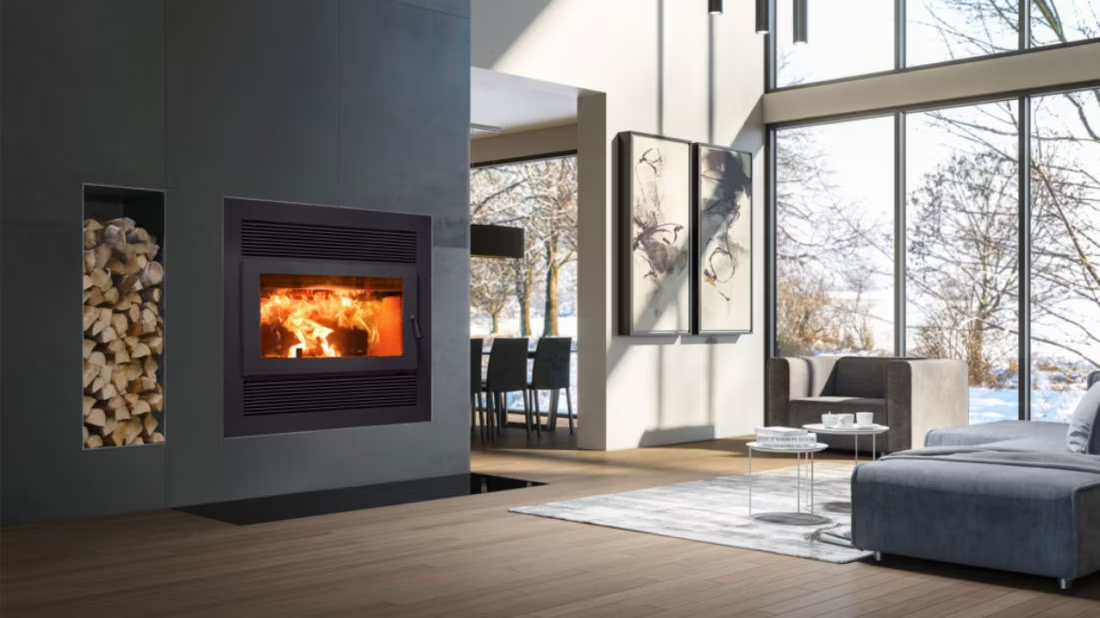
That doesn't mean nobody wants one. A handful of East Kapolei and greater Honolulu County homeowners install wood-burning fireplaces purely for the visual and emotional appeal of a real fire, for staging a higher-end home, or because they split time with a mainland property where wood heat matters. Locally available species tell their own story: koa is prized furniture and ukulele wood, far too valuable to burn; ʻōhiʻa is under a statewide interisland movement quarantine due to Rapid ʻŌhiʻa Death, so it isn't a practical firewood source regardless of intent; eucalyptus, grown widely as a plantation and windbreak species on Oahu, is the most realistic locally sourced option, though there is no established firewood-delivery trade the way there is in cold-climate states. If a real wood fire is what you want, go in with clear eyes about sourcing, venting, and cost—and know that gas and electric options are far more common answers to the same desire for hearth ambiance in this climate.
Three steps. No salesperson until you're ready.
Tell us about your project
Your zip code, your situation, and the fuel you're leaning toward—or let the answers point you to one.
See what's actually available
The brands dealers within 100 miles genuinely carry—real options, never a catalog mirage.
Get your dealer & Project Guide
A trusted local dealer, plus the free Project Guide & Parts List that names every component of the job.
Frequently Asked Questions
Does anyone actually install wood-burning fireplaces in East Kapolei?
Occasionally, yes—but it's a small niche, not a mainstream category. With essentially no heating season and winter lows around 65°F, nobody in East Kapolei needs a wood stove for warmth. The installs that do happen tend to be decorative statement pieces in higher-end homes, features requested by owners relocating from cold-climate states who want the familiar look and crackle of a real fire, or vacation-property owners splitting time between Oahu and a mainland home where wood heat makes practical sense. If that's your situation, a trusted local hearth dealer can tell you honestly whether it's worth pursuing versus a gas or electric alternative.
What would it cost to install a real wood-burning fireplace here?
There isn't an established wood-hearth trade on Oahu the way there is in places like Buffalo, NY or Madison, WI, so pricing tends to run higher than mainland averages once you factor in the appliance shipping to Hawaii, masonry or chimney chase construction (uncommon in most Oahu homes to begin with), and a specialty installer familiar with solid-fuel code requirements. Expect a wider, less predictable range than for a gas or electric unit, and expect to get fewer competing quotes. A local dealer matched through Find My Fireplace can give you a firm, honest number for your specific home rather than a generic estimate.
Can I burn eucalyptus, koa, or ʻōhiʻa in a wood stove?
Eucalyptus is the most realistic option—it's grown widely on Oahu as a plantation and windbreak species and burns reasonably well once seasoned, though you'd likely need to source and split it yourself rather than order it from a firewood delivery service, since none really exists here. Koa is a poor choice for firewood; it's a slow-growing, highly prized hardwood that sells by the board foot for furniture, canoes, and ukuleles, not by the cord. ʻŌhiʻa is effectively off the table—the state's ongoing quarantine on ʻōhiʻa wood movement, put in place to slow Rapid ʻŌhiʻa Death, restricts transporting it between islands and even within some areas, so it isn't a practical or advisable firewood source.
Do I need a permit to install a wood-burning fireplace in East Kapolei?
Yes. Any new solid-fuel burning appliance requires a building permit through the City and County of Honolulu Department of Planning and Permitting, which covers all of Oahu including East Kapolei. Because these installs are so uncommon locally, plan reviewers may be less familiar with solid-fuel clearance and venting requirements than they are with the gas fireplace permits they process constantly—budget extra time for review and lean on an installer who has pulled a wood-appliance permit in Honolulu County before.
Are there air quality restrictions on wood burning in East Kapolei?
East Kapolei has no wood-smoke air quality designations or burn-ban ordinances, largely because almost nobody burns wood for heat here. The bigger air quality variable on Oahu is volcanic smog (vog) drifting over from Big Island eruptions, which is unrelated to residential wood burning but worth knowing if you're weighing any combustion appliance. Because wood burning is so rare locally, don't expect the kind of neighbor complaints or curtailment notices common in wood-heavy markets like Klamath Falls, OR—the practical concern here is installation quality and venting, not community air quality rules.
Would a wood stove actually provide any heating benefit in my home?
Realistically, no. With an average winter low around 65°F and essentially no heating season at all, a wood stove in East Kapolei functions the same way a fireplace does in a warm-climate showroom—as a visual and sensory feature, not a heat source anyone relies on. Running one on a typical evening would likely make the room uncomfortably warm rather than comfortable. If you want the ambiance without the heat load, ask a local dealer about gas units with adjustable flame-only modes, which solve this exact problem far more elegantly than a wood-burning appliance can.
What should I consider instead of a wood-burning fireplace?
Most East Kapolei homeowners chasing hearth ambiance land on gas or electric instead. Propane-fueled gas fireplaces are common across Oahu where natural gas infrastructure is limited, and they deliver a realistic flame with none of the sourcing headaches of firewood. Electric fireplaces are the simplest option—no venting, no permit for many models, and instant installation—though it's worth knowing Hawaiian Electric's residential rate runs about $0.43 per kWh, among the highest in the country, so a unit run mostly for looks rather than heat keeps operating costs manageable. A local dealer can walk you through both.
If I go ahead with a wood fireplace, what maintenance should I expect?
Beyond the standard annual chimney sweep recommended by the CSIA for any wood-burning appliance, East Kapolei's coastal, high-humidity environment adds a wrinkle: salt air accelerates corrosion on metal flue components and firebox hardware faster than it would in a dry inland climate. Ask your installer about marine-grade or stainless steel venting components specifically, and plan on more frequent hardware inspections than you'd need in a drier climate zone.
Can Find My Fireplace actually match me with a dealer for a wood-burning install in East Kapolei?
Yes, though the pool of dealers who regularly handle solid-fuel installs on Oahu is smaller than for gas or electric. We're a neutral matchmaker, not a manufacturer or retailer—we don't sell or ship anything ourselves. Tell us about your home and what you're trying to achieve, and we'll connect you with a trusted local dealer who will give you a straight answer on feasibility, plus a free Project Guide & Parts List covering the exact components—including the vent kit—your specific install would require.
Why is my open fireplace making my house colder?
Open fireplaces suck—literally. As the fire burns, it consumes air your furnace already paid to heat and pulls it out through the chimney, so the house is actually colder after the fire goes out than before you lit it. An insert fixes this: it seals the chimney, puts fixed glass across the front, and turns that hole in your house into a real heat source.
What's the difference between an insert and a zero-clearance fireplace?
An insert is a fireplace that slides into a pre-existing wood-burning fireplace—if you don't have one, there's nothing to insert it into. A zero-clearance fireplace is built into a framed wall, which makes it the answer for remodels and new construction. Simple test: existing masonry fireplace means insert; blank or framed wall means zero-clearance.
What is an in-home preview and do I need one?
It's a visit where a hearth professional measures your space, confirms the model you picked actually works in your home, and walks the specs—framing, gas line, venting, finish work—before anything is ordered. Some details you just can't know until you see the house. Never make a down payment without one; it's the single most-skipped step that burns buyers.
Can a fireplace actually lower my heating bill?
Yes—by creating a comfort zone. A furnace heats every square foot of the house just to warm the one room you're in; a gas fireplace on low burns roughly a sixth of the gas a typical furnace does. Set the furnace around 55–60 degrees as a baseline, then heat the rooms your family actually uses. Families who heat this way commonly save $20–$60 a month.
Nearby Dealers
Hearth shops serving East Kapolei and the surrounding area. Every listing shows whether it is a WhyFire partner, a dealer we have verified as authorized for the brands we recommend, or a local business carrying hearth products. No manufacturer pays for placement. How we verify dealers →
Island Pool And Supply
Find your wood fireplace in East Kapolei.
Tell us about your home and your goals, and we'll connect you with a trusted local dealer who can give it to you straight—plus a free Project Guide & Parts List built around your specific East Kapolei property.
Find Your Fireplace →