
A pellet stove in a place that barely gets cold.
Ainaloa's winter lows average 56°F, so a pellet stove here is almost never about survival heat. If you still want one, we'll match you with a real local dealer who can tell you what's honestly involved.
Every Project Starts From One of These Five Situations
Where pellet heat is more novelty than necessity.
Ainaloa sits in the Puna District on Hawaii Island at just 736 feet of elevation, inside climate zone 1A—the same tropical classification as Miami. The town logs an average winter low of 56°F and a winter heating need that's about as mild as it gets. For comparison, a cold-climate town like Duluth, MN faces a dramatically longer and harsher heating season. In practical terms, Ainaloa homes almost never need supplemental heat, and a pellet stove—an appliance engineered to hold a steady burn through single-digit overnight lows—has very little functional job to do here.
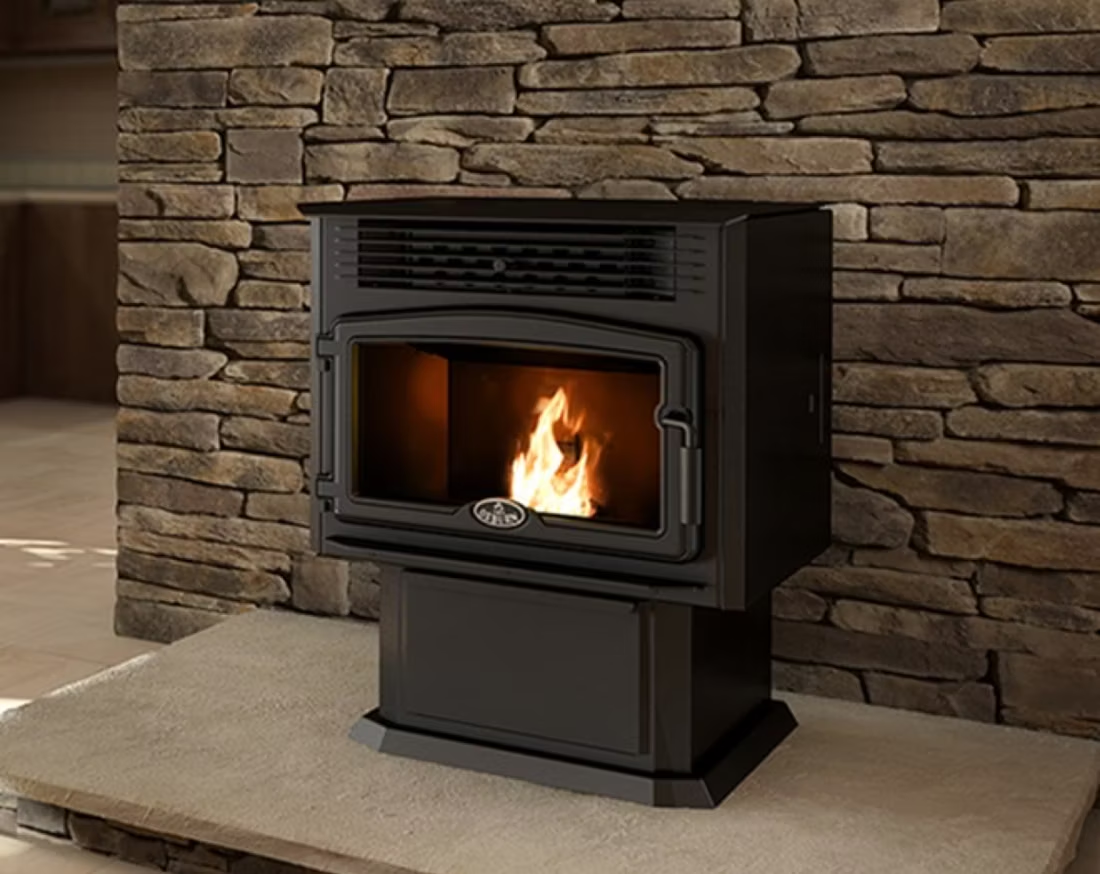
That doesn't mean nobody installs one. A small number of Ainaloa and greater Puna homeowners add a pellet stove purely for the look and feel of a hearth, for a vacation rental that wants a cozy focal point, or because they moved from a colder mainland climate and miss the ritual of a fire on a rainy, windy night. Lignetics is the regional pellet brand most likely to show up at Big Island hearth retailers, though most bags are shipped in rather than locally milled. If that's your situation, the honest starting point is a local dealer who will tell you plainly whether the project makes sense for your home before quoting you anything.
Three steps. No salesperson until you're ready.
Tell us about your project
Your zip code, your situation, and the fuel you're leaning toward—or let the answers point you to one.
See what's actually available
The brands dealers within 100 miles genuinely carry—real options, never a catalog mirage.
Get your dealer & Project Guide
A trusted local dealer, plus the free Project Guide & Parts List that names every component of the job.
Frequently Asked Questions
Do people actually install pellet stoves in Ainaloa?
Occasionally, but it's uncommon. With average winter lows around 56°F and a winter mild enough that real heating needs are rare, Ainaloa homes essentially never need a dedicated heat source. The handful of installs that do happen tend to be homeowners who want the visual and ambient appeal of a stove—the glow, the glass front, the feel of a hearth—rather than anyone trying to solve a real heating problem. If that's you, say so up front to a local dealer so they can steer you toward a unit sized for looks rather than BTU output.
What's the appeal of a pellet stove in a climate this warm?
Mostly aesthetics and nostalgia. Some Ainaloa homeowners are transplants from colder states who miss the visual anchor of a fire in the living room, even in a place where you'd rarely light it. Others want a focal point for a vacation rental or a mauka (upland) property where evenings in Puna's wet forest can feel cooler and damper than the coastal norm. In both cases, the honest framing is decorative-first, functional-second—which changes what stove size and features actually make sense.
How much does a pellet stove installation cost in Ainaloa?
There isn't a well-established local cost range because so few installs happen here, but expect costs to run at or above the mainland norm of roughly $4,500–$7,500. Big Island installers who take on this kind of niche project often factor in barge shipping for the unit and vent kit, plus the fact that few technicians on Hawaii Island specialize in pellet venting specifically. Get a firm, in-home quote from a local dealer rather than assuming a mainland price applies.
Where would I even buy pellets in Ainaloa?
Pellet fuel isn't milled locally—Ainaloa has no cold-climate timber industry producing pellet feedstock the way the Pacific Northwest does. Lignetics is the regional brand most likely to be available through Hilo or Kona-area hearth and hardware retailers, typically shipped in by container or barge. Expect to buy in bulk when a shipment lands rather than picking up a bag whenever you want one, and budget for pricing above mainland averages once shipping is factored in.
Would a pellet stove make my home uncomfortably hot or humid?
It's a real risk worth discussing with an installer. Most Ainaloa homes are built for ventilation and airflow, not heat retention—thin walls, screened lanais, minimal insulation. Adding a radiant heat source designed for a Fargo, ND winter into a home built to shed heat can make a small room uncomfortably warm fast, and combined with Puna's ambient humidity, that warmth doesn't dissipate the way it would in a drier climate. A good local dealer will talk you through sizing a unit down significantly from what a mainland calculator would suggest.
Would a pellet stove help during a power outage?
No—pellet stoves rely on an electric auger and blower to feed fuel and circulate heat, so they shut down the moment the grid does, same as anywhere else. That said, this matters less in Ainaloa than it would in a cold-climate town, since a power outage here doesn't put anyone at risk of freezing the way it might in a place with real winter lows. If backup heat is the actual goal, a pellet stove isn't the tool for that job here.
Is there a better alternative for the rare cool evening in Ainaloa?
For most homeowners, yes. A portable electric space heater or an electric fireplace insert delivers warmth on the handful of cool, wet nights a year without the venting, pellet storage, and chimney-style installation a pellet stove requires. Many Puna homes already run mini-split heat pump systems for cooling that can reverse for occasional heat. Electric service through Hawaii Electric Light Co runs about 48 cents per kWh—high by national standards—but since actual heating hours per year are minimal, the total cost stays low regardless of which electric option you choose.
Do I need a permit to install a pellet stove in Ainaloa?
Yes, in most cases. Hawaii County's Department of Public Works handles building permits for wall penetrations and venting associated with a pellet stove install, even though Ainaloa has no air quality restrictions on wood or pellet burning the way non-attainment areas on the mainland do. A licensed local installer will typically pull this permit as part of the job rather than leaving it to the homeowner.
Pellet vs. electric—which makes more sense for an Ainaloa home?
For nearly everyone here, electric wins on practicality. With such a short, mild winter season, you're not running a heat source often enough to justify pellet storage, hopper loading, or venting through an exterior wall. An electric stove or fireplace insert gives you the same visual glow with a simple plug-in install and no fuel logistics. Pellet only makes sense if the tactile experience of a real fire—the sound, the smell, the ritual—is something you specifically want, cost and convenience aside.
Why is my open fireplace making my house colder?
Open fireplaces suck—literally. As the fire burns, it consumes air your furnace already paid to heat and pulls it out through the chimney, so the house is actually colder after the fire goes out than before you lit it. An insert fixes this: it seals the chimney, puts fixed glass across the front, and turns that hole in your house into a real heat source.
What do I measure to size a fireplace insert?
Four numbers tell you what fits: the front width, the front height, the back width, and the overall depth of your existing fireplace opening. Grab a tape measure, jot those down, and snap a photo of the wall—those two things do more to move your project forward than anything else you can do today.
Can I install a fireplace myself?
If you're putting a fire in your house on purpose, it's best to work with an expert. Unless you're genuinely experienced in framing, gas line, vent pipe, and the national code on clearances to combustibles, have a professional do it—and ideally the same company that sells you the fireplace, so warranty, service, and liability all live under one roof.
Can a fireplace actually lower my heating bill?
Yes—by creating a comfort zone. A furnace heats every square foot of the house just to warm the one room you're in; a gas fireplace on low burns roughly a sixth of the gas a typical furnace does. Set the furnace around 55–60 degrees as a baseline, then heat the rooms your family actually uses. Families who heat this way commonly save $20–$60 a month.
Nearby Dealers
Hearth shops serving Ainaloa and the surrounding area. Every listing shows whether it is a WhyFire partner, a dealer we have verified as authorized for the brands we recommend, or a local business carrying hearth products. No manufacturer pays for placement. How we verify dealers →
Fireplace & Home Center
Hawaii Fireplace – Kamuela
Island Pool & Spa Supply
Pellet Brands Stocked Around Ainaloa
Manufacturers will point you to the nearest stocking dealer.
Find your pellet fireplace in Ainaloa.
Tell us about your home and what you're really after—ambiance, a focal point, or something else—and we'll match you with a local dealer and a free Project Guide & Parts List sized honestly for Ainaloa's climate.
Find Your Fireplace →