
Clean, convenient heat for Wayne County's mild winters.
From Jesup to Odum and Screven, Wayne County winters rarely demand a wood-hauling routine—but a pellet stove still takes the edge off cold snaps and cuts the electric heat pump's workload. Find the right unit and connect with a trusted local dealer.
Every Project Starts From One of These Five Situations
Convenience heat for a short, mild season.
Wayne County sits in climate zone 2A, the hot-humid Coastal Plain of southeast Georgia, with an average winter low around 35°F and only about 2,012 heating degree days a year. Compare that to a place like Duluth, MN, which racks up over 9,000 HDD, and it's clear Wayne County's heating season is short—a handful of genuinely cold weeks bookended by mild nights that barely dip below 40°F. Jesup, Odum, and the rest of the county still see real cold snaps, especially when Arctic air pushes down the Coastal Plain, but this isn't a climate that demands a stove running around the clock from October to April.
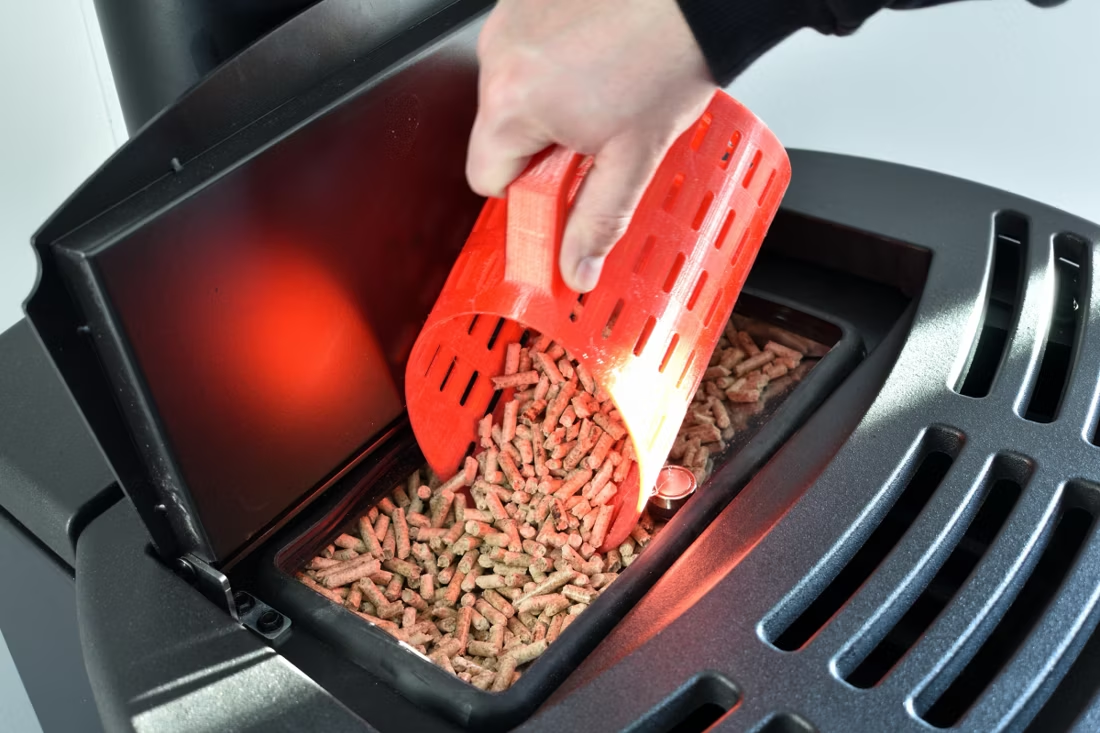
That's exactly why pellet works well here as a supplemental system rather than a primary one. A pellet stove gives Wayne County homeowners push-button convenience during those cold-front weeks—no splitting oak or hickory, no seasoning wood in a humid climate where firewood can mold before it dries—while still cutting the load on an electric heat pump during peak winter demand. Regional pellet brands including Lignetics, Hamer Pellet Fuel, and Greenway Renewable Energy are sold through hearth dealers and farm supply stores across this part of Georgia, so fuel supply isn't the constraint it can be in more remote counties.
Three steps. No salesperson until you're ready.
Tell us about your project
Your zip code, your situation, and the fuel you're leaning toward—or let the answers point you to one.
See what's actually available
The brands dealers within 100 miles genuinely carry—real options, never a catalog mirage.
Get your dealer & Project Guide
A trusted local dealer, plus the free Project Guide & Parts List that names every component of the job.
Frequently Asked Questions
How much does a pellet stove installation cost in Wayne County?
Pellet stoves are generally less expensive to install than wood stoves because they vent through a simple wall thimble rather than a full masonry or Class A chimney. In Wayne County, most installs run in the $2,500 to $5,000 range once you factor in the unit, the vent kit, a hearth pad if required by the manufacturer, and a dedicated electrical outlet for the auger and combustion blower. Converting an existing wood-burning fireplace into a pellet insert install can run a bit higher if a liner is needed to route the vent pipe through the chimney. A local dealer will give you a firm number after seeing your setup.
What size pellet stove do I need in a climate like Wayne County's?
With only about 2,012 heating degree days a year and average winter lows around 35°F, most Wayne County homes don't need a large-capacity pellet stove sized for round-the-clock primary heat. A small-to-medium unit rated for 1,000 to 1,800 square feet is usually plenty to heat a main living area or open-plan home during the coldest weeks of January and February, with the rest of the house carried by an electric heat pump or central system. Oversizing is more of a risk here than undersizing—a stove built for northern winters will often run on its lowest setting most of the season in this climate, which is inefficient and can shorten pellet life in the hopper. A local dealer can size against your actual square footage and layout.
Where can I find a certified pellet stove dealer near Wayne County?
Look for a hearth dealer with NFI (National Fireplace Institute) pellet-specific certification and, ideally, a service technician who can also handle warranty repairs—pellet stoves have more moving parts (auger motor, combustion blower, control board) than a wood stove, so ongoing service access matters. Dealers serving Wayne County typically stock or can order units compatible with regionally available pellets from Lignetics, Hamer Pellet Fuel, and Greenway Renewable Energy. If you're outside Jesup proper—out toward Odum, Screven, or Gardi—expect a small travel charge on the install quote, which is normal for rural service calls.
What's the difference between a pellet stove and a pellet insert?
A pellet stove is a freestanding unit that sits on a hearth pad and vents through an exterior wall—it can go almost anywhere in the house with access to an outside wall and an outlet. A pellet insert is built to slide into an existing masonry fireplace opening, converting an old wood-burning fireplace into a sealed, efficient pellet-fed heat source while reusing the existing chimney as the vent path (typically with a liner). For Wayne County homes with an older open fireplace that's rarely used because it loses more heat than it produces, an insert is often the better upgrade. Homes without an existing fireplace usually go with a freestanding stove instead.
Do I need a permit to install a pellet stove in Wayne County?
Most new pellet stove and insert installations require a building permit through the Wayne County building department, along with an electrical inspection since the unit needs a dedicated outlet for the auger and blower motor. Most established hearth dealers pull the permit as part of the installation, so it's rarely something you have to manage yourself. Because Wayne County has no air quality non-attainment designations or wood-burning curtailment periods, there's no seasonal restriction on when you can run the stove once it's installed and inspected.
Is a pellet stove worth it if Wayne County winters are this mild?
For most homes here, yes—as a supplemental system, not a primary heat source. Given the average winter low near 35°F and a heating season that's genuinely short compared to the rest of the country, a pellet stove's main value in Wayne County is knocking down the electric bill during cold-front weeks and providing a warm gathering spot without running the whole-house system harder than it needs to. One honest tradeoff worth knowing: pellet stoves need electricity to run the auger and blower, so they won't provide heat during a power outage—worth considering given that this part of coastal Georgia occasionally loses power during tropical storm season. If backup heat during outages matters to you, ask a local dealer about pairing a pellet stove with a battery backup or keeping a wood-burning option as well.
How often does a pellet stove need cleaning and maintenance?
Pellet stoves need more frequent light maintenance than wood stoves but far less than a full chimney sweep. Plan on emptying and vacuuming the ash pot every few days of regular use, cleaning the burn pot weekly to keep the fire feeding properly, and scheduling a full annual service—vent inspection, gasket check, motor and auger cleaning—typically before the season starts each fall. Because Wayne County's burning season is compressed into a few cold months rather than spread across a long winter, most local owners find one professional service visit a year is enough to keep the stove running efficiently.
Where can I buy pellets locally in Wayne County?
Bagged pellets from regional producers including Lignetics, Hamer Pellet Fuel, and Greenway Renewable Energy are commonly stocked at hearth dealers and farm supply retailers throughout southeast Georgia, and many stores will order a pallet (typically 50 bags, about a ton) if you want to stock up ahead of the season. Because Wayne County's heating season is short, most homeowners don't need to store more than a half-ton to a ton to get through winter—a manageable amount for a garage or covered storage area, which matters in a humid climate where pellets need to stay dry to burn cleanly.
Pellet stove vs. wood stove—which makes more sense in Wayne County?
Wood is abundant locally—oak, pine, and hickory are all common in Wayne County's forests—and a wood stove works without electricity, which matters if you're weighing storm-season power outages. But wood also means splitting, stacking, and seasoning in a humid Coastal Plain climate where uncured wood can mold or smoke poorly. Pellet stoves trade that labor for convenience: load the hopper, set the thermostat, and get consistent heat with far less ash and mess. For a heating season as short as Wayne County's, that convenience often outweighs the modest cost premium of bagged pellets versus firewood. Homeowners who want a backup heat source for outages sometimes keep both—pellet for daily convenience, a wood option in reserve.
What's the difference between an insert and a zero-clearance fireplace?
An insert is a fireplace that slides into a pre-existing wood-burning fireplace—if you don't have one, there's nothing to insert it into. A zero-clearance fireplace is built into a framed wall, which makes it the answer for remodels and new construction. Simple test: existing masonry fireplace means insert; blank or framed wall means zero-clearance.
Why is my open fireplace making my house colder?
Open fireplaces suck—literally. As the fire burns, it consumes air your furnace already paid to heat and pulls it out through the chimney, so the house is actually colder after the fire goes out than before you lit it. An insert fixes this: it seals the chimney, puts fixed glass across the front, and turns that hole in your house into a real heat source.
How much should I budget for a fireplace?
For an average home—covering the fireplace, the vent pipe, and basic installation—a budget between $3,900 and $5,500 gives you a lot of options across wood, gas, and pellet. By the time you add finish work, gas line, and electrical, the average complete installation lands between $5,000 and $12,000 all-in. In a remodel or new build, a good rule is to put about 2.5% of the total project cost toward the fireplace.
Does a fireplace add value to my home?
On average, a fireplace adds back to the home about the same amount you spent installing it. Add the monthly savings from heating the rooms you actually use instead of the whole house—often hundreds of dollars a year—and the value case is strong before you even count what a fire does for how your family uses the room.
Pellet Brands Stocked Around Wayne County
Manufacturers will point you to the nearest stocking dealer.
Find your pellet stove in Wayne County.
Tell us a bit about your home and we'll put together a free Project Guide & Parts List—the right pellet stove or insert, the exact vent kit for your setup, and a match with a trusted local Wayne County dealer.
Find Your Fireplace →