
Instant Heat for Wayne County's Short, Mild Winters.
From Jesup to Odum to Screven, gas fireplaces give Wayne County homes clean, on-demand warmth for the handful of genuinely cold nights each winter—no wood to stack, no ash to haul. Find the right unit and connect with a trusted local dealer.
Every Project Starts From One of These Five Situations
Comfort heat for a county that rarely needs much of it.
Wayne County sits in the humid subtropical belt of southeast Georgia—Climate Zone 2A—where the average winter low hovers around 35°F and the county has a short, mild heating season, a small fraction of what a Duluth, Minnesota or Burlington, Vermont winter demands. Most Wayne County homes don't need an appliance running around the clock; what they need is something to take the edge off a January evening in Jesup, Odum, or Screven without firing up the whole HVAC system over a 40-degree night. That's the gap a gas fireplace fills, and it's why gas remains a standard, popular choice here even though the heating season is short.
Natural gas service in Wayne County is concentrated mostly inside Jesup city limits, where the municipal gas system serves in-town customers; outside the city, across the unincorporated stretches of the county, propane is the standard fuel and the more practical route for a new gas fireplace install. Either way, a properly sized direct-vent unit gives you real flame and real heat at the flip of a switch, with none of the ash or soot that comes with the oak, pine, and hickory that fuel most of the county's wood-burning fireplaces.
Three steps. No salesperson until you're ready.
Tell us about your project
Your zip code, your situation, and the fuel you're leaning toward—or let the answers point you to one.
See what's actually available
The brands dealers within 100 miles genuinely carry—real options, never a catalog mirage.
Get your dealer & Project Guide
A trusted local dealer, plus the free Project Guide & Parts List that names every component of the job.
Frequently Asked Questions
How much does a gas fireplace installation cost in Wayne County?
Most gas fireplace installations in Wayne County fall between $3,500 and $9,000, with the biggest swing factors being whether you're converting an existing masonry fireplace with a gas insert (lower end), building new construction with fresh gas line and venting runs (middle), or setting up a new propane tank for a home outside Jesup's municipal gas footprint (higher end). Homes already on natural gas inside city limits, or with an existing propane tank, tend to land toward the lower end since the fuel supply infrastructure is already in place. A local dealer will give you a firm number after seeing your fireplace opening, chimney condition, and fuel access.
Can I convert my existing wood fireplace to gas?
Yes, and it's a common project in Wayne County's older Jesup and Odum homes, many of which have masonry fireplaces originally built for oak, pine, or hickory cordwood. A gas insert slides into that existing masonry opening, uses a stainless liner run through your current chimney for venting, and hooks into either a natural gas line (if you're inside Jesup's service area) or a propane line. Expect the conversion to run toward the lower half of the $3,500–$9,000 range if the fireplace opening and chimney are in good shape, with costs rising if the liner or firebox needs repair work first.
Do I need natural gas, or can I use propane?
Either works, and which one you use largely comes down to where you live in the county. Inside Jesup city limits, the municipal natural gas system makes hookup straightforward if you're already using gas for a water heater or range. Outside the city—which describes most of unincorporated Wayne County—propane is the standard fuel, either through an existing tank or a new tank set by a local propane supplier. Nearly every gas fireplace model on the market can be configured for either fuel; your installer sets the correct orifice and regulator for whichever one you have.
Will my gas fireplace work during a power outage?
Most modern gas fireplaces will, which matters in Wayne County given how often summer storms and occasional winter fronts knock out power in this part of southeast Georgia. Units with IPI (intermittent pilot ignition) run on AA battery backup that kicks in automatically when the power drops, so the fireplace lights on demand just like normal. Valor fireplaces take it a step further—their pilot generates its own electricity through a thermocouple, so there are no batteries to remember at all. Ask your local dealer about the ignition system on any unit you're considering if backup heat during an outage matters to you.
What's the difference between a gas fireplace, gas insert, and gas stove?
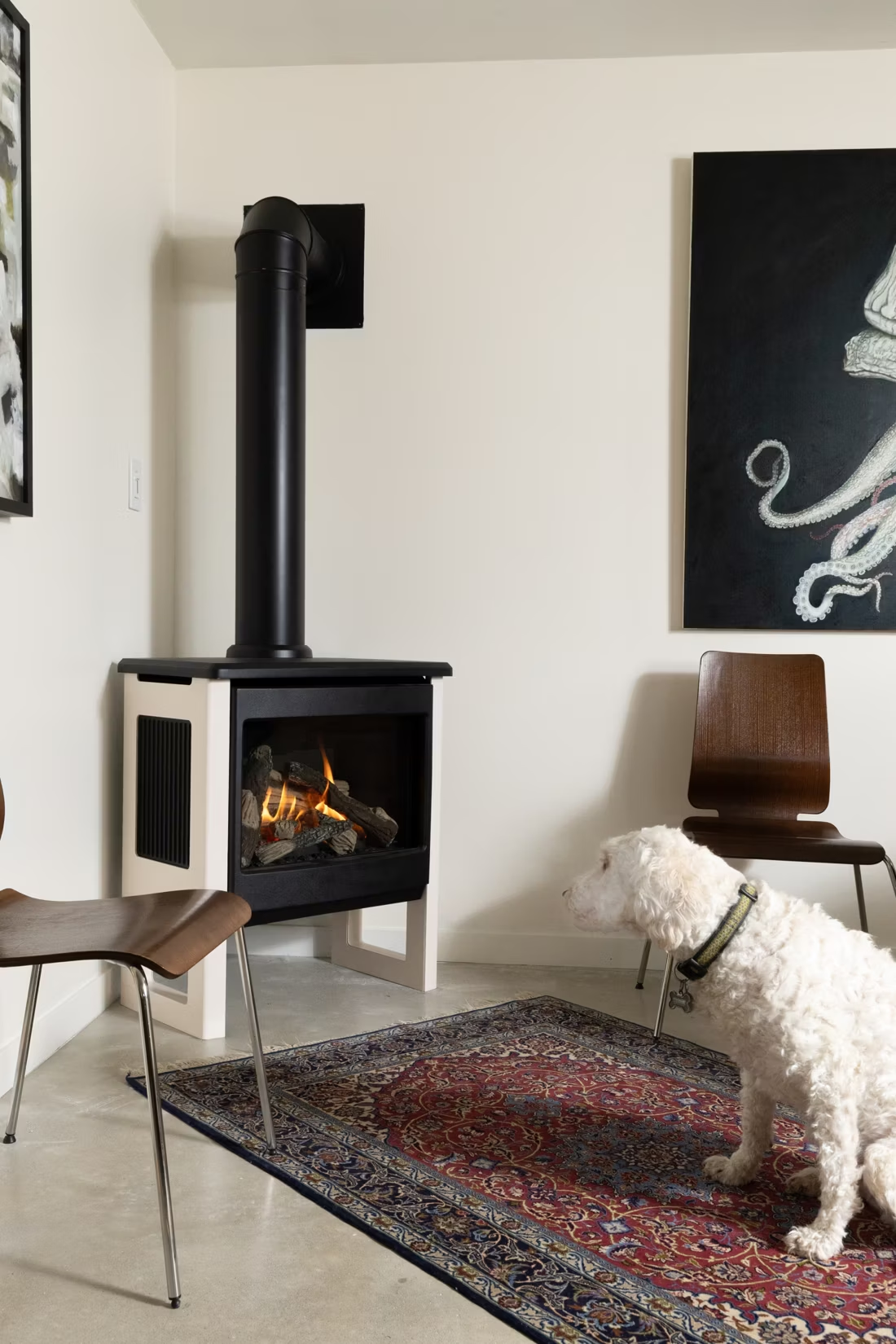
A gas fireplace is a fully built-in unit framed into a wall, typically chosen for new construction or a major remodel. A gas insert is built to slide into an existing masonry fireplace opening, sealing it up and venting through the existing chimney with a liner—the right call for most of Wayne County's older homes with an existing hearth. A gas stove is a freestanding cast-iron or steel unit that sits on the floor like a wood stove but burns gas, a good fit for a room without a fireplace at all. A local dealer can walk your space and tell you which fits.
Do I need a permit to install a gas fireplace in Wayne County?
Yes. Inside Jesup, permits go through the City of Jesup Building Department; in unincorporated Wayne County, they go through the Wayne County Building Department. Both a building permit and a gas line permit are typically required for a new installation, and the gas line work has to be done by a licensed gas-fitter. Most local hearth dealers coordinate all of this as part of the install, so you're not left managing separate trades and inspections yourself.
What's the difference between vented and vent-free gas fireplaces?
Vented (direct-vent) gas fireplaces draw combustion air from outside and exhaust it back outside through a sealed pipe. Vent-free units burn without any outside venting at all, releasing water vapor and small amounts of combustion byproducts into the room. Vent-free is legal in Georgia and cheaper to install since there's no venting to run, but in Wayne County's already humid Climate Zone 2A air, adding more moisture into the living space isn't ideal—condensation and mildew are enough of a concern here without help from an appliance. For that reason, most local dealers steer Wayne County homeowners toward direct-vent units, which sidestep the humidity issue entirely.
How often should my gas fireplace be serviced?
An annual inspection is the standard recommendation for any gas fireplace or insert, ideally before the short Wayne County heating season ramps up in November or December. A technician checks the burner, pilot assembly, gas connections, and venting, and cleans the glass and firebox. It's a quick visit—usually $150 to $250—but it catches pilot and ignition issues before you're relying on the fireplace on one of the county's genuinely cold nights.
Gas vs. wood—which is right for my home?
With no air quality restrictions in Wayne County and plenty of local oak, pine, and hickory available, wood burning is unrestricted and popular for ambiance and occasional heat. But with only a short, mild heating season and winter lows averaging 35°F, most homes here don't need wood as a serious heat source the way a Fargo or Bismarck home might. Gas gives you instant on-off convenience with zero wood handling, which is why it's the standard choice for primary living spaces in newer Jesup and Odum homes. Many Wayne County households land on a mix: gas for daily use and quick warmth, wood for atmosphere on a rare cold weekend.
Why is my open fireplace making my house colder?
Open fireplaces suck—literally. As the fire burns, it consumes air your furnace already paid to heat and pulls it out through the chimney, so the house is actually colder after the fire goes out than before you lit it. An insert fixes this: it seals the chimney, puts fixed glass across the front, and turns that hole in your house into a real heat source.
Is my gas fireplace wasting gas?
If it was installed more than 15 years ago, probably. Older gas fireplaces keep a standing pilot light burning all the time, and that little flame can cost a couple hundred dollars a year. Newer models use pilot-on-demand ignition—the pilot lights only when you use the fireplace and goes out when you turn it off.
Can I install a fireplace myself?
If you're putting a fire in your house on purpose, it's best to work with an expert. Unless you're genuinely experienced in framing, gas line, vent pipe, and the national code on clearances to combustibles, have a professional do it—and ideally the same company that sells you the fireplace, so warranty, service, and liability all live under one roof.
Does a fireplace add value to my home?
On average, a fireplace adds back to the home about the same amount you spent installing it. Add the monthly savings from heating the rooms you actually use instead of the whole house—often hundreds of dollars a year—and the value case is strong before you even count what a fire does for how your family uses the room.
Find your gas fireplace in Wayne County.
Tell us about your home and we'll match you with the right gas fireplace, insert, or stove—plus a free Project Guide & Parts List laying out the exact parts, including the vent kit, and your recommended local Wayne County dealer.
Find Your Fireplace →