
Keep Your Family Warm and Safe—No Matter What
Waycross and the rest of Ware County see winter lows around 37°F and roughly 1,712 heating degree days a season—nothing like the deep cold of the upper Midwest. Wood still has a place here, just a different one. We'll help you find the right unit and the right local dealer to install it.
Every Project Starts From One of These Five Situations
In Ware County, wood heat is more ambiance than necessity.
Ware County sits in USDA climate zone 2A, hot and humid, with average winter lows around 37°F and about 1,712 heating degree days a year. Compare that to Duluth, MN, where homes rack up close to 10,000 heating degree days—Ware County homes simply don't need a full-time heat source most winters. Heat pumps and gas handle the handful of nights that dip into the 20s. That's the honest starting point for anyone searching for a wood stove or fireplace here: it's rarely the primary heat plan.
That said, wood still shows up across the county—in cabins and hunting camps around the Okefenokee Swamp, in older Waycross homes with existing masonry fireplaces that families want to keep functional, and in rural properties where a stove is useful backup if an ice storm knocks out power for a few days. Local oak, pine, and hickory are all abundant and well-suited to burning, and a well-sized stove or insert can turn a decorative fireplace into a genuine cold-night heat source. It's a smaller, more deliberate category of buyer than in a cold-climate market—which makes finding a dealer who actually understands the use case more important, not less.
Three steps. No salesperson until you're ready.
Tell us about your project
Your zip code, your situation, and the fuel you're leaning toward—or let the answers point you to one.
See what's actually available
The brands dealers within 100 miles genuinely carry—real options, never a catalog mirage.
Get your dealer & Project Guide
A trusted local dealer, plus the free Project Guide & Parts List that names every component of the job.
Frequently Asked Questions
How much does a wood stove installation cost in Ware County?
Nationally, a wood stove install with a hearth pad and Class A chimney typically runs $3,000 to $7,000. In a mild climate like Ware County's, most buyers choose smaller stoves or inserts sized for occasional use rather than whole-home heating, which tends to keep installs toward the lower half of that range. Converting an existing masonry fireplace into a working wood insert is usually the cheapest path since the chimney is already in place—new chimney construction for a freestanding stove costs more.
Is a wood stove actually necessary in Ware County's climate?
For most homes, no. With an average winter low near 37°F and only about 1,712 heating degree days a year, a heat pump or gas system comfortably covers Ware County's heating needs. Wood makes sense as a supplemental or backup option—for the occasional hard freeze, for a cabin near the Okefenokee that isn't on full-time HVAC, or simply because a family wants a working fireplace rather than a decorative one. Go in expecting a nice-to-have, not a necessity.
What firewood species are common in Ware County?
Oak, pine, and hickory are the three you'll find most often, reflecting the mix of pine flatwoods and hardwood bottomland that surrounds the Okefenokee Swamp and the Satilla River drainage. Oak and hickory burn dense and hot with less resin buildup, making them the better choice for stove use; pine is plentiful and fine for kindling or shorter burns but needs to be well-seasoned to avoid excess creosote given the county's humidity.
Do I need a permit to install a wood stove in Ware County?
Yes—a building permit is standard for a new wood-burning appliance installation, whether you're inside Waycross city limits or in unincorporated Ware County, and the stove itself needs to meet current EPA 2020 NSPS emissions standards. Ware County has no air quality non-attainment designation and no winter burn curtailment periods like you'd see in a smoke-prone western basin, so day-to-day burning isn't restricted—just be mindful of local outdoor burning rules during the dry spells that raise wildfire risk in the pine woods around the county.
Should I install a wood stove or a wood insert in an older Waycross home?
If your home already has a masonry fireplace—common in older Waycross neighborhoods—an insert is usually the better call. It uses the chimney you already have and turns a decorative, heat-leaking fireplace into a legitimate heat source on the nights you actually want one. A freestanding stove makes more sense for a cabin, workshop, or hunting camp near the Okefenokee that doesn't have an existing chimney to work with.
Is it hard to find a wood stove dealer in a market like Ware County?
It's a smaller market than you'd find in a cold-climate county, and not every hearth retailer in southeast Georgia stocks a deep wood-burning lineup—gas and electric units move faster here. That's exactly why matching with the right dealer matters more, not less: you want someone who regularly installs wood stoves for rural properties, camps, and older homes with existing chimneys, rather than a shop that treats it as an afterthought to their gas business.
Does a wood stove make sense as backup heat during an ice storm?
For rural Ware County properties, yes. South Georgia doesn't see ice storms often, but when one hits—like the events that have knocked out power across the region in past winters—a wood stove keeps running with zero electricity, which a gas insert with electronic ignition or a heat pump can't guarantee. If backup heat during an outage is your main reason for considering wood, a simple, non-catalytic stove with a manual damper is usually the most reliable and lowest-maintenance choice.
What about a pellet stove instead of wood?
Pellet stoves are even less common in Ware County than wood stoves, for the same climate reasons—the heating demand just isn't there for most homes. If you're drawn to the convenience of a hopper-fed appliance anyway, regional brands like Lignetics, Hamer Pellet Fuel, and Greenway Renewable Energy supply pellets across the Southeast, but keep in mind pellet stoves need electricity to run the auger and blower, so they won't help during a power outage the way a wood stove will.
Wood vs. gas—which makes more sense for a Ware County home?
For most Ware County homeowners, gas is the more practical everyday choice—instant on-off heat, no ash or wood handling, and a good fit for a climate that only needs supplemental heat a handful of nights a year. Wood makes sense when you specifically want the look and feel of a real fire, you have a cabin or camp near the Okefenokee without easy gas access, or you want heat that keeps working if the power goes out during a storm. Plenty of local homes end up with both—gas for daily convenience, wood for backup and atmosphere.
Why is a fireplace insert so efficient?
An insert does two things: it seals the chimney completely, so you stop losing air you already paid to heat, and it radiates warmth into the room through the firebox and glass. Most add a heat-exchange fan that pulls cool room air underneath, wraps it around the hot firebox, and pushes it back out warm. Your home is more efficient before you've even lit the first fire.
What's the difference between an insert and a zero-clearance fireplace?
An insert is a fireplace that slides into a pre-existing wood-burning fireplace—if you don't have one, there's nothing to insert it into. A zero-clearance fireplace is built into a framed wall, which makes it the answer for remodels and new construction. Simple test: existing masonry fireplace means insert; blank or framed wall means zero-clearance.
Can a fireplace actually lower my heating bill?
Yes—by creating a comfort zone. A furnace heats every square foot of the house just to warm the one room you're in; a gas fireplace on low burns roughly a sixth of the gas a typical furnace does. Set the furnace around 55–60 degrees as a baseline, then heat the rooms your family actually uses. Families who heat this way commonly save $20–$60 a month.
How much should I budget for a fireplace?
For an average home—covering the fireplace, the vent pipe, and basic installation—a budget between $3,900 and $5,500 gives you a lot of options across wood, gas, and pellet. By the time you add finish work, gas line, and electrical, the average complete installation lands between $5,000 and $12,000 all-in. In a remodel or new build, a good rule is to put about 2.5% of the total project cost toward the fireplace.
Stove and Fireplace Dealers in Ware County
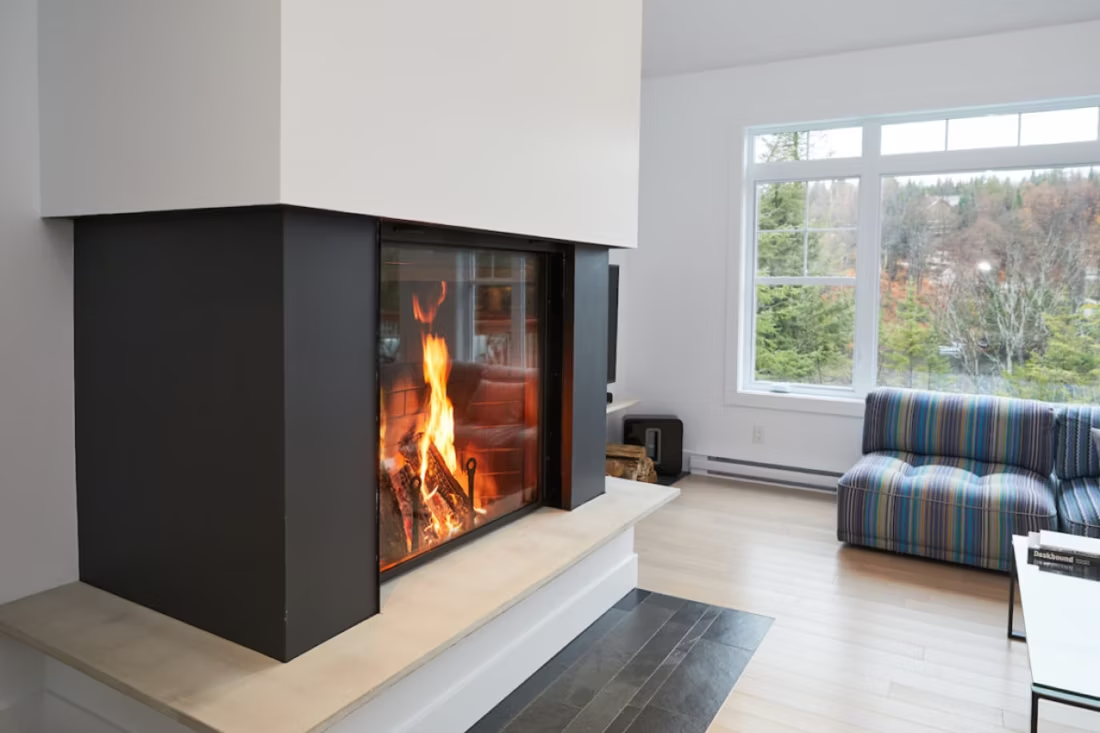
Find your wood fireplace in Ware County.
Tell us about your home and how you'd actually use a wood stove or insert, and we'll put together a free Project Guide & Parts List—the right unit, the vent kit it needs, and a trusted local Ware County dealer to install it.
Find Your Fireplace →