
Find your fireplace in Ware County, Georgia.
Resources for every fuel type across the county—from Waycross out to Waresboro and Manor—matched to a climate where winters are short and the heating season is measured in weeks, not months. Pick a fuel and get connected with a local dealer who knows what actually gets installed here.
Every Project Starts From One of These Five Situations
A hot, humid climate zone with just 1,712 heating degree days a year.
Ware County sits in the flat, sandy coastal plain of southeast Georgia, anchored by Waycross—long called the "Gateway to the Okefenokee" for its position on the swamp's western edge. The county falls in climate zone 2A: hot, humid summers and winters mild enough that the average low is just 37°F, with only 1,712 heating degree days a year. That's roughly a tenth of the heating load a home in Duluth, Minnesota carries each winter. Oak, pine, and hickory grow throughout the county's pine flatwoods and swamp margins, and plenty of households still cut and split it for the yard or a fire pit—just not usually to heat a house through what passes for winter here.
That short heating season is exactly why wood stoves and pellet stoves are the exception in Ware County rather than the rule. A handful of homes keep a wood-burning fireplace for the occasional cold front or for the ambiance, but it's not sized or expected to be primary heat the way it would be further north. Pellet brands like Lignetics, Hamer Pellet Fuel, and Greenway Renewable Energy distribute across Georgia, but pellet stove installs are uncommon this far south—the fuel storage and hopper-feeding routine doesn't pencil out against a winter this mild. Gas and electric are where most of the real activity is: propane-fueled fireplaces and inserts show up in a lot of rural Ware County homes, and electric units are popular for ambiance and supplemental warmth, especially in the manufactured and mobile housing common throughout the county. This hub rolls up retailers, techs, and suppliers across Waycross, Waresboro, Millwood, Manor, and the unincorporated stretches in between—pick your fuel below for local dealers and real install costs.
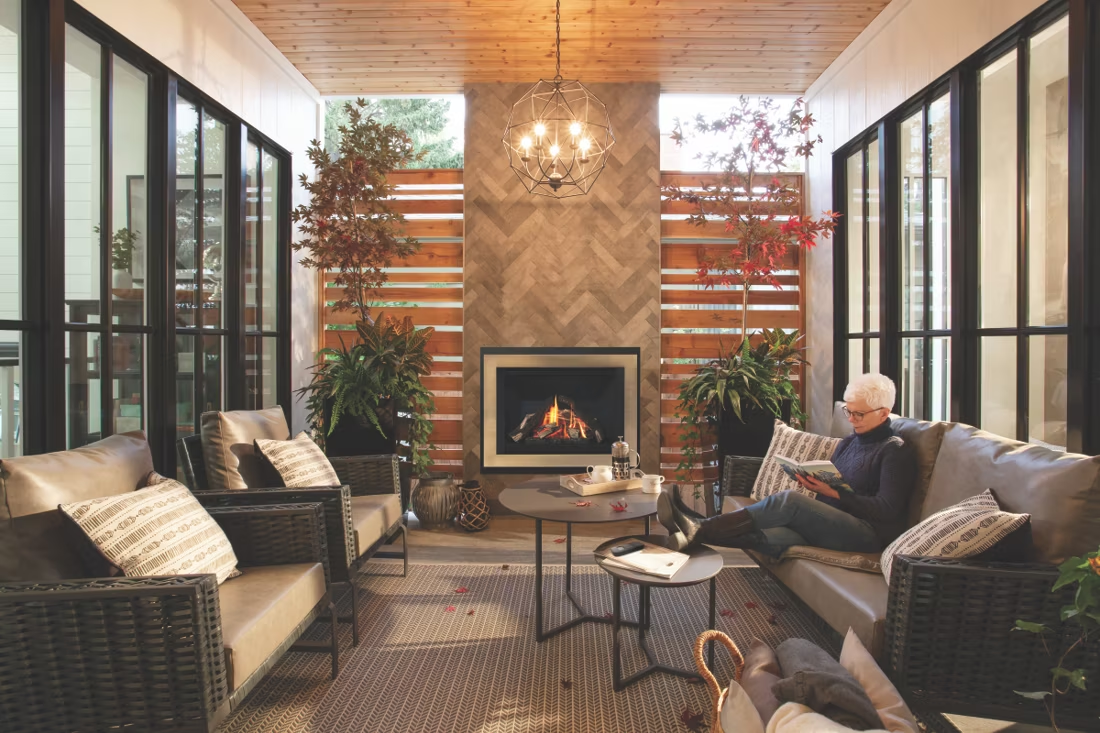
Four fuels. One honest answer for Ware County.
Three steps. No salesperson until you're ready.
Tell us about your project
Your zip code, your situation, and the fuel you're leaning toward—or let the answers point you to one.
See what's actually available
The brands dealers within 100 miles genuinely carry—real options, never a catalog mirage.
Get your dealer & Project Guide
A trusted local dealer, plus the free Project Guide & Parts List that names every component of the job.
Frequently Asked Questions
Which fireplace fuel makes the most sense in Ware County?
Given how mild the winters are here—1,712 heating degree days and an average low around 37°F—gas and electric fireplaces are the practical choices for most Ware County homes. Propane-fed gas units are common because a lot of the county isn't on a municipal gas main, and a propane fireplace or insert gives you real heat on the cold fronts that do roll through without committing to a fuel you'll barely use most winters. Electric fireplaces are popular for the same reason plus ambiance, and they install easily in manufactured and mobile homes, which make up a meaningful share of housing in the county. Wood and pellet aren't off the table if you specifically want them, but they're the exception rather than the default here.
Are wood-burning fireplaces still installed in Ware County?
Occasionally, but it's not the norm. A short heating season means most homeowners don't get enough use out of a wood stove to justify the wood storage and chimney maintenance, so when we do see a wood-burning install it's usually for ambiance or a backup heat source during an occasional hard freeze. Oak, pine, and hickory are all available locally if you go that route—they're the wood species that grow throughout the county's pine flatwoods—but expect any dealer you're matched with to ask pointed questions about how often you'd actually burn it before recommending a full wood-stove package.
Can I get pellets or find a pellet stove dealer in Ware County?
Regional pellet brands like Lignetics, Hamer Pellet Fuel, and Greenway Renewable Energy do distribute across Georgia, so the fuel itself isn't hard to find if you already own a pellet stove or are moving one in from elsewhere. But new pellet stove installs are rare in Ware County—the hopper-feeding routine and fuel storage make more sense in colder parts of the state, like the north Georgia mountains, where the heating season actually justifies it. If you're set on pellet heat here, we can still match you with a dealer, but be honest with yourself about how many nights a year you'd actually load it.
Do I need a permit for a gas or electric fireplace install in Ware County?
Yes for gas, generally no for a plug-in electric unit. A new gas fireplace or insert needs a permit through the local building department and a licensed gas fitter to run or connect the propane line, since most of the county runs fireplaces on bottled propane rather than municipal gas. Electric fireplaces typically skip the permit process unless you're hardwiring a built-in model that requires a new dedicated circuit—in that case an electrician pulls a separate electrical permit. Most dealers we match homeowners with handle this paperwork as part of the install quote, so it's rarely something you're chasing down yourself.
What does a gas or electric fireplace install typically cost in Ware County?
Gas fireplaces, inserts, and stoves generally run $4,500–$11,000 installed, with the range driven mostly by whether you're extending a propane line, converting an existing wood-burning hearth to gas, or building venting for new construction. Electric fireplaces are the more affordable end—$200–$3,000 for the unit itself, plus $400–$1,200 in labor if it's a built-in requiring a new circuit rather than a plug-and-play placement. Because most gas installs here are propane rather than municipal-line, budget for a tank setup or hookup fee from your propane supplier on top of the fireplace install itself if you don't already have service.
When's the best time of year to schedule a fireplace install or service call in Ware County?
Late summer and early fall—before the first real cold front of the season—is the smart window. Ware County's heating season is short and unpredictable, so installers and gas techs get their busiest stretch compressed into a few weeks once temperatures actually drop, and hurricane season through late summer can also affect scheduling and material delivery. Booking a gas fireplace inspection or an electric fireplace install in September or October means you're not waiting behind everyone else who only thought about it once it got cold.
Does a fireplace add value to my home?
On average, a fireplace adds back to the home about the same amount you spent installing it. Add the monthly savings from heating the rooms you actually use instead of the whole house—often hundreds of dollars a year—and the value case is strong before you even count what a fire does for how your family uses the room.
Can a fireplace actually lower my heating bill?
Yes—by creating a comfort zone. A furnace heats every square foot of the house just to warm the one room you're in; a gas fireplace on low burns roughly a sixth of the gas a typical furnace does. Set the furnace around 55–60 degrees as a baseline, then heat the rooms your family actually uses. Families who heat this way commonly save $20–$60 a month.
Can I install a fireplace myself?
If you're putting a fire in your house on purpose, it's best to work with an expert. Unless you're genuinely experienced in framing, gas line, vent pipe, and the national code on clearances to combustibles, have a professional do it—and ideally the same company that sells you the fireplace, so warranty, service, and liability all live under one roof.
I know I want a fireplace—where do I actually start?
Do two things today: snap a photo of the wall or fireplace you want to transform, and take a tape measure to the space—width, height, depth. Those two artifacts answer most of a hearth professional's first questions. Then settle fuel (wood, gas, pellet, or electric) and set a realistic budget: $3,900–$5,500 covers fireplace, vent, and basic install for most homes.
Stove and Fireplace Dealers in Ware County
Listings include WhyFire partner dealers, dealers we have verified as authorized for the brands we recommend, and established local businesses that carry hearth products. Every listing shows which one it is. The ones marked Preferred run on WhyFire's software, so they can show you real pricing and book your appointment right here. No manufacturer pays for placement. How we verify dealers →
Brantley Gas - Waycross, Ga
Sikes Propane Inc
Kash Gas Co
Arco Hardware
Get matched with a local Ware County dealer.
Pick your fuel below and we'll put together a free Project Guide & Parts List—the right unit for how mild our winters actually are, the parts it needs, and the local dealer we recommend for your project.
Find Your Fireplace →