
Keep Your Family Warm and Safe—No Matter What
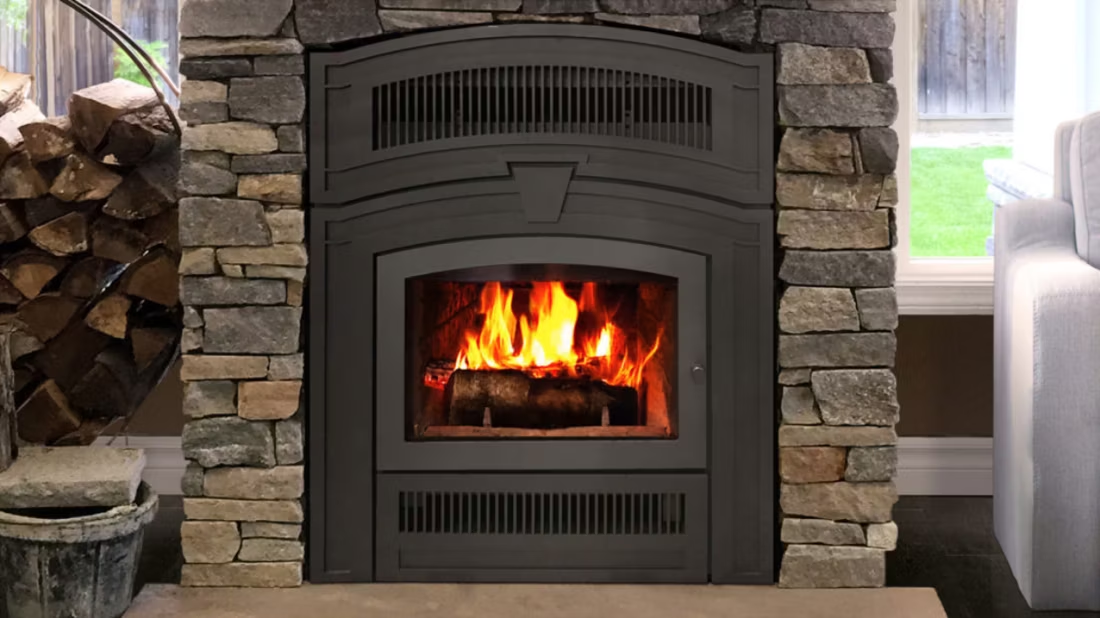
With winter lows averaging 31°F, few Sugar Hill homes need wood heat to get through the season—but a real wood-burning fireplace still earns its keep for ambiance, backup power during ice-storm outages, and the occasional genuinely cold night.
Every Project Starts From One of These Five Situations
Wood fireplaces are the exception here, not the rule.
Sugar Hill sits at 1,050 feet in Gwinnett County, northeast of Atlanta, in climate zone 3A. With a winter heating season that's light compared to most of the country and winter lows that average 31°F, this is nothing like Duluth, MN or Burlington, VT, where a wood stove is load-bearing infrastructure for six months of the year. Most Sugar Hill winters are short and mild enough that a furnace or heat pump handles the job without much drama, and gas fireplaces are the far more common upgrade in this market.
That said, wood still shows up in Sugar Hill homes for reasons that have nothing to do with survival heat. Ice storms occasionally knock out power from Georgia Power or Sawnee Electric Membership Corporation for a day or two at a time, and a wood stove or insert is the one heat source that keeps working when the grid doesn't. Others simply want the look and smell of a real fire for holiday gatherings or football Saturdays. Gwinnett County's heavily wooded suburban lots also mean local oak, pine, and hickory firewood isn't hard to come by, even if most neighbors have never split a cord in their life.
Three steps. No salesperson until you're ready.
Tell us about your project
Your zip code, your situation, and the fuel you're leaning toward—or let the answers point you to one.
See what's actually available
The brands dealers within 100 miles genuinely carry—real options, never a catalog mirage.
Get your dealer & Project Guide
A trusted local dealer, plus the free Project Guide & Parts List that names every component of the job.
Frequently Asked Questions
How much does it cost to install a wood stove or fireplace in Sugar Hill?
Because wood installs are uncommon in this market, pricing tends to run toward the higher end of national norms—expect roughly $3,500 to $8,000 for a freestanding wood stove with Class A chimney venting through a two-story Sugar Hill home, and $6,000 to $10,000+ for a full masonry-style factory-built fireplace in new construction. Fewer local installers specialize in wood-burning venting compared to the metro Atlanta gas fireplace market, so getting two or three in-home quotes matters more here than in a market where every dealer does wood installs weekly.
Do I need a big wood stove to heat my Sugar Hill home?
Almost never. Since most Sugar Hill households are using wood heat as backup or supplemental warmth rather than a primary heat source, a small to mid-size stove (rated for 1,000-1,500 sq ft) is usually plenty—even for a larger house—because it's covering one room during an outage or a cold snap, not the whole floor plan around the clock. Oversizing a stove for a mild-winter home is a common mistake; it leads to smoldering, low-temperature fires and creosote buildup rather than the clean, hot burn a wood stove needs to run efficiently.
Where do I find someone qualified to install a wood stove near Sugar Hill?
Look for NFI (National Fireplace Institute)-certified installers or CSIA-affiliated chimney professionals. In the greater Atlanta market, most hearth retailers lean heavily toward gas fireplace sales and service, so it's worth confirming directly that a dealer regularly installs solid-fuel appliances and Class A chimney systems, not just gas log sets. A shop that handles both fuels but does relatively few wood jobs a year should still be able to walk you through clearances, venting, and code requirements for Gwinnett County.
Should I get a wood stove or a wood-burning insert?
Many Sugar Hill homes built from the 1990s through the 2000s came with a builder-grade masonry or prefab fireplace that's rarely used for anything but decoration. If that describes your fireplace, a wood-burning insert is usually the better fit—it drops into the existing opening, uses the chimney you already have, and turns an inefficient, drafty firebox into a real heat source for backup or supplemental use. A freestanding wood stove makes more sense in a basement, workshop, or a room with no existing chimney, since it can be placed almost anywhere with the right clearances and venting.
Do I need a permit to install a wood stove in Sugar Hill?
Yes—new solid-fuel appliance installations require a building permit, typically through the City of Sugar Hill or Gwinnett County Building Department depending on your address, and the unit needs to meet current EPA emissions standards. Unlike some in-town Atlanta neighborhoods, Sugar Hill and Gwinnett County don't currently have wood-burning curtailment days tied to ozone non-attainment, so once it's installed and permitted, you're free to burn without seasonal restrictions.
What kind of wood stove makes sense for Sugar Hill's climate?
Since most local installs are for backup or occasional-use heat rather than round-the-clock winter burning, you generally don't need an extreme long-burn catalytic stove built for sub-zero nights. A smaller non-catalytic stove from a brand like Pacific Energy, Jotul, or Vermont Castings will comfortably heat a room or two during an outage or cold snap without the added cost and maintenance of a catalytic combustor designed for climates that see much longer, colder heating seasons.
How often should a wood stove or chimney be inspected in Sugar Hill?
Annually, per CSIA guidelines—even with light seasonal use. Because most Sugar Hill wood stoves burn far fewer hours per year than one in a genuine cold-climate market, creosote buildup happens more slowly, but moisture, pests, and nesting animals in an underused chimney are just as much of a risk here as heavy soot is elsewhere. Plan the inspection for late summer or early fall, well before the occasional cold front or ice storm makes you actually need the stove to work.
Where can I get firewood in the Sugar Hill area?
Local tree services and firewood suppliers around Gwinnett County commonly sell seasoned oak and hickory, both dense hardwoods that burn hot and slow, along with pine, which is more common as kindling or shoulder-season wood given its faster, sootier burn. Because Gwinnett is heavily wooded suburban land, storm-downed oak and hickory are often available cheap or free from neighbors and tree crews if you're willing to split and season it yourself—though for backup-heat use, buying pre-seasoned cordwood ready to burn is the more practical choice.
Should I get a wood fireplace or a gas fireplace in Sugar Hill?
For most Sugar Hill homeowners, gas wins on convenience: instant on-off operation, no smoke drifting toward a neighbor's yard on a typical suburban lot, and no wood to store or haul. Wood's real advantage here is narrower but genuine—it keeps working without electricity, which matters when an ice storm takes down lines from Georgia Power or Sawnee EMC for a day or more. If you already have gas service and just want reliable everyday heat and ambiance, gas is the more common local choice; if backup heat during outages or the specific experience of a real wood fire matters to you, wood is worth the extra install complexity.
Why is my open fireplace making my house colder?
Open fireplaces suck—literally. As the fire burns, it consumes air your furnace already paid to heat and pulls it out through the chimney, so the house is actually colder after the fire goes out than before you lit it. An insert fixes this: it seals the chimney, puts fixed glass across the front, and turns that hole in your house into a real heat source.
Why won't my new wood stove get going like my old one?
New wood stoves are 70%+ efficient, so far less heat goes up the flue—which also means less draft to get a fire established. The rule: build a genuinely hot fire for about 45 minutes before you choke it down. Skip that and you get smoke in the room, creosote in the chimney, and a fire that never takes off. Most performance complaints trace straight back to this.
What is an in-home preview and do I need one?
It's a visit where a hearth professional measures your space, confirms the model you picked actually works in your home, and walks the specs—framing, gas line, venting, finish work—before anything is ordered. Some details you just can't know until you see the house. Never make a down payment without one; it's the single most-skipped step that burns buyers.
How much should I budget for a fireplace?
For an average home—covering the fireplace, the vent pipe, and basic installation—a budget between $3,900 and $5,500 gives you a lot of options across wood, gas, and pellet. By the time you add finish work, gas line, and electrical, the average complete installation lands between $5,000 and $12,000 all-in. In a remodel or new build, a good rule is to put about 2.5% of the total project cost toward the fireplace.
Nearby Dealers
Hearth shops serving Sugar Hill and the surrounding area.
Gas Equipment Company - Lawrenceville
Find your wood fireplace in Sugar Hill.
Tell us about your home and how you'd actually use a wood stove or insert—ambiance, backup heat, or both—and we'll match you with a trusted local dealer and send over a free Project Guide & Parts List, including the vent kit your installer will need.
Find Your Fireplace →