
Pellet heat isn't common in Richmond County—but it does have a place.
With winter lows averaging 35°F and a winter heating season that's short and mild overall, most Augusta-area homes run on gas or electric heat. But a smaller group of Richmond County homeowners still choose a pellet stove or insert—for ambiance, a detached workshop, or backup during the rare ice storm. We'll connect you with a trusted local dealer who knows exactly where pellet appliances fit here.
Every Project Starts From One of These Five Situations
Georgia makes the pellets the world burns—Richmond County rarely needs them for heat.
Richmond County—home to Augusta and roughly 441,800 residents—sits in climate zone 3A, a humid subtropical zone where the average winter low is 35°F and the overall need for winter heat is light, with only a short, mild heating season each year. Compare that to a place like Duluth, Minnesota, where winters are long and brutally cold, and it's clear why pellet stoves never became a default heating choice here. Both wood and pellet appliances are, honestly, uncommon as primary or even routine supplemental heat in this county—gas furnaces, heat pumps, and gas fireplace inserts do the bulk of the work, and that's the right call for most homes.
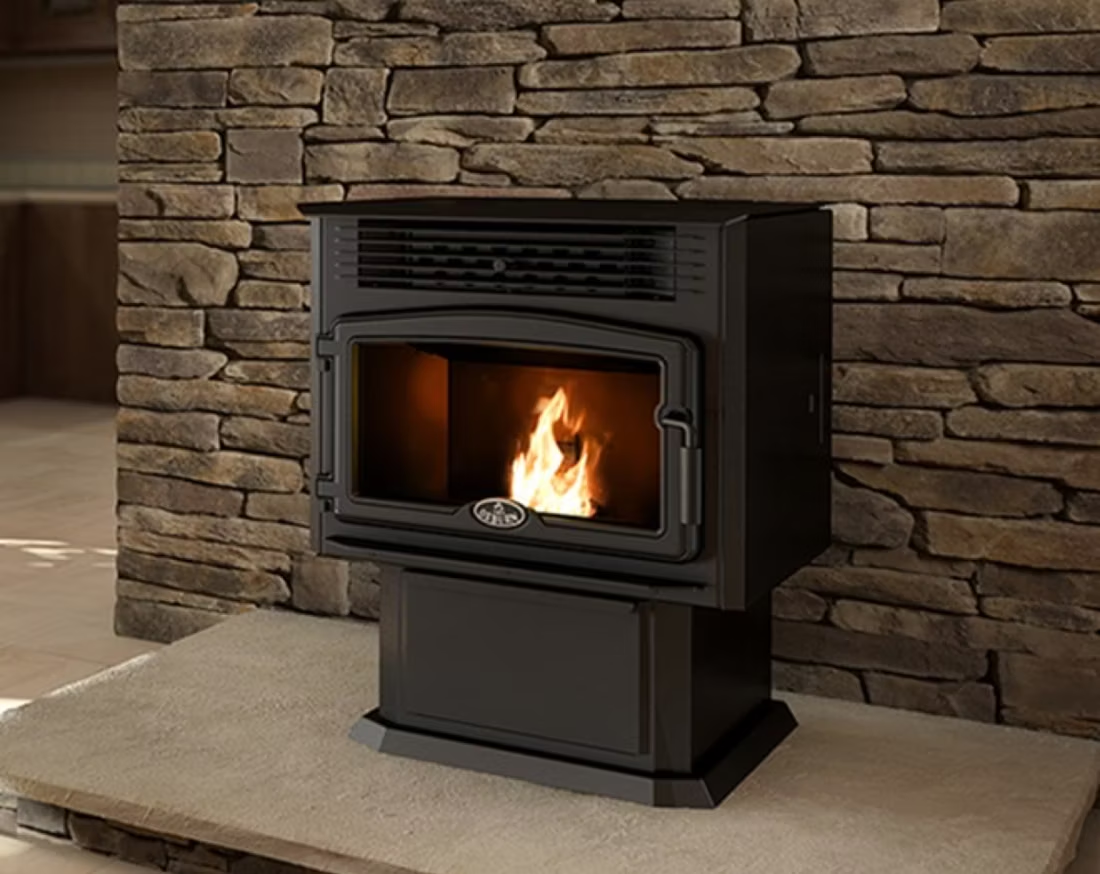
There's an irony worth naming: the Southeast, including Georgia, is one of the largest wood pellet manufacturing regions in the country, with mills processing pine, oak, and hickory residuals—the same species that show up in local firewood piles—into pellets that ship out to colder markets and overseas. Brands like Lignetics, Hamer Pellet Fuel, and Greenway Renewable Energy have a real regional presence, but that's industrial output, not proof of local heating demand. When a Richmond County homeowner does install a pellet stove, it's usually for the look and feel of a live fire in a sunroom or den, supplemental warmth in a detached workshop or garage, or a hedge against the occasional multi-day ice storm—the kind that hit the Augusta area hard in past winters and knocked out power for days.
Three steps. No salesperson until you're ready.
Tell us about your project
Your zip code, your situation, and the fuel you're leaning toward—or let the answers point you to one.
See what's actually available
The brands dealers within 100 miles genuinely carry—real options, never a catalog mirage.
Get your dealer & Project Guide
A trusted local dealer, plus the free Project Guide & Parts List that names every component of the job.
Frequently Asked Questions
How much does a pellet stove installation cost in Richmond County?
Because pellet appliances are a low-volume product here compared to gas fireplaces and heat pumps, fewer local dealers stock them, and installs often run in line with national averages—typically $3,000 to $6,000 for a freestanding stove with a through-wall vent kit, more if you're converting an existing masonry fireplace to a pellet insert with a liner. Expect your dealer to source the specific unit from a regional distributor rather than pull it off a showroom floor, which can add a short lead time compared to a gas insert purchase.
What size pellet stove do I actually need in Augusta's climate?
Smaller than you'd think. With winter lows averaging 35°F and a heating season that's genuinely short, most Richmond County homes only need a compact pellet stove (rated for 800–1,200 square feet) even for a full living area, and many homeowners intentionally undersize further because they're using it for supplemental warmth or ambiance rather than whole-home heat. Oversizing is a common mistake—a stove sized for a Minnesota winter will run far too hot and cycle constantly in an Augusta den.
Do I need a permit to install a pellet stove in Richmond County?
Yes—new installations require a building permit through the Augusta-Richmond County Planning & Development Department, since Augusta and Richmond County operate under a consolidated city-county government. The permit process for a pellet appliance is generally simpler than for a wood stove requiring a masonry chimney, since most pellet units vent through a small-diameter PL (pellet vent) pipe run through an exterior wall rather than up through the roof. Most local installers handle the permit filing as part of the job.
What kind of venting does a pellet stove need compared to a wood stove?
Pellet stoves use a smaller, simpler venting system—typically 3 or 4-inch PL vent pipe that can run horizontally through an exterior wall, unlike a wood stove's Class A chimney pipe that usually needs to exit through the roof. That makes pellet installs less invasive for a retrofit, which is one reason they still show up occasionally in Richmond County sunrooms and additions where running a full masonry-style chimney isn't practical.
Where do I buy pellets in Richmond County, and how should I store them?
Bagged pellets from regional producers like Lignetics, Hamer Pellet Fuel, and Greenway Renewable Energy are available through farm supply stores and some hardware retailers in the Augusta area, though selection is thinner than in colder states where pellet stoves are the norm—you may need to call ahead or order a season's supply at once rather than expect year-round shelf stock. Storage matters more here than it does up north: Georgia's humidity can cause pellets to swell and break down if they're kept anywhere but a dry, sealed space, so a garage or shed with real moisture control is worth the investment.
How much maintenance does a pellet stove need in a mild climate like this?
Less than in a place burning around the clock all winter, but the basics don't change: an annual cleaning of the burn pot, hopper, auger, and exhaust venting, plus a glass wipe-down through the season. Because Richmond County's burn season is short and many owners only run their stove on the coldest nights or for ambiance, buildup is slower—but skipping the annual service is still the leading cause of feed jams and inefficient burns when you do want the stove running.
When does pellet stove season actually start in Richmond County?
With an average winter low of 35°F and a winter heating season that's short and mild overall, genuinely cold stretches in Richmond County are usually confined to December through February, and even then, many days don't require supplemental heat at all. Most local owners fire up a pellet stove for occasional cold snaps or ice-storm power outages rather than as a daily fixture—which is a very different use pattern than a stove running nonstop from October to April in a colder climate zone.
Are there rebates or tax credits for a pellet stove in Georgia?
The federal biomass stove tax credit (Section 25C) applies nationwide, including Georgia, and covers 30% of the cost of a qualifying high-efficiency pellet stove or insert, up to $2,000, for units with a thermal efficiency rating of at least 75% as tested under current HHV standards. Georgia doesn't currently layer a state-level rebate on top of that for pellet appliances, so the federal credit is the main incentive to ask your dealer about when comparing pellet against a gas insert.
Should I get a pellet stove, or is gas the better fit for my Richmond County home?
For most homes here, a direct-vent gas fireplace or insert is the more practical choice—it matches the mild, short heating season, runs on demand with no fuel storage, and doesn't depend on electricity to feed itself, which a pellet stove's auger and blower do. Pellet makes sense in narrower cases: a detached workshop without gas service, a homeowner who specifically wants a real flame and the pellet aesthetic, or a household that wants a supplemental option for multi-day outages after an ice storm (paired with a generator, since pellet stoves won't run on batteries the way some gas units can). A local dealer can walk through both against your actual layout and gas access.
How often does a pellet stove need cleaning?
A clean pellet stove is a happy pellet stove. Plan on cleaning the burn pot about once a week when you're burning regularly—ash and clinkers gum up the air holes just like a pellet barbecue. Most pellet stove problems trace back to skipped cleaning that nobody explained up front. Some designs make it easy with a trapdoor burn pot: pull a lever and the gunk drops into the ash pan.
Why is a fireplace insert so efficient?
An insert does two things: it seals the chimney completely, so you stop losing air you already paid to heat, and it radiates warmth into the room through the firebox and glass. Most add a heat-exchange fan that pulls cool room air underneath, wraps it around the hot firebox, and pushes it back out warm. Your home is more efficient before you've even lit the first fire.
Can a fireplace actually lower my heating bill?
Yes—by creating a comfort zone. A furnace heats every square foot of the house just to warm the one room you're in; a gas fireplace on low burns roughly a sixth of the gas a typical furnace does. Set the furnace around 55–60 degrees as a baseline, then heat the rooms your family actually uses. Families who heat this way commonly save $20–$60 a month.
How much should I budget for a fireplace?
For an average home—covering the fireplace, the vent pipe, and basic installation—a budget between $3,900 and $5,500 gives you a lot of options across wood, gas, and pellet. By the time you add finish work, gas line, and electrical, the average complete installation lands between $5,000 and $12,000 all-in. In a remodel or new build, a good rule is to put about 2.5% of the total project cost toward the fireplace.
Stove and Fireplace Dealers in Richmond County
Listings include WhyFire partner dealers, dealers we have verified as authorized for the brands we recommend, and established local businesses that carry hearth products. Every listing shows which one it is. The ones marked Preferred run on WhyFire's software, so they can show you real pricing and book your appointment right here. No manufacturer pays for placement. How we verify dealers →
Thompson Gas
Augusta Overhead
Fireside Outdoor Kitchens
Thompson Gas - Waynesboro
Pellet Brands Stocked Around Richmond County
Manufacturers will point you to the nearest stocking dealer.
Find your pellet stove option in Richmond County.
Tell us about your home and how you'd use a pellet stove—ambiance, a workshop, or storm backup—and we'll match you with a trusted local dealer and send over a free Project Guide & Parts List with the exact venting components for your project.
Find Your Fireplace →