
Get real fireplace ambiance in Richmond County—no chimney required.
With winter lows averaging 35°F and a winter heating season that's short and mild, Augusta and the rest of Richmond County rarely need a wood-burning workhorse. Electric delivers the look and the zone heat without venting, permits, or ash—find the right unit and a trusted local installer.
Every Project Starts From One of These Five Situations
Electric heat fits Richmond County's mild winters.
Richmond County sits in climate zone 3A with a mild, short winter heating season—a fraction of what colder states see, and a big reason wood-burning fireplaces have mostly faded into decoration here. Historic homes in Summerville and Olde Town Augusta still have their original masonry fireplaces, and some owners burn a fire with local oak or hickory a handful of nights each winter, but very few households rely on wood or pellets for actual heat. Pellet stoves in particular are essentially nonexistent in the county—there's no meaningful cold-weather demand driving that market, even though regional brands like Lignetics and Hamer Pellet Fuel are available through Southeast distribution.
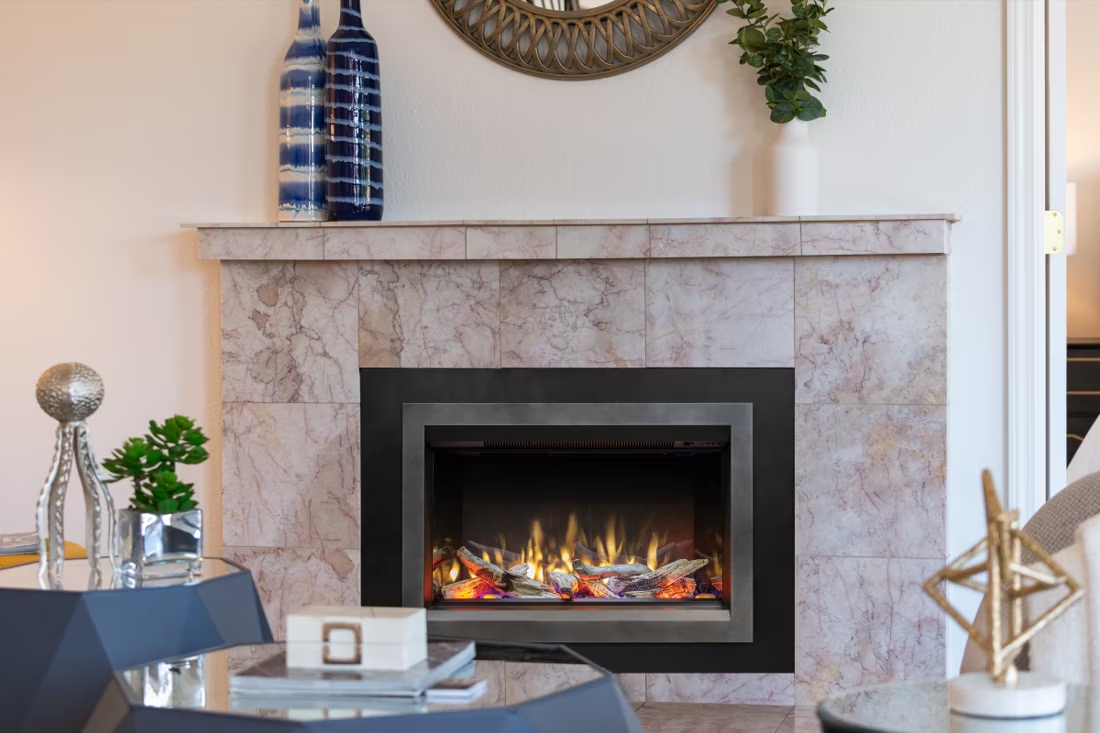
That's exactly the gap electric fills. Georgia Power serves the bulk of Augusta and the surrounding developed parts of the county, with Jefferson Energy Cooperative covering some of the more rural stretches toward Blythe and Hephzibah. Either way, an electric fireplace or insert plugs into existing service or a dedicated circuit—no gas line, no flue, no masonry work—which makes it the simplest fireplace upgrade for additions, sunrooms, condos near Augusta University, and older homes where running a chimney liner or gas line isn't practical. It's built for ambiance and supplemental warmth on the genuinely cold nights, not for carrying a whole house through a Georgia winter, because it doesn't need to.
Three steps. No salesperson until you're ready.
Tell us about your project
Your zip code, your situation, and the fuel you're leaning toward—or let the answers point you to one.
See what's actually available
The brands dealers within 100 miles genuinely carry—real options, never a catalog mirage.
Get your dealer & Project Guide
A trusted local dealer, plus the free Project Guide & Parts List that names every component of the job.
Frequently Asked Questions
How much does an electric fireplace installation cost in Richmond County?
Plug-in freestanding electric fireplaces and mantel packages typically run $300 to $800 installed, since they use a standard outlet and require no electrical work. Wall-mounted or built-in units—the kind of project most Augusta homeowners are after for a living room or primary bedroom—usually run $1,200 to $2,500, including a dedicated 120V or 240V circuit if your panel needs one. Converting an existing masonry fireplace in an older Summerville or Olde Town home to an electric insert generally falls in that same $1,200 to $2,500 range, though homes with older knob-and-tube or undersized panels can run higher once an electrician is factored in.
Do I need a permit for an electric fireplace in Richmond County?
A small plug-in unit needs no permit—it's no different from adding a space heater or a lamp. A built-in or wall-mounted electric fireplace that requires a new dedicated circuit does typically need an electrical permit through Augusta-Richmond County's Planning & Development Department, and most licensed electricians pull that permit as part of the install. There's no combustion involved, so there's no chimney inspection, no venting code, and no air-quality review to worry about—which is part of why electric installs move faster than gas or wood projects in the county.
What's the difference between an electric fireplace, insert, and stove?
An electric fireplace is typically a built-in or wall-mounted unit designed to look like a traditional firebox—common in new construction and remodels around newer Richmond County subdivisions like those near Riverwatch Parkway. An electric insert is sized to slide into an existing masonry firebox, which is the more common route in older Augusta neighborhoods with a fireplace opening but no real need to burn wood. An electric stove is a freestanding cabinet-style unit that sits on the floor, popular for additions, garages converted to living space, or mobile homes in Blythe and Hephzibah where a built-in isn't practical. All three plug in or wire in without any venting.
Will an electric fireplace keep my home warm during a power outage?
No—and this is worth being upfront about. An electric fireplace needs electricity to run, so it won't provide heat if Georgia Power or Jefferson Energy Cooperative service goes down, which does happen during the occasional Augusta-area ice storm even though outages here are usually shorter than in harder-hit northern climates like Buffalo, NY or Duluth, MN. If backup heat during outages matters to you, that's a case where a vented gas fireplace with battery-backup ignition is worth considering alongside electric, and a local dealer can walk you through both.
Electric vs. gas fireplace—which is right for my Augusta home?
Gas fireplaces put out more real heat and can serve as backup warmth during a power outage, but they require a gas line, venting, and a bigger installation footprint—natural gas is available through most of developed Augusta, with propane filling in elsewhere in the county. Electric skips all of that: no venting, no gas line, no combustion byproducts, and a much simpler retrofit into an interior room, condo, or addition. Given Richmond County's mild winters and modest heating load, most homeowners choose electric for convenience and ambiance and gas when they specifically want a fireplace that can also carry real heat on the coldest nights.
Is wood heat common in Richmond County?
Not really, and it's worth saying plainly. With winter lows averaging around 35°F and only a mild, short winter heating season, most Richmond County households never need supplemental wood heat the way homes in colder states do. Some older properties in Summerville and Olde Town Augusta still have working masonry fireplaces and burn a fire with local oak, pine, or hickory a handful of times each season, but it's almost always for atmosphere rather than necessity. Pellet stoves are rarer still—there's essentially no local market for them despite regional suppliers like Greenway Renewable Energy operating in the broader Southeast. Electric fills the role wood plays in colder climates: occasional warmth and ambiance, without the upkeep.
Is an electric fireplace enough heat, or is it just for looks?
Most electric fireplaces put out 4,000 to 5,000 BTU (roughly 1,200 to 1,500 watts) of real heat, which is enough to noticeably warm a single room—a sunroom, guest bedroom, or home office—even on Richmond County's coldest nights, which rarely dip far below freezing. It's genuinely useful supplemental heat, not just a light-up prop, but it's not sized to replace central heating for a whole house. Given the county's mild, short winter heating season, that supplemental role is usually all a home actually needs from a fireplace.
Can renters or condo owners in Augusta install an electric fireplace?
Yes—this is one of the easier fireplace projects for renters and condo owners around downtown Augusta or Augusta University. A freestanding or plug-in electric fireplace needs nothing more than a standard outlet, so it can move with you and requires no permit, no landlord sign-off on venting, and no HOA review for chimney work. Wall-mounted units are also an option if your lease or HOA allows minor wall-mounted fixtures—just check before drilling into a wall you don't own.
How much does it cost to run an electric fireplace in Richmond County?
At Georgia Power's typical residential rate (roughly $0.13 per kWh), a 1,500-watt electric fireplace running on high costs about $0.20 an hour, or a little under $5 for eight hours of use—cheap enough that most owners run it for ambiance without worrying about the bill. Customers served by Jefferson Energy Cooperative in the more rural parts of the county may see a slightly different rate, but the cost per hour stays in the same ballpark. That's a fraction of what heating an entire home with electric resistance heat would cost, which is exactly why these units are marketed and used as supplemental, zone-based heat rather than a whole-house solution.
Can I put a TV above my fireplace?
Yes—with an asterisk. Fireplaces are hot and TVs don't like heat. Either put a mantel between them to deflect rising warmth, or choose a fireplace with heat-management technology that creates a cool zone on the wall above—the wall stays around 125 degrees, barely warm, while the room still gets full heat. If you like clean lines and don't want a mantel, heat management is the answer.
Do electric fireplaces actually produce heat?
Yes—most put out around 4,800–5,000 BTUs from a standard outlet, which comfortably warms a bedroom, office, or den as a comfort-zone heater. What they won't do is carry a whole house the way wood, gas, or pellet can. Think of electric as ambiance-first with honest supplemental heat: flames on with no heat in July, flames plus warmth in January.
Can a fireplace actually lower my heating bill?
Yes—by creating a comfort zone. A furnace heats every square foot of the house just to warm the one room you're in; a gas fireplace on low burns roughly a sixth of the gas a typical furnace does. Set the furnace around 55–60 degrees as a baseline, then heat the rooms your family actually uses. Families who heat this way commonly save $20–$60 a month.
Can I install a fireplace myself?
If you're putting a fire in your house on purpose, it's best to work with an expert. Unless you're genuinely experienced in framing, gas line, vent pipe, and the national code on clearances to combustibles, have a professional do it—and ideally the same company that sells you the fireplace, so warranty, service, and liability all live under one roof.
Stove and Fireplace Dealers in Richmond County
Listings include WhyFire partner dealers, dealers we have verified as authorized for the brands we recommend, and established local businesses that carry hearth products. Every listing shows which one it is. The ones marked Preferred run on WhyFire's software, so they can show you real pricing and book your appointment right here. No manufacturer pays for placement. How we verify dealers →
Thompson Gas
Augusta Overhead
Fireside Outdoor Kitchens
Thompson Gas - Waynesboro
Find your electric fireplace in Richmond County.
Tell us a bit about your home and we'll match you with a trusted local dealer and send over a free Project Guide & Parts List—a plan for your electric fireplace project in Richmond County, right down to the parts and your recommended installer.
Find Your Fireplace →