
Instant warmth, no chimney required, in Hephzibah.
With winter lows averaging in the mid-30s, Hephzibah homes rarely need a wood-burning workhorse—an electric fireplace delivers real ambiance and supplemental heat with a standard outlet or a single dedicated circuit.
Every Project Starts From One of These Five Situations
Mild winters mean electric fireplaces fit perfectly.
Hephzibah sits in Richmond County just southeast of Augusta, in climate zone 3A—a humid, mild-winter zone where the coldest nights average around 35°F and the whole heating season adds up to a short, mild stretch of cold. Compare that to a place like Duluth, Minnesota, where winters are brutally long and a wood stove is load-bearing infrastructure for six months of the year: Hephzibah's heating need is a fraction of that. Wood and pellet stoves are rare here for good reason—there's simply not enough sustained cold to justify a whole-house solid-fuel system, and most local homes don't have a masonry chimney to work with in the first place.
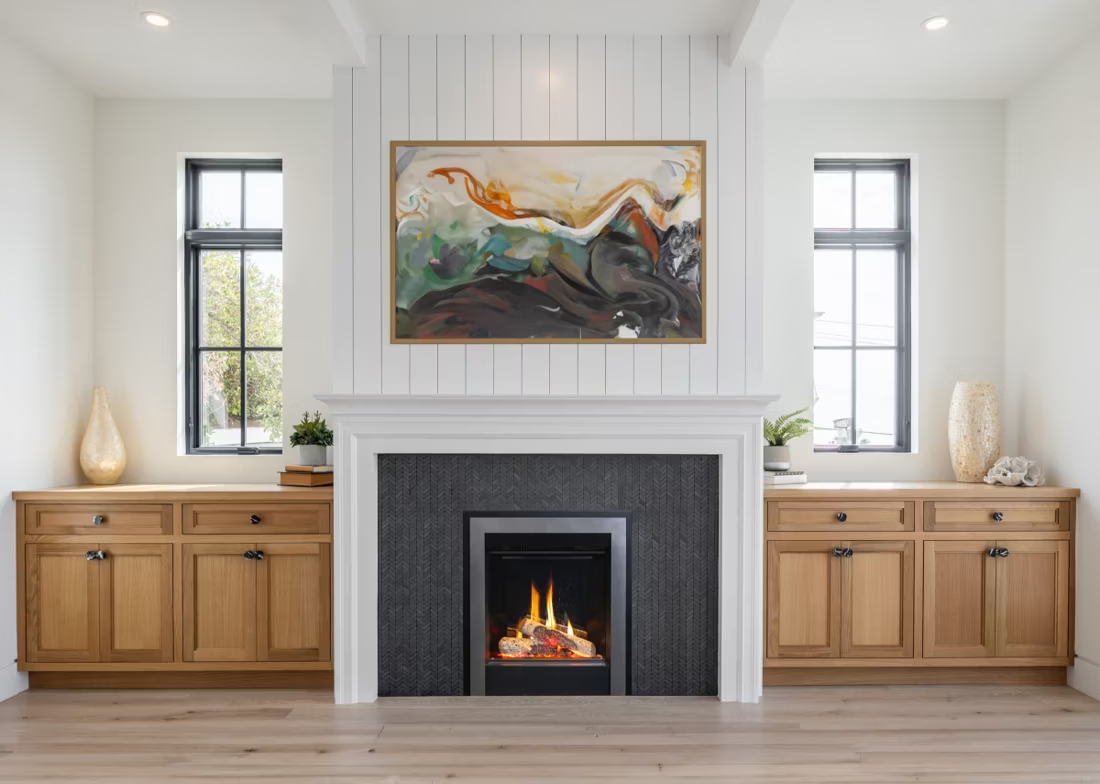
That's exactly the climate where electric fireplaces earn their keep. There's no venting, no chimney, no gas line, and no combustion byproducts to worry about—just a unit that plugs in or wires into a dedicated circuit and produces real radiant or fan-forced heat on demand. Georgia Power serves Hephzibah at a residential rate around $0.1549 per kWh, which makes running a 1,500-watt electric fireplace for a few hours on a chilly evening cost pocket change compared to running central heat for the whole house. For the occasional freeze or a cold front rolling through, that's often all the heat a room needs.
Three steps. No salesperson until you're ready.
Tell us about your project
Your zip code, your situation, and the fuel you're leaning toward—or let the answers point you to one.
See what's actually available
The brands dealers within 100 miles genuinely carry—real options, never a catalog mirage.
Get your dealer & Project Guide
A trusted local dealer, plus the free Project Guide & Parts List that names every component of the job.
Frequently Asked Questions
How much does it cost to install an electric fireplace in Hephzibah?
Electric fireplaces are the least expensive hearth option to install because there's no venting or gas line involved. A plug-in insert or mantel package typically runs $300 to $1,500 installed, while a built-in wall unit that requires a dedicated 20-amp circuit and some carpentry work runs $1,500 to $3,500. Compare that to a wood or gas installation, which usually starts closer to $4,000 once chimney or venting work is factored in—electric skips that entirely, which is part of why it's such a common choice for Hephzibah's mild climate.
Do I need a permit for an electric fireplace in Hephzibah?
In most cases, no—a plug-in electric fireplace that uses an existing outlet doesn't trigger a permit. If you're adding a built-in unit that needs a new dedicated circuit, an electrical permit is typically required, and that work should go through a licensed electrician. Hephzibah residents generally handle permitting through the Augusta-Richmond County Planning & Development Department, since Richmond County's building codes cover most of the surrounding area. Your local dealer or electrician can confirm what's needed for your specific installation.
Why don't more homes in Hephzibah use wood stoves?
It comes down to climate. Hephzibah only sees a short, mild heating season and winter lows that average in the mid-30s—nothing like the sustained cold of a place such as Bismarck, North Dakota, where a wood stove can be the difference between a warm house and a cold one for months at a stretch. Most Hephzibah homes also don't have masonry fireplaces with a working chimney, which adds cost and complexity to any wood installation. A handful of homeowners with existing chimneys or a taste for the ritual of a real fire do install wood stoves, but it's the exception rather than the norm—electric and gas cover the vast majority of local demand.
Electric vs. gas fireplace—which makes more sense in Hephzibah?
Both are common choices here. Gas delivers a larger, more fire-like flame and higher heat output, which matters if you want a fireplace that can genuinely warm a room on a cold January morning—but it requires a gas line and venting, which adds to the installation cost and complexity. Electric skips all of that: no gas line, no venting, and a lower upfront cost, at the tradeoff of a smaller heat output and a flame effect that, while good on modern units, doesn't burn real fuel. For a supplemental heat source in a mild climate like Hephzibah's, many homeowners find electric does everything they need without the extra install work.
What's the best type of electric fireplace for a Hephzibah home?
For most homes here, a built-in wall unit or a linear electric fireplace insert gives the best look-to-cost ratio—brands like Dimplex, Amantii, and Napoleon make models designed to be recessed into a wall or existing fireplace opening. If you have an old, unused masonry fireplace, an electric insert is a popular option: it drops into the existing firebox, uses the outlet or a new circuit run behind it, and eliminates any chimney maintenance going forward. Mantel packages (a freestanding electric fireplace with a surround) are the simplest option if you're not doing any construction—just plug it in and you're done.
How much does it cost to run an electric fireplace in Hephzibah?
At Georgia Power's residential rate of about $0.1549 per kWh, a typical 1,500-watt electric fireplace running on high heat costs roughly 23 cents per hour to operate. Most homeowners run theirs a few hours in the evening on cooler nights rather than continuously, since Hephzibah's mild winters rarely require all-day heat. Compare that to running central electric resistance heat for the whole house, and a single-room electric fireplace is a genuinely cheap way to take the edge off a cold evening without touching the thermostat.
Will my electric fireplace work if the power goes out?
No—electric fireplaces require power to run, so they won't operate during an outage. Georgia Power's service in Richmond County is generally reliable, but ice storms and severe thunderstorms do occasionally knock out power in this part of Georgia, sometimes for a day or more. If backup heat during an outage matters to you, a gas unit with a battery-backed ignition system is a better fit than electric. Most homeowners here treat electric fireplaces as a convenience and ambiance feature rather than an emergency heat source.
Can I install an electric fireplace myself?
Plug-in units—mantel packages, freestanding stoves, and some inserts—are genuinely DIY-friendly. You place the unit, plug it into a standard outlet, and you're done. Built-in wall units and larger inserts that need a dedicated circuit are a different story: that work should go to a licensed electrician, both for safety and because it typically needs to pass an electrical inspection. A local dealer can tell you which category your chosen unit falls into before you buy.
Can I convert my existing wood fireplace to electric?
Yes, and it's a common project in Hephzibah's older homes that have an unused masonry fireplace. An electric insert slides into the existing firebox opening, plugs into an outlet or a new dedicated circuit, and gives you flame effect and heat without ever needing a chimney sweep again. It's usually the least expensive fireplace conversion available—often $500 to $2,000 depending on the unit and whether new wiring is needed—since there's no chimney relining or venting work involved.
Do electric fireplaces actually produce heat?
Yes—most put out around 4,800–5,000 BTUs from a standard outlet, which comfortably warms a bedroom, office, or den as a comfort-zone heater. What they won't do is carry a whole house the way wood, gas, or pellet can. Think of electric as ambiance-first with honest supplemental heat: flames on with no heat in July, flames plus warmth in January.
Can I put a TV above my fireplace?
Yes—with an asterisk. Fireplaces are hot and TVs don't like heat. Either put a mantel between them to deflect rising warmth, or choose a fireplace with heat-management technology that creates a cool zone on the wall above—the wall stays around 125 degrees, barely warm, while the room still gets full heat. If you like clean lines and don't want a mantel, heat management is the answer.
Can a fireplace actually lower my heating bill?
Yes—by creating a comfort zone. A furnace heats every square foot of the house just to warm the one room you're in; a gas fireplace on low burns roughly a sixth of the gas a typical furnace does. Set the furnace around 55–60 degrees as a baseline, then heat the rooms your family actually uses. Families who heat this way commonly save $20–$60 a month.
What is an in-home preview and do I need one?
It's a visit where a hearth professional measures your space, confirms the model you picked actually works in your home, and walks the specs—framing, gas line, venting, finish work—before anything is ordered. Some details you just can't know until you see the house. Never make a down payment without one; it's the single most-skipped step that burns buyers.
Nearby Dealers
Hearth shops serving Hephzibah and the surrounding area. Every listing shows whether it is a WhyFire partner, a dealer we have verified as authorized for the brands we recommend, or a local business carrying hearth products. No manufacturer pays for placement. How we verify dealers →
Thompson Gas
Augusta Overhead
Fireside Outdoor Kitchens
Thompson Gas - Waynesboro
Electric Service in Hephzibah
An electric fireplace's heater draws about 1,500 watts—pennies per hour at local rates.
Georgia Power Co
Find your electric fireplace in Hephzibah.
Tell us a bit about your home and we'll match you with a trusted local dealer and a free Project Guide & Parts List—the exact parts and recommended dealer for your electric fireplace project in Hephzibah.
Find Your Fireplace →