
Find a pellet stove built for Pike County's short, mild winters.
Automated, thermostat-controlled heat for the cool (but rarely brutal) winters around Zebulon, Molena, Concord, and Meansville. Find the right pellet stove or insert and connect with a trusted local dealer.
Every Project Starts From One of These Five Situations
Convenient warmth for Pike County's short heating season.
Pike County sits in the Georgia piedmont south of Atlanta, home to fewer than 4,000 residents spread across Zebulon, Molena, Concord, Meansville, and Williamson. With a Climate Zone 3A designation, an average winter low around 34°F, and only a light overall winter heating load each year, this isn't a place that needs a stove capable of holding a 20-hour overnight burn through a deep freeze—it's a place where a handful of genuinely cold weeks each winter make a clean, easy-to-run heat source worth having.
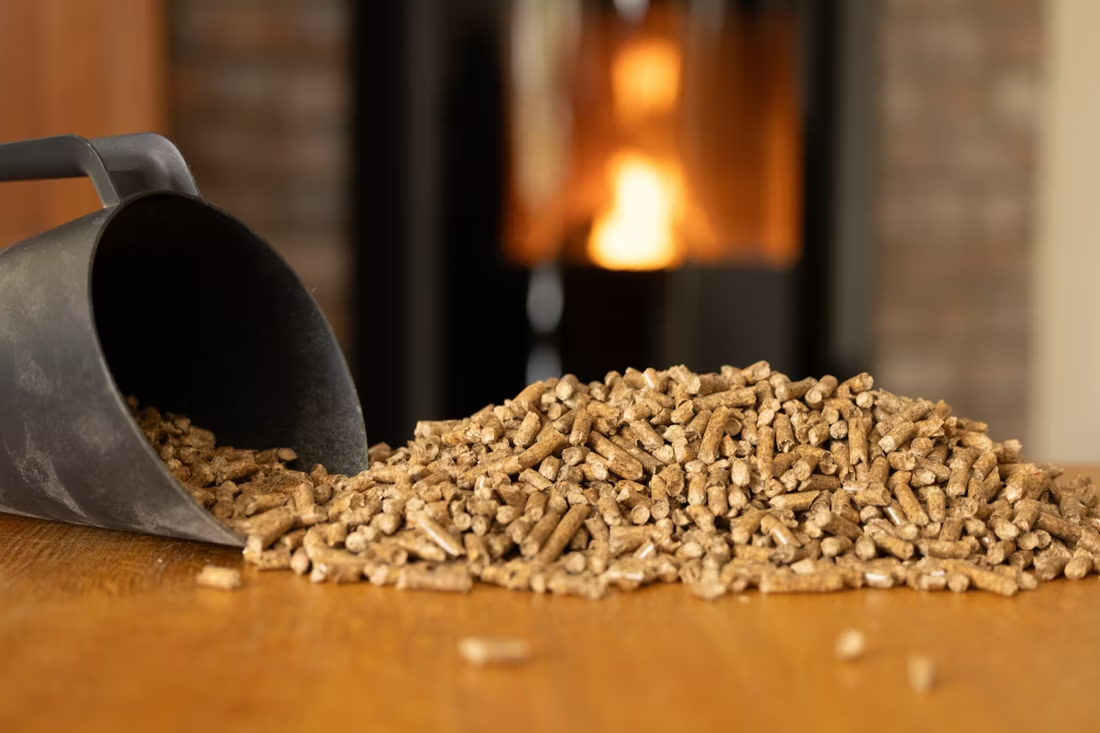
That's where pellet stoves fit well. There's no smoke management issue to work around here—Pike County has no listed air quality non-attainment concerns, so there's nothing stopping a pellet appliance from running whenever it's useful. Fuel is also convenient locally: Georgia-based producers like Hamer Pellet Fuel and Greenway Renewable Energy, along with widely distributed Lignetics bags, mean pellet supply doesn't have to travel far to reach homes built among the oak, pine, and hickory stands that cover much of the county. Set the thermostat, load the hopper, and let the auger do the work—no splitting, stacking, or tending a fire required.
Three steps. No salesperson until you're ready.
Tell us about your project
Your zip code, your situation, and the fuel you're leaning toward—or let the answers point you to one.
See what's actually available
The brands dealers within 100 miles genuinely carry—real options, never a catalog mirage.
Get your dealer & Project Guide
A trusted local dealer, plus the free Project Guide & Parts List that names every component of the job.
Frequently Asked Questions
How much does a pellet stove installation cost in Pike County?
Pellet stove installations typically run $3,500 to $6,500 depending on the unit, whether a dedicated 120V outlet needs to be run near the hearth, and whether venting has to be extended through an exterior wall. Pellet inserts installed into an existing masonry fireplace usually land a bit higher, in the $4,000 to $7,500 range, since the vent pipe has to run through the chimney to a proper termination point. Because Pike County has no natural gas infrastructure in most areas, pellet appliances are often compared directly against propane options, and pellet tends to come out ahead on upfront install cost. A local dealer can give a firm number after seeing your hearth setup in person.
What size pellet stove do I need for my Pike County home?
Most homes in Pike County are single-story ranch or farmhouse-style builds, and given the mild, short winter heating season here, you're rarely fighting extended sub-freezing stretches. A small to mid-size pellet stove (rated for 1,000 to 1,800 square feet) is enough to heat a main living area or open floor plan as supplemental heat, while a larger unit makes sense only if you're aiming to heat the whole house without relying on a central system. Because winters are short, many Pike County homeowners size for comfort in the living room rather than whole-house output—a local dealer can walk through your floor plan and insulation level to confirm the right hopper capacity and heat output.
Where can I find certified pellet stove installers near Pike County?
Look for installers with NFI (National Fireplace Institute) certification, which covers proper venting, clearances, and electrical setup for pellet appliances. Given Pike County's small population, some certified dealers are based in neighboring Lamar, Spalding, or Upson counties and serve Zebulon, Molena, and the surrounding rural roads as part of their regular service area—expect a modest travel charge for jobs farther from Barnesville or Griffin. Most installers handle both the sale and the install, which keeps warranty coverage and code compliance straightforward, and most also service and clean the units annually.
What's the difference between a pellet stove and a pellet insert?
A pellet stove is a freestanding appliance that sits on a hearth pad and vents through a wall or existing chimney chase—it can go almost anywhere with the right clearances. A pellet insert is built to slide into an existing masonry fireplace opening, using the chimney as a vent chase while sealing off the old open firebox. For Pike County homes with an existing wood fireplace that rarely gets used, an insert is often the simpler upgrade since it reuses the chimney you already have. Homes without an existing fireplace, or newer construction, are usually better suited to a freestanding stove.
Do I need a permit to install a pellet stove in Pike County?
Yes—a building permit through the Pike County Building Department is required for a new pellet stove or insert installation, covering the hearth clearance, venting, and electrical connection. Unlike a wood stove, there's no separate air quality curtailment issue to worry about here, since Pike County has no listed non-attainment concerns. There's also no cutting permit to deal with, since pellet fuel is purchased by the bag rather than harvested—one less step compared to wood heat. Most installers pull the permit as part of the job.
What's the best pellet stove for Pike County's climate?
Because Pike County's winters are short and the average low sits around 34°F, you don't need a top-tier long-burn unit built for sub-zero endurance—a mid-range stove with a standard 40 to 60 pound hopper capacity is usually plenty, since you won't often need multi-day continuous runs. What matters more locally is convenience and reliability: a thermostat-controlled unit that can cycle on for a cool evening and shut off automatically once the room warms up fits how most Pike County households actually use supplemental heat. Common brands sold by area dealers include Harman, Lopi, and US Stove—any of these paired with locally available Hamer Pellet Fuel or Greenway Renewable Energy bags will run well here.
How much pellet fuel will I need for a Pike County winter?
With a fairly light overall winter heating load, a Pike County home using a pellet stove as supplemental heat in one or two rooms typically burns through 1 to 2 tons of pellets per season—noticeably less than colder-climate homes that can go through 4 tons or more. Because Hamer Pellet Fuel and Greenway Renewable Energy both produce in Georgia, local supply tends to be more consistent than in areas that rely on pellets trucked in from out of state, and Lignetics bags are widely available through hardware retailers as a backup option. Buying a season's supply in the fall, before the first cold snap, is the easiest way to avoid scrambling during a stretch of unusually cold weather.
Will my pellet stove work if the power goes out?
No—pellet stoves rely on an electric auger to feed fuel and a blower to circulate heat, so a power outage stops the stove even with a full hopper. This matters in rural Pike County, where outages after storms can last longer than in town. Some homeowners pair a pellet stove with a small battery backup or generator sized to run the auger and blower, which keeps the unit going during an outage. If uninterrupted backup heat during outages is the priority, a wood stove or vented gas unit that doesn't depend on electricity may be worth considering alongside pellet.
Pellet stove vs. wood stove—which makes more sense in Pike County?
Wood stoves burn the oak, pine, and hickory common throughout Pike County and work without electricity, which matters during storm-related outages. They also demand more day-to-day work—splitting, stacking, tending a fire, and cleaning ash and creosote. Pellet stoves trade some of that off-grid independence for convenience: load the hopper, set the thermostat, and let the auger and blower handle the rest, with cleaner burns and less ash to deal with. Given Pike County's mild winters and generally light heating needs, many households find the lower-maintenance pellet option fits how little they actually need to run a stove—while others in more rural parts of the county still lean on wood for backup heat during outages.
Why is a fireplace insert so efficient?
An insert does two things: it seals the chimney completely, so you stop losing air you already paid to heat, and it radiates warmth into the room through the firebox and glass. Most add a heat-exchange fan that pulls cool room air underneath, wraps it around the hot firebox, and pushes it back out warm. Your home is more efficient before you've even lit the first fire.
How often does a pellet stove need cleaning?
A clean pellet stove is a happy pellet stove. Plan on cleaning the burn pot about once a week when you're burning regularly—ash and clinkers gum up the air holes just like a pellet barbecue. Most pellet stove problems trace back to skipped cleaning that nobody explained up front. Some designs make it easy with a trapdoor burn pot: pull a lever and the gunk drops into the ash pan.
Can I install a fireplace myself?
If you're putting a fire in your house on purpose, it's best to work with an expert. Unless you're genuinely experienced in framing, gas line, vent pipe, and the national code on clearances to combustibles, have a professional do it—and ideally the same company that sells you the fireplace, so warranty, service, and liability all live under one roof.
What is an in-home preview and do I need one?
It's a visit where a hearth professional measures your space, confirms the model you picked actually works in your home, and walks the specs—framing, gas line, venting, finish work—before anything is ordered. Some details you just can't know until you see the house. Never make a down payment without one; it's the single most-skipped step that burns buyers.
Pellet Brands Stocked Around Pike County
Manufacturers will point you to the nearest stocking dealer.
Find your pellet stove in Pike County.
Tell us a bit about your home and we'll match you with a trusted local dealer and send over a free Project Guide & Parts List—the exact stove or insert, vent kit, and installation plan for your Pike County home.
Find Your Fireplace →