
A rare fit for Peach County's mild winters.
With winter lows averaging 36°F and just 2,210 heating degree days a year, Peach County rarely needs a dedicated solid-fuel heater. A small number of homeowners still install a pellet stove for backup warmth or the look of a real flame, and I'll match you with a trusted local dealer who knows how to size and vent one correctly for a middle Georgia home.
Every Project Starts From One of These Five Situations
Middle Georgia's short, mild heating season doesn't call for it.
Peach County sits in climate zone 3A around Fort Valley and Byron, in the heart of Georgia's peach-growing belt just southwest of Macon. With around 14,500 residents spread across a small, mostly rural county, and only 2,210 heating degree days a year—a fraction of what a place like Duluth, MN sees in a single winter—the heating season here is short and forgiving. Most homes rely on heat pumps or gas furnaces sized for occasional cold mornings, not months of sustained freeze, and that's the main reason pellet stoves never became a standard fixture in local building plans the way they have in colder parts of the country.
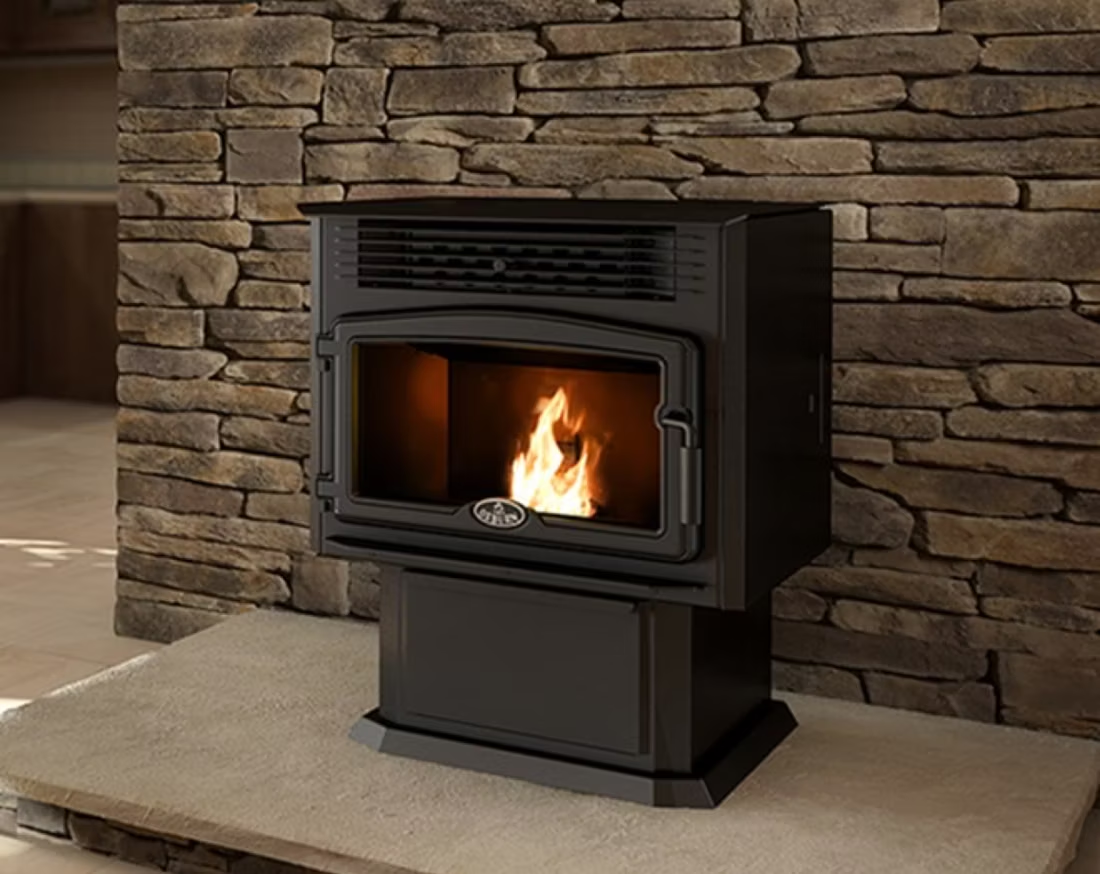
That doesn't mean nobody wants one. A handful of Peach County homeowners install a pellet stove in a sunroom, workshop, or rural property as supplemental heat or simply for the ambiance of a live flame, and there's no local air quality restriction working against it—Peach County has no designated air quality concerns. What's worth knowing going in: a pellet stove needs electricity to run its auger and blower, so it won't help during the ice storms that occasionally knock out power in middle Georgia. Bagged pellets from regional brands like Lignetics, Hamer Pellet Fuel, and Greenway Renewable Energy are available through farm supply and hardware retailers, but you're buying by the bag here, not from a dedicated pellet depot the way you might in the Northeast.
Three steps. No salesperson until you're ready.
Tell us about your project
Your zip code, your situation, and the fuel you're leaning toward—or let the answers point you to one.
See what's actually available
The brands dealers within 100 miles genuinely carry—real options, never a catalog mirage.
Get your dealer & Project Guide
A trusted local dealer, plus the free Project Guide & Parts List that names every component of the job.
Frequently Asked Questions
How much does a pellet stove installation cost in Peach County?
Because pellet stoves are uncommon in a mild climate like Peach County's, there isn't a dense local network of pellet specialists the way you'd find in a colder state. Nationally, a pellet stove and its installation typically run $3,000 to $6,000 depending on venting and hearth pad work; in Peach County, expect to work with a dealer who covers the broader middle Georgia region out of Macon or Warner Robins rather than someone based full-time in Fort Valley or Byron.
Why aren't pellet stoves common in Peach County?
With just 2,210 heating degree days and average winter lows around 36°F, Peach County's heating season is short and mild—climate zone 3A means homes are typically sized for occasional cold snaps rather than months of sustained freeze. Heat pumps and gas furnaces handle that job efficiently without hauling bags of fuel, which is why pellet stoves have stayed a niche, supplemental choice here rather than a primary heat source.
Does anyone in Peach County actually use a pellet stove?
A small number do—usually a homeowner on a rural Fort Valley or Byron property who wants backup warmth for the occasional winter storm, or who likes the look of a live flame without splitting and stacking firewood. Others install one in a workshop, sunroom, or hunting camp where the household heat pump doesn't reach. In Peach County a pellet stove is best thought of as a supplemental appliance, not a whole-home heating plan.
Where do I buy pellets in Peach County?
Peach County doesn't sit near the large pellet mills that supply colder states, but bagged pellets from regional brands like Lignetics, Hamer Pellet Fuel, and Greenway Renewable Energy are distributed through farm supply and hardware retailers across middle Georgia. Because demand is lower here than up north, expect to pick up a few bags at a time rather than find a dedicated pellet depot in town—stocking up before the first real cold snap is still a smart habit, even in a mild winter.
Will a pellet stove work during a power outage?
This is the main tradeoff to weigh in a place like Peach County, where ice storms occasionally take down power lines for a day or more. A pellet stove needs electricity to run its auger and combustion blower, so it goes cold in an outage right when you might want backup heat most. If outage resilience is the real goal, a wood-burning option or a generator paired with the pellet stove is worth discussing with a local dealer before you buy.
What size pellet stove do I need for a Peach County home?
Because winter lows average around 36°F here, most Peach County homes only need a small to mid-size pellet stove sized to heat a single room or open living area rather than the whole house. Oversizing is the bigger risk in a mild climate like this—a unit sized for a much colder region ends up idling on its lowest setting most of the season, which can lead to incomplete combustion and buildup in the burn pot. A local dealer can size the unit to the specific space you actually want warmed on the coldest nights.
Do I need a permit to install a pellet stove in Peach County?
Most jurisdictions require a building permit for a new solid-fuel appliance, covering the unit, hearth clearance, and vent termination, and Peach County is no exception. Because pellet installs are infrequent locally, it's worth confirming clearance and venting requirements with the Peach County building department, or the City of Fort Valley if you're inside city limits, before work starts—the inspector may simply see fewer pellet jobs than gas or electric fireplace jobs.
How does local wood availability affect the case for a pellet stove?
Peach County has plenty of oak, pine, and hickory on hand, which is part of why a simple wood stove or fireplace insert is often a more natural fit locally than an appliance that needs bagged fuel trucked in. If you already have access to firewood, weigh that against the convenience pellets offer—cleaner, more consistent burns, but a higher cost per BTU and a need to keep bags on hand rather than a woodpile.
Pellet vs. gas vs. electric—what actually makes sense in Peach County?
For most Peach County homes, gas or electric heat is the practical daily choice, since both integrate easily with the heat pump or gas furnace systems already standard here. A pellet stove is better thought of as a supplemental or ambiance appliance—good for a sunroom, workshop, or occasional backup, but not something to build your home's primary heating strategy around given a 2,210-HDD season. If you want a stove aesthetic with less fuel-hauling than wood, an electric option may fit daily life better; if you specifically want the live-flame pellet burn experience, that's where a pellet stove earns its place.
What's the difference between an insert and a zero-clearance fireplace?
An insert is a fireplace that slides into a pre-existing wood-burning fireplace—if you don't have one, there's nothing to insert it into. A zero-clearance fireplace is built into a framed wall, which makes it the answer for remodels and new construction. Simple test: existing masonry fireplace means insert; blank or framed wall means zero-clearance.
How often does a pellet stove need cleaning?
A clean pellet stove is a happy pellet stove. Plan on cleaning the burn pot about once a week when you're burning regularly—ash and clinkers gum up the air holes just like a pellet barbecue. Most pellet stove problems trace back to skipped cleaning that nobody explained up front. Some designs make it easy with a trapdoor burn pot: pull a lever and the gunk drops into the ash pan.
What is an in-home preview and do I need one?
It's a visit where a hearth professional measures your space, confirms the model you picked actually works in your home, and walks the specs—framing, gas line, venting, finish work—before anything is ordered. Some details you just can't know until you see the house. Never make a down payment without one; it's the single most-skipped step that burns buyers.
How much should I budget for a fireplace?
For an average home—covering the fireplace, the vent pipe, and basic installation—a budget between $3,900 and $5,500 gives you a lot of options across wood, gas, and pellet. By the time you add finish work, gas line, and electrical, the average complete installation lands between $5,000 and $12,000 all-in. In a remodel or new build, a good rule is to put about 2.5% of the total project cost toward the fireplace.
Stove and Fireplace Dealers in Peach County
Pellet Brands Stocked Around Peach County
Manufacturers will point you to the nearest stocking dealer.
Get your free Project Guide & Parts List for a pellet stove in Peach County.
Tell me about your home and how you'd actually use a pellet stove—supplemental heat, storm backup, or simple ambiance—and I'll match you with a trusted local dealer who installs them in middle Georgia, plus send a free Project Guide & Parts List with the exact parts, including the vent kit, for your project.
Find Your Fireplace →