
Find the fireplace built for Peach County's mild winters.
Gas and electric fireplace resources for Fort Valley, Byron, and every corner of Peach County—plus straight answers on wood and pellet options for the occasional masonry fireplace or personal preference. Connect with a trusted local hearth retailer who knows what actually makes sense here.
Every Project Starts From One of These Five Situations
Short heating seasons, real comfort choices, across Peach County, Georgia.
Peach County sits in Climate Zone 3A in Middle Georgia, home to Fort Valley (Blue Bird's bus manufacturing headquarters), Byron near Robins Air Force Base, and the peach orchards the county is named for. Winters here average a low of 36°F with just 2,210 heating degree days a year—a fraction of what a place like Bismarck, ND racks up past 9,000 HDD in a normal winter. There's no non-attainment or inversion issue in the air quality data here, and the heating season itself is short, usually a few cold snaps between December and February rather than a long stretch of sustained cold.
That climate shapes what actually gets installed. Gas and electric fireplaces do the real work in Peach County—instant heat with no wood-hauling, and low-maintenance operation that fits a mild-winter household. Wood and pellet stoves are uncommon as new installs; where you'll find wood, it's usually an existing masonry fireplace burning local oak, pine, or hickory on the occasional cold night, more for ambiance than primary heat. This hub rolls up hearth retailers, service technicians, and fuel suppliers across the whole county—Fort Valley, Byron, Powersville, and the unincorporated areas in between. Pick your fuel below for local dealers, real cost ranges, and the resources that actually apply to your home.
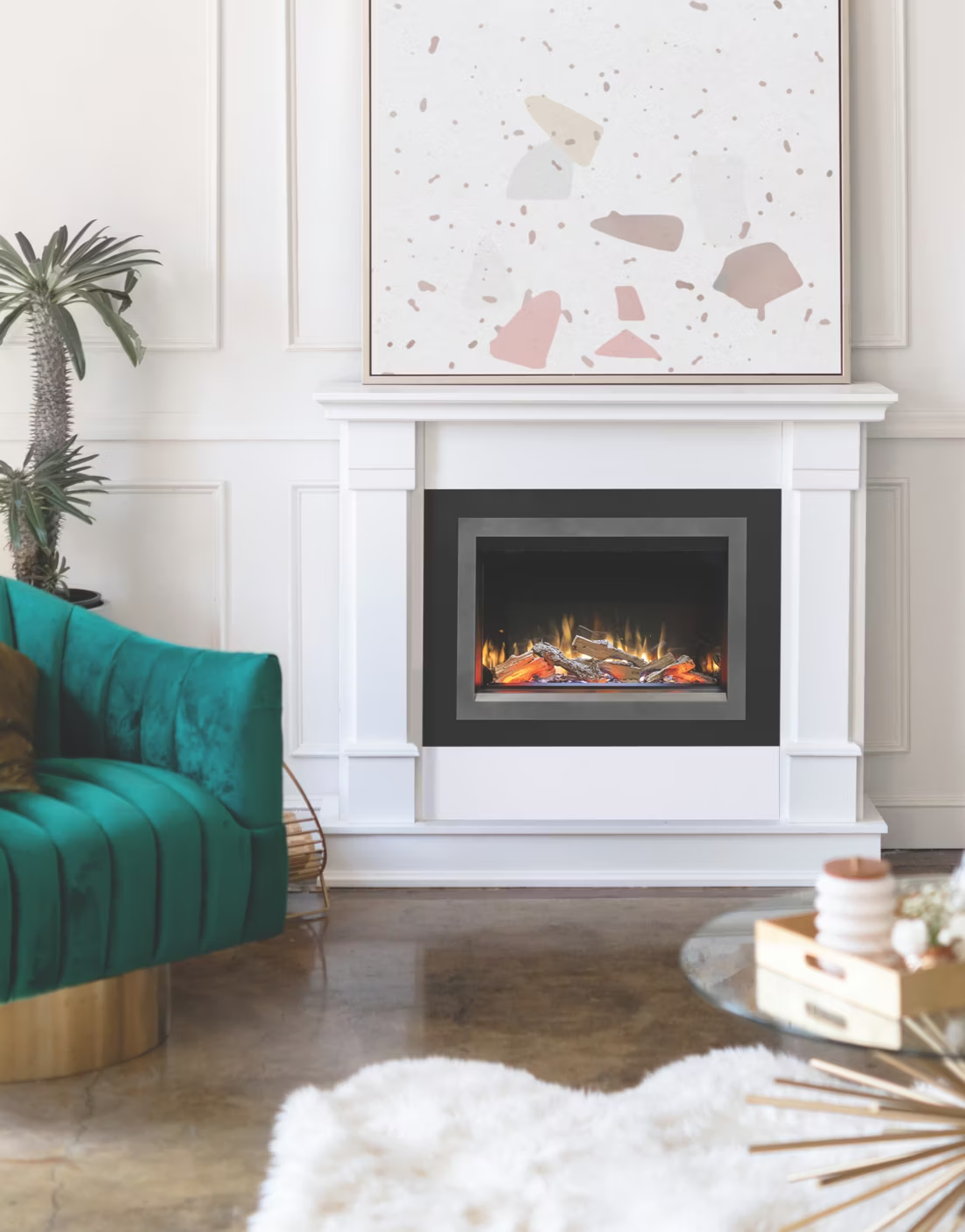
Four fuels. One honest answer for Peach County.
Three steps. No salesperson until you're ready.
Tell us about your project
Your zip code, your situation, and the fuel you're leaning toward—or let the answers point you to one.
See what's actually available
The brands dealers within 100 miles genuinely carry—real options, never a catalog mirage.
Get your dealer & Project Guide
A trusted local dealer, plus the free Project Guide & Parts List that names every component of the job.
Frequently Asked Questions
Which fuel works best in Peach County?
Gas and electric are the two fuels that actually fit Peach County's climate. With winter lows averaging around 36°F and only 2,210 heating degree days a year, the cold spells are short—gas fireplaces (through Fort Valley Utility Commission service or propane in rural areas) give instant heat and ambiance without any wood-hauling, and electric fireplaces have become popular as low-cost supplemental heat since they need no venting or gas line at all. Wood shows up mostly in existing masonry fireplaces, occasionally burning local oak, pine, or hickory on a cold January night—but new wood stove installs are rare, since the mild climate rarely justifies the firewood and chimney upkeep. Pellet stoves are close to nonexistent for the same reason.
Do I need a permit to install a fireplace in Peach County?
Generally yes for gas installs. New gas fireplaces, inserts, and gas line work require a building permit through Peach County's building department, or the City of Fort Valley or City of Byron building department if you're inside city limits—plus a licensed gas-fitter for the actual gas connection. Built-in electric fireplaces that require new wiring or a dedicated circuit typically need an electrical permit; plug-in electric units generally don't. Existing masonry wood fireplaces being reactivated or relined may also need a permit and inspection. Most local retailers handle the paperwork as part of installation.
Are wood-burning fireplaces or pellet stoves practical in Peach County given the mild climate?
Not really as new installs, and it's worth being honest about that. At 2,210 heating degree days, Peach County's cold season is a fraction of what a cold-climate market like Duluth, MN sees in a single winter, so the economics of firewood or pellet bags rarely pencil out against a gas or electric unit that costs less to run day to day. Where wood fireplaces exist here, it's usually an older masonry fireplace burning local oak, pine, or hickory for occasional ambiance rather than daily heat. Pellet stoves are even rarer—regional brands like Lignetics, Hamer Pellet Fuel, and Greenway Renewable Energy are still stocked at a few Middle Georgia suppliers, mostly for the small number of homeowners who already have a unit or want one for a vacation property in a colder region.
Can one local hearth retailer handle both gas and electric?
Yes—most hearth retailers serving Peach County, whether based in Fort Valley, Byron, or nearby Warner Robins and Macon, carry both gas and electric lines, since those are the two fuels that actually move in this market. Some also stock a limited wood insert selection for masonry fireplace retrofits, but you won't find much dedicated pellet inventory locally. If you're comparing gas versus electric for your home, a multi-fuel retailer can walk you through both in person.
How does service work in the rural parts of Peach County?
Most technicians covering Peach County are based in Fort Valley or Byron and travel out to Powersville and the unincorporated county for service calls—expect a modest travel fee for properties farther from those two towns. Gas fireplace service and electric fireplace installs are the bulk of the work; scheduling ahead of the first cold snap in late fall tends to be easier than trying to book an emergency appointment in January.
What's the typical cost range for fireplace installation across fuel types in Peach County?
Gas fireplace, insert, or stove: roughly $3,500–$8,500 depending on gas line work and venting, generally lower than colder markets since venting requirements are less complex. Electric fireplace: $200–$2,500 for the unit itself, plus $300–$900 in labor for anything beyond a plug-and-play install. Wood fireplace or insert work (mostly reline or retrofit of an existing masonry fireplace): $3,000–$6,000. Pellet stove installs are uncommon enough that pricing varies widely—expect $3,500–$5,500 if you pursue one. See the county + fuel pages above for retailer-specific pricing.
How much should I budget for a fireplace?
For an average home—covering the fireplace, the vent pipe, and basic installation—a budget between $3,900 and $5,500 gives you a lot of options across wood, gas, and pellet. By the time you add finish work, gas line, and electrical, the average complete installation lands between $5,000 and $12,000 all-in. In a remodel or new build, a good rule is to put about 2.5% of the total project cost toward the fireplace.
Can a fireplace actually lower my heating bill?
Yes—by creating a comfort zone. A furnace heats every square foot of the house just to warm the one room you're in; a gas fireplace on low burns roughly a sixth of the gas a typical furnace does. Set the furnace around 55–60 degrees as a baseline, then heat the rooms your family actually uses. Families who heat this way commonly save $20–$60 a month.
What is an in-home preview and do I need one?
It's a visit where a hearth professional measures your space, confirms the model you picked actually works in your home, and walks the specs—framing, gas line, venting, finish work—before anything is ordered. Some details you just can't know until you see the house. Never make a down payment without one; it's the single most-skipped step that burns buyers.
Wood, gas, pellet, or electric—how do I choose?
Match the fuel to your life, not the other way around. Wood: lowest fuel cost and total power-outage independence, but you're hauling and stacking. Gas: press a button, set a thermostat, no maintenance to speak of. Pellet: wood economics with automatic feeding, in exchange for weekly cleaning and a need for electricity. Electric: plugs in anywhere with honest supplemental heat. Nobody regrets the fuel that fits how they actually live.
Stove and Fireplace Dealers in Peach County
Listings include WhyFire partner dealers, dealers we have verified as authorized for the brands we recommend, and established local businesses that carry hearth products. Every listing shows which one it is. The ones marked Preferred run on WhyFire's software, so they can show you real pricing and book your appointment right here. No manufacturer pays for placement. How we verify dealers →
Advance Home Specialties
Evergreen Propane, LLC
Macon Spa & Wood Stoves
Find your fireplace in Peach County.
Tell us about your home and we'll match you with a trusted local dealer in Fort Valley or Byron and send you a free Project Guide & Parts List—the exact parts, including venting, and the local pro who can install it right.
Find Your Fireplace →