
Plug-in warmth for Murray County homes, no chimney required.
Real fireplace ambiance and supplemental heat for the foothills near Fort Mountain and the Cohutta Wilderness—no venting, no gas line, no masonry work. Find the right unit and connect with a trusted local dealer.
Every Project Starts From One of These Five Situations
Simple heat for the foothills near the Cohutta Wilderness.
Murray County is a small, rural county of roughly 6,400 people tucked into the foothills of the Blue Ridge, with Fort Mountain State Park and the Cohutta Wilderness portion of the national forest system just up the ridge. Climate zone 4A and an average winter low around 30°F mean this isn't a brutal-cold market—with a moderate winter heating load, Murray County winters are moderate compared to the Upper Midwest or New England, but nights still dip cold enough that a room without central heat, or a drafty older farmhouse, needs a real supplemental heat source most of the winter.
A lot of Murray County housing stock is manufactured homes, additions, and older farmhouses that were never built with a masonry chimney or a gas line run to the living room. That's exactly the gap electric fireplaces fill: no venting, no combustion byproducts to worry about (helpful in a county with no air quality restrictions to navigate either way), and installation that's often as simple as a dedicated 120V or 240V circuit rather than a full chimney project. Oak, pine, and hickory keep the wood-burning tradition alive here—cutting permits run about $20 a cord through the Cherokee National Forest office from May through October—but for a sunroom, a bonus room, a rental, or a mobile home where venting isn't practical, electric is the low-maintenance option that still delivers real flame-effect ambiance and zone heat.
Three steps. No salesperson until you're ready.
Tell us about your project
Your zip code, your situation, and the fuel you're leaning toward—or let the answers point you to one.
See what's actually available
The brands dealers within 100 miles genuinely carry—real options, never a catalog mirage.
Get your dealer & Project Guide
A trusted local dealer, plus the free Project Guide & Parts List that names every component of the job.
Frequently Asked Questions
How much does an electric fireplace installation cost in Murray County?
A plug-in freestanding or mantel-style electric fireplace can run as little as $400 to $800 installed, since it typically just needs a standard 120V outlet and no structural work. A built-in wall unit or a linear electric insert set into an existing opening runs higher, generally $800 to $2,000, once you factor in framing, a dedicated 240V circuit if the unit calls for one, and finish trim work. Because there's no chimney, no gas line, and no venting to size, electric installs in Murray County are usually the fastest and least invasive fireplace project available—often a single-day job for a licensed electrician and installer working together.
Will an electric fireplace actually heat a room in Murray County's climate?
Yes, for the climate Murray County actually has. With an average winter low around 30°F and a moderate winter heating load, most homes here don't need a whole-house wood-burning solution—they need a way to take the chill off a specific room without running central heat for the whole house. A quality electric insert or built-in with a 4,500–5,000 BTU heater element can comfortably supplement a bedroom, sunroom, or den. It won't compete with the sustained radiant output of a catalytic wood stove on the coldest nights, but for Murray County's moderate winters, most homeowners use electric as their primary supplemental heat rather than a backup to something bigger.
Do I need a permit to install an electric fireplace in Murray County?
In most cases, no separate fireplace permit is required for a plug-in unit—it's treated like any other appliance on an existing circuit. If you're adding a built-in electric fireplace that requires a new dedicated circuit or any electrical panel work, that portion of the job needs to be pulled and inspected by a licensed electrician under standard county electrical permitting, the same as adding an outlet or a new circuit for any large appliance. Because there's no combustion, no chimney, and no gas line, electric fireplace projects in Murray County are typically the simplest fireplace category from a permitting standpoint.
Can I convert an existing wood fireplace to electric?
Yes—this is a common project for Murray County's older farmhouses that have a masonry fireplace but no interest in cutting, hauling, and stacking wood anymore. An electric insert slides into the existing firebox opening, plugs into a nearby outlet or a newly run circuit, and gives you flame-effect ambiance and supplemental heat without touching the chimney at all (the chimney can simply be capped). It's a lower-cost, lower-disruption alternative to a gas insert conversion, especially useful in parts of the county without ready access to natural gas service, where propane or electric are the practical choices.
What's the best electric fireplace option for a manufactured or mobile home?
Manufactured and mobile homes make up a meaningful share of Murray County's housing stock, and electric is generally the safest, code-simplest fireplace option for them—there's no chimney penetration through a roof designed for a different structural load, and no gas line to run under a home on piers. A wall-mounted or recessed linear electric fireplace, or a freestanding mantel unit, both work well as long as the electrical panel has capacity for the added circuit. A local installer familiar with manufactured-home wiring can confirm panel capacity before you buy, which avoids a mismatched purchase.
Will my electric fireplace still work during a power outage?
No—this is the honest tradeoff with electric heat. Unlike a wood stove burning local oak or hickory, an electric fireplace goes dark the moment the power does, and rural Murray County, particularly the areas closer to Fort Mountain and the national forest boundary, can see longer outage windows during ice storms than in-town areas closer to Chatsworth. If backup heat during outages matters to your household, many local homeowners pair an electric fireplace for everyday convenience with a wood stove, propane heater, or generator for storm season. Ask a local dealer to talk through both if reliability during outages is a real concern for your property.
Where can I find a local dealer to install an electric fireplace near me?
Look for a hearth or electrical contractor who regularly handles both the fireplace unit and any required circuit work, rather than splitting the job between a big-box purchase and a separate handyman. Because Murray County is a smaller, rural market, the installers who cover it well tend to travel from the broader North Georgia hearth trade area, and most will size the unit to your room, confirm your panel has capacity for a dedicated circuit if needed, and handle trim and finish work around the unit. Getting matched with a trusted local dealer avoids the common mismatch of an underpowered plug-in unit installed where a hardwired built-in was really the better call.
Electric vs. wood—which is right for my Murray County home?
Wood remains a strong option here—oak, pine, and hickory are all locally abundant, and Cherokee National Forest cutting permits run about $20 per cord from May through October for residents willing to cut their own. Wood also keeps working when the power doesn't, which matters for storm-prone rural properties. Electric, on the other hand, wins on simplicity: no ash, no creosote, no annual chimney sweep, and installation that doesn't touch your roofline. For a primary living space in an older farmhouse with an existing chimney, wood often stays the better long-term heat source. For an addition, a rental, a mobile home, or a room where convenience matters more than backup heat, electric is usually the more practical fit.
Electric vs. pellet stove—which makes more sense for Murray County?
Pellet stoves burning bagged fuel from brands like Lignetics, Hamer Pellet Fuel, or Greenway Renewable Energy give you a wood-like fire and strong heat output, but they still require electricity to run the auger and blower—so they're not a true power-outage backup either, and they need periodic hopper loading and ash cleanout. Electric fireplaces skip the fuel entirely: no bags to store, no hopper to load, just a switch or remote. For Murray County homeowners who want the least maintenance and don't need to double as an emergency heat source, electric is simpler. For those who want real combustion heat with more BTU output and don't mind managing pellets, that's the tradeoff worth weighing with a local dealer.
Can I put a TV above my fireplace?
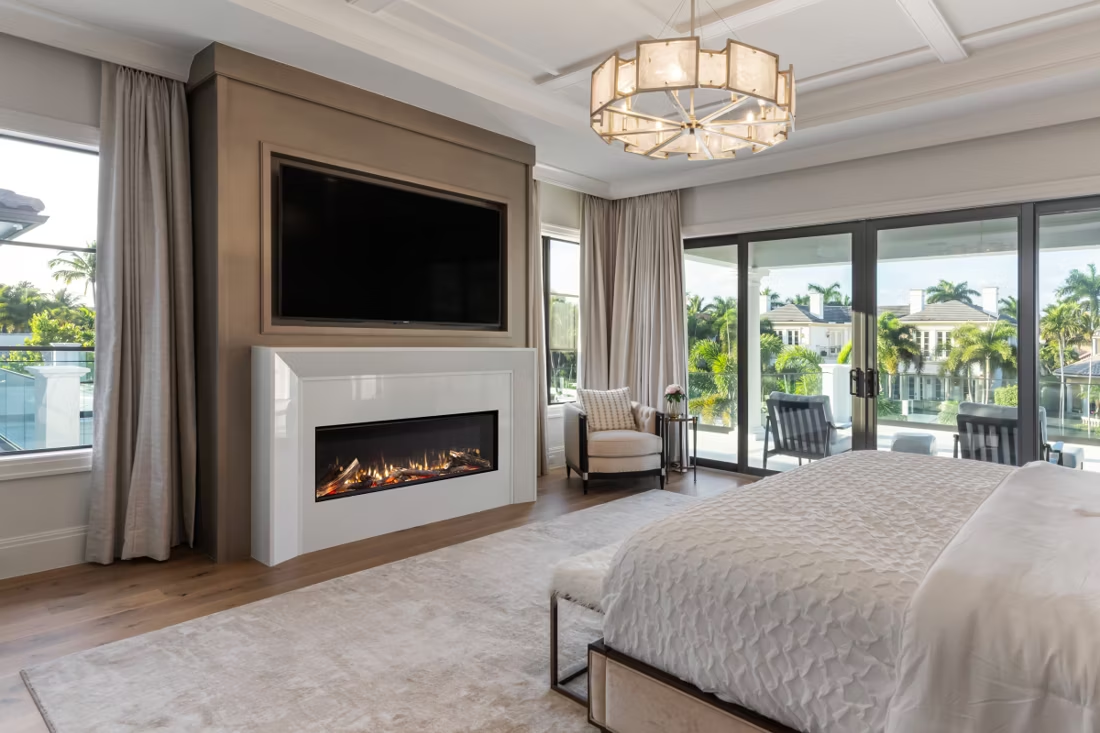
Yes—with an asterisk. Fireplaces are hot and TVs don't like heat. Either put a mantel between them to deflect rising warmth, or choose a fireplace with heat-management technology that creates a cool zone on the wall above—the wall stays around 125 degrees, barely warm, while the room still gets full heat. If you like clean lines and don't want a mantel, heat management is the answer.
Do electric fireplaces actually produce heat?
Yes—most put out around 4,800–5,000 BTUs from a standard outlet, which comfortably warms a bedroom, office, or den as a comfort-zone heater. What they won't do is carry a whole house the way wood, gas, or pellet can. Think of electric as ambiance-first with honest supplemental heat: flames on with no heat in July, flames plus warmth in January.
Can a fireplace actually lower my heating bill?
Yes—by creating a comfort zone. A furnace heats every square foot of the house just to warm the one room you're in; a gas fireplace on low burns roughly a sixth of the gas a typical furnace does. Set the furnace around 55–60 degrees as a baseline, then heat the rooms your family actually uses. Families who heat this way commonly save $20–$60 a month.
Does a fireplace add value to my home?
On average, a fireplace adds back to the home about the same amount you spent installing it. Add the monthly savings from heating the rooms you actually use instead of the whole house—often hundreds of dollars a year—and the value case is strong before you even count what a fire does for how your family uses the room.
Find your electric fireplace in Murray County.
Tell us a bit about your home and we'll put together your free Project Guide & Parts List—the exact unit, circuit requirements, and parts for your Murray County space, plus a match with a trusted local dealer to install it.
Find Your Fireplace →