
Find the right hearth fuel for your Murray County home.
Wood, gas, pellet, and electric fireplace resources for Chatsworth, Eton, and every rural community in Murray County—from the Cohutta Wilderness to the valley floor along the Conasauga River. Find the right unit and connect with a trusted local hearth retailer.
Every Project Starts From One of These Five Situations
Mild Appalachian foothill winters in Murray County, Georgia.
Murray County sits in the foothills of the Blue Ridge in northwest Georgia, rising from the valley floor up toward Fort Mountain and the Cohutta Wilderness. Winters here are mild by national standards—average lows around 30°F and a modest heating season overall, a fraction of what a place like Duluth, MN sees in a typical season. The climate falls in zone 4A, mixed-humid, so wood needs proper covered storage to season well against the region's summer humidity. Oak, pine, and hickory are the common local species, much of it available through Cherokee National Forest cutting permits for residents who want to source their own firewood.
What you'll find on this hub: hearth retailers, service technicians, and fuel suppliers covering Murray County—from Chatsworth out to Eton and the rural stretches near Carters Lake. With a county population of just over 6,400, some retailers and installers are based here while others travel in from nearby Dalton or the greater Chattanooga area to serve county homes. All four fuel types—wood, gas, pellet, and electric—are standard, viable choices here. Pick your fuel below to see local dealers, installation costs, and the resources that fit your project.
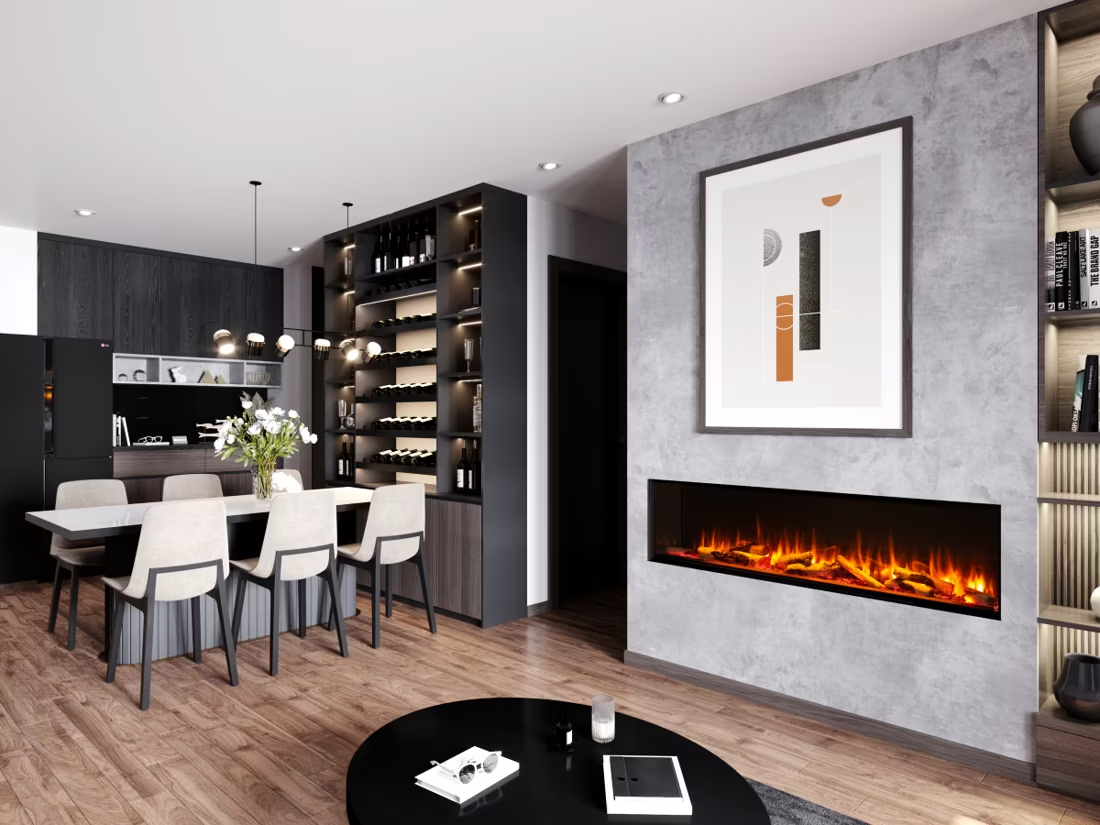
Four fuels. One honest answer for Murray County.
Three steps. No salesperson until you're ready.
Tell us about your project
Your zip code, your situation, and the fuel you're leaning toward—or let the answers point you to one.
See what's actually available
The brands dealers within 100 miles genuinely carry—real options, never a catalog mirage.
Get your dealer & Project Guide
A trusted local dealer, plus the free Project Guide & Parts List that names every component of the job.
Frequently Asked Questions
Which fuel works best in Murray County?
It depends on the home and how you use it. Wood remains a strong choice in Murray County—oak and hickory from the surrounding foothills burn hot and long, pine is abundant for kindling and mixed loads, and Cherokee National Forest cutting permits let residents source their own firewood cheaply. Gas is the convenience option; most rural Murray County homes run on propane rather than piped natural gas, so a gas fireplace or insert typically means a propane tank and regulator as part of the install. Pellet is a solid middle ground, with regional brands like Lignetics, Hamer Pellet Fuel, and Greenway Renewable Energy stocked at area suppliers—no woodpile, but you're buying bagged fuel each season. Electric works well here as supplemental heat and, given the county's mild winter lows (around 30°F average), it can even carry a well-insulated smaller home through most of the heating season without strain. Many Murray County households mix fuels—wood or gas as primary, electric for a bedroom or den.
Do I need a permit to install a fireplace in Murray County?
In most cases, yes. Wood stoves, wood inserts, gas fireplaces, gas inserts, and pellet stoves typically require a building permit through the county's permitting office, and new wood-burning appliances sold and installed today must meet current EPA emissions standards regardless of jurisdiction. If your project involves running or modifying a propane line, that work generally needs a licensed gas installer and a separate inspection. Electric fireplaces are usually exempt from permitting unless the installation involves new wiring or a dedicated circuit for a built-in unit. Most local hearth retailers pull the necessary permits as part of the installation, so homeowners rarely have to navigate the paperwork themselves.
Are there air quality restrictions on wood burning in Murray County?
No—Murray County has no significant air quality concerns or winter burn restrictions on the books, unlike basin or non-attainment areas elsewhere in the country that issue voluntary or mandatory no-burn advisories during winter inversions. That means homeowners here can generally plan wood heat around their own preference and firewood supply rather than local air quality curtailment days. It's still worth choosing an EPA-certified stove or insert for efficiency and cleaner burns—you'll get more heat per cord of oak or hickory and less smoke output, even without a regulatory requirement pushing you there.
Can one local hearth retailer handle all four fuel types?
Some can, but in a county this size, coverage varies by dealer. A retailer based in or near Chatsworth may carry wood and gas as their core lines with pellet as a secondary offering, while a larger multi-fuel dealer serving from the Dalton or Chattanooga area is more likely to stock working displays across wood, gas, pellet, and electric. If you're still deciding between fuels, it's worth confirming with a given retailer which lines they carry and install before you visit—Murray County's population supports fewer standalone showrooms than nearby metro areas, so some cross-shopping may mean visiting a dealer just outside the county line.
How does service work in rural areas of Murray County?
Most technicians serving Murray County travel out from a home base—some local, some from Dalton or the Chattanooga metro—to reach outlying areas near Fort Mountain, the Cohutta Wilderness, and Carters Lake. Expect a modest travel fee for the more remote calls, and know that scheduling ahead of the fall heating season (September–October) generally gets you a faster appointment than a mid-winter emergency call. With a modest heating season overall and winter lows averaging 30°F, the heating season here is shorter than in colder-climate regions, which gives a bit more scheduling flexibility for annual chimney sweeps, gas inspections, or pellet stove cleaning.
What's the typical cost range for fireplace installation across all fuel types in Murray County?
Costs vary by fuel and scope of work. Wood stove or insert installation: roughly $4,000–$8,500 for a typical retrofit, more if new chimney or hearth work is needed. Gas fireplace, insert, or stove: roughly $4,000–$10,000, with propane tank setup and line work affecting the upper end for homes without existing gas service. Pellet stove or insert: roughly $4,000–$7,000 for most installs. Electric fireplace: $200–$3,000 for the unit itself, plus $400–$1,200 in labor for anything beyond a simple plug-in placement, such as a wall-mount or built-in with new wiring. See the county + fuel pages above for cost detail tied to specific local retailer pricing.
Does a fireplace add value to my home?
On average, a fireplace adds back to the home about the same amount you spent installing it. Add the monthly savings from heating the rooms you actually use instead of the whole house—often hundreds of dollars a year—and the value case is strong before you even count what a fire does for how your family uses the room.
What is an in-home preview and do I need one?
It's a visit where a hearth professional measures your space, confirms the model you picked actually works in your home, and walks the specs—framing, gas line, venting, finish work—before anything is ordered. Some details you just can't know until you see the house. Never make a down payment without one; it's the single most-skipped step that burns buyers.
Can I install a fireplace myself?
If you're putting a fire in your house on purpose, it's best to work with an expert. Unless you're genuinely experienced in framing, gas line, vent pipe, and the national code on clearances to combustibles, have a professional do it—and ideally the same company that sells you the fireplace, so warranty, service, and liability all live under one roof.
What are the biggest mistakes people make buying a fireplace?
Five come up constantly: budgeting for the unit but not the full job (vent, gas line, electrical, finish work); drowning in options instead of starting from style and fuel; buying without an in-home preview; handing installation to a handyman instead of a pro; and giving up out of sheer indecision. Every one is avoidable with a clear plan—step one, step two, step three.
Stove and Fireplace Dealers in Murray County
Listings include WhyFire partner dealers, dealers we have verified as authorized for the brands we recommend, and established local businesses that carry hearth products. Every listing shows which one it is. The ones marked Preferred run on WhyFire's software, so they can show you real pricing and book your appointment right here. No manufacturer pays for placement. How we verify dealers →
Tri-State Heating And Air Conditioning
Hearthside Fireplace Patio & Barbeque Center
Therm-Con, Llc
America's Hearth & Patio Warehouse
Blossman Gas And Appliance
Neal's Heating & Air D/b/a Fireside Hearth & Patio
Greene Stove & Fireplace Distribution
Allgas, Inc. - Boaz
Get your Murray County fireplace project plan.
Get matched with a trusted local dealer and a free Project Guide & Parts List—the exact parts, vent kit included, and the recommended installer for your Murray County home.
Find Your Fireplace →