
Pellet heat built for Morgan County's mild winters.
From the antebellum streets of Madison to the lake houses around Lake Oconee, pellet stoves give Morgan County homes clean, thermostat-like warmth without a wood pile. Find the right unit and connect with a trusted local dealer.
Every Project Starts From One of These Five Situations
A clean, low-maintenance answer to occasional cold snaps.
Morgan County sits in climate zone 3A, with a population of about 6,332 spread across Madison, Rutledge, Bostwick, and the shoreline communities around Lake Oconee. Winters here are genuinely mild—an average winter low near 34°F and just 2,789 heating degree days a year, roughly a quarter of what a heating-dominated city like Duluth, MN logs in a typical season. That means pellet stoves in Morgan County usually aren't running around the clock; they're doing focused work on the handful of nights each winter when temperatures actually drop into the 20s, plus year-round ambiance in a den or sunroom.
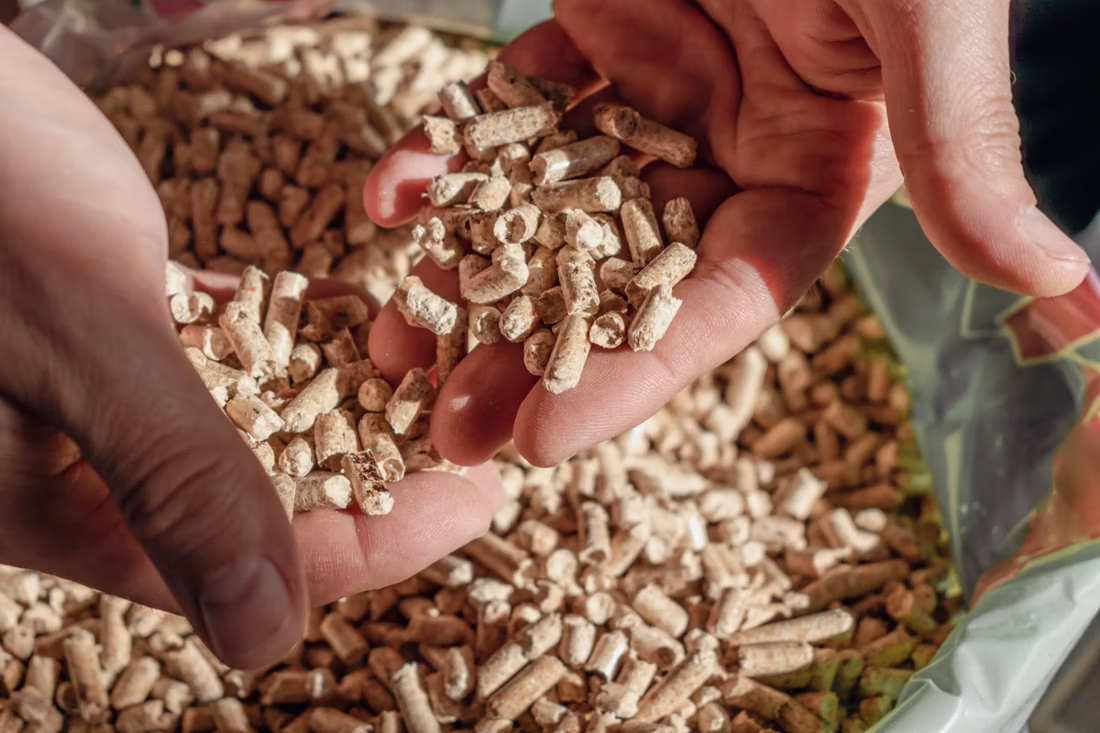
That mild-climate reality shapes what makes sense here. A pellet stove's automated hopper feed and steady, adjustable output suit homes near Lake Oconee that sit empty during the week and need to warm up fast on a Friday night, and older Madison homes with tall ceilings and drafty original windows that benefit from zone heating in the rooms actually in use. Regional pellet manufacturers including Lignetics, Hamer Pellet Fuel, and Greenway Renewable Energy supply the Georgia market from mills that process the same pine and hardwood scrap common to the state's timber industry, so fuel is easy to source locally without hauling bags in from out of state—and local oak, pine, and hickory forests mean this is also solid wood-burning country if a household wants to compare the two.
Three steps. No salesperson until you're ready.
Tell us about your project
Your zip code, your situation, and the fuel you're leaning toward—or let the answers point you to one.
See what's actually available
The brands dealers within 100 miles genuinely carry—real options, never a catalog mirage.
Get your dealer & Project Guide
A trusted local dealer, plus the free Project Guide & Parts List that names every component of the job.
Frequently Asked Questions
How much does a pellet stove installation cost in Morgan County?
A freestanding pellet stove installation in Morgan County typically runs $3,000 to $6,000, and a pellet insert into an existing masonry fireplace usually falls in a similar range once venting and a liner are factored in. Pellet stoves vent through a small-diameter pipe out a side wall or through the roof rather than requiring a full masonry chimney, which keeps labor lower than a comparable wood stove install. Because Morgan County's mild winters mean many households are installing a stove for supplemental heat and ambiance rather than a full-time furnace replacement, a mid-size unit is usually enough—your local dealer can confirm sizing and give a firm quote after seeing the room and existing venting, if any.
What size pellet stove do I need for a Morgan County home?
With an average winter low around 34°F and under 2,800 heating degree days a year, most Morgan County homes don't need a stove sized for whole-house heating the way a colder-climate home would. A small to mid-size pellet stove (rated for 1,000–1,800 square feet) is usually plenty for zone heating a living room, den, or open-concept main floor—whether that's a historic home near downtown Madison with high ceilings or a newer build out toward Lake Oconee. If the goal is closer to whole-home heat for a smaller, well-insulated house, a mid-size unit with a larger hopper capacity will hold you overnight without a refill. Your local dealer will walk the space and confirm sizing before you buy.
Do I need a permit to install a pellet stove in Morgan County?
Most pellet stove and insert installations require a building permit through the Morgan County Building Department, and any new vent penetration through an exterior wall or roof needs to meet code clearances to combustibles. Most local hearth dealers pull the permit and schedule the inspection as part of the installation, so homeowners typically don't have to navigate the paperwork themselves. Because Morgan County has no air quality non-attainment designation or wood-burning curtailment periods, pellet stove permitting here is generally more straightforward than in counties with winter inversion concerns.
What's the difference between a pellet stove and a pellet insert?
A pellet stove is a freestanding unit that sits on its own hearth pad and vents out through a nearby wall or the roof—it can go almost anywhere with a clear path to the outside. A pellet insert is built to slide into an existing masonry fireplace opening, using a vent liner run up through the original chimney. For Madison's older homes with existing wood-burning fireplaces, an insert is often the cleaner option because it reuses the chimney that's already there. Newer construction around Lake Oconee without an existing fireplace usually calls for a freestanding stove instead.
Where can I buy pellets and how much do they cost in Morgan County?
Wood pellets are widely available through local hardware and farm supply stores, with regional brands like Lignetics, Hamer Pellet Fuel, and Greenway Renewable Energy commonly stocked across Georgia. Given Morgan County's modest heating demand, a household using a stove mainly for supplemental heat might burn one to two tons per season; a home relying on it more heavily could use three tons or more. Pellets typically run in the $250–$300 per ton range in the Southeast, sold in 40-pound bags—buying a season's supply in late summer, before demand picks up in the fall, is the easiest way to avoid picked-over shelves.
How much maintenance does a pellet stove need?
Pellet stoves need more routine attention than a gas unit but far less than a wood stove's chimney sweeping. Plan on emptying the ash pan every few days during regular use, wiping the glass weekly, and vacuuming the burn pot and hopper area every couple of weeks. A full professional cleaning and inspection once a year—checking the auger motor, combustion blower, and venting—keeps the unit running efficiently and is often required to keep the manufacturer's warranty valid. Given Morgan County's shorter, milder burn season compared to colder parts of the country, most households only need that single annual service visit rather than mid-season cleanings.
Will my pellet stove work if the power goes out?
No—this is worth knowing before you buy. Pellet stoves rely on an electric auger to feed fuel and a blower to distribute heat, so they shut down during a power outage unless connected to a battery backup or generator. In Morgan County, where summer storms can occasionally knock out power, that's a real consideration if you're counting on the stove as your only heat source during an outage. Homeowners who want heat that works no matter what often pair a pellet stove for everyday convenience with a small generator, or consider a wood stove for a room where outage-proof backup heat matters most.
Pellet vs. wood—which makes more sense for Morgan County?
Wood is abundant locally—oak, pine, and hickory are all common in Morgan County's forests—and a wood stove will keep running through a power outage, which matters given the county's occasional summer storm outages. Pellet stoves trade that off-grid resilience for real convenience: load the hopper, set the thermostat, and walk away, with less mess, no splitting or stacking, and a more consistent, controllable heat output. Given how mild Morgan County winters run, many households lean toward pellet for the low-maintenance, thermostat-like experience in a den or living room, and keep wood-burning capability, or a generator, as backup for outages. Local dealers carry both and can walk through the tradeoffs for your specific home.
When's the best time to install a pellet stove in Morgan County?
Late summer through early fall is the ideal window—dealers have full inventory, pellet suppliers like Lignetics and Hamer Pellet Fuel haven't hit peak seasonal demand yet, and installers have more open scheduling before the first cold snap arrives. Because Morgan County's cold weather tends to arrive in short bursts rather than a long sustained season, there's less urgency than in a colder climate, but waiting until the first hard freeze in December often means longer installer wait times and thinner pellet stock on store shelves.
Why is my open fireplace making my house colder?
Open fireplaces suck—literally. As the fire burns, it consumes air your furnace already paid to heat and pulls it out through the chimney, so the house is actually colder after the fire goes out than before you lit it. An insert fixes this: it seals the chimney, puts fixed glass across the front, and turns that hole in your house into a real heat source.
How often does a pellet stove need cleaning?
A clean pellet stove is a happy pellet stove. Plan on cleaning the burn pot about once a week when you're burning regularly—ash and clinkers gum up the air holes just like a pellet barbecue. Most pellet stove problems trace back to skipped cleaning that nobody explained up front. Some designs make it easy with a trapdoor burn pot: pull a lever and the gunk drops into the ash pan.
How much should I budget for a fireplace?
For an average home—covering the fireplace, the vent pipe, and basic installation—a budget between $3,900 and $5,500 gives you a lot of options across wood, gas, and pellet. By the time you add finish work, gas line, and electrical, the average complete installation lands between $5,000 and $12,000 all-in. In a remodel or new build, a good rule is to put about 2.5% of the total project cost toward the fireplace.
Can a fireplace actually lower my heating bill?
Yes—by creating a comfort zone. A furnace heats every square foot of the house just to warm the one room you're in; a gas fireplace on low burns roughly a sixth of the gas a typical furnace does. Set the furnace around 55–60 degrees as a baseline, then heat the rooms your family actually uses. Families who heat this way commonly save $20–$60 a month.
Pellet Brands Stocked Around Morgan County
Manufacturers will point you to the nearest stocking dealer.
Find your pellet stove in Morgan County.
Tell us a bit about your home and we'll match you with the right pellet stove or insert—plus a free Project Guide & Parts List with the exact parts, including the vent kit, and our recommended local dealer.
Find Your Fireplace →