
Instant heat, zero venting, for Morgan County homes.
With average winter lows near 34°F and a short, mild heating season, Morgan County doesn't need a furnace-grade wood stove in every room—it needs clean, flip-a-switch warmth for a sunroom, a Madison historic-district parlor, or a Lake Oconee weekend house. Find the right unit and connect with a trusted local dealer.
Every Project Starts From One of These Five Situations
Mild winters make electric heat make sense.
Morgan County sits in climate zone 3A—mixed-humid, with a mild, modest winter heating season, a fraction of what a place like Duluth, MN racks up in a single hard winter. Winter lows average around 34°F, and the county rarely sees the kind of sustained deep freeze that makes homeowners in colder states lean on wood as primary heat. Across a county of about 6,300 people spread through Madison, Rutledge, Bostwick, and Buckhead, that means most homes already have a heat pump or central system doing the heavy lifting—an electric fireplace is there for the shoulder-season chill, the sunroom that the HVAC never quite reaches, or the ambiance of real-looking flame without smoke.
Electric service in Morgan County runs through Georgia Power and Walton EMC depending on where you're located, and neither requires anything special for a plug-in electric fireplace—no gas line, no chimney, no exterior venting. That matters in Madison's historic district, where exterior alterations to preserve the antebellum streetscape are closely watched; an electric insert or mantel unit adds heat and flame without touching a facade or a masonry chimney. It's also a common choice for lake cabins around Hard Labor Creek State Park and Lake Oconee, where owners want warmth and glow on cool evenings without maintaining a wood supply at a property they only visit part-time.
Three steps. No salesperson until you're ready.
Tell us about your project
Your zip code, your situation, and the fuel you're leaning toward—or let the answers point you to one.
See what's actually available
The brands dealers within 100 miles genuinely carry—real options, never a catalog mirage.
Get your dealer & Project Guide
A trusted local dealer, plus the free Project Guide & Parts List that names every component of the job.
Frequently Asked Questions
How much does an electric fireplace installation cost in Morgan County?
A basic plug-in electric fireplace or insert that runs off a standard household outlet typically costs $150 to $600 installed, since there's no venting or gas line to run. A built-in electric fireplace or a larger insert that needs its own dedicated 20-amp circuit runs higher—usually $1,500 to $3,500 once an electrician runs new wiring and a local hearth dealer handles the surround and finish work. Because there's no chimney or flue involved, Morgan County installs are generally faster and less disruptive than wood or gas projects, especially in older Madison homes where opening up masonry isn't an option.
Will an electric fireplace actually heat my Morgan County home?
To a point. Electric fireplaces max out around 1,500 watts, roughly 5,000 BTU—enough to comfortably warm a single room, a sunroom addition, or take the chill off a cool night, but not enough to replace central heat in a whole house. Given Morgan County's mild winters (average lows around 34°F and a short, gentle heating season), that's usually plenty. Most homeowners here use electric units as supplemental heat in a specific room or as the sole heat source in a seasonal Lake Oconee cabin, while the main house still relies on a heat pump or gas furnace for the coldest stretches.
Does an electric fireplace work during a power outage?
No—and this is worth being honest about. Electric fireplaces require power to run the heating element, blower, and flame effect, so during an ice storm outage affecting Georgia Power or Walton EMC lines, an electric unit goes dark along with everything else. If backup heat during outages is a real concern for your property—particularly rural homes outside Madison where restoration can take longer—a wood stove or a battery-backed gas insert is a better fit for that specific need. Many Morgan County homeowners pair an electric fireplace for everyday ambiance with a separate backup heat plan for storm season.
What's the difference between an electric insert, a wall-mount unit, and a mantel package?
An electric insert is built to drop into an existing fireplace opening—a common upgrade for Madison homes with an old masonry firebox that's rarely used. A wall-mount unit hangs flush on a wall like a large flat-screen and needs no fireplace opening at all, which works well in newer construction or a sunroom addition. A mantel package combines an electric insert with a surrounding mantel and shelf, giving you the look of a full fireplace where none previously existed. All three run on standard household current or a dedicated circuit for larger models, and none require venting.
Do I need a permit to install an electric fireplace in Morgan County?
A plug-in electric fireplace that uses an existing outlet generally doesn't require a permit. If your installation calls for a new dedicated circuit—common for larger built-in units—that electrical work typically needs a permit through Morgan County Building Inspections, and any licensed electrician doing the work will usually pull it as part of the job. Because there's no gas line or chimney involved, electric fireplace projects in Morgan County tend to be the simplest permit-wise of any hearth fuel.
Can I install an electric fireplace in a historic home in downtown Madison?
Yes, and it's often the easiest hearth upgrade for a historic property. Because electric units need no exterior venting, no new chimney, and no alteration to the facade, they sidestep the kind of exterior-change review that Madison's historic district applies to visible modifications. Homeowners with an existing but unused masonry fireplace commonly drop in an electric insert to get flame and heat back into the room without touching the original brickwork or mantel.
What size electric fireplace do I need?
Sizing an electric fireplace is really about the visual—the flame display and cabinet width to fit your wall or existing fireplace opening—since heat output is capped around 1,500 watts regardless of unit size. A 30-inch to 40-inch unit suits most living rooms in Morgan County's typical single-family and ranch-style homes, while wall-mount units in a great room or open-concept space often go bigger, 50 inches or more, purely for the look. A local dealer can measure your opening or wall and talk through flame style and trim kit options in person.
Electric vs. gas fireplace—which is right for my Morgan County home?
Gas delivers real, sustained heat output and can be sized to genuinely warm a room on a cold January night, but it requires either a natural gas line or a propane tank, plus venting for most models. Electric requires neither—just an outlet or a simple circuit—which makes it faster and cheaper to install, especially in a historic Madison home or a room addition without existing gas service. Given Morgan County's mild climate, many homeowners choose electric for everyday ambiance and reserve gas for homes where they specifically want the fireplace to carry real heating load through the winter. A local dealer can walk through both options for your specific room.
Where can I find a qualified electric fireplace installer near me in Morgan County?
For a simple plug-in unit, most reputable hearth dealers serving Morgan County will handle delivery and setup directly. For a built-in unit needing new wiring, you want a licensed electrician working alongside a hearth retailer familiar with Georgia Power and Walton EMC service requirements in the county. Skip the big-box guesswork—a local dealer who's actually installed units in Madison's historic homes and around Lake Oconee will know what fits the space and the wiring you already have. Find My Fireplace matches you with a trusted local dealer who carries what's genuinely installable for your address, at no cost to you.
Can I put a TV above my fireplace?
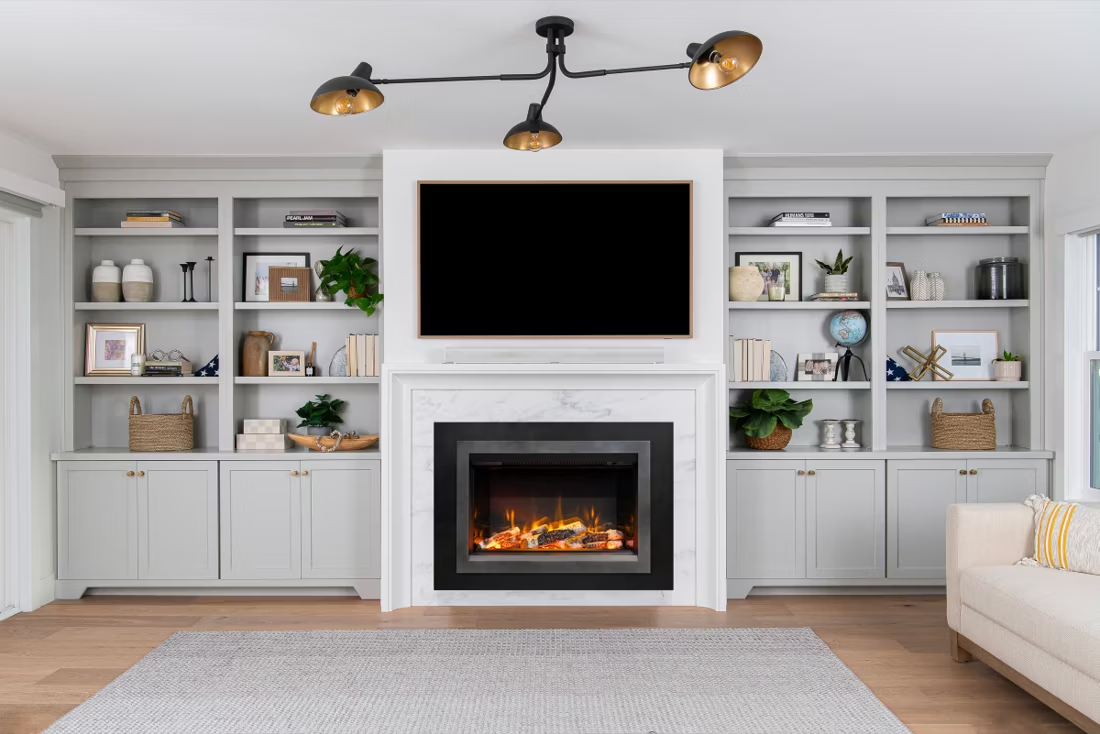
Yes—with an asterisk. Fireplaces are hot and TVs don't like heat. Either put a mantel between them to deflect rising warmth, or choose a fireplace with heat-management technology that creates a cool zone on the wall above—the wall stays around 125 degrees, barely warm, while the room still gets full heat. If you like clean lines and don't want a mantel, heat management is the answer.
Does an electric fireplace need a vent or chimney?
No—that's its superpower. An electric fireplace needs a wall and an outlet, period. No vent pipe, no gas line, no clearances to design around, which is why it works in bedrooms, offices, apartments, and walls where venting a gas or wood unit would be impractical or impossible. Installation is typically the simplest and least expensive of any fireplace type.
Can I install a fireplace myself?
If you're putting a fire in your house on purpose, it's best to work with an expert. Unless you're genuinely experienced in framing, gas line, vent pipe, and the national code on clearances to combustibles, have a professional do it—and ideally the same company that sells you the fireplace, so warranty, service, and liability all live under one roof.
How much should I budget for a fireplace?
For an average home—covering the fireplace, the vent pipe, and basic installation—a budget between $3,900 and $5,500 gives you a lot of options across wood, gas, and pellet. By the time you add finish work, gas line, and electrical, the average complete installation lands between $5,000 and $12,000 all-in. In a remodel or new build, a good rule is to put about 2.5% of the total project cost toward the fireplace.
Find your electric fireplace in Morgan County.
Tell us a bit about your home and we'll match you with a trusted local dealer and send over a free Project Guide & Parts List—the exact parts, including any circuit or trim work, for your electric fireplace project in Morgan County.
Find Your Fireplace →