
Keep Your Family Warm and Safe—No Matter What
With winter lows averaging 40°F, Montgomery homes rarely need wood as a primary heat source. If you still want the look and feel of a real fire, we'll connect you with a local dealer who installs it right.
Every Project Starts From One of These Five Situations
A mild coastal climate that rarely calls for wood heat.
Montgomery sits at just 7 feet of elevation in unincorporated Chatham County, a few miles outside Savannah on the Georgia coastal plain. It's climate zone 2A—hot and humid most of the year, with winter lows averaging around 40°F and only a short, mild heating season each year. Compare that to a place like Duluth, MN, which has a long, brutal winter heating season, and it's clear why wood stoves never became a household necessity here the way they did in colder parts of the country.
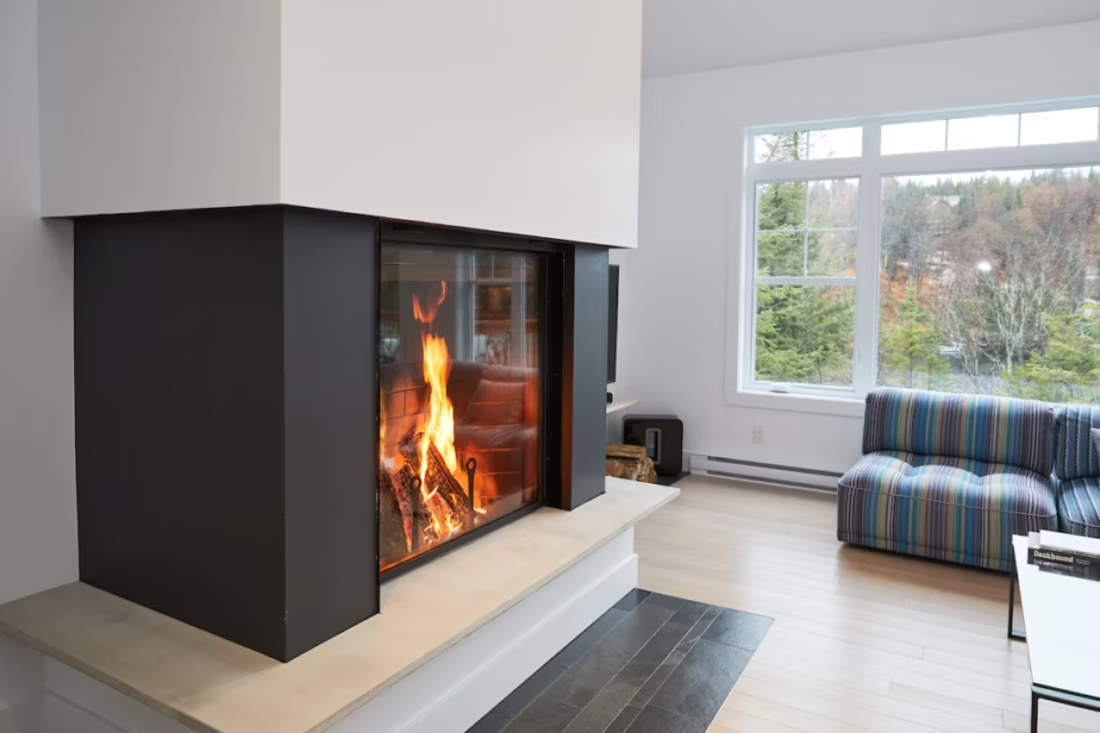
That doesn't mean wood fireplaces don't exist in Montgomery—they do, but almost entirely for ambiance, occasional use during rare hard freezes, or as a feature in older homes built with masonry fireplaces decades ago. Local oak, pine, and hickory are plentiful, but most of that supply is sold for grilling and smoking rather than stacked firewood cords, since almost nobody here burns wood as their main heat source. If you want a real wood fire for the look and feel of it, a properly sized, EPA-certified unit installed by someone who understands the local building code is still very doable—it's just a different kind of project than in a cold-climate market.
Three steps. No salesperson until you're ready.
Tell us about your project
Your zip code, your situation, and the fuel you're leaning toward—or let the answers point you to one.
See what's actually available
The brands dealers within 100 miles genuinely carry—real options, never a catalog mirage.
Get your dealer & Project Guide
A trusted local dealer, plus the free Project Guide & Parts List that names every component of the job.
Frequently Asked Questions
Does it actually make sense to install a wood-burning fireplace in Montgomery?
For most Montgomery homes, wood isn't a practical primary heat source—with only a short, mild heating season each year and winter lows that average around 40°F, a heat pump or gas unit handles the occasional cold snap just fine. Where a wood fireplace does make sense is ambiance: a real, crackling fire on the handful of nights a year it dips into the 20s or 30s, or as a feature that adds character to an older Chatham County home. If that's the goal, a smaller decorative or occasional-use unit is usually a better fit than a heavy-duty catalytic stove built for round-the-clock cold-climate heating.
How much does it cost to install a wood fireplace or insert in Montgomery?
Because wood heat is uncommon in this part of coastal Georgia, pricing varies more than it would in a market where every dealer installs wood stoves daily. A factory-built, EPA-certified wood-burning fireplace or insert typically runs $3,500 to $7,000 installed, depending on the unit and venting path. If you're converting an older masonry fireplace in a Savannah-area home, expect the higher end of that range once chimney relining and code updates are factored in. Get quotes from a couple of local dealers—since this isn't a high-volume category here, prices aren't as standardized as they are for gas or electric work.
Do I need a permit to install a wood stove in Montgomery?
Yes. Montgomery is unincorporated, so building permits go through Chatham County Building Safety and Regulatory Services rather than a city office. Any new wood-burning appliance needs to meet current EPA 2020 NSPS emissions standards, and your installer will need to pull a permit and pass inspection on clearances and venting. The good news is that Chatham County isn't an EPA non-attainment area and has no winter burn curtailment periods like you'd see in wood-heavy western states—once it's installed and inspected, there are no seasonal restrictions on when you can use it.
What kind of firewood is available locally, and does it burn well?
Oak, pine, and hickory are the common species around Chatham County, but most of that wood is sold in small bundles for grilling and smoking rather than by the cord for home heating—there just isn't the year-round demand for a full firewood supply chain here. Pine is the most plentiful, thanks to the region's pine plantations, but it burns fast and sappier than hardwood, so oak or hickory is the better choice if you want longer, cleaner-burning fires on the occasional cold night. Plan to source wood a season ahead of when you'll need it, since local suppliers gear up more around holidays and cold snaps than continuous winter demand.
Are there any wood smoke or air quality restrictions in Montgomery?
No—Chatham County has no air quality non-attainment designation and no winter burn bans or curtailment periods, unlike wood-heavy regions out west that restrict burning during temperature inversions. Because wood heat is used so sparingly here, smoke buildup in the neighborhood air simply isn't the issue it is in colder, wood-dependent markets. The only requirement is that the unit itself be EPA-certified and installed to code—after that, there's no seasonal restriction on when you can use it.
Would gas or electric make more sense than wood for my home?
For most of the heating Montgomery homes actually need, yes. Natural gas and propane fireplaces are common here and give you instant, zero-maintenance heat without wood storage—a good fit given how few nights a year real supplemental heat is needed. Electric heat pumps, run through Georgia Power at roughly 15.5 cents per kWh, already carry most of the heating load in this climate. Wood still has a place if what you want is the experience of a real fire, but if the goal is simply staying warm on the coldest nights, gas or your existing electric system will do it with a lot less upkeep.
What type of wood-burning unit is best for occasional use rather than daily heating?
Skip the large, high-BTU catalytic stoves built for cold-climate homes that burn wood 12 hours a day all winter—they're oversized and overbuilt for a Montgomery home that might light a fire a dozen nights a year. A smaller factory-built, zero-clearance wood fireplace or a modest freestanding stove is usually the better fit: lower upfront cost, smaller hearth pad and clearance requirements, and sized appropriately for occasional, ambiance-driven use rather than sustained heat output.
How often should a wood fireplace that only gets used a few times a year be inspected?
Still annually, and it's actually more important than people assume. A fire that only gets lit occasionally, and often burns cooler while everyone enjoys it rather than gets tended for heat output, can produce more creosote per burn than a stove that runs hot and steady all winter in a cold climate. Have a CSIA-certified sweep inspect and clean the flue once a year before burn season, even if you only used it a handful of times the year before—infrequent use doesn't mean low risk.
Will installing a wood fireplace affect my homeowners insurance or resale value in Montgomery?
Because wood-burning units are less common in this part of Chatham County, some insurers will ask more questions about the installation than they would for a gas fireplace—installation date, EPA certification, and whether it passed county inspection. Keep your permit paperwork and inspection sign-off from Chatham County Building Safety and Regulatory Services on file; it makes both the insurance conversation and any future home sale much simpler. Buyers here generally see a well-installed wood fireplace as a charming extra rather than a red flag, as long as it's documented and up to code.
What's the difference between an insert and a zero-clearance fireplace?
An insert is a fireplace that slides into a pre-existing wood-burning fireplace—if you don't have one, there's nothing to insert it into. A zero-clearance fireplace is built into a framed wall, which makes it the answer for remodels and new construction. Simple test: existing masonry fireplace means insert; blank or framed wall means zero-clearance.
Why is my open fireplace making my house colder?
Open fireplaces suck—literally. As the fire burns, it consumes air your furnace already paid to heat and pulls it out through the chimney, so the house is actually colder after the fire goes out than before you lit it. An insert fixes this: it seals the chimney, puts fixed glass across the front, and turns that hole in your house into a real heat source.
Does a fireplace add value to my home?
On average, a fireplace adds back to the home about the same amount you spent installing it. Add the monthly savings from heating the rooms you actually use instead of the whole house—often hundreds of dollars a year—and the value case is strong before you even count what a fire does for how your family uses the room.
How much should I budget for a fireplace?
For an average home—covering the fireplace, the vent pipe, and basic installation—a budget between $3,900 and $5,500 gives you a lot of options across wood, gas, and pellet. By the time you add finish work, gas line, and electrical, the average complete installation lands between $5,000 and $12,000 all-in. In a remodel or new build, a good rule is to put about 2.5% of the total project cost toward the fireplace.
Nearby Dealers
Hearth shops serving Montgomery and the surrounding area. Every listing shows whether it is a WhyFire partner, a dealer we have verified as authorized for the brands we recommend, or a local business carrying hearth products. No manufacturer pays for placement. How we verify dealers →
Strickland Oil Co
La Source
Liberty Propane
Casual Living Fireside And Grillin'
Thompson Gas - Springfield
Mf Masonry
Find your wood fireplace in Montgomery.
Tell us a bit about your home and how you'd use it, and we'll match you with a local Chatham County dealer plus a free Project Guide & Parts List for your wood fireplace project.
Find Your Fireplace →