
Find a pellet stove built for Monroe County winters.
From Forsyth to Culloden and Smarr, a pellet stove gives you thermostat-controlled heat for central Georgia's short cold spells—without the daily upkeep of a wood stove. Find the right unit and connect with a trusted local dealer.
Every Project Starts From One of These Five Situations
Steady heat for a climate that doesn't ask for much.
Monroe County sits in climate zone 3A, with an average winter low around 34°F and roughly 2,553 heating degree days a year—mild by national standards, closer to a handful of genuinely cold weeks than a full winter of sustained cold. Homes in Forsyth, Juliette, Culloden, and Smarr don't need a stove running around the clock from October through April; they need something that can knock the chill off a January cold front, take the edge off a damp February morning, and run efficiently without babysitting. That's exactly the niche a pellet stove fills.
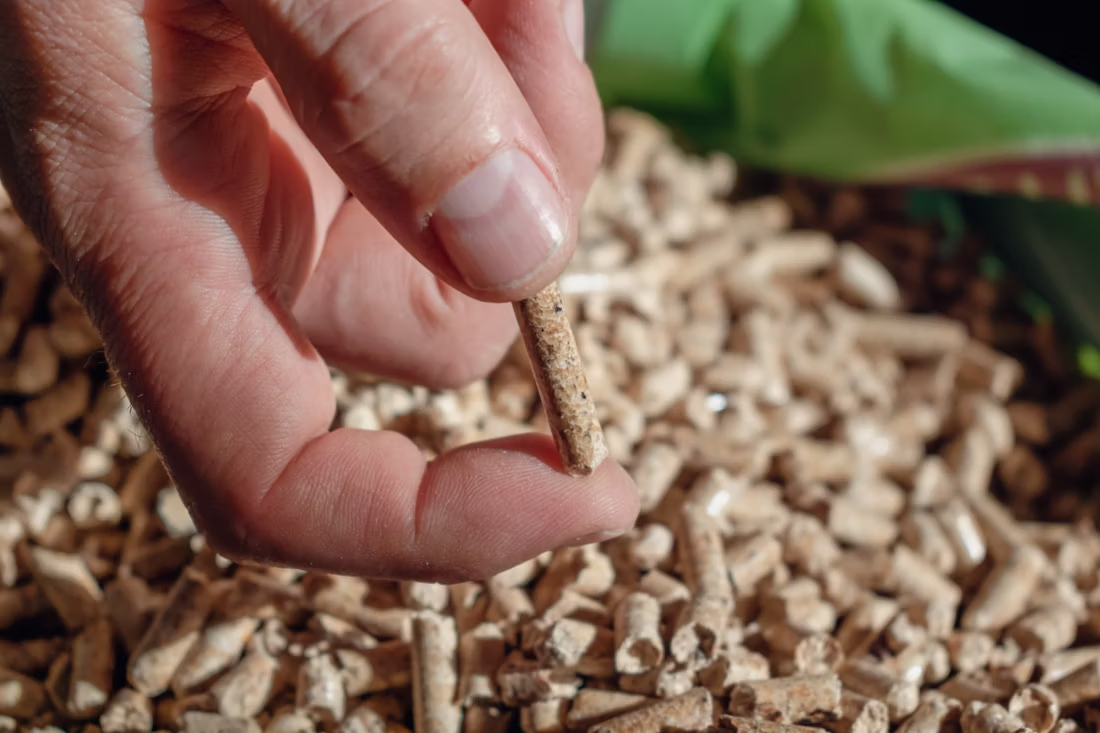
Bagged pellets from brands like Lignetics, Hamer Pellet Fuel, and Greenway Renewable Energy are sold through farm supply and hardware retailers across the region, so fuel supply isn't a concern even though this part of Georgia doesn't have the wood-pellet manufacturing density you'd find further north. With no local air quality restrictions on solid-fuel appliances, pellet stoves here are chosen less for regulatory reasons and more for convenience: load the hopper, set the thermostat, and let it run—no splitting, stacking, or hauling cordwood, even though oak, pine, and hickory are all abundant locally for anyone who prefers a traditional wood stove instead. The one honest tradeoff: pellet stoves need electricity to run the auger and blower, which matters in a county where ice storms occasionally take power lines down for a day or more.
Three steps. No salesperson until you're ready.
Tell us about your project
Your zip code, your situation, and the fuel you're leaning toward—or let the answers point you to one.
See what's actually available
The brands dealers within 100 miles genuinely carry—real options, never a catalog mirage.
Get your dealer & Project Guide
A trusted local dealer, plus the free Project Guide & Parts List that names every component of the job.
Frequently Asked Questions
How much does a pellet stove installation cost in Monroe County?
Most pellet stove installations run in the $3,000 to $6,000 range, with the total depending on whether you're installing a freestanding stove venting through an exterior wall or converting an existing masonry fireplace with a pellet insert. Because pellet stoves vent horizontally through a small-diameter pipe rather than requiring a full chimney, installation is typically simpler and less expensive than a wood stove install in the same home. A local dealer can give you a firm number after seeing your home's layout and where the vent will exit the wall.
What size pellet stove do I need for a Monroe County home?
Given the mild winters here—average lows in the 30s rather than the single digits you'd see in a place like Duluth or Fargo—most Monroe County homes do fine with a small to mid-size pellet stove rated for 1,000 to 1,800 square feet, even if that's not the entire footprint of the house. Most homeowners are using the stove to heat a main living area or supplement a central HVAC system during cold fronts, not to carry the whole house through a brutal winter. A local dealer can size the unit to your specific square footage and floor plan.
Do I need a permit to install a pellet stove in Monroe County?
Yes—new pellet stove installations typically require a building permit through the Monroe County building department, since the appliance needs a code-compliant through-wall vent and clearance from combustibles. Most local hearth dealers handle the permit application and inspection scheduling as part of the installation, so you generally don't have to navigate the paperwork yourself. If you're installing in an unincorporated part of the county versus inside Forsyth city limits, confirm with your installer which office issues the permit for your address.
How does pellet stove venting work, and is it different from a wood stove?
Pellet stoves vent through a small (typically 3- or 4-inch) pipe that runs horizontally through an exterior wall, rather than requiring the full vertical chimney a wood stove needs. This makes pellet installs faster and generally cheaper, and it means a pellet stove can go in interior rooms of a home that would never support a masonry chimney. For Monroe County homes without an existing fireplace, this is often the deciding factor in choosing pellet over wood—you're not paying for new chimney construction.
Where can I buy pellets in Monroe County, and how much fuel will I need?
Bagged pellets from Lignetics, Hamer Pellet Fuel, and Greenway Renewable Energy are available through farm supply and hardware stores serving the county—you won't find a local pellet mill nearby, but supply through regional retailers is consistent. Given Monroe County's mild heating season, a typical household running a pellet stove as supplemental or occasional heat uses far less fuel than a homeowner in a colder climate—often just a few tons a season rather than the five-plus tons a primary-heat household further north might burn. Buying a season's supply in fall, before demand picks up during the first cold snap, is the easiest way to avoid running short mid-winter.
How much maintenance does a pellet stove require?
Pellet stoves need more routine attention than a gas unit but less than a wood stove: emptying the ash pan every few days to weekly depending on use, cleaning the burn pot and glass periodically, and vacuuming the hopper and exhaust venting a few times per season. Most manufacturers also recommend an annual professional inspection and cleaning of the venting and combustion blower, typically before the first cold front hits in fall. Given how lightly most Monroe County homes lean on their pellet stove compared to a colder-climate home running one daily, upkeep tends to be manageable—a season of occasional use produces far less buildup than months of continuous burning.
Will my pellet stove work if the power goes out?
No—this is the one real limitation to know about before you buy. Pellet stoves rely on electricity to run the auger that feeds fuel and the blower that moves heat into the room, so a power outage shuts the stove down along with everything else. That matters in Monroe County because winter ice storms occasionally knock out power for a day or more. If backup heat during outages is a priority, some homeowners pair a pellet stove with a small battery backup or generator sized to run just the stove's electronics, or choose a wood stove instead for a fuel source that works with no power at all. Ask a local dealer about battery backup options if this is a concern for your household.
Pellet stove or wood stove—which makes more sense in Monroe County?
Wood is the traditional choice here, and it makes sense given how much oak, pine, and hickory grows locally—self-cut or locally sourced firewood keeps fuel costs low, and a wood stove works with no electricity, which matters during ice storm outages. Pellet stoves trade that self-sufficiency for convenience: no splitting or stacking, more consistent heat output, cleaner glass, and thermostatic control, at the cost of needing bagged fuel purchased through a retailer and power to run the appliance. In a mild climate like Monroe County's, where the stove is often supplemental rather than the sole heat source, that convenience tends to matter more to homeowners than it would in a place burning wood nightly for months on end.
Are there rebates or tax credits available for a pellet stove in Monroe County?
Yes—qualifying wood and pellet stoves with a thermal efficiency rating of 75% or higher (measured by HHV) are eligible for the federal biomass stove tax credit, which currently covers 30% of the equipment and installation cost, up to a $2,000 annual credit, through at least 2032. Most EPA-certified pellet stoves sold by local dealers meet this efficiency threshold, but the specific model and its documentation matter for claiming the credit, so ask your installer for the manufacturer's certification statement at the time of purchase. Georgia doesn't currently layer a separate state-level biomass rebate on top of the federal credit, so the federal program is the primary incentive to factor into your budget.
What's the difference between an insert and a zero-clearance fireplace?
An insert is a fireplace that slides into a pre-existing wood-burning fireplace—if you don't have one, there's nothing to insert it into. A zero-clearance fireplace is built into a framed wall, which makes it the answer for remodels and new construction. Simple test: existing masonry fireplace means insert; blank or framed wall means zero-clearance.
Why is a fireplace insert so efficient?
An insert does two things: it seals the chimney completely, so you stop losing air you already paid to heat, and it radiates warmth into the room through the firebox and glass. Most add a heat-exchange fan that pulls cool room air underneath, wraps it around the hot firebox, and pushes it back out warm. Your home is more efficient before you've even lit the first fire.
What is an in-home preview and do I need one?
It's a visit where a hearth professional measures your space, confirms the model you picked actually works in your home, and walks the specs—framing, gas line, venting, finish work—before anything is ordered. Some details you just can't know until you see the house. Never make a down payment without one; it's the single most-skipped step that burns buyers.
How much should I budget for a fireplace?
For an average home—covering the fireplace, the vent pipe, and basic installation—a budget between $3,900 and $5,500 gives you a lot of options across wood, gas, and pellet. By the time you add finish work, gas line, and electrical, the average complete installation lands between $5,000 and $12,000 all-in. In a remodel or new build, a good rule is to put about 2.5% of the total project cost toward the fireplace.
Pellet Brands Stocked Around Monroe County
Manufacturers will point you to the nearest stocking dealer.
Find your pellet stove in Monroe County.
Tell us a bit about your home and we'll match you with the right pellet stove or insert, plus a free Project Guide & Parts List—the exact parts, including the vent kit, and our recommended local dealer for your project.
Find Your Fireplace →