
Warm, real-looking flame for Monroe County's mild winters—no venting required.
From downtown Forsyth to Juliette and Culloden, electric fireplaces bring instant ambiance and supplemental warmth without a chimney, a gas line, or a wood pile. Find the right unit and connect with a trusted local dealer.
Every Project Starts From One of These Five Situations
Zone heat that matches Middle Georgia's mild winters.
Monroe County sits in climate zone 3A, with an average winter low around 34°F and only about 2,553 heating degree days a year—a fraction of what a Duluth, MN or Bismarck, ND homeowner deals with. Cold spells here are real but short, which is exactly the profile where electric fireplaces make the most sense: a handful of hard-freeze nights a season around Forsyth, Juliette, Culloden, and the High Falls area don't justify a full wood or gas heating system for most rooms, but a little radiant, visible warmth on a 34-degree morning is genuinely nice to have.
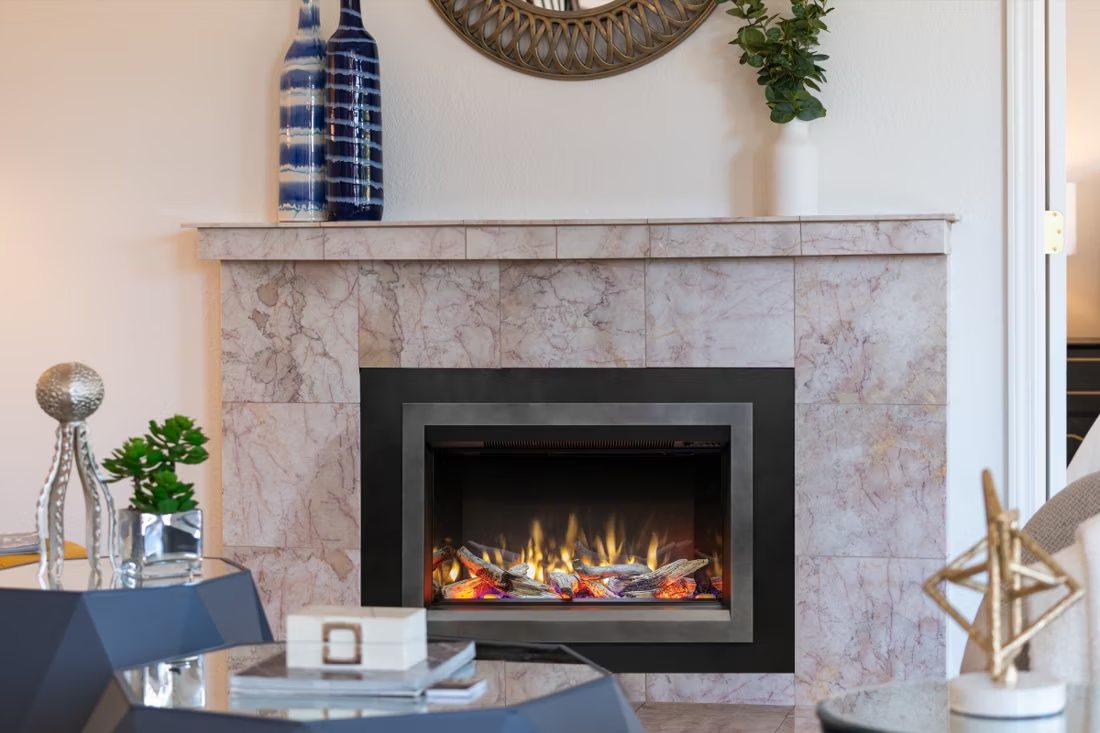
Electric fireplaces and inserts install without a chimney, without combustion venting, and often without any structural work at all—a real advantage in Forsyth's older in-town homes and in the mix of newer construction and manufactured housing found throughout rural Monroe County. In-town properties are generally served by Georgia Power, while much of the surrounding county runs on Central Georgia EMC; either way, most electric fireplace inserts run on a standard household circuit, and larger built-in units simply need a dedicated 20-amp line from a licensed electrician. No wood to split, no gas line to run—just plug in or wire in and go.
Three steps. No salesperson until you're ready.
Tell us about your project
Your zip code, your situation, and the fuel you're leaning toward—or let the answers point you to one.
See what's actually available
The brands dealers within 100 miles genuinely carry—real options, never a catalog mirage.
Get your dealer & Project Guide
A trusted local dealer, plus the free Project Guide & Parts List that names every component of the job.
Frequently Asked Questions
How much does an electric fireplace installation cost in Monroe County?
A basic plug-in electric fireplace insert—the kind that drops into an existing mantel surround or a simple wall opening—typically runs $300 to $1,200 installed in Monroe County, and often needs no electrical work beyond an existing outlet. Built-in, wall-mounted, or linear electric fireplaces that require a dedicated circuit, framing, or a finished surround run $1,500 to $4,000 depending on size and finish work. Because there's no chimney, no gas line, and no venting to size, electric installs are consistently the least expensive fireplace option in the county—and the fastest to complete, often in a single day.
What size electric fireplace or insert do I need?
Most electric fireplaces run on standard 1,500-watt heating elements, which comfortably supplement heat in a single room of roughly 400 to 600 square feet—enough for a living room, den, or primary bedroom in a typical Forsyth or Culloden home. Because Monroe County's heating season is short and mild, homeowners here are almost always sizing for one or two rooms rather than trying to heat an entire house, which keeps the decision simpler than in colder climates. If you want visual flame without much heat output—common for a bonus room or a rental property—smaller units with adjustable or flame-only settings work fine. A local dealer can walk your space and confirm the right footprint for your mantel or wall opening.
Do I need a permit to install an electric fireplace in Monroe County?
A plug-in electric fireplace insert that uses an existing outlet generally doesn't require a permit. If your installation involves running new wiring or adding a dedicated circuit for a built-in or wall-mounted unit, that electrical work typically does require a permit—pulled through the Monroe County Building Department for unincorporated areas, or the City of Forsyth's building office for properties inside city limits. Most local dealers coordinate with a licensed electrician and handle this step as part of the install, so you're not left tracking down paperwork yourself.
Plug-in vs. hardwired electric fireplace—what's the difference?
A plug-in electric fireplace insert connects to a standard household outlet and can usually be installed in an afternoon with no electrician needed—a good fit for a quick mantel upgrade in an existing Forsyth home. A hardwired unit—common with larger built-in, wall-mounted, or linear designs—connects directly to a dedicated circuit for a cleaner look with no visible cord, but it requires a licensed electrician and, in most cases, a permit. For new construction or a remodel in Monroe County, hardwiring during framing is far simpler than retrofitting later, so it's worth deciding early if you're building or renovating.
Will an electric fireplace actually heat my home in Monroe County?
It depends on what you're asking it to do. Given Monroe County's mild profile—average winter lows around 34°F and roughly 2,553 heating degree days a year—most homes rely on a central heat pump or HVAC system for whole-house heating, and an electric fireplace is best understood as supplemental zone heat for one room rather than a primary furnace replacement. On the occasional hard-freeze night, a 1,500-watt unit can noticeably take the edge off a living room or bedroom and reduce reliance on central heat for that space. If you're hoping to heat an entire home during a rare cold snap, a wood or gas option built for higher output is a better fit—but for most days in Monroe County, electric covers the actual need just fine.
Can I put an electric insert into my existing fireplace?
Yes—converting an existing wood-burning masonry fireplace to electric is one of the simpler upgrades a Monroe County homeowner can make, and it's popular in older Forsyth homes where the chimney has fallen out of regular use. An electric insert slides into the existing firebox opening, plugs into a nearby outlet (or is wired to a new one behind the surround), and requires no venting or chimney work at all—the flue can simply be capped. The conversion typically runs $300 to $1,000 depending on the insert size and whether new electrical work is needed, and it eliminates the ash, creosote buildup, and chimney maintenance that come with wood burning.
Does my electrical service affect what electric fireplace I can install?
For most plug-in inserts, no—a standard 15- or 20-amp household circuit handles a typical 1,500-watt unit without issue, whether you're served by Georgia Power in town or Central Georgia EMC out in the rural parts of the county. For larger built-in or linear fireplaces that draw more power or require a dedicated circuit, an electrician will confirm your panel has available capacity before running new wiring—this is rarely a problem in newer homes but worth checking in older farmhouses around Culloden or Smarr with older panels. A local dealer can flag this during the initial consultation so there are no surprises once installation day arrives.
Electric vs. wood—which fits my Monroe County home?
Monroe County has a genuine wood-burning tradition—oak, pine, and hickory are all common locally, and plenty of rural properties still rely on cordwood for backup heat during winter storms when power goes out. Wood wins if you want that backup capability or the authentic experience of a real fire. Electric wins on convenience and cost: no venting, no ash, no permit hassle for a basic plug-in unit, and instant on-off operation—a better match for in-town Forsyth homes, rentals, or anyone who wants fireplace ambiance without the upkeep. Because electric units don't work during a power outage, some homeowners in the county keep a wood stove or fireplace as backup and use electric for daily convenience in the main living space.
How long do electric fireplaces last and what maintenance do they need?
A quality electric fireplace insert or built-in unit typically lasts 10 to 15 years with minimal upkeep—there's no chimney to sweep and no gas line to inspect. Maintenance is mostly dusting the interior, occasionally replacing an LED light module or heating element as it ages, and keeping the unit clear of blocked vents on the back panel. Because there's no combustion involved, there's no annual safety inspection required the way there is for wood or gas appliances, which is part of why electric remains the lowest-maintenance fireplace option for Monroe County homeowners who want warmth and ambiance without an ongoing service routine.
Do electric fireplaces actually produce heat?
Yes—most put out around 4,800–5,000 BTUs from a standard outlet, which comfortably warms a bedroom, office, or den as a comfort-zone heater. What they won't do is carry a whole house the way wood, gas, or pellet can. Think of electric as ambiance-first with honest supplemental heat: flames on with no heat in July, flames plus warmth in January.
Can I put a TV above my fireplace?
Yes—with an asterisk. Fireplaces are hot and TVs don't like heat. Either put a mantel between them to deflect rising warmth, or choose a fireplace with heat-management technology that creates a cool zone on the wall above—the wall stays around 125 degrees, barely warm, while the room still gets full heat. If you like clean lines and don't want a mantel, heat management is the answer.
Can I install a fireplace myself?
If you're putting a fire in your house on purpose, it's best to work with an expert. Unless you're genuinely experienced in framing, gas line, vent pipe, and the national code on clearances to combustibles, have a professional do it—and ideally the same company that sells you the fireplace, so warranty, service, and liability all live under one roof.
What is an in-home preview and do I need one?
It's a visit where a hearth professional measures your space, confirms the model you picked actually works in your home, and walks the specs—framing, gas line, venting, finish work—before anything is ordered. Some details you just can't know until you see the house. Never make a down payment without one; it's the single most-skipped step that burns buyers.
Find your electric fireplace in Monroe County.
Tell us a bit about your home in Forsyth, Juliette, Culloden, or anywhere else in Monroe County, and we'll match you with the right electric fireplace or insert—plus a free Project Guide & Parts List with the exact parts and your recommended local dealer.
Find Your Fireplace →