
Pellet heat for Lanier County's rare cold nights.
With such a short, mild winter and winter lows averaging 38°F, Lanier County almost never needs a dedicated heating appliance the way a northern state does. Pellet stoves aren't common here, but a small number of homeowners still want one for a hunting cabin near Lake Grand Bay, backup heat during an ice event, or the look and feel of a real fire without a wood supply chain. I'll match you with a vetted regional dealer who actually carries and installs pellet equipment in south Georgia.
Every Project Starts From One of These Five Situations
A coastal-plain climate that rarely needs supplemental heat.
Lanier County is one of Georgia's smallest counties by population, with about 3,170 residents centered around Lakeland and Lake Grand Bay in the state's coastal plain. Sitting in climate zone 2A with an average winter low of 38°F and a short, mild heating season, the county's heating season is short and mild compared to almost anywhere pellet stoves are a mainstream purchase—Fargo, ND and Duluth, MN both see a winter heating season more than four times as long and demanding in a typical winter. Most Lanier County homes rely on electric heat pumps or gas furnaces for the handful of genuinely cold weeks each year, and even wood-burning fireplaces here, despite abundant local oak, pine, and hickory, tend to see occasional or ambiance-only use rather than serve as a home's real heat source.
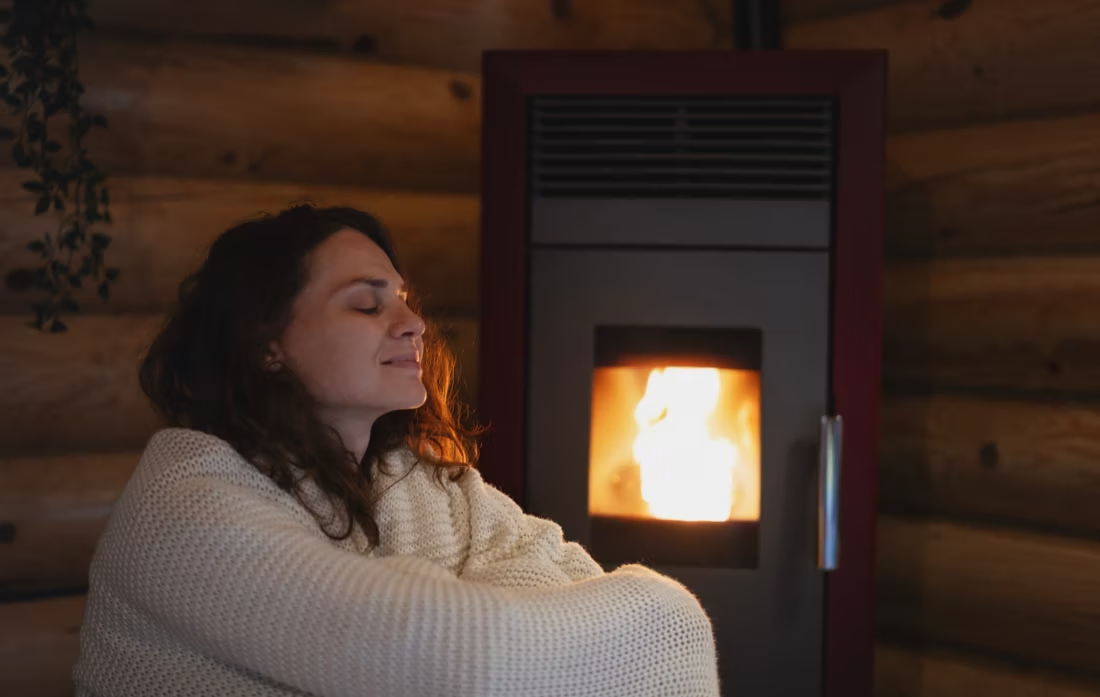
That mild climate is exactly why pellet stoves rate as not-applicable for most Lanier County households—there isn't the sustained cold that makes a hopper-fed, thermostatically controlled stove worth the investment over a heat pump or gas unit that's already doing the job. Regional pellet brands like Lignetics, Hamer Pellet Fuel, and Greenway Renewable Energy do move product through south Georgia dealers, but that supply mostly serves the small pocket of buyers who want a pellet stove for a specific reason: a camp or cabin near the lake without reliable gas service, a backup source for the ice storms that occasionally roll through south Georgia, or simply the appeal of a clean-burning, low-maintenance stove in a den or sunroom. If that's you, I can connect you with one of the few local dealers who genuinely stock and service pellet equipment, rather than send you to a big-box store guessing at fit.
Three steps. No salesperson until you're ready.
Tell us about your project
Your zip code, your situation, and the fuel you're leaning toward—or let the answers point you to one.
See what's actually available
The brands dealers within 100 miles genuinely carry—real options, never a catalog mirage.
Get your dealer & Project Guide
A trusted local dealer, plus the free Project Guide & Parts List that names every component of the job.
Frequently Asked Questions
Are pellet stoves actually common in Lanier County?
No, and it's worth saying plainly: with such a mild, short winter and lows averaging 38°F, Lanier County doesn't have the sustained cold that makes pellet heat a practical primary system the way it is in a place like Duluth, MN or International Falls, MN. Most homes here run electric heat pumps or gas furnaces year-round and only need real heat output on the coldest handful of nights each winter. The pellet stoves that do go into Lanier County homes are almost always secondary—a hunting camp near Lake Grand Bay, a workshop, or a backup unit for an occasional hard freeze.
What does a pellet stove installation cost in Lanier County?
Because pellet stoves are a niche request here rather than a routine job, there isn't a well-established local price benchmark the way there is in colder states where every hearth shop installs several a month. Cost is driven mainly by whether the space has an existing chimney or needs a new through-wall vent kit, whether you want a hearth pad for clearance, and whether a dedicated electrical outlet needs to be added for the auger and blower. Rather than quote a generic national number that may not reflect what's actually available in south Georgia, I'll match you with a regional dealer who can give you a firm price after seeing the space.
Do I need a permit to install a pellet stove in Lanier County?
Yes, a new solid-fuel appliance installation typically requires a building permit through your local building official, whether that's the county office in Lakeland or a municipal office if you're inside city limits. Because pellet installs are infrequent here, it's worth confirming with the permitting office directly rather than assuming the process mirrors a wood stove or gas fireplace install—a licensed local installer will usually handle the permit application as part of the job.
What size pellet stove do I need in a climate this mild?
Most Lanier County homes don't need a pellet stove sized to heat the whole house, since a heat pump or gas furnace is already carrying that load through the winter. A smaller-capacity unit, often in the 40,000 BTU range or less, is usually enough to warm a den, sunroom, or cabin during the county's occasional cold snaps. Oversizing a pellet stove for a climate with such a short, mild winter just means running it damped down most of the time, which wastes pellets and adds unnecessary maintenance.
Where can I buy pellets in Lanier County?
Since Lanier County's pellet demand is small, don't expect a dedicated pellet retailer in Lakeland the way you'd find in a northern town. Regional brands like Lignetics, Hamer Pellet Fuel, and Greenway Renewable Energy are distributed through hearth dealers and farm supply stores in nearby south Georgia markets, but local stock can run thin outside of the coldest weeks. Most owners here buy a season's supply in advance rather than count on picking up bags as needed.
How much maintenance does a pellet stove actually need in this climate?
Less than it would in a place burning six or seven months a year. You'll still want to clean the firepot and ash pan regularly whenever the stove is in use and have the vent system inspected annually, but with Lanier County's short, mild heating season, most owners are looking at a handful of weeks of actual burn time rather than a full winter's worth of daily operation—so wear and creosote-equivalent buildup stay minimal year to year.
Is a pellet stove a good backup heat source during a power outage?
Not really, and it's worth knowing before you buy. Pellet stoves need electricity to run the auger and combustion blower, so they shut down the moment the power does—which matters in south Georgia during the ice events that occasionally knock out lines here. If backup heat during an outage is the main goal, a gas fireplace or insert with intermittent pilot ignition and battery backup, or a Valor-style self-powered pilot, is usually the more reliable choice given that gas is a standard, well-supported fuel option in Lanier County.
Pellet vs. gas—which makes more sense for a Lanier County home?
For most households here, gas wins for day-to-day heat: it's a standard, well-established fuel locally, it runs without needing you to keep bags of pellets on hand, and it holds up during power outages with the right ignition system. Pellet makes sense in narrower cases—a cabin near Lake Grand Bay without gas service, a workshop, or simply wanting the visual and ambiance of a real-flame stove without dealing with a wood supply. If you're heating a primary living space full-time, start with gas; if you want a supplemental or secondary unit for a specific space, pellet is worth a look through a dealer who actually stocks it in the region.
Are there any rebates or tax credits for installing a pellet stove?
Federally, yes—a pellet stove rated at 75% efficiency or higher can qualify for the federal biomass stove tax credit (26 U.S. Code Section 25(C)), worth 30% of the cost up to $2,000, regardless of what state or climate zone you're in. Georgia doesn't currently layer a state-level rebate on top of that for Lanier County homeowners, so the federal credit is the main incentive to ask your installer about when you're comparing units and getting a quote.
What's the difference between an insert and a zero-clearance fireplace?
An insert is a fireplace that slides into a pre-existing wood-burning fireplace—if you don't have one, there's nothing to insert it into. A zero-clearance fireplace is built into a framed wall, which makes it the answer for remodels and new construction. Simple test: existing masonry fireplace means insert; blank or framed wall means zero-clearance.
Why is a fireplace insert so efficient?
An insert does two things: it seals the chimney completely, so you stop losing air you already paid to heat, and it radiates warmth into the room through the firebox and glass. Most add a heat-exchange fan that pulls cool room air underneath, wraps it around the hot firebox, and pushes it back out warm. Your home is more efficient before you've even lit the first fire.
Can a fireplace actually lower my heating bill?
Yes—by creating a comfort zone. A furnace heats every square foot of the house just to warm the one room you're in; a gas fireplace on low burns roughly a sixth of the gas a typical furnace does. Set the furnace around 55–60 degrees as a baseline, then heat the rooms your family actually uses. Families who heat this way commonly save $20–$60 a month.
Can I install a fireplace myself?
If you're putting a fire in your house on purpose, it's best to work with an expert. Unless you're genuinely experienced in framing, gas line, vent pipe, and the national code on clearances to combustibles, have a professional do it—and ideally the same company that sells you the fireplace, so warranty, service, and liability all live under one roof.
Pellet Brands Stocked Around Lanier County
Manufacturers will point you to the nearest stocking dealer.
Get your free Lanier County pellet stove Project Guide & Parts List.
Tell me how you plan to use the stove—main living space, cabin near the lake, or backup heat—and I'll match you with a trusted regional dealer who genuinely stocks pellet equipment in south Georgia, plus send a free Project Guide & Parts List with the exact vent kit and parts for your project.
Find Your Fireplace →