
Find your fireplace in Lanier County.
Gas and electric fireplaces are the practical mainstays here, given how mild the winters run. A smaller number of homeowners still add a wood-burning fireplace or backup pellet stove. Whatever fits your home, we'll match you with a local dealer who installs it correctly.
Every Project Starts From One of These Five Situations
Mild winters, 1,847 heating degree days, and a county built around gas and electric heat.
Lanier County sits in the flat coastal plain of south Georgia near the Florida line, with the county seat at Lakeland and Banks Lake as the area's defining landmark. The county falls in climate zone 2A—hot and humid—with an average winter low of 38°F and just 1,847 heating degree days a year, roughly a fifth of what a place like Fargo, North Dakota logs in a typical winter. That's the whole story behind why this county's hearth market looks different from a mountain or northern-tier county: heating season here is short, mild, and made up of scattered cold snaps rather than months of sustained cold.
That climate reality means wood and pellet heating aren't practical primary systems in Lanier County, even though oak, pine, and hickory are all locally available for anyone who wants a wood-burning fireplace for ambiance, holiday fires, or backup heat during the ice storms that occasionally knock out power in south Georgia. Gas and electric units are where most of the real investment happens here—gas fireplaces and inserts running on bottled or bulk propane for reliable, thermostat-controlled heat, and electric units for supplemental warmth or a no-venting install in a den or bedroom. With no local air quality restrictions or burn-day curtailments to navigate, the bigger questions for homeowners are usually about sizing the unit correctly for a mild climate and finding a dealer who actually serves a county this small. This hub rolls up hearth retailers, service techs, and fuel suppliers across Lanier County, from Lakeland out to Stockton and the rural stretches along Highway 41.
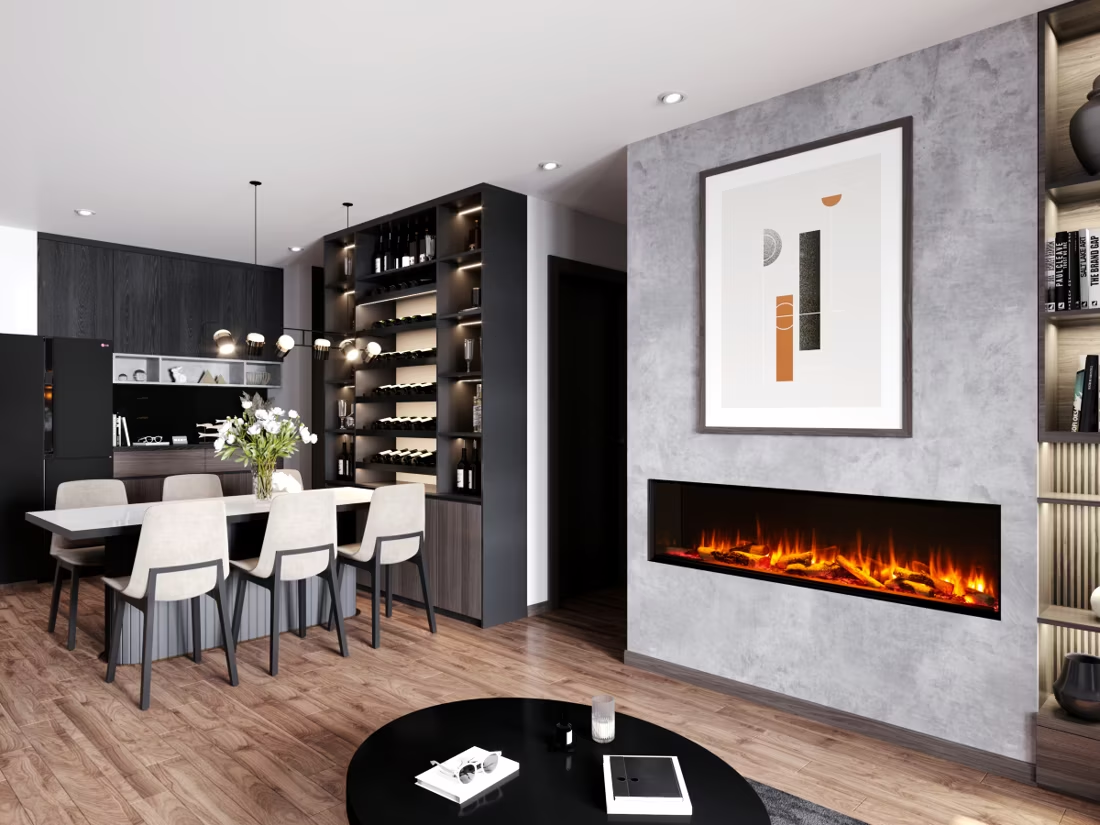
Four fuels. One honest answer for Lanier County.
Three steps. No salesperson until you're ready.
Tell us about your project
Your zip code, your situation, and the fuel you're leaning toward—or let the answers point you to one.
See what's actually available
The brands dealers within 100 miles genuinely carry—real options, never a catalog mirage.
Get your dealer & Project Guide
A trusted local dealer, plus the free Project Guide & Parts List that names every component of the job.
Frequently Asked Questions
Which fireplace fuel actually makes sense in Lanier County?
With an average winter low of 38°F and only 1,847 heating degree days a year, Lanier County doesn't need a heavy-duty primary heat source the way a northern county does. Gas fireplaces and inserts running on propane are the most practical everyday choice—they light instantly, hold a steady temperature through a cold snap, and don't need daily tending. Electric fireplaces are equally common as supplemental heat in a bedroom, den, or sunroom, since a mild climate like this rarely demands more than a small resistance-heat boost. Wood-burning fireplaces still show up in a portion of homes, mostly for ambiance or occasional backup during ice storms, and pellet stoves are the least common option countywide, generally installed as an emergency heat source rather than daily-use equipment.
Is a wood-burning fireplace or stove worth installing here?
Oak, pine, and hickory are all locally available if you want to burn wood, and plenty of Lanier County homeowners do keep a wood-burning fireplace for holiday fires, ambiance, or the handful of nights each winter that actually get cold. What doesn't make much sense here is a whole-house wood heating system—with only 1,847 heating degree days a year, the fuel-cost savings that justify a wood stove in a place like Duluth, Minnesota simply don't apply. Where wood stoves do earn their keep locally is as backup heat: south Georgia sees the occasional ice storm that knocks out power for days, and a wood stove or fireplace insert keeps a room livable when the grid goes down.
What about pellet stoves—are they available in Lanier County?
Pellet stoves are available through regional suppliers—Lignetics, Hamer Pellet Fuel, and Greenway Renewable Energy all distribute in this part of Georgia—but they're not a common installation in a county with this mild a climate. The households that do install one are usually thinking about resilience rather than everyday heating: a pellet stove with a battery backup for the auger and blower can keep a single room warm during an extended winter outage, which is the scenario most local buyers mention when they're weighing it against a wood stove or a propane heater as backup.
Do I need a permit for a gas or electric fireplace install in Lanier County?
Yes, in most cases. Gas fireplace and insert installations require a gas-line permit and work by a licensed gas fitter, typically pulled through the Lanier County building department in Lakeland. Electric fireplaces usually skip the permit process for a plug-in unit, but a hardwired built-in that needs a new circuit does require an electrical permit and inspection. A wood-burning fireplace or stove install also goes through the building department, with the retailer or installer typically handling the paperwork as part of the job rather than leaving it to the homeowner.
How does installation and service work in a county this small?
Lanier County's population is a little over 3,000, so most hearth retailers and service technicians are actually based in Valdosta or elsewhere in Lowndes County and travel in for jobs in Lakeland and Stockton. That generally means a modest trip fee for service calls and a bit more lead time for scheduling than you'd see in a larger market, especially right after a cold snap or storm when everyone's gas fireplace or backup heater needs attention at once. Booking routine gas inspections or chimney sweeps in late summer, ahead of the season's first real cold spell, avoids the scheduling crunch.
What does a gas or electric fireplace installation typically cost here?
Gas fireplace, insert, or stove installs in Lanier County generally run $4,000–$9,000, with the range driven mainly by whether you're running new propane line or converting an existing wood-burning fireplace to a gas insert. Electric fireplaces are far less expensive—$200–$3,000 for the unit itself, plus $400–$1,200 in labor if you're adding a dedicated circuit for a built-in rather than plugging in a freestanding model. Wood-burning fireplace or stove installs, where they happen, typically run $4,000–$8,000 depending on chimney and venting work. The county + fuel pages above break these numbers down further with local retailer pricing.
How much should I budget for a fireplace?
For an average home—covering the fireplace, the vent pipe, and basic installation—a budget between $3,900 and $5,500 gives you a lot of options across wood, gas, and pellet. By the time you add finish work, gas line, and electrical, the average complete installation lands between $5,000 and $12,000 all-in. In a remodel or new build, a good rule is to put about 2.5% of the total project cost toward the fireplace.
Can I install a fireplace myself?
If you're putting a fire in your house on purpose, it's best to work with an expert. Unless you're genuinely experienced in framing, gas line, vent pipe, and the national code on clearances to combustibles, have a professional do it—and ideally the same company that sells you the fireplace, so warranty, service, and liability all live under one roof.
Does a fireplace add value to my home?
On average, a fireplace adds back to the home about the same amount you spent installing it. Add the monthly savings from heating the rooms you actually use instead of the whole house—often hundreds of dollars a year—and the value case is strong before you even count what a fire does for how your family uses the room.
Wood, gas, pellet, or electric—how do I choose?
Match the fuel to your life, not the other way around. Wood: lowest fuel cost and total power-outage independence, but you're hauling and stacking. Gas: press a button, set a thermostat, no maintenance to speak of. Pellet: wood economics with automatic feeding, in exchange for weekly cleaning and a need for electricity. Electric: plugs in anywhere with honest supplemental heat. Nobody regrets the fuel that fits how they actually live.
Stove and Fireplace Dealers in Lanier County
Listings include WhyFire partner dealers, dealers we have verified as authorized for the brands we recommend, and established local businesses that carry hearth products. Every listing shows which one it is. The ones marked Preferred run on WhyFire's software, so they can show you real pricing and book your appointment right here. No manufacturer pays for placement. How we verify dealers →
All Star Garage Doors
Akins LLC
Southern Quality Propane
Barfield Gas Company
Get matched with a local Lanier County dealer.
Tell us about your home and we'll put together a free Project Guide & Parts List—the right unit for Lanier County's mild climate, the parts it needs, and the local dealer we recommend for your project.
Find Your Fireplace →