
Keep Your Family Warm and Safe—No Matter What
With winter lows averaging 33°F, few Johns Creek homes need wood as a primary heat source. For the homeowners who still want a real fire, here's how to do it right—and who to call.
Every Project Starts From One of These Five Situations
A mild-climate market where wood is the exception, not the rule.
Johns Creek sits at just under 1,000 feet elevation in north Fulton County, in climate zone 3A, with a light overall winter heating load and an average winter low of 33°F. That's a fraction of what a place like Minneapolis or Burlington, Vermont sees in a single season—winters here rarely demand sustained heat for weeks at a time, and hard freezes are the exception rather than the norm. As a result, wood-burning fireplaces and stoves are not a mainstream heating choice in Johns Creek the way they are in colder parts of the country. Gas and electric fireplaces dominate the local market because they match how people actually use supplemental heat here: occasionally, for a cold snap or two, not as a daily necessity.
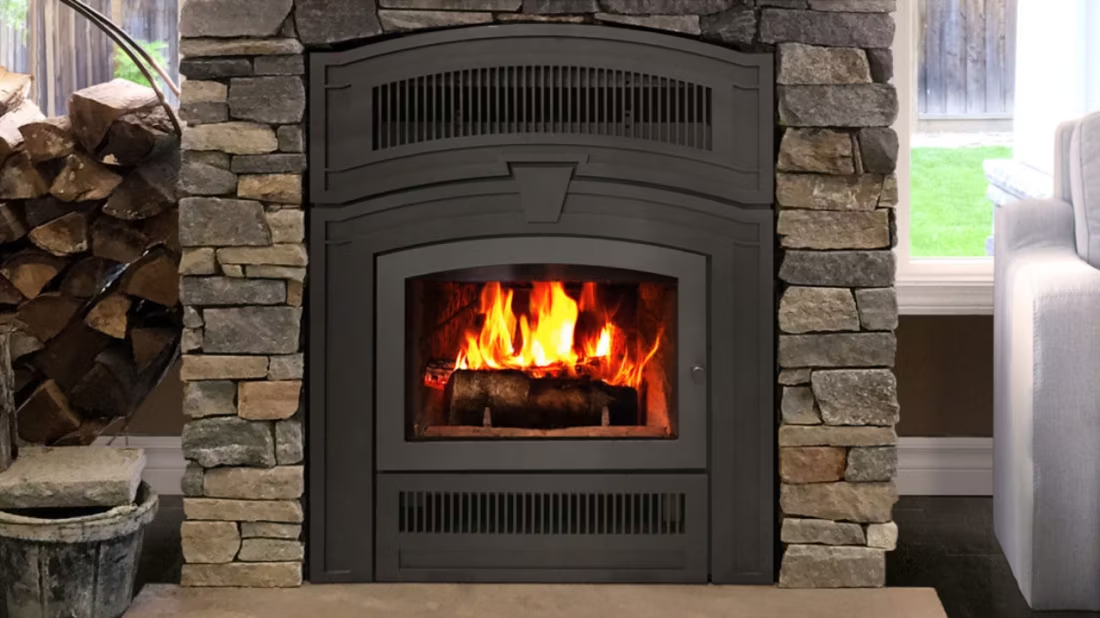
That said, a meaningful number of Johns Creek homeowners still want a wood-burning fireplace—for the smell and sound of a real fire, for s'mores with the kids, or as backup heat during the ice storms that occasionally knock out power across the Atlanta metro through Georgia Power and Sawnee EMC territory. Local hardwoods like oak, hickory, and pine are readily available from area firewood suppliers rather than public-land permits, since Johns Creek isn't near national forest cutting areas. If wood is what you want, a handful of Atlanta-area hearth retailers still carry wood stoves and inserts alongside their larger gas and electric lines, and can size a unit correctly for occasional, ambiance-driven use rather than round-the-clock heating.
Three steps. No salesperson until you're ready.
Tell us about your project
Your zip code, your situation, and the fuel you're leaning toward—or let the answers point you to one.
See what's actually available
The brands dealers within 100 miles genuinely carry—real options, never a catalog mirage.
Get your dealer & Project Guide
A trusted local dealer, plus the free Project Guide & Parts List that names every component of the job.
Frequently Asked Questions
How much does a wood stove or fireplace installation cost in Johns Creek?
Because wood is a smaller share of the Johns Creek hearth market, pricing tends to track the broader Atlanta metro: a wood stove or insert installation typically runs $3,500 to $8,000, depending on the unit and whether an existing masonry chimney (many Johns Creek homes already have one, often built for gas logs) can be adapted versus needing new Class A chimney pipe. New-construction installs without an existing chimney run higher once framing and roof penetration are factored in. Given how few local installers specialize in wood, it's worth confirming upfront that a dealer regularly installs wood-burning appliances, not just gas.
What size wood stove do I actually need in Johns Creek?
Smaller than you'd guess if you're used to reading cold-climate sizing charts. With winter lows averaging 33°F and a fairly light winter heating load overall, most Johns Creek homeowners are using a wood stove or fireplace for a single room, a great room, or occasional supplemental warmth—not whole-home heating. A small to mid-size EPA-certified stove (rated for up to 1,200–1,500 sq ft) is plenty for the vast majority of local installs. Oversizing is actually the more common mistake here, since a stove sized for a Minnesota winter will run smoky and inefficient during a mild Johns Creek cold snap.
Where do I find installers who actually work with wood in Johns Creek?
Fewer local hearth companies specialize in wood compared to gas, simply because gas and electric make up most of the installs in this market. Look for a dealer with NFI (National Fireplace Institute) wood-specialty certification specifically, not just a general hearth installer—the venting, clearances, and hearth pad requirements for wood are different from gas, and a shop that mostly sells gas logs may not have recent wood-burning experience. Ask directly how many wood installs they've done in the past year.
Should I get a wood stove or a wood-burning fireplace insert?
If your Johns Creek home already has a masonry fireplace—common in many neighborhoods here—a wood-burning insert is usually the simpler path. It uses your existing chimney (typically with a new liner) and turns an open, inefficient fireplace into something that actually throws heat. A freestanding wood stove makes more sense if you don't have an existing fireplace, want a stove in a room without one, or want maximum heat output for occasional cold snaps. Given how mild winters are here, either option is realistically sized for supplemental use rather than daily reliance.
Do I need a permit to install a wood stove in Johns Creek?
Yes—any new wood-burning appliance install requires a building permit through the City of Johns Creek's Community Development Department, which reviews clearances, venting, and hearth pad specifications. There's no cutting permit system to worry about locally, since Johns Creek isn't near U.S. Forest Service land—homeowners here buy firewood from local suppliers rather than harvesting it themselves. Georgia has no statewide air quality restrictions on wood burning in this area, so there are no curtailment periods to plan around.
What's the best wood stove for a mild climate like Johns Creek's?
You don't need a 20-hour catalytic burner built for sub-zero nights here—that's overkill for a climate averaging 33°F winter lows. A straightforward non-catalytic EPA-certified stove from a brand like Pacific Energy, Lopi, or Vermont Castings will comfortably handle occasional-use fires in a Johns Creek family room or den. If you want a more traditional look, a wood-burning fireplace insert into an existing masonry firebox is often the better fit for supplemental, ambiance-focused use rather than a heavy-duty freestanding unit.
How often should my chimney be inspected if I only burn occasionally?
Even with light, occasional use—a handful of fires a month during the cooler stretch from November through February—the CSIA still recommends an annual inspection before the season starts. Creosote builds up more slowly with infrequent burning, but Johns Creek's humid subtropical climate means chimneys sit unused and damp for most of the year, which brings its own risks like animal nesting and moisture damage. A yearly Level 1 inspection catches both issues before you light the first fire of the season.
Where can I buy firewood in Johns Creek?
Local firewood suppliers throughout north Fulton County deliver seasoned oak, hickory, and pine by the cord, typically running $250 to $350 per cord depending on species and seasoning. Oak and hickory burn hotter and longer, which matters less here than in a cold-climate home but still makes for a better fire. Since Johns Creek isn't near public forest land, there's no self-cutting permit option—buying seasoned wood from an established local supplier is the standard route, and it's worth asking how long the wood has been split and stacked, since green wood is a common complaint.
Does wood make sense in Johns Creek, or should I go with gas or electric instead?
For most Johns Creek homes, gas or electric is the more practical everyday choice—Georgia Power and Sawnee EMC territory both support electric fireplaces well, and natural gas service covers much of the area, making instant, no-mess heat an easy fit for a climate that rarely demands sustained warmth. Wood makes sense if you specifically want the experience of a real fire, or if you want a heat source that still works during the ice storms that periodically knock out power across the metro. Plenty of Johns Creek homeowners end up with both: a gas insert or electric unit for daily use, and a wood-burning fireplace kept in reserve for ambiance or outages.
What's the difference between an insert and a zero-clearance fireplace?
An insert is a fireplace that slides into a pre-existing wood-burning fireplace—if you don't have one, there's nothing to insert it into. A zero-clearance fireplace is built into a framed wall, which makes it the answer for remodels and new construction. Simple test: existing masonry fireplace means insert; blank or framed wall means zero-clearance.
What do I measure to size a fireplace insert?
Four numbers tell you what fits: the front width, the front height, the back width, and the overall depth of your existing fireplace opening. Grab a tape measure, jot those down, and snap a photo of the wall—those two things do more to move your project forward than anything else you can do today.
Does a fireplace add value to my home?
On average, a fireplace adds back to the home about the same amount you spent installing it. Add the monthly savings from heating the rooms you actually use instead of the whole house—often hundreds of dollars a year—and the value case is strong before you even count what a fire does for how your family uses the room.
Can I install a fireplace myself?
If you're putting a fire in your house on purpose, it's best to work with an expert. Unless you're genuinely experienced in framing, gas line, vent pipe, and the national code on clearances to combustibles, have a professional do it—and ideally the same company that sells you the fireplace, so warranty, service, and liability all live under one roof.
Nearby Dealers
Hearth shops serving Johns Creek and the surrounding area. Every listing shows whether it is a WhyFire partner, a dealer we have verified as authorized for the brands we recommend, or a local business carrying hearth products. No manufacturer pays for placement. How we verify dealers →
North Atlanta Fireplace Grill & Patio
Fireplace Depot
EarthCore Industries
Builder Specialties, Inc.
Tara Residential
Bolton Fireplace
The Man Cave Store
The Mad Hatter
Graves Fireplaces Inc.
Alley-Cassetty
Construction Resources - Decatur
Old Hat Chimney
Atlanta Chimney Worx
Authenteak
Cr Design Center - Westside
Extreme Chimneys
Atlanta's Top Chimney Sweep
Blossman Gas And Appliance
Find your wood fireplace in Johns Creek.
Tell us about your home and how you'd actually use a wood-burning fireplace, and we'll match you with a local Johns Creek-area dealer who still does wood installs right—plus a free Project Guide & Parts List with the vent kit and parts your project needs.
Find Your Fireplace →