
Cozy, on-demand heat for Johns Creek's mild but real winters.
With a winter heating season that stays short and mild overall, and winter lows averaging 33°F, Johns Creek doesn't need a furnace-grade wood setup—it needs reliable ambiance and the occasional boost on a genuine cold snap. I'll match you with a trusted local dealer who knows the gas line work and venting for this part of Fulton County.
Every Project Starts From One of These Five Situations
Ambiance and backup warmth, without the woodpile.
Sitting at just under 1,000 feet in the Georgia Piedmont, Johns Creek runs a mild climate zone 3A profile—nowhere near the punishing cold of Duluth or Fargo, but still cool enough most winters to justify real heat a few dozen nights a year when temperatures dip into the 20s. That's a very different equation than a mountain town with a winter heating season nearly twice as long: homeowners here are usually looking for supplemental zone heat and a good-looking focal point in the living room, not a stove that has to carry the house through a five-month winter.
That's part of why wood and pellet heat barely register in Johns Creek even though oak, pine, and hickory all grow throughout Fulton County—there's no local cutting-permit infrastructure like you'd find near national forest land, most subdivisions here are governed by HOAs that don't love smoke or stacked cordwood, and the short, mild winter season just doesn't reward the hassle. Gas fills that gap well: many of Johns Creek's established neighborhoods already have natural gas service for water heaters and ranges, making a fireplace or insert a straightforward add, while newer or more rural pockets served by Sawnee Electric Membership Corporation sometimes run on propane instead. Either fuel gives you real flame and real heat without touching the two electric utilities' residential rates—Georgia Power at roughly 15.5¢/kWh and Sawnee EMC at roughly 11.5¢/kWh—which matters if you're weighing a gas unit against an electric fireplace for everyday running cost.
Three steps. No salesperson until you're ready.
Tell us about your project
Your zip code, your situation, and the fuel you're leaning toward—or let the answers point you to one.
See what's actually available
The brands dealers within 100 miles genuinely carry—real options, never a catalog mirage.
Get your dealer & Project Guide
A trusted local dealer, plus the free Project Guide & Parts List that names every component of the job.
Frequently Asked Questions
How much does a gas fireplace installation cost in Johns Creek?
Most Johns Creek installations fall in the $3,500 to $8,500 range. Many homes built in the area's master-planned subdivisions from the 1990s through 2000s were already stubbed for an optional fireplace, so dropping in a direct-vent unit and finishing the surround lands toward the lower end. If you're adding a fireplace where none existed—say, converting a formal living room or finishing a basement—running a new gas line and cutting venting through an exterior wall pushes the number up. Propane households on the Sawnee EMC side of the city should budget a bit more if tank setup is needed.
Does wood heat make sense at all in Johns Creek?
Not really as a primary or even meaningful backup heat source. Oak, pine, and hickory all grow locally, but with average winter lows around 33°F and a winter season that stays short and mild overall, there's rarely enough sustained cold to justify tending a wood stove—and most Johns Creek subdivisions have HOA covenants that frown on stacked firewood or visible smoke. A handful of homeowners still keep a wood-burning fireplace for occasional ambiance, but gas has become the practical default for anyone who actually wants heat on demand.
Natural gas or propane—which will my Johns Creek home use?
It depends on your neighborhood. Established subdivisions with natural gas already run to the house for the furnace, water heater, or range are the easiest conversions—the fireplace just taps into existing service. Homes in newer developments or the more rural edges of Fulton County served by Sawnee Electric Membership Corporation for power sometimes lack a natural gas main nearby, in which case propane with a small exterior tank is the standard workaround. A local dealer can tell you in five minutes which situation you're in by checking your existing gas appliances.
Will my gas fireplace keep working if the power goes out?
Most will, and it's a reasonable thing to plan for—Johns Creek isn't immune to the ice storms that occasionally roll through metro Atlanta and knock out power for a day or two, unlike routine thunderstorm outages that clear fast. Units with IPI (intermittent pilot ignition) run their electronics off AA batteries that kick in automatically when utility power drops. Valor fireplaces skip the battery question entirely—their pilot's thermocouple generates its own current. If backup warmth during an ice-storm outage matters to you, ask your dealer which ignition system is on the model you're considering.
What's the difference between a gas fireplace, insert, and stove?
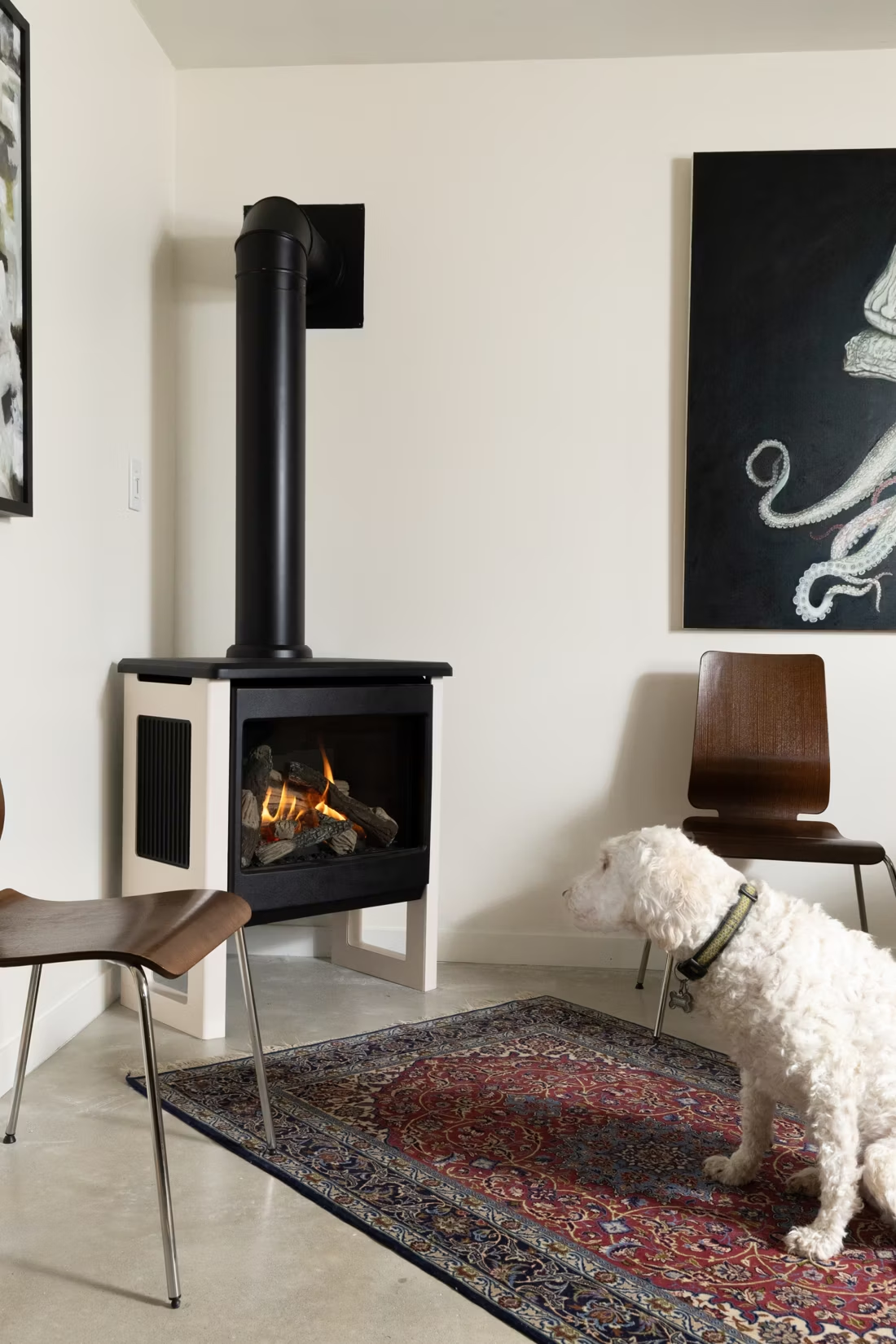
A gas fireplace is a built-in unit framed into a wall, which is how most new construction and remodels in Johns Creek's newer subdivisions handle it. A gas insert fits into an existing masonry firebox—a good option if your home has an older wood-burning fireplace you'd rather not maintain but still want to use the chimney chase for. A gas stove is freestanding on a hearth pad, which some homeowners choose for a den, bonus room, or basement where there's no existing fireplace opening at all. For most Johns Creek retrofits, an insert is the least invasive upgrade.
Do I need a permit to install a gas fireplace in Johns Creek?
Yes. As an incorporated city, Johns Creek handles its own building and gas permitting through the City of Johns Creek Permitting and Development Services rather than routing through Fulton County directly. You'll need a building permit for the unit and venting plus a mechanical/gas permit for the line work, both requiring a licensed gas-fitter. Established local hearth dealers who work regularly in the city typically handle the permit applications and schedule the inspection as part of the installation.
Vented vs. vent-free gas fireplaces—which is better for my home?
Direct-vent (sealed) units pull combustion air from outside and exhaust it back outside, making them the safer, code-compliant choice everywhere including Georgia, and they're what most Johns Creek dealers recommend for main living areas and bedrooms. Vent-free units are legal in Georgia and burn directly into the room, but they come with strict room-volume requirements and aren't a good fit for smaller or tightly sealed rooms—a real consideration in newer, well-insulated Johns Creek construction where indoor air doesn't exchange as freely as in an older, drafty house.
How often does a gas fireplace need servicing in Johns Creek?
Plan on an annual inspection, ideally in early fall before you start relying on it. A technician checks the burner, pilot assembly, and gas connections and cleans the glass—typically $150 to $250. One local wrinkle worth knowing: Johns Creek's spring pollen season is intense even by Atlanta standards, and homes with exterior vent terminations near landscaping or gutters can end up with pollen and debris buildup around the vent cap by the time cooler weather returns, so a quick visual check after pollen season isn't a bad idea even outside your annual service.
What size gas fireplace do I actually need in Johns Creek?
Smaller than you'd guess if you're used to national heat-output charts built around much colder climates. With winter lows averaging 33°F and relatively few nights in the 20s, most Johns Creek homes are using a gas fireplace for supplemental zone heat and ambiance rather than whole-room primary heat, so units in the 20,000 to 30,000 BTU range comfortably handle a typical living room or great room. Larger open-concept spaces in some of the area's bigger subdivision floor plans may call for something toward the higher end, but a local dealer sizing it against your actual square footage and ceiling height will keep you from overbuying.
What's the difference between an insert and a zero-clearance fireplace?
An insert is a fireplace that slides into a pre-existing wood-burning fireplace—if you don't have one, there's nothing to insert it into. A zero-clearance fireplace is built into a framed wall, which makes it the answer for remodels and new construction. Simple test: existing masonry fireplace means insert; blank or framed wall means zero-clearance.
Why is a fireplace insert so efficient?
An insert does two things: it seals the chimney completely, so you stop losing air you already paid to heat, and it radiates warmth into the room through the firebox and glass. Most add a heat-exchange fan that pulls cool room air underneath, wraps it around the hot firebox, and pushes it back out warm. Your home is more efficient before you've even lit the first fire.
Does a fireplace add value to my home?
On average, a fireplace adds back to the home about the same amount you spent installing it. Add the monthly savings from heating the rooms you actually use instead of the whole house—often hundreds of dollars a year—and the value case is strong before you even count what a fire does for how your family uses the room.
Can I install a fireplace myself?
If you're putting a fire in your house on purpose, it's best to work with an expert. Unless you're genuinely experienced in framing, gas line, vent pipe, and the national code on clearances to combustibles, have a professional do it—and ideally the same company that sells you the fireplace, so warranty, service, and liability all live under one roof.
Nearby Dealers
Hearth shops serving Johns Creek and the surrounding area. Every listing shows whether it is a WhyFire partner, a dealer we have verified as authorized for the brands we recommend, or a local business carrying hearth products. No manufacturer pays for placement. How we verify dealers →
North Atlanta Fireplace Grill & Patio
Fireplace Depot
EarthCore Industries
Builder Specialties, Inc.
Tara Residential
Bolton Fireplace
The Man Cave Store
The Mad Hatter
Graves Fireplaces Inc.
Alley-Cassetty
Construction Resources - Decatur
Old Hat Chimney
Atlanta Chimney Worx
Authenteak
Cr Design Center - Westside
Extreme Chimneys
Atlanta's Top Chimney Sweep
Blossman Gas And Appliance
Get your free Project Guide & Parts List for a gas fireplace in Johns Creek.
Tell me about your home and your gas access—existing natural gas line, or propane—and I'll match you with a trusted local dealer and send a free Project Guide & Parts List with the exact vent kit and parts your project needs.
Find Your Fireplace →