
Pellet Heat Is Rare in Glynn County—But Not Impossible.
With winter lows averaging 44°F and just 1,400 heating degree days a year along the Golden Isles, pellet stoves aren't a mainstream heating choice here—but a small number of homeowners still want one for a marsh cabin, a vacation property, or a cold snap on St. Simons. We'll help you find out if it makes sense, and match you with a dealer who actually carries them.
Every Project Starts From One of These Five Situations
Glynn County's winters rarely call for dedicated heating hardware.
Glynn County sits on the Georgia coast around Brunswick, St. Simons Island, and Jekyll Island, with a climate classified 2A—hot and humid, not heating-dominated. The average winter low is 44°F, and the county logs roughly 1,400 heating degree days a year. For comparison, a place like Duluth, MN racks up close to 10,000 HDD in the same period. Most Glynn County homes run central HVAC in heat-pump mode for the handful of genuinely cold nights each winter, and a dedicated pellet appliance simply isn't something the climate asks for.
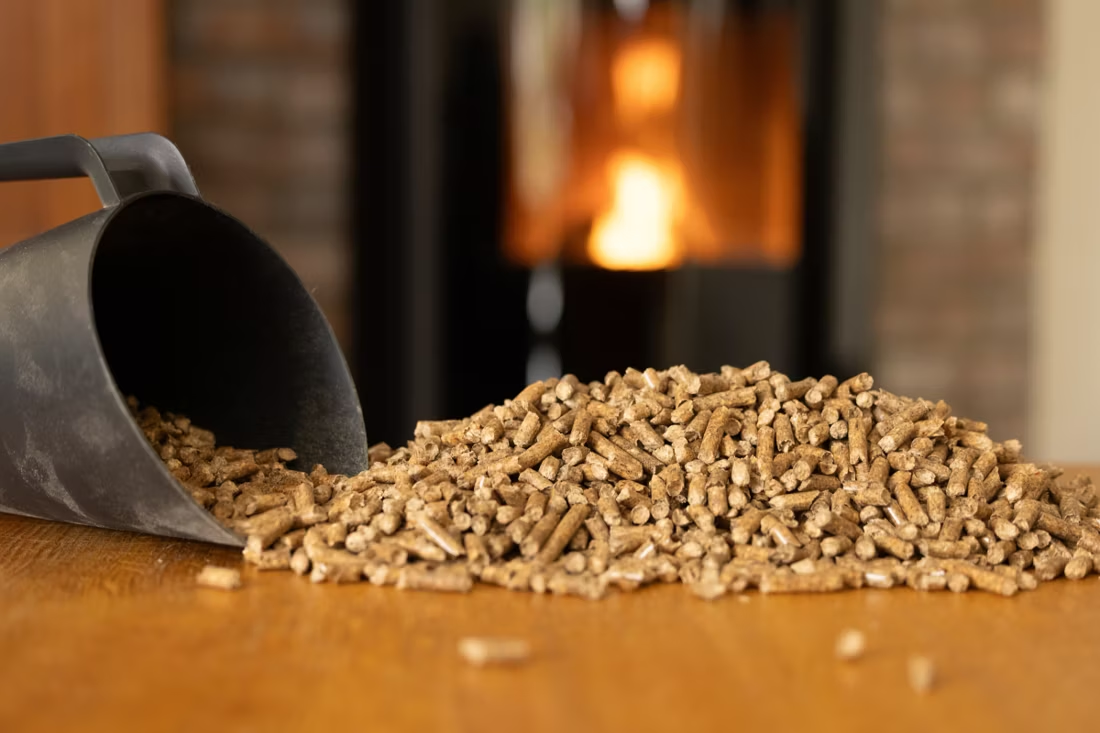
That said, the raw material is practically local—Southeast Georgia's pine forests feed regional pellet producers like Lignetics, Hamer Pellet Fuel, and Greenway Renewable Energy, some of whom ship product out of the very region where oak, pine, and hickory grow thick. Locally, pellet stoves show up in a narrower set of situations: a marsh-front cabin someone wants heated on damp January mornings, a vacation home owned by a transplant from a colder state, or a homeowner who simply likes the ambiance and controllability of a pellet unit over a gas log set. If that's you, a handful of dealers in the Brunswick and coastal Georgia trade area can source and install one correctly—we just won't pretend it's a common request.
Three steps. No salesperson until you're ready.
Tell us about your project
Your zip code, your situation, and the fuel you're leaning toward—or let the answers point you to one.
See what's actually available
The brands dealers within 100 miles genuinely carry—real options, never a catalog mirage.
Get your dealer & Project Guide
A trusted local dealer, plus the free Project Guide & Parts List that names every component of the job.
Frequently Asked Questions
How much does a pellet stove installation cost in Glynn County?
There isn't a well-established local price range for pellet stove installs in Glynn County the way there is in colder markets, simply because so few homes install them. Nationally, a pellet stove or insert install typically runs $3,000 to $6,500 depending on the unit, venting path, and whether you need a dedicated 120V outlet nearby (pellet stoves require electricity to run the auger and blower). Because demand is thin here, get quotes from more than one dealer—pricing tends to vary more in low-volume markets than in places where installers do this work every week.
Why aren't pellet stoves more common in Glynn County?
Mostly climate. With an average winter low around 44°F and only about 1,400 heating degree days a year, most Glynn County homes need supplemental heat on maybe a few dozen nights a season, if that—nothing close to the sustained cold that makes a pellet stove's steady, thermostatically controlled output worth the investment. Heat pumps and gas logs cover the occasional cold snap here far more economically than a dedicated pellet appliance and its fuel supply chain would.
Who actually installs pellet stoves in Glynn County if they're uncommon?
The requests that do come in are usually one of a few types: a marsh or river cabin someone wants heated without running ductwork, a vacation property owned by someone from a colder climate who wants a familiar heat source, or a homeowner who simply prefers the look and control of a pellet unit to a gas insert. A small number of hearth dealers serving the Brunswick and coastal Georgia trade area can source and install pellet stoves on request—they just don't stock them the way a dealer in a heating-dominated climate would. Expect a longer lead time and possibly a special order.
Pellet stove vs. gas fireplace—which makes more sense in Glynn County?
For nearly every Glynn County home, gas is the more practical choice. Gas fireplaces and inserts are standard here, offer instant on-off heat with no fuel storage or ash cleanup, and pair naturally with a climate where you might only want supplemental heat a handful of nights a year. Pellet stoves require a fuel supply (40-lb bags, typically sourced or special-ordered rather than stocked on every hardware store shelf locally), a hopper to load, and electricity to run the auger—worthwhile in a place burning through a ton or more of pellets each winter, less so where cold snaps are the exception. If you want the visual and ambiance of a fire without wood handling, a direct-vent gas unit is almost always the simpler fit here.
Where can I buy wood pellets in Glynn County?
Pellet fuel isn't stocked on every shelf the way it is up North, since so few local homes burn it regularly. Regional producers like Lignetics, Hamer Pellet Fuel, and Greenway Renewable Energy manufacture pellets in the broader Southeast—much of it milled from the same pine forests that supply local lumber—but a lot of that product is trucked or shipped to colder markets rather than sold at retail in coastal Georgia. If you do install a pellet stove here, ask your dealer about ordering pellets by the pallet (roughly a ton) in advance of winter rather than counting on last-minute local stock.
What does a pellet stove installation require in a coastal Georgia home?
Pellet stoves vent horizontally through an exterior wall using a small-diameter power vent, rather than requiring a full masonry chimney—which actually makes them easier to retrofit into a Glynn County home than a wood stove would be. You'll need a dedicated 120V electrical outlet nearby for the auger and combustion blower, and proper clearance from combustibles per the manufacturer's listing. One coastal-specific consideration: salt air along St. Simons, Sea Island, and the Brunswick waterfront accelerates corrosion on exterior vent caps and hardware, so ask your installer about marine-grade or stainless venting components if your home is within a mile or two of saltwater.
Do I need a permit to install a pellet stove in Glynn County?
Yes—a building permit is typically required for any new fuel-burning appliance installation, handled through the Glynn County building department for unincorporated areas or the relevant city office if you're inside Brunswick city limits. Because pellet installs are infrequent here, it's worth confirming with your installer that they're familiar with the current permitting process rather than assuming it's routine paperwork for the reviewing office.
Would an electric fireplace make more sense than pellet in Glynn County?
For a lot of homes here, yes. Electric fireplaces and inserts are standard equipment in Glynn County's climate—no venting, no fuel storage, and installation costs that run a fraction of a pellet setup, often just a matter of plugging into an existing outlet or adding a dedicated circuit. If what you want is the visual of a fire and a little supplemental warmth on a rare 30-degree night on St. Simons, electric gets you there with none of the fuel logistics that come with pellets in a market where pellet bags aren't sitting on every shelf.
Are there any local homes that genuinely need a pellet stove?
A few, realistically. Homes on the marsh or river that lose power more often than the mainland grid, off-grid or partially off-grid cabins, and hunting camps in the more rural stretches of the county sometimes want a stand-alone heat source that doesn't depend entirely on the HVAC system. For those specific situations, a pellet stove can work well—just know you're planning around a fuel supply chain built for colder markets, not one built for coastal Georgia demand.
How often does a pellet stove need cleaning?
A clean pellet stove is a happy pellet stove. Plan on cleaning the burn pot about once a week when you're burning regularly—ash and clinkers gum up the air holes just like a pellet barbecue. Most pellet stove problems trace back to skipped cleaning that nobody explained up front. Some designs make it easy with a trapdoor burn pot: pull a lever and the gunk drops into the ash pan.
What does it take to replace an existing fireplace?
Fireplaces are like icebergs—bigger behind the wall than in front of it. Replacement means removing the surrounding tile or stone (the finish material laps onto the fireplace face), pulling the old unit, setting the new one in the same enclosure, and re-finishing the wall. A hearth professional can determine what's behind your wall without demolition during an in-home preview.
Can a fireplace actually lower my heating bill?
Yes—by creating a comfort zone. A furnace heats every square foot of the house just to warm the one room you're in; a gas fireplace on low burns roughly a sixth of the gas a typical furnace does. Set the furnace around 55–60 degrees as a baseline, then heat the rooms your family actually uses. Families who heat this way commonly save $20–$60 a month.
How much should I budget for a fireplace?
For an average home—covering the fireplace, the vent pipe, and basic installation—a budget between $3,900 and $5,500 gives you a lot of options across wood, gas, and pellet. By the time you add finish work, gas line, and electrical, the average complete installation lands between $5,000 and $12,000 all-in. In a remodel or new build, a good rule is to put about 2.5% of the total project cost toward the fireplace.
Stove and Fireplace Dealers in Glynn County
Pellet Brands Stocked Around Glynn County
Manufacturers will point you to the nearest stocking dealer.
Get matched with a Glynn County dealer who'll tell you the truth about pellet heat.
Tell us about your home and how you'd use it, and we'll connect you with a trusted local dealer and a free Project Guide & Parts List—the exact equipment, venting, and recommended installer for your situation, whether pellet turns out to be the right call or not.
Find Your Fireplace →