
Instant ambiance for Glynn County's mild coastal winters.
From downtown Brunswick to St. Simons and Sea Island, Glynn County's short, mild heating season makes electric the simplest way to add real flame-look warmth—no chimney, no gas line, no venting. Find the right unit and connect with a trusted local dealer.
Every Project Starts From One of These Five Situations
Warmth on demand, no chimney required.
Glynn County sits in climate zone 2A along the Georgia coast, and the numbers explain a lot about how people heat their homes here: an average winter low around 44°F and roughly 1,400 heating degree days a year—a fraction of what a place like Bozeman, MT or Duluth, MN racks up in a single hard month. Real sustained cold is rare, which is exactly why wood and pellet heat are flagged not-applicable for this county. Oak, pine, and hickory are all abundant locally, and plenty of Golden Isles residents still enjoy an occasional wood fire for atmosphere, but almost nobody here is burning cordwood or pellets to actually keep a house warm through winter—the season is just too short and too mild to justify the storage, smoke, and upkeep.
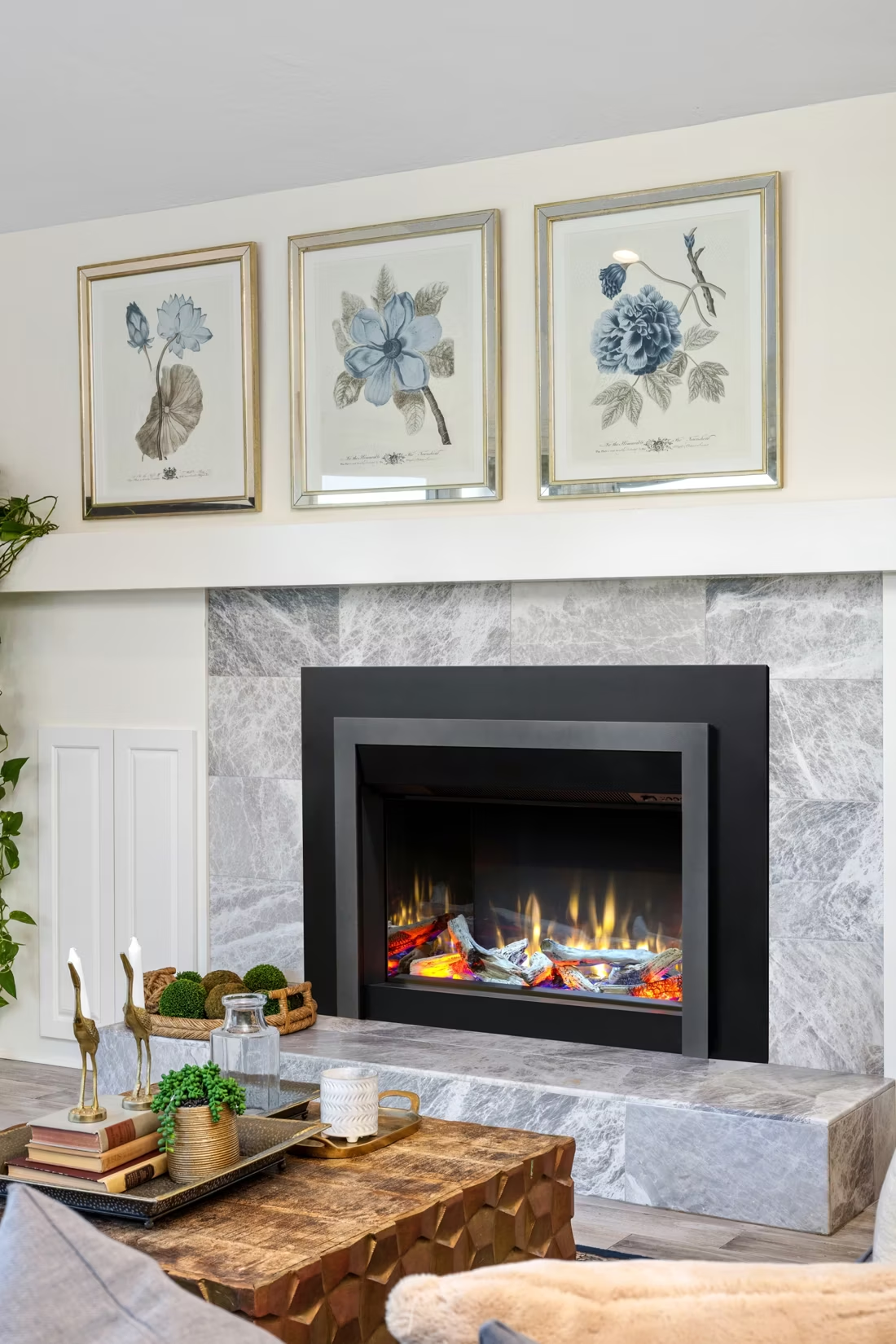
That's where electric fireplaces earn their keep. Georgia Power serves the county's electric grid, and a plug-in or hardwired unit gives homeowners in Brunswick's historic districts, St. Simons Island cottages, and Sea Island condos the look and radiant warmth of a fire without cutting into a masonry chimney or running new gas line through salt-exposed walls. Coastal humidity and salt air are hard on venting hardware and metal flue components over time—electric units sidestep that problem entirely because there's no combustion and nothing to vent. For older homes with a decorative firebox that hasn't drawn smoke in decades, or island condos where HOA rules restrict gas and wood installs, an electric insert is often the only option the association will approve without a fight.
Three steps. No salesperson until you're ready.
Tell us about your project
Your zip code, your situation, and the fuel you're leaning toward—or let the answers point you to one.
See what's actually available
The brands dealers within 100 miles genuinely carry—real options, never a catalog mirage.
Get your dealer & Project Guide
A trusted local dealer, plus the free Project Guide & Parts List that names every component of the job.
Frequently Asked Questions
How much does an electric fireplace or insert cost to install in Glynn County?
Plug-in electric inserts and freestanding units are the least expensive hearth option available, generally running $150 to $2,500 for the unit itself, with no venting or gas line work to add to the bill. Built-in wall units or larger mantel packages that require a dedicated 120V or 240V circuit run higher—typically $1,500 to $4,000 installed once an electrician is involved—but that's still well below what a vented gas or wood project would cost. Because Glynn County's heating season is so short, most homeowners here are buying an electric fireplace for ambiance and supplemental warmth rather than as a primary heat source, which keeps the project scope, and the price, modest.
Do I need a permit to install an electric fireplace in Glynn County?
In most cases, no. A standard plug-in electric fireplace or insert that runs off an existing outlet doesn't trigger a building or mechanical permit anywhere in Glynn County, whether you're in the city of Brunswick or unincorporated areas near St. Simons and Sea Island. If your project involves adding a new dedicated circuit, relocating an outlet, or building out a new mantel surround, that electrical work typically does require a permit through the county's building department—your installer or a licensed electrician will usually pull it as part of the job.
Will an electric fireplace actually keep a room warm in Glynn County?
For supplemental heat, yes. With an average winter low around 44°F and only about 1,400 heating degree days a year, Glynn County rarely sees the kind of sustained cold that demands a whole-house heating appliance. A modern electric insert with a built-in fan heater can comfortably take the edge off a chilly evening in a bedroom, sunroom, or living area during the occasional cold snap in December or January. It's not designed to replace central HVAC, but for the county's climate, it doesn't need to—it's filling in the gaps around a heat pump system that's already doing most of the work.
Is an electric fireplace a good option for a condo on St. Simons or Sea Island?
Often the best option. Many island condo and HOA communities restrict or outright prohibit gas lines, wood-burning appliances, and exterior venting penetrations—all of which are common sticking points in coastal association bylaws. An electric fireplace typically sidesteps those restrictions entirely because it plugs into an existing outlet and requires no exterior vent termination or gas service. That makes it one of the few hearth upgrades a Sea Island or St. Simons unit owner can install without submitting an architectural review request first, though it's still worth confirming your specific association's rules before buying.
What happens to an electric fireplace during a hurricane power outage?
It won't run—that's the honest tradeoff. Glynn County sits in an active hurricane corridor, and Georgia Power outages after a named storm can stretch for days on the barrier islands and in low-lying parts of Brunswick. Because electric fireplaces have no combustion source, they're entirely dependent on grid power (or a generator) to produce heat or flame. If backup heat during storm season is a real priority for your household, a vented gas unit or a wood-burning option is worth discussing alongside electric—many Glynn County homes end up with electric for daily ambiance and a gas or wood appliance as the storm-season fallback.
Electric vs. gas fireplace—which is right for my Glynn County home?
Gas is the standard choice for homeowners who want real heat output and the ability to run during a power outage, since many gas units include battery-backup or self-powering ignition. Electric wins on installation simplicity and upfront cost—no gas line, no venting, and often no permit at all—which matters in Glynn County's historic Brunswick homes and island condos where running new gas service can be expensive or restricted. Given the county's mild 1,400 HDD climate, plenty of homeowners find electric is genuinely enough for their needs, while those closer to the marsh with drafty older construction sometimes lean toward gas for the added heat output.
Why isn't wood heat more common in Glynn County if oak and hickory are available locally?
Wood is technically available—oak, pine, and hickory all grow throughout the county—but with an average winter low near 44°F and virtually no sustained cold season, there's little practical reason to maintain a wood-burning setup as a heat source. A handful of homeowners in the county still install a wood stove or fireplace purely for the ambiance of a real fire on the rare cold night, but it's a minority choice rather than a heating strategy, which is why wood is flagged as not-applicable for this county compared to a place like International Falls, MN where it's essential.
Does salt air or coastal humidity affect electric fireplace performance?
Less than you'd think, and that's part of the appeal. Gas venting components and metal chimney liners are vulnerable to corrosion in Glynn County's salt-laden coastal air, particularly on St. Simons and Sea Island where ocean exposure is direct. Electric fireplaces have no combustion byproducts and no exterior vent termination, so there's no metal flue sitting in salt air to degrade over time. The main maintenance consideration is simply keeping the unit's interior components dust-free and, for homes very close to the water, choosing enclosures rated for higher-humidity environments.
What's the difference between an electric insert and a freestanding electric fireplace?
An electric insert is built to slide into an existing masonry firebox—a common fit for Glynn County's older homes in downtown Brunswick and the historic districts near the waterfront, where a decorative fireplace opening already exists but hasn't been used in years. A freestanding or wall-mounted electric fireplace, by contrast, doesn't require an existing opening at all and can go into a new-construction living room, a St. Simons rental cottage, or a condo without a fireplace ever having been built in. Both plug into standard outlets in most cases, so the choice usually comes down to whether you're working with an existing firebox or starting from a blank wall.
Can I put a TV above my fireplace?
Yes—with an asterisk. Fireplaces are hot and TVs don't like heat. Either put a mantel between them to deflect rising warmth, or choose a fireplace with heat-management technology that creates a cool zone on the wall above—the wall stays around 125 degrees, barely warm, while the room still gets full heat. If you like clean lines and don't want a mantel, heat management is the answer.
Do electric fireplaces actually produce heat?
Yes—most put out around 4,800–5,000 BTUs from a standard outlet, which comfortably warms a bedroom, office, or den as a comfort-zone heater. What they won't do is carry a whole house the way wood, gas, or pellet can. Think of electric as ambiance-first with honest supplemental heat: flames on with no heat in July, flames plus warmth in January.
What is an in-home preview and do I need one?
It's a visit where a hearth professional measures your space, confirms the model you picked actually works in your home, and walks the specs—framing, gas line, venting, finish work—before anything is ordered. Some details you just can't know until you see the house. Never make a down payment without one; it's the single most-skipped step that burns buyers.
Does a fireplace add value to my home?
On average, a fireplace adds back to the home about the same amount you spent installing it. Add the monthly savings from heating the rooms you actually use instead of the whole house—often hundreds of dollars a year—and the value case is strong before you even count what a fire does for how your family uses the room.
Stove and Fireplace Dealers in Glynn County
Find your electric fireplace in Glynn County.
Tell us a bit about your home—whether it's a historic Brunswick bungalow, a St. Simons cottage, or a Sea Island condo—and we'll match you with a trusted local dealer and send over a free Project Guide & Parts List for your electric fireplace project.
Find Your Fireplace →