
Real Warmth for Golden Isles Nights, Zero Smoke Required.
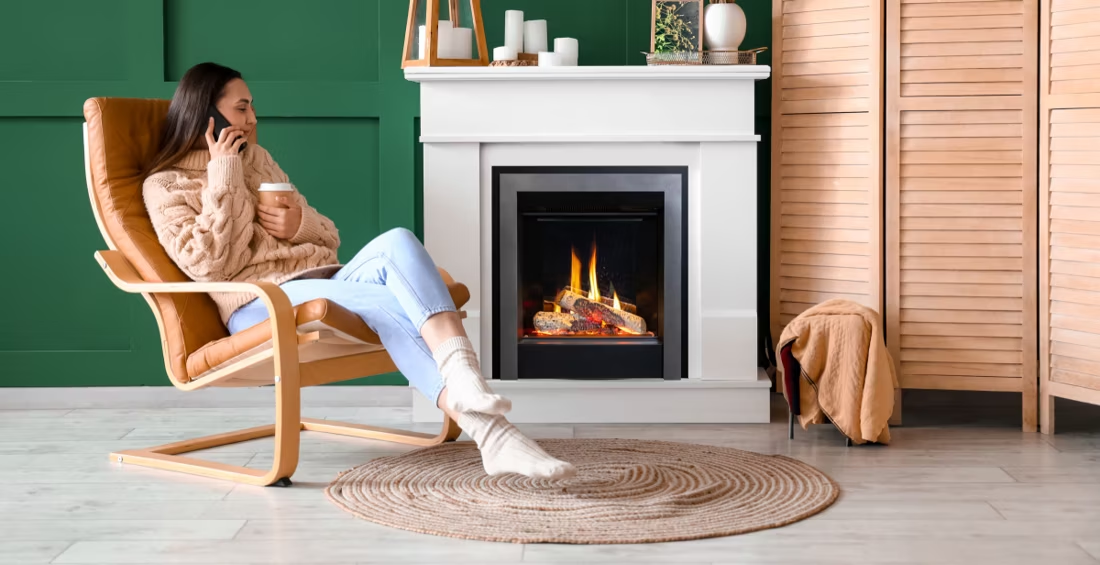
Coastal Glynn County winters rarely demand serious heat—electric fireplaces deliver ambiance and cozy backup warmth without a chimney, a woodpile, or a gas line. Find the right unit and connect with a trusted local dealer.
Every Project Starts From One of These Five Situations
Mild winters make electric the practical choice.
Country Club Estates sits at just 3 feet of elevation in Glynn County's marshy Golden Isles corridor, where winter lows average a mild 44°F and the area sees a very short, mild winter—only about a fifth of the winter heating load of a place like Duluth, MN sees in an average winter. That's not a climate that calls for cordwood or a hopper full of pellets, which is why wood stoves and pellet stoves are essentially absent here. It's exactly the kind of climate where an electric fireplace makes sense: real flame-effect ambiance and a burst of supplemental warmth on the handful of nights that actually get cold, without asking a homeowner to manage combustion, venting, or fuel storage in a humid coastal environment.
Electric units plug into a standard outlet or tie into a dedicated circuit, run on power from Georgia Power or Okefenoke Rural Electric Membership Corporation depending on which side of Glynn County you're on, and need no chimney, no flue, and no clearance to combustibles the way a wood or gas unit does. There's no creosote to manage, no venting hardware to corrode in salt air, and no seasonal fuel delivery to schedule. For most homes here, the goal isn't heating the whole house—it's a warm-looking, low-maintenance focal point that can genuinely take the chill off a 40-degree evening when needed.
Three steps. No salesperson until you're ready.
Tell us about your project
Your zip code, your situation, and the fuel you're leaning toward—or let the answers point you to one.
See what's actually available
The brands dealers within 100 miles genuinely carry—real options, never a catalog mirage.
Get your dealer & Project Guide
A trusted local dealer, plus the free Project Guide & Parts List that names every component of the job.
Frequently Asked Questions
How much does an electric fireplace installation cost in Country Club Estates?
Plug-in electric inserts and freestanding stoves start around $600–$1,500 installed, since most just need an existing outlet and a bit of trim carpentry. Built-in wall units or mantel packages that require a dedicated 20-amp circuit typically run $1,500–$3,500, factoring in a licensed electrician's time for the new circuit. Larger linear built-ins set into custom cabinetry or a media wall can push toward $4,000–$5,000 once finish carpentry is included. Because there's no venting or masonry work involved, electric installs in Glynn County are consistently the fastest and least expensive hearth project a local dealer handles.
Will an electric fireplace actually heat my house here?
For most Country Club Estates homes, yes—as supplemental, zone-based heat. With winter lows averaging 44°F and only a very short, mild winter each year, the coldest nights here rarely ask for more than a 1,500-watt heater's worth of output, which is what most electric fireplace inserts provide. Central HVAC handles the rare cold snap for the rest of the house; the fireplace is there to take the edge off a chilly evening in the room you're actually sitting in. It's not designed to replace your heat pump the way a wood stove might replace furnace heat in a colder climate—it's a comfort and ambiance tool that happens to also throw real warmth when you want it.
Do I need a permit or an electrician to install one?
A plug-in electric fireplace or insert that uses an existing standard outlet typically doesn't require a permit. If you're adding a built-in unit that needs a new dedicated circuit—which is common for wall-mount and linear models—Glynn County's building and codes office generally requires an electrical permit, and the circuit work needs to be pulled by a licensed electrician. Reputable local dealers coordinate this as part of the install quote, so you're not left tracking down a separate electrician on your own.
What types of electric fireplaces are available—insert, wall-mount, or stove?
Electric inserts slide into an existing masonry fireplace opening or a zero-clearance mantel surround, and are the most common retrofit option for older homes in the area. Wall-mount and linear units hang flush on a wall like a large television and work well in newer construction or a media wall setup. Freestanding electric stoves mimic a traditional cast-iron wood stove look and can go almost anywhere with an outlet—popular for sunrooms and Florida-room additions common in this part of coastal Georgia. A local dealer can walk you through which format fits your framing and finish plans.
What will an electric fireplace cost to run on my utility bill?
Most homes in Country Club Estates are served by either Georgia Power (about 15.49¢ per kWh) or Okefenoke Rural Electric Membership Corporation (about 14.24¢ per kWh), depending on location. A typical 1,500-watt electric fireplace run for three or four hours on a cool evening uses roughly 4.5–6 kWh, which works out to around 65–95 cents a night—call it $15–$25 a month for regular winter-evening use. Because our heating season here is short, most owners find the total seasonal cost is a small fraction of what a comparable gas or wood-heating setup would run.
Electric vs. gas fireplace—which makes more sense in Glynn County?
Gas is the better choice if you want a fireplace that can genuinely carry real heating load and a more authentic flame, and natural gas or propane service is available to most Country Club Estates addresses. But gas installs run higher—typically several thousand dollars once gas line work and venting are factored in—and require an annual service check. Electric wins on install cost, simplicity, and maintenance: no gas line, no venting, no combustion byproducts to worry about in a humid coastal home. Given how mild winters are here, many homeowners find electric delivers all the ambiance and warmth they actually need without the added expense of a gas line install.
Will my electric fireplace work if the power goes out?
No—electric fireplaces need household power to run, so they won't function during an outage, which is worth knowing given Glynn County's exposure to coastal storms and hurricane-season outages. That said, because heating demand here is so low (44°F average winter lows), most homeowners don't rely on their fireplace as an emergency heat source the way someone in a colder climate might lean on a wood stove during a blackout. If backup heat during outages is a real priority for your household, that's a conversation worth having with a local dealer about a small propane or wood-burning unit instead.
Do electric fireplaces hold up in this coastal, humid climate?
Better than most alternatives, actually. Because there's no chimney, flue, or venting hardware exposed to salt air, electric units avoid the corrosion issues that can affect masonry and metal venting components in coastal Glynn County. There's also no creosote or combustion moisture to manage inside the wall cavity, which matters in a humid subtropical climate where trapped moisture is already a concern. Look for units with sealed electronics and stick to reputable brands—Dimplex, Napoleon, and Touchstone are commonly stocked by local dealers and hold up well in this environment.
Why don't more homes here use wood or pellet stoves instead?
With only a very short, mild winter each year and winter lows rarely dropping much below the low 40s, there just isn't enough sustained cold to justify the fuel storage, chimney maintenance, and combustion byproducts that come with a wood or pellet stove. Add in the region's humidity—which makes storing seasoned firewood or bagged pellets dry through the summer a real hassle—and it's easy to see why wood and pellet appliances are essentially absent in Country Club Estates while electric and gas fireplaces cover nearly all the local demand.
Can I put a TV above my fireplace?
Yes—with an asterisk. Fireplaces are hot and TVs don't like heat. Either put a mantel between them to deflect rising warmth, or choose a fireplace with heat-management technology that creates a cool zone on the wall above—the wall stays around 125 degrees, barely warm, while the room still gets full heat. If you like clean lines and don't want a mantel, heat management is the answer.
Does an electric fireplace need a vent or chimney?
No—that's its superpower. An electric fireplace needs a wall and an outlet, period. No vent pipe, no gas line, no clearances to design around, which is why it works in bedrooms, offices, apartments, and walls where venting a gas or wood unit would be impractical or impossible. Installation is typically the simplest and least expensive of any fireplace type.
Can a fireplace actually lower my heating bill?
Yes—by creating a comfort zone. A furnace heats every square foot of the house just to warm the one room you're in; a gas fireplace on low burns roughly a sixth of the gas a typical furnace does. Set the furnace around 55–60 degrees as a baseline, then heat the rooms your family actually uses. Families who heat this way commonly save $20–$60 a month.
Does a fireplace add value to my home?
On average, a fireplace adds back to the home about the same amount you spent installing it. Add the monthly savings from heating the rooms you actually use instead of the whole house—often hundreds of dollars a year—and the value case is strong before you even count what a fire does for how your family uses the room.
Nearby Dealers
Hearth shops serving Country Club Estates and the surrounding area. Every listing shows whether it is a WhyFire partner, a dealer we have verified as authorized for the brands we recommend, or a local business carrying hearth products. No manufacturer pays for placement. How we verify dealers →
We’ve paused dealer listings for this connection today. Enter your zip or postal code above to find dealers near you, or come back tomorrow.
Popular Electric Brands
Where each brand came from, what's inside it today, and every current model. No brand pays to be here. Not every dealer carries every brand, so enter your zip code to see what's sold near Country Club Estates.
Fireplace Xtrordinair
Fireplace Xtrordinair, now often called FireplaceX, is the fireplace brand of Travis Industries, Inc., of Mukilteo, Washington.
5 electric models →DaVinci
DaVinci Custom Fireplaces is a brand of Travis Industries, Inc., of Mukilteo, Washington, the company behind Lopi and Fireplace Xtrordinair.
5 electric models →Kozy Heat
Kozy Heat was founded in 1976 by Dudley Hussong in Lakefield, Minnesota, and incorporated as Hussong Manufacturing Co., Inc. in 1978.
3 electric models →Forge & Flame
Forge & Flame is the stove brand Hearth & Home Technologies introduced in August 2023 to bring Vermont Castings, Harman, and Quadra-Fire under one name.
1 electric model →Electric Service in Country Club Estates
An electric fireplace's heater draws about 1,500 watts—pennies per hour at local rates.
Georgia Power Co
Okefenoke Rural El Member Corp
Find your electric fireplace in Country Club Estates.
Tell us a bit about your home and we'll help you find a trusted local dealer and a free Project Guide & Parts List—the right electric fireplace or insert, sized correctly, with the parts your installer needs.
Find Your Fireplace →