
Find your pellet stove in Glascock County.
Consistent, hopper-fed heat for Gibson and the farmland surrounding it—sized right for central Georgia's mild but real winter cold snaps. Find the right unit and connect with a trusted local dealer.
Every Project Starts From One of These Five Situations
Steady heat, without the wood pile.
Glascock County is Georgia's least populous county—just over 1,000 residents spread across farmland and pine timberland around Gibson. Winters here sit in IECC climate zone 3A: mild by the standards of Bozeman or Duluth, but not without real cold. January and February bring regular nights in the 20s and the occasional hard freeze, plus power outages after ice storms that roll through central Georgia's rural grid. That's exactly the window where a pellet stove earns its keep—automated, thermostatically controlled heat that runs for days on a bag of pellets rather than a woodpile you have to split and stack.
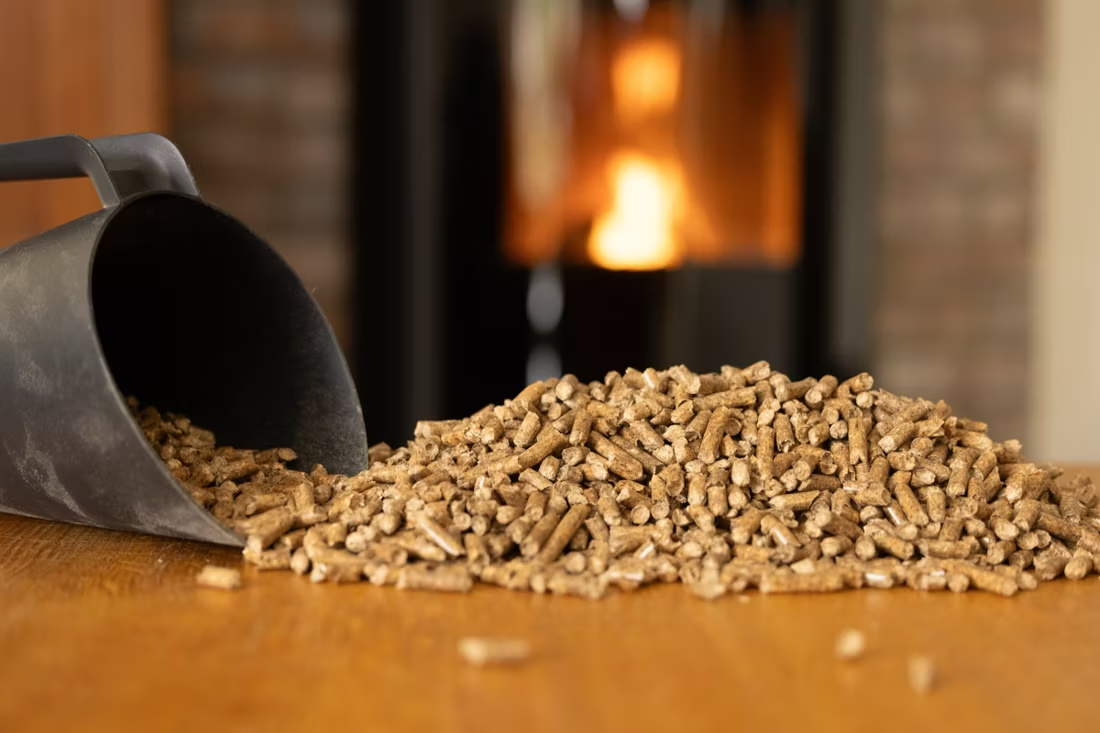
Pellet fuel supply is straightforward here: regional brands like Lignetics, Hamer Pellet Fuel, and Greenway Renewable Energy are milled from the same Southern pine that dominates Glascock County's own timberland, and most hardware and farm-supply stores across central Georgia stock bags seasonally. Compared to the oak, pine, and hickory cordwood that's traditional in this part of the state, pellets trade a little bit of that campfire-and-cutting ritual for hands-off convenience—load the hopper, set the thermostat, and let the auger do the rest. For a county this small and this rural, that convenience matters: a pellet insert into an existing fireplace or a freestanding stove in a den or workshop is a realistic, well-supported upgrade, not a novelty.
Three steps. No salesperson until you're ready.
Tell us about your project
Your zip code, your situation, and the fuel you're leaning toward—or let the answers point you to one.
See what's actually available
The brands dealers within 100 miles genuinely carry—real options, never a catalog mirage.
Get your dealer & Project Guide
A trusted local dealer, plus the free Project Guide & Parts List that names every component of the job.
Frequently Asked Questions
How much does a pellet stove installation cost in Glascock County?
Most pellet stove and insert installations in this part of central Georgia run in the neighborhood of $3,000 to $6,000, depending on the unit, whether you're inserting into an existing masonry fireplace or venting a freestanding stove through an exterior wall, and any electrical work needed for the hopper and blower. Because Glascock County is rural with a small population base, expect installers based in Augusta, Thomson, or Sandersville to serve the area—factor in a modest trip charge for the drive to Gibson or the outlying parts of the county. A local dealer can give you a firm number after seeing your specific fireplace or install location.
What size pellet stove do I need for my home?
Given Glascock County's mild zone 3A winters, most homes here do fine with a small-to-medium pellet stove rated for 1,000 to 1,800 square feet, even when the unit is serving as the primary heat source for a den, farmhouse living room, or workshop. Larger or leakier older farmhouses common around Gibson may need a stove sized toward the upper end of that range, or a second heat source for back bedrooms. Because pellet stoves are thermostatically controlled, oversizing is less of a problem than with wood stoves—but a local dealer can still walk your space and match a hopper capacity and BTU output to your actual square footage.
Where can I find pellet stove dealers near Glascock County?
Glascock County's population, just over 1,000, doesn't support a hearth retailer of its own, so most residents work with dealers based in nearby Augusta, Thomson, or Sandersville who serve Gibson and the surrounding farmland as part of their regular service territory. Look for a dealer who can speak specifically to regional pellet supply—brands like Lignetics, Hamer Pellet Fuel, and Greenway Renewable Energy are all milled in the Southeast and widely available here—rather than a big-box installer unfamiliar with what's actually stocked locally.
Do I need a permit to install a pellet stove in Glascock County?
Yes—a building permit is typically required for a new pellet stove installation, even though pellet venting is simpler than a masonry wood chimney. In Glascock County, that permit goes through the county building department based in Gibson, the county seat. Because the county is small, turnaround on permits is usually fast, but it's worth confirming with your installer that the pellet vent termination clearances meet code, especially if you're venting through a wall near a window or property line.
Pellet stove vs. wood stove—which is right for my home?
Wood stoves burn the oak, pine, and hickory that's traditional and abundant in this part of central Georgia, work without electricity, and appeal to homeowners who don't mind splitting and stacking. Pellet stoves trade that ritual for convenience: load a 40-lb bag into the hopper, set a thermostat, and get automated, even heat without tending a fire. The tradeoff is that pellet stoves need electricity to run the auger and blower—worth considering given how often ice storms take out power in rural Glascock County. Some homeowners here keep a wood stove for outage backup and a pellet unit for daily convenience in the main living space.
Pellet stove vs. gas fireplace—which makes more sense here?
Glascock County doesn't have the natural gas infrastructure you'd find in a larger city, so a gas fireplace here typically means propane, with a tank and delivery contract. A pellet stove sidesteps that altogether—you're buying bagged fuel by the ton or by the bag rather than contracting for tank delivery, and pellet fuel is easy to store dry in a garage or outbuilding. If instant on/off, no-touch operation matters most to you, propane gas is worth pricing out. If you'd rather manage a fuel supply yourself and skip the propane contract, pellet is usually the simpler path in a rural county like this one.
Where can I buy pellet fuel near Glascock County?
Bagged pellets from brands like Lignetics, Hamer Pellet Fuel, and Greenway Renewable Energy are typically available seasonally at farm-supply and hardware stores throughout central Georgia, including in nearby Thomson and Sandersville. Because Glascock County is rural, it's worth buying a season's supply—a ton or more—early in the fall rather than relying on last-minute trips once cold weather hits. A dry outbuilding, garage, or covered porch works fine for storage as long as bags stay off bare concrete and out of direct moisture.
How much maintenance does a pellet stove need?
Pellet stoves need more frequent attention than a gas unit but less than a wood stove's annual chimney sweep. Plan on emptying the ash pan every few days during regular winter use, a deeper cleaning of the burn pot and heat exchanger tubes every few weeks, and an annual professional service to check the auger, blower motor, and venting. Given how few hearth specialists are based directly in Glascock County, scheduling that annual service with your installer before the coldest stretch of January hits is worth doing early, rather than waiting for a breakdown mid-winter.
Does a pellet stove make sense in a mild climate like Glascock County's?
Yes, though it's worth being realistic about the role it will play. Zone 3A winters in central Georgia are mild compared to the Upper Midwest—you won't be running a pellet stove around the clock from November through March the way a homeowner in Fargo or Duluth would. But Glascock County still sees regular nights in the 20s, occasional hard freezes, and power outages after winter storms, and a pellet stove handles all of that well: even, thermostatically controlled heat for a den, living room, or workshop, without the daily commitment of a full wood-burning setup. For most homes here, it functions as reliable supplemental heat with the option to run as a primary source during the coldest stretches.
Why is a fireplace insert so efficient?
An insert does two things: it seals the chimney completely, so you stop losing air you already paid to heat, and it radiates warmth into the room through the firebox and glass. Most add a heat-exchange fan that pulls cool room air underneath, wraps it around the hot firebox, and pushes it back out warm. Your home is more efficient before you've even lit the first fire.
How often does a pellet stove need cleaning?
A clean pellet stove is a happy pellet stove. Plan on cleaning the burn pot about once a week when you're burning regularly—ash and clinkers gum up the air holes just like a pellet barbecue. Most pellet stove problems trace back to skipped cleaning that nobody explained up front. Some designs make it easy with a trapdoor burn pot: pull a lever and the gunk drops into the ash pan.
What is an in-home preview and do I need one?
It's a visit where a hearth professional measures your space, confirms the model you picked actually works in your home, and walks the specs—framing, gas line, venting, finish work—before anything is ordered. Some details you just can't know until you see the house. Never make a down payment without one; it's the single most-skipped step that burns buyers.
Does a fireplace add value to my home?
On average, a fireplace adds back to the home about the same amount you spent installing it. Add the monthly savings from heating the rooms you actually use instead of the whole house—often hundreds of dollars a year—and the value case is strong before you even count what a fire does for how your family uses the room.
Pellet Brands Stocked Around Glascock County
Manufacturers will point you to the nearest stocking dealer.
Find your pellet stove in Glascock County.
Tell us a bit about your home and we'll match you with a trusted local dealer and a free Project Guide & Parts List—the exact parts, including the vent kit, for your pellet project in Glascock County.
Find Your Fireplace →