
Efficient, hands-off heat for Floyd County winters.
From Rome to Cave Spring, Lindale, and Armuchee, pellet stoves give Floyd County homeowners thermostat-controlled warmth without the wood-splitting. Find the right unit and connect with a trusted local dealer.
Every Project Starts From One of These Five Situations
Convenient heat for a mild, humid climate.
Floyd County sits in climate zone 4A with a winter heating season on the milder side and an average winter low around 30°F—a fraction of the heating load faced by places like Duluth, MN or Fargo, ND, where winters run two to three times longer and colder. Winters here are short and generally mild, with occasional hard freezes and the odd ice storm rolling through the Rome area. That combination—real but limited cold—is exactly where pellet stoves earn their keep: enough heating demand to justify a dedicated appliance, but not so much that homeowners want to deal with splitting and stacking cords of oak, pine, or hickory all winter.
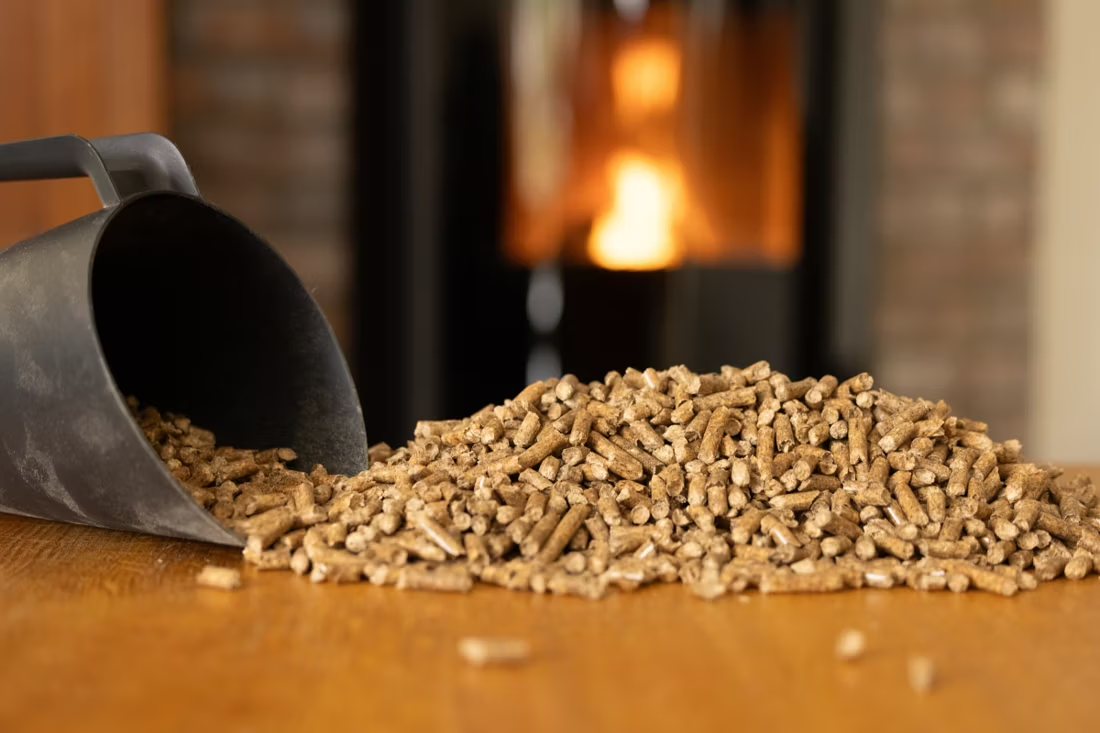
Floyd County has no listed air quality non-attainment issues or winter inversion concerns, so pellet stoves here are chosen mostly for convenience and efficiency rather than to dodge burn restrictions. Regional hardwood pellet brands like Lignetics, Hamer Pellet Fuel (produced right in Georgia), and Greenway Renewable Energy are readily stocked by area dealers, so fuel supply isn't a seasonal scramble. For homeowners who still want to cut their own wood as a backup, Cherokee National Forest issues cutting permits for about $20 per cord during the May-to-October season—but for most Rome-area households, a pellet hopper and an auger feed beat hauling firewood.
Three steps. No salesperson until you're ready.
Tell us about your project
Your zip code, your situation, and the fuel you're leaning toward—or let the answers point you to one.
See what's actually available
The brands dealers within 100 miles genuinely carry—real options, never a catalog mirage.
Get your dealer & Project Guide
A trusted local dealer, plus the free Project Guide & Parts List that names every component of the job.
Frequently Asked Questions
How much does a pellet stove installation cost in Floyd County?
Across the Southeast, a freestanding pellet stove installation typically runs $3,000 to $6,500, and a pellet insert into an existing fireplace usually lands closer to $4,000 to $7,000 once venting and a hearth pad are factored in. Where you land in that range depends on whether you need new through-wall venting, electrical work for the auger and blower, and any hearth clearance modifications. Homes in Rome with an existing masonry fireplace are often on the lower end since the chimney chase can sometimes be reused; standalone installations in a den or garage in Cave Spring or Armuchee may need fresh venting run through an exterior wall. A local dealer can give you a firm number after seeing your space.
What size pellet stove do I need for my Floyd County home?
Given Floyd County's relatively mild heating load—a short, mild winter season and winter lows that mostly stay in the 20s and 30s rather than deep negative territory—most homes don't need the largest pellet stoves on the market. A small to mid-size unit (rated for 1,000 to 1,800 square feet) handles a main living area or an open floor plan in a typical Rome or Lindale home. Larger, well-insulated houses or homes used for whole-house heating may want a bigger hopper capacity to reduce refill frequency, but you're rarely sizing for extreme cold the way a homeowner in Minneapolis or Bozeman would. A local retailer can walk your home and match hopper size and BTU output to your actual square footage.
Where do I buy pellets in Floyd County, and what do they cost?
Regional hardwood pellet brands—Lignetics, Hamer Pellet Fuel, and Greenway Renewable Energy—are the ones you'll most commonly find stocked by hearth dealers and farm supply stores serving the Rome area. Expect to pay roughly $250 to $320 per ton depending on brand and season; buying early in fall before cold weather hits often beats scrambling for pellets in January. A typical Floyd County home burning a pellet stove as supplemental heat might use 1 to 2 tons per season, while a home relying on it more heavily could use 3 or more tons given the county's relatively short heating season.
What's the difference between a pellet stove and a pellet insert?
A pellet stove is a freestanding appliance that sits on a hearth pad and vents through a wall or existing chimney—it can go almost anywhere in a room with the right clearances. A pellet insert is built to slide into an existing masonry fireplace opening, turning an old wood-burning fireplace into a sealed, high-efficiency pellet unit that vents up the existing chimney with a liner. For Floyd County homes with an older fireplace—common in many of Rome's historic neighborhoods—an insert is usually the cleaner upgrade since it reuses the chimney you already have. Homes without an existing fireplace typically go with a freestanding stove instead.
Do I need a permit to install a pellet stove in Floyd County?
Most pellet stove and insert installations require a building permit, and the process depends on whether the home is inside Rome's city limits or in unincorporated Floyd County. Addresses within Rome go through the City of Rome's permitting process, while homes in areas like Armuchee, Silver Creek, or Cave Spring go through the Floyd County Building Department. In both cases, permits cover the venting path and any electrical work for the unit's blower and auger. Most local hearth dealers handle the permit application as part of the installation, so it's rarely something the homeowner has to navigate alone.
What's the best pellet stove for Floyd County's climate?
Because Floyd County's winters are moderate rather than extreme, homeowners here generally don't need the largest-capacity, longest-burn pellet stoves built for places with sustained sub-zero nights. Mid-size units with reliable thermostat control and quiet auger/blower operation tend to be the better fit—you're running the stove on demand during cold spells and freezes rather than around the clock for months. Look for models with easy ash-pan removal and a hopper that doesn't require daily refilling, since most Floyd County households use their pellet stove as zone heat for a living area rather than as the sole heat source for the whole house. A local dealer can point you toward specific models that pair well with the brands of pellets stocked in the Rome area.
How much maintenance does a pellet stove need?
Pellet stoves need more frequent light maintenance than wood stoves but far less heavy cleaning. Plan on emptying the ash pan every few days to weekly depending on use, cleaning the glass and burn pot regularly, and having a full professional service—including venting and blower inspection—once a year, ideally before the fall heating season starts. Given Floyd County's relatively short burn season, an annual fall service appointment with a local dealer is usually enough to keep a unit running reliably through the winter.
Will my pellet stove work during a power outage?
Not without a backup power source. Pellet stoves rely on electricity to run the auger that feeds pellets and the blower that distributes heat, so a standard unit shuts down the moment the power goes out. Georgia's occasional winter ice storms can knock out power in the Rome area for hours or, less commonly, days, so if backup heat during an outage matters to you, ask your local dealer about battery backup options or plan for a small generator to keep the unit running. Homeowners who need heat that works no matter what the power grid does often pair a pellet stove with a wood-burning option elsewhere in the house.
Pellet stove vs. wood stove—which is right for my Floyd County home?
Wood stoves burn cordwood—plentiful locally given the county's oak, pine, and hickory forests, and available through Cherokee National Forest cutting permits for about $20 per cord—and they keep working without electricity, which matters during ice-storm outages. Pellet stoves trade that off for convenience: load the hopper, set the thermostat, and let the auger do the rest, with less mess and more consistent heat output, but they need power to run. For most Floyd County households where wood heat is a nice-to-have rather than a necessity, the ease of a pellet stove tends to win out. For homeowners who want a true off-grid backup heat source, a wood stove remains the more dependable choice.
Why is my open fireplace making my house colder?
Open fireplaces suck—literally. As the fire burns, it consumes air your furnace already paid to heat and pulls it out through the chimney, so the house is actually colder after the fire goes out than before you lit it. An insert fixes this: it seals the chimney, puts fixed glass across the front, and turns that hole in your house into a real heat source.
What's the difference between an insert and a zero-clearance fireplace?
An insert is a fireplace that slides into a pre-existing wood-burning fireplace—if you don't have one, there's nothing to insert it into. A zero-clearance fireplace is built into a framed wall, which makes it the answer for remodels and new construction. Simple test: existing masonry fireplace means insert; blank or framed wall means zero-clearance.
Can a fireplace actually lower my heating bill?
Yes—by creating a comfort zone. A furnace heats every square foot of the house just to warm the one room you're in; a gas fireplace on low burns roughly a sixth of the gas a typical furnace does. Set the furnace around 55–60 degrees as a baseline, then heat the rooms your family actually uses. Families who heat this way commonly save $20–$60 a month.
Does a fireplace add value to my home?
On average, a fireplace adds back to the home about the same amount you spent installing it. Add the monthly savings from heating the rooms you actually use instead of the whole house—often hundreds of dollars a year—and the value case is strong before you even count what a fire does for how your family uses the room.
Stove and Fireplace Dealers in Floyd County
Pellet Brands Stocked Around Floyd County
Manufacturers will point you to the nearest stocking dealer.
Find your pellet stove in Floyd County, GA.
Tell us about your home and we'll match you with a trusted local dealer and send over a free Project Guide & Parts List—the exact stove or insert, vent kit, and installation plan for your Floyd County project.
Find Your Fireplace →